



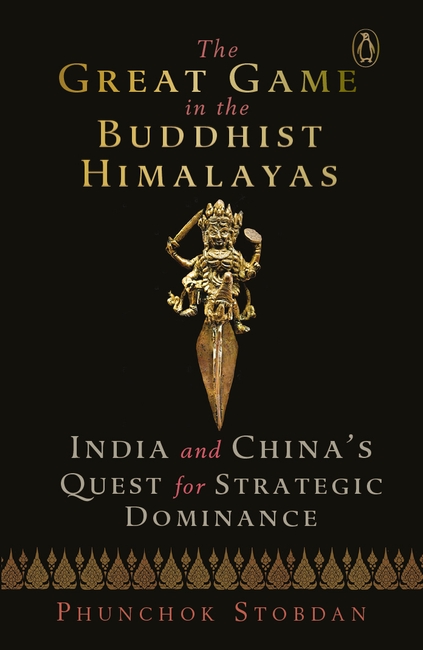
There is a new ‘great game’ being played in the Buddhist Himalayas between India, China and Tibet, which makes for a crucial third player. Together, they are leveraging their influence with the Buddhist communities to create strategic dominance, with varying degrees of success.
China’s ‘Buddhist diplomacy’ has focused on Nepal and Bhutan, and the Indian Himalayan regions of Ladakh, Arunachal Pradesh and Sikkim, which have sizeable Buddhist populations and are vulnerable to this influence. The crisis in Doklam brought into focus what will be one of the most difficult issues to unfold in the Himalayas in future: India’s insufficient ability to deal with China only through the prism of military power.
If Xi Jinping, who is known to be working towards a resolution of the Tibet question, succeeds, and the Dalai Lama does indeed return to Tibet, how will it impact Indian interests in the Buddhist Himalayas? If the Tibet issue remains unresolved, how will India and China deal with and leverage the sectarian strife that is likely to intensify in a post-Dalai Lama world?
The Great Game in the Buddhist Himalayas includes several unknown insights into the India-China, India-Tibet and China-Tibet relationships. It reads like a geopolitical thriller, taking the reader through the intricacies of reincarnation politics, competing spheres of sacred influence, and monastic and sectarian allegiances that will keep the Himalayas on edge for years to come.
Catagory: Religion
The Markandeya Purana
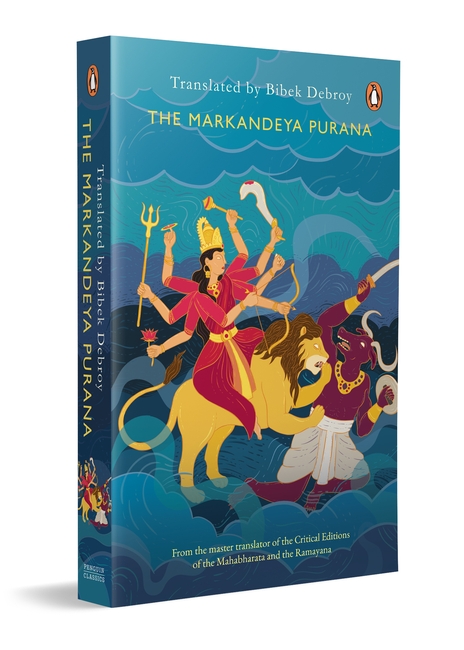
A marvellous amalgam of mythology and metaphysics, the Markandeya Purana unfolds as a series of conversations, in which the sage Markandeya is asked to answer some deeper questions raised by events in the Mahabharata. These illuminating exchanges evolve into a multi-faceted exploration of the core concepts of Hindu philosophy-from an excellent exposition of yoga and its unique attributes to a profound treatise on the worship of the goddess, the Devi Mahatmya, which also includes the popular devotional texts known as ‘Chandi’ or ‘Durga Saptashati’.
Brimming with insight and told with clarity, this luminous text is also a celebration of a complex mythological universe populated with gods and mortals, and contains within its depths many nested tales like that of Queen Madalasa and her famous song.
Bibek Debroy’s masterful translation draws out the subtleties of the Markandeya Purana, enabling a new generation of readers to savour its timeless riches.
The Bhagavadgita
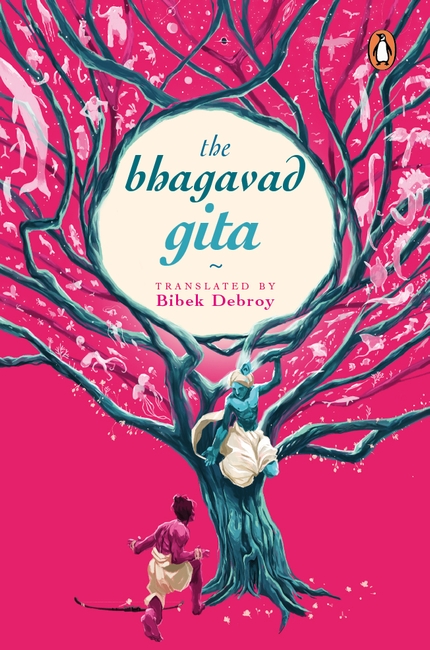
The foundational text on dharma and Hindu philosophy, exquisitely rendered by one of our most eminent Sanskrit translators
As a spiritual guide, the Bhagavadgita is a mesmerizing account of the debate between right and wrong, and the bond between action and consequence. One of the core Hindu scriptures, it is part of the great Indian epic, the Mahabharata, and unfolds in the form of a dialogue between Krishna and the Pandava prince, Arjuna.
This beautifully produced bilingual edition is a masterful verse-for-verse translation, providing the original Sanskrit verses alongside the English rendition. Bibek Debroy’s deep familiarity with the text yields a treasure trove of insights that will delight the scholar and the lay reader alike, making this essential reading for anyone with an abiding interest in Indian scriptures.
Dharma
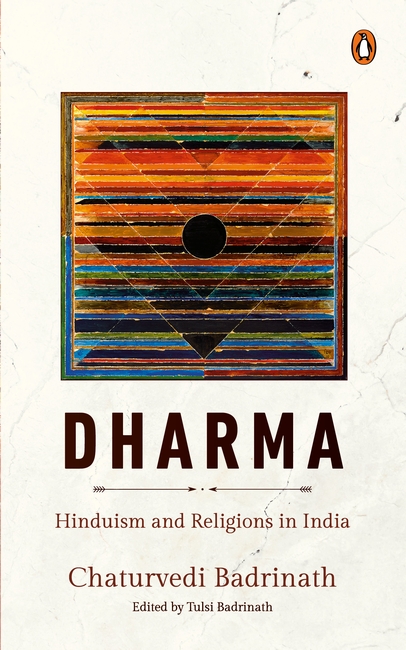
Chaturvedi Badrinath is known for his authoritative work on the Mahabharata, and on the central place of dharma in Indian thought. His Swami Vivekananda: The Living Vedanta continues to inspire readers with a fresh perspective on the man who was the living embodiment of the Vedanta he preached.
In Dharma: Hinduism and Religions in India, Badrinath argues that the Indian civilization is a ‘Dharmic’ one, founded as it is on the principle of dharma. Dharma has always been translated, wrongly, as ‘religion’.
The concerns of Indian philosophy are the concerns of human life everywhere. Badrinath talks about the history of the words ‘Hindu’ and ‘Hinduism’, Islam in relation with Hinduism, the issues that arose from the spread of Christianity in India, Jainism and Buddhism as part of dharma and darshana, and explains why organized violence in the service of religious fundamentalism is the very negation of religion with its reverence for life.
Thought provoking, perceptive and challenging many long-held notions, Dharma is a must-read for anyone who is interested in India, the interaction of different religions over centuries in this land, and the underlying unity of all life.
Pilgrim’s India
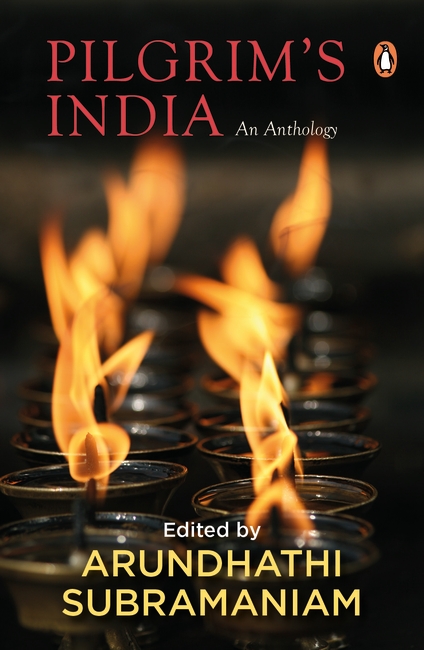
More people have embarked on a quest for the sacred in India than anywhere else.
Pilgrim’s India is about all journeys impelled by the idea of the sacred. It brings together essays and poems-from the Katha Upanishad, Fa-Hien, Basavanna and Kabir to Paul Brunton, Richard Lannoy, Amit Chaudhuri, Arun Kolatkar and others-about various aspects of trips undertaken in the name of God. Readers will encounter the watchful reserve of a British journalist in southern India, the vigorous prose of a contemporary Sikh pilgrim, a French author-adventurer’s appraisal of the Ellora caves, a modern-day Zoroastrian’s reflections on Udvada and a woman’s impression of what it means to be Muslim in India.
Mystics, witnesses and wanderers write about the Supreme Being, about journeys and destination, false starts, bottlenecks and blind alleys, about humour, rage and revelation-all of which make this anthology a deeply absorbing and idiosyncratic take on pilgrims and pilgrim trails in India.
An End To Suffering
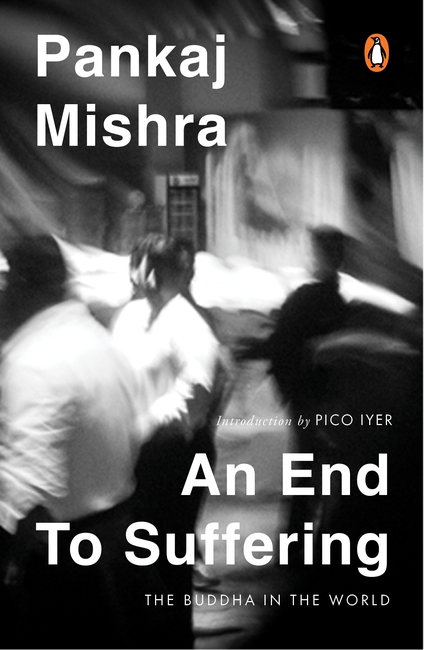
Is the Buddha still relevant today and, if so, in what way? Pankaj Mishra tries to answer this question as he travels through poverty-ridden South Asia to gilded Europe and America. Along the way he discovers how Buddhist thought has flowered even in a materialistic world, and reveals the parallels between the age of the Buddha and the contemporary world. A rich, challenging and deeply contemplative work, An End to Suffering is regarded as many to be Mishra’s masterpiece.
The Blood Telegram
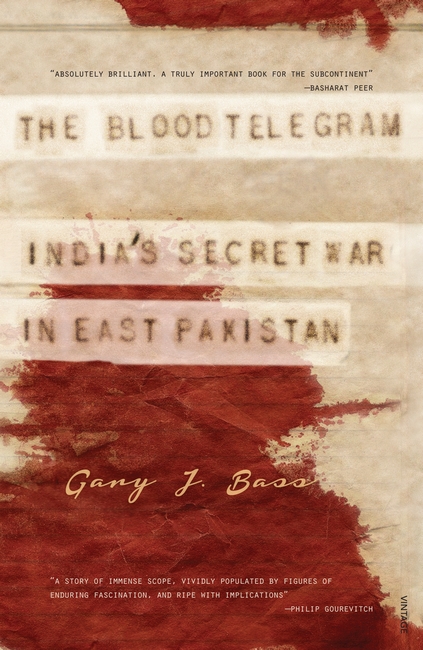
In 1971, the Pakistani army launched a devastating crackdown on what was then East Pakistan (today’s independent Bangladesh), killing thousands of people and sending ten million refugees fleeing into India. The events also sparked the 1971 Indo-Pakistani War.
Drawing on recently declassified documents, unheard White House tapes, and meticulous investigative reporting, Gary Bass gives us an unprecedented chronicle of the break-up of Pakistan, and India’s role in it. This is the pathbreaking account of India’s real motives, the build-up to the war, and the secret decisions taken by Indira Gandhi and her closest advisers.
This book is also the story of how two of the world’s great democracies-India and the United States-dealt with one of the most terrible humanitarian crises of the twentieth century. Gary Bass writes a revealing account of how the Bangladeshis became collateral damage in the great game being played by America and China, with Pakistan as the unlikely power broker. The United States’ embrace of the military dictatorship in Islamabad would affect geopolitics for decades, beginning a pattern of Ameranti-democratic engagement in Pakistan that went back far beyond General Musharraf.
The Blood Telegram is a revelatory and compelling work, essential reading for anyone interested in the recent history of our region.
The First Sikh
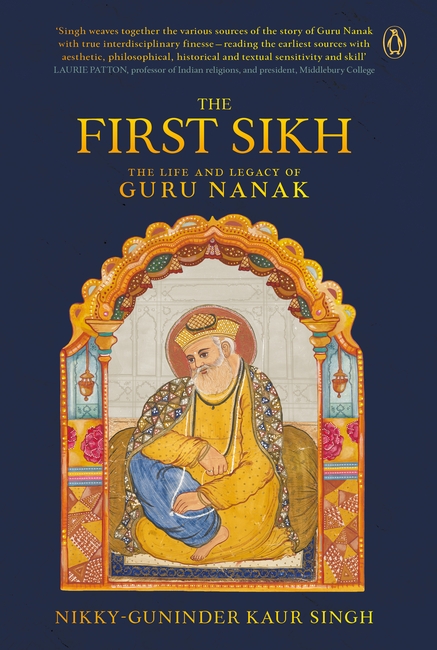
In this highly accessible and comprehensive biography, Nikky-Guninder Kaur Singh deftly mines the available sources to construct a vivid and complex account of Guru Nanak’s life and legacy, his personality and background, the pluralistic world he lived in, his teachings and philosophy, and even the manner in which he has been understood by believers and scholars over time. What emerges is a majestic and magisterial portrait of a great enlightener who not only founded one of the world’s major religions but whose singular message of unity and hope has endured centuries after he first walked the earth.
The First Sikh unites rigorous scholarship with a deep love for the subject, offering fascinating insights into Guru Nanak’s life and times even as it explores key facets of Sikhism. Moreover, it shows us how Guru Nanak continues to remain relevant in a twenty-first-century reality.
The ISIS Peril
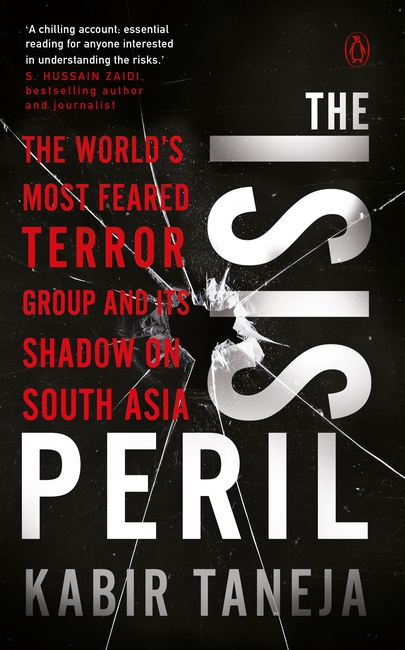
As early as 2014, after the fall of Mosul, maps of ISIS showing a desire to take over South Asia started to appear on social media. But how far has that borne fruit? Or has it always been more of an ill-conceived chimera?
One of the shortcomings of our understanding of ISIS in India-and indeed in South Asia-is that neither the media nor the public discourse seems to know what ISIS itself is. The militant group has eclipsed Al Qaeda to become the most feared terror group in the West, and it continues to expand its influence, despite losing the territory it had captured. And yet, its shadow on South Asia has not been grasped quite as clearly.
In The ISIS Peril, Kabir Taneja explores the psychology of South Asian jihadists through the discussion on various narratives from Kashmir to Kerala, the Islamic State’s online propaganda strategies by way of Twitter, Facebook and Telegram, leading to the radicalization and subsequent recruitment of the youth, to the Holey Bakery attack in Bangladesh in 2016 and the Easter weekend bombings in Sri Lanka in 2019.
Based on detailed and rare primary sources, Taneja uncovers the ideological underpinnings of the jihadist movement in South Asia, and in the process, not only exposes its fault lines but also highlights the challenges in defeating not just the world’s most feared terror group but something more powerful, an ideology that it represents.
Ayodhya
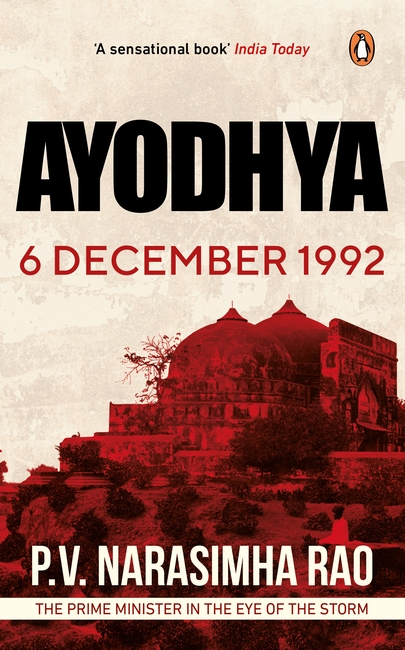
‘A sensational book’ India Today
A shocking exposé of the event that changed Indian politics forever
P.V. Narasimha Rao was the prime minister of India when, on 6 December 1992, thousands of kar sevaks stormed into the site of the Babri Masjid in Ayodhya. The nation watched in horror as the centuries-old mosque was razed to the ground, in the presence of paramilitary forces and senior political leaders, marking a turning point in post-Independence Indian history.
Many hold Rao responsible for not preventing the demolition, while others accuse him of being a co-conspirator. In this tell-all account, Rao reveals what really transpired in the run-up to that fateful day. Drawing on the Supreme Court order, parliamentary proceedings, eyewitness reports and his own insights, he presents a comprehensive view of the machinations that led to the demolition of the Babri Masjid.
Nearly three decades after the event, Ayodhya: 6 December 1992 remains a valuable resource to understanding the political manoeuvres behind the Ram Mandir issue and the dangers of exploiting religious sentiments for narrow electoral gains.