




Sree Narayana Guru (1855-1928) was a spiritual leader and social reformer who led powerful movements to promote social equality. Not Many, But One brings together his work in two rich volumes of translation and interpretation, pieced together for a modern readership.
In Volume 2, we see how Sree Narayana Guru revived the Advaita philosophy. The book also focuses on the correlation between the teachings of Advaita, the conclusions of modern physics and cosmology, and how Advaita reveals the complex secrets of the universe. It explains the theoretical, observational and experimental findings given by science about the origin, evolution, existence and future of our universe. Volume 2 also explores the Big Bang theory, the inflation theory, the role of dark matter and dark energy, the concept of space and time, the anthropic principle, supersymmetry, spontaneous symmetry breaking, string theory and other latest avenues of modern science. The translations, explanations and commentary given are simple and conceivable by ordinary readers who may not be well equipped with the complexities of intuitional spiritual findings of Advaita and hypothetic conclusions of quantum physics-but without compromising on the authenticity of the works.
Vedic philosophers, physicists, cosmologists and enthusiasts who love science and spirituality will appreciate this enterprising effort – though with limitations – in bringing closer the two hitherto uncompromising schools of thought. The devotees of Sree Narayana Gurudev will find an opportunity to go deeper into his works.
Catagory: Religion
A Talib’s Tale
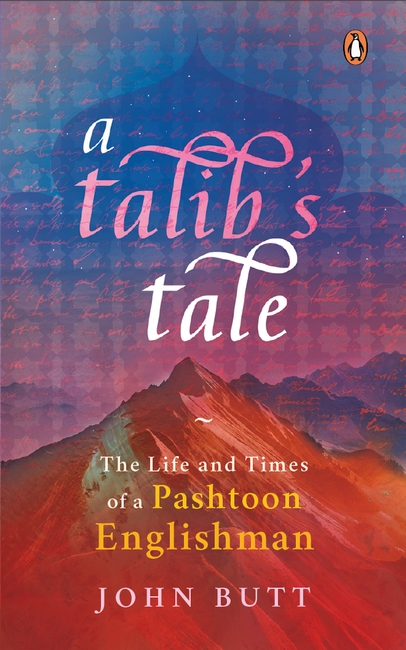
John Butt came to Swat in 1970 as a young man in search of an education he couldn’t get from his birthplace in England. He travels around the region, first only with friends from his home country, but as he befriends the locals and starts to learn about their culture and life, he soon finds his heart turning irrevocably Pashtoon.
Containing anecdotes from his life both before and since he shifted to Afghanistan, and with a keen and optimistic attitude towards becoming the best version of himself, John Butt tells a wonderful and heartfelt tale of a man who finds a home in the most unexpected place.
The RSS
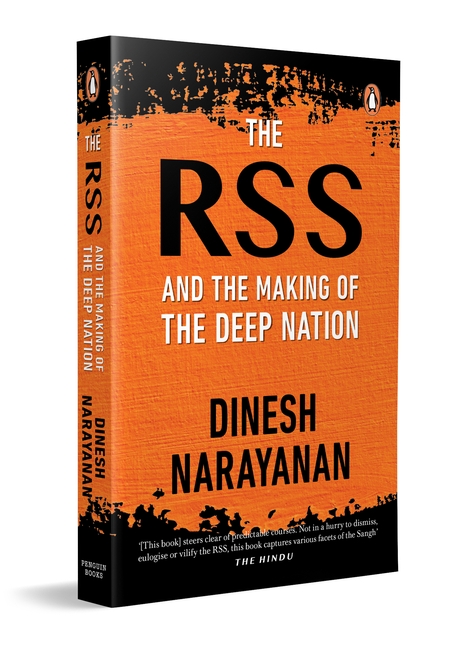
Since its inception in 1925, the RSS has perplexed observers with its organizational skills, military discipline and single-minded quest for influence in all walks of Indian life. Often seen as insidious and banned thrice, the pace of its growth and ideological dominance of the political landscape in the second decade of the millennium have been remarkable. It believes that Hindus have exclusive ownership of the Indian nation or Bharat, as it prefers to call it, and that hitherto, forces inimical to the interests of Hindus were deciding the socio-political and economic agenda in India. With political power firmly in favour, it is now going all out to embed its ideology deep in India’s genetic code. The abrogation of Article 370 in Kashmir, the big push to construct a Ram Temple in Ayodhya and moves to amend personal laws are the first symbolic steps in establishing the primacy of Hindus in the affairs of the country.
Relying on original research, interviews with insiders and analysis of current events, The RSS and the Making of the Deep Nation traces the RSS’s roots and nearly century-long operations in the relentless pursuit for ideological dominance in a nation known for its rich diversity of thought, custom and ritual.
An Extraordinary Life
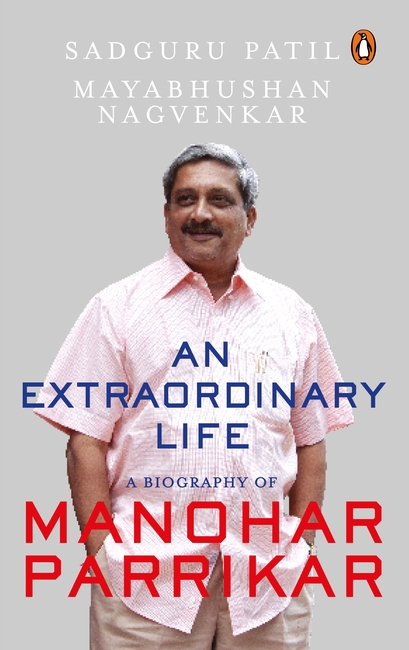
Over the last two decades, the exploits of one man, an IIT-Bombay alumnus, changed the way mainstream India looked at Goa and the political goings-on in the country’s smallest state. An Extraordinary Life traces the life and times of Manohar Parrikar through the informed voices of his relatives, friends, foes, bureaucrats and IIT contemporaries. The daily battles of a gifted individual are brought to the fore as he encounters love and vices. But more importantly, it showcases his rise in politics from the son of a grocery store owner in a nondescript town, a sanghachalak in Mapusa town, an Opposition MLA and leader, to a chief minister (on multiple occasions) and, finally, to a defence minister.
The Fakir: The Journey Within
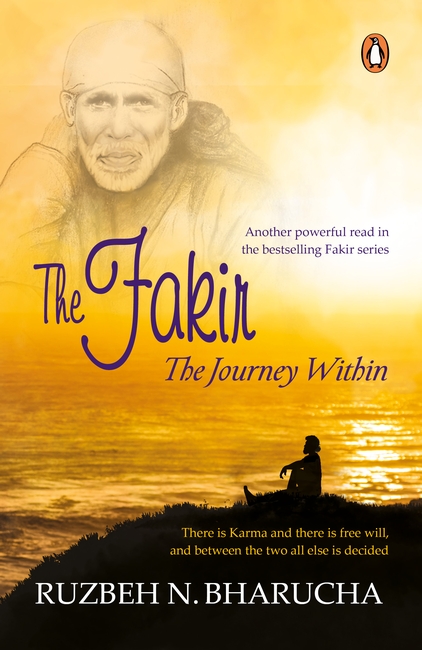
To be a better spiritual being and to better even that with every step is the goal of every soul so it can then ultimately merge into The One . . .
Rudra is exactly where he wants to be-with his kind, loving BABA, talking about life and the laws of the spiritual realm. He is taken to various villages to see for himself what the right way to live and pray is.
As he serves his BABA and asks Him questions, much is revealed to him: ‘When you pray with such intensity that The One shall listen to your prayer, then your purity, intensity, devotion and yearning will get wings to reach The One’
BABA also talks about how we should be in life, how our relationships should be, how jealousy and anger are detrimental to the development of good karma and how conducting oneself without cribbing and complaining takes on to the higher plane.
In The Fakir once again Rudra is the student and BABA the teacher as well at the MASTER.
The Ramcharitmanas 3
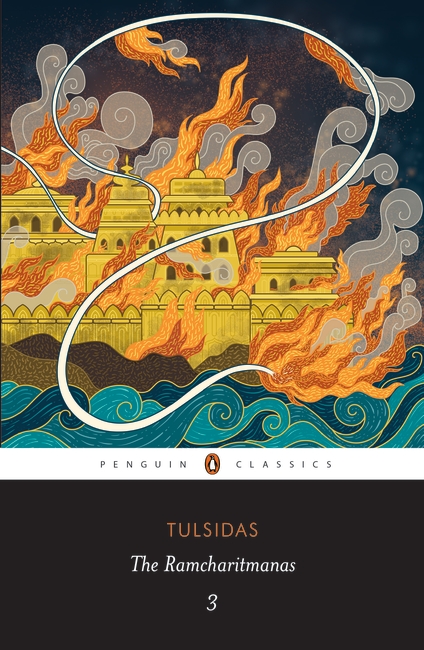
The most popular devotional text recounting the adventures of the Hindu god Ram
The Ramcharitmanas, composed by the poet-saint Tulsidas in the sixteenth century during a dynamic period of religious reform, was instrumental in making the story of Ram-and his divine feats against Ravan, the demon king of Lanka-widely accessible to the common people for the first time. Prior to that, this tale was exclusively the preserve of the priestly class who could read Valmiki’s Sanskrit epic, The Ramayana. By reimagining Valmiki’s text in the vernacular language, as a poem to be imbibed through recitation rather than reading, Tulsidas kindled a devotional revolution, forever changing the religious and social landscape of northern India.
Rohini Chowdhury’s exquisite translation brings Tulsidas’s magnum opus vividly to life, and her detailed introduction sheds crucial light on the poet and his work, placing them both in the wider context of Hindi literature.
The Ramcharitmanas 1
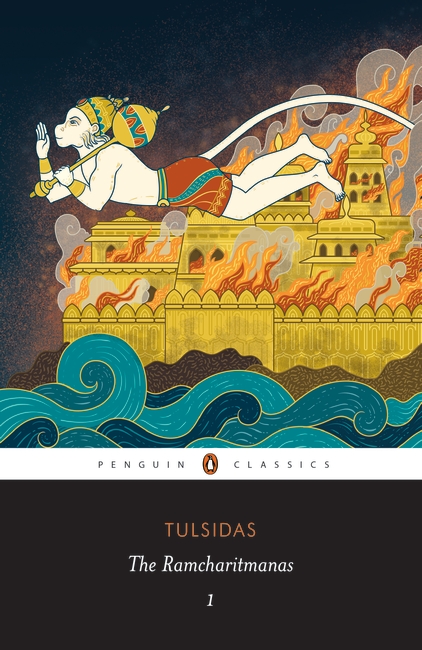
The most popular devotional text recounting the adventures of the Hindu god Ram
The Ramcharitmanas, composed by the poet-saint Tulsidas in the sixteenth century during a dynamic period of religious reform, was instrumental in making the story of Ram-and his divine feats against Ravan, the demon king of Lanka-widely accessible to the common people for the first time. Prior to that, this tale was exclusively the preserve of the priestly class who could read Valmiki’s Sanskrit epic, The Ramayana. By reimagining Valmiki’s text in the vernacular language, as a poem to be imbibed through recitation rather than reading, Tulsidas kindled a devotional revolution, forever changing the religious and social landscape of northern India.
Rohini Chowdhury’s exquisite translation brings Tulsidas’s magnum opus vividly to life, and her detailed introduction sheds crucial light on the poet and his work, placing them both in the wider context of Hindi literature.
The Ramcharitmanas 2
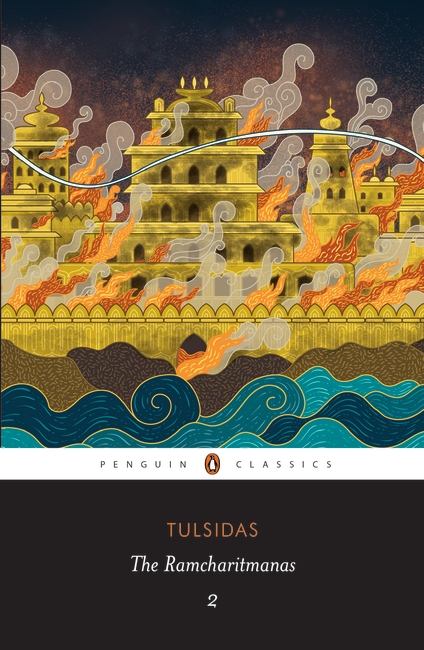
The most popular devotional text recounting the adventures of the Hindu god Ram
The Ramcharitmanas, composed by the poet-saint Tulsidas in the sixteenth century during a dynamic period of religious reform, was instrumental in making the story of Ram-and his divine feats against Ravan, the demon king of Lanka-widely accessible to the common people for the first time. Prior to that, this tale was exclusively the preserve of the priestly class who could read Valmiki’s Sanskrit epic, The Ramayana. By reimagining Valmiki’s text in the vernacular language, as a poem to be imbibed through recitation rather than reading, Tulsidas kindled a devotional revolution, forever changing the religious and social landscape of northern India.
Rohini Chowdhury’s exquisite translation brings Tulsidas’s magnum opus vividly to life, and her detailed introduction sheds crucial light on the poet and his work, placing them both in the wider context of Hindi literature.
The Minority Conundrum
The second volume in the Rethinking India series explicates what it means to be a minority in majoritarian times. The contributors identify vulnerabilities that encumber the quest for the realization of substantive citizenship by minority groups. The essays deal with educational attainments, employment prospects in a liberalized economy, possibilities of equal opportunity, violence of the state and vigilante groups, emerging questions of citizenship and employment, linking language with the material life of its speakers, and the receding political voice of minorities amidst a majoritarian upswing.
Also examined is the concept of minority being inextricably bound with two allied ideas equally foundational to the vision of the Indian Republic: secularism and nationalism. The three together form a conceptual whole to the extent that none finds its manifestation without reference to the other two. The take-offs of the minority question in India include the archetypal nationalist’s disapproval of the very endurance of the subject post-Independence. The secular-modernists and the Hindutva nationalists converge in prescribing assimilation-one into a modernist project, the other into a national culture defined by Sanskritic Hinduism-while the pluralist vision, tolerant of divergent practices, follies in assuming cultures and religious observances as frozen. This, along with several allied issues, forms the heart of this thought-provoking volume.
Land Of The Seven Rivers-Pb
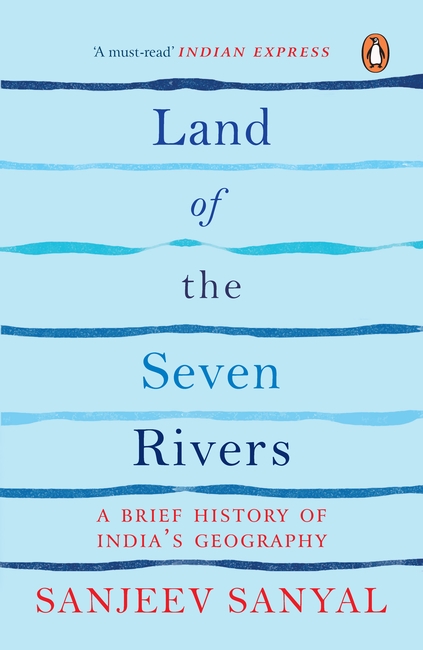
Did ancient India witness the Great Flood? Why did the Buddha give his first sermon at Sarnath? How did the Europeans map India?
Combining scholarship with sparkling wit, Sanjeev Sanyal sets out to explore how India’s history was shaped by its geography-answering questions you may have never thought to ask. Moving from geological and genetic origins to present-day Gurgaon, Land of the Seven Rivers is riveting, wry and full of surprises.