



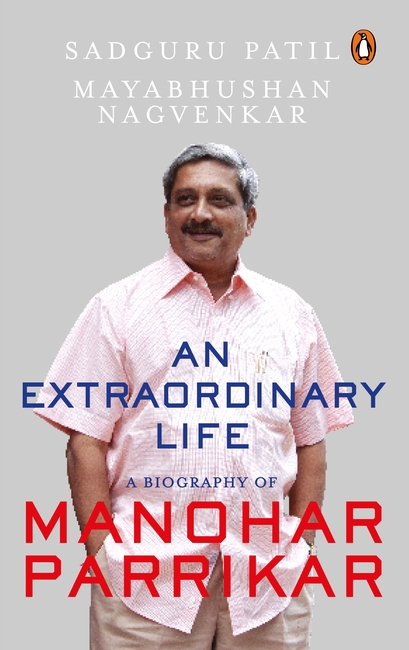
Over the last two decades, the exploits of one man, an IIT-Bombay alumnus, changed the way mainstream India looked at Goa and the political goings-on in the country’s smallest state. An Extraordinary Life traces the life and times of Manohar Parrikar through the informed voices of his relatives, friends, foes, bureaucrats and IIT contemporaries. The daily battles of a gifted individual are brought to the fore as he encounters love and vices. But more importantly, it showcases his rise in politics from the son of a grocery store owner in a nondescript town, a sanghachalak in Mapusa town, an Opposition MLA and leader, to a chief minister (on multiple occasions) and, finally, to a defence minister.
Catagory: Religion
The Fakir: The Journey Within
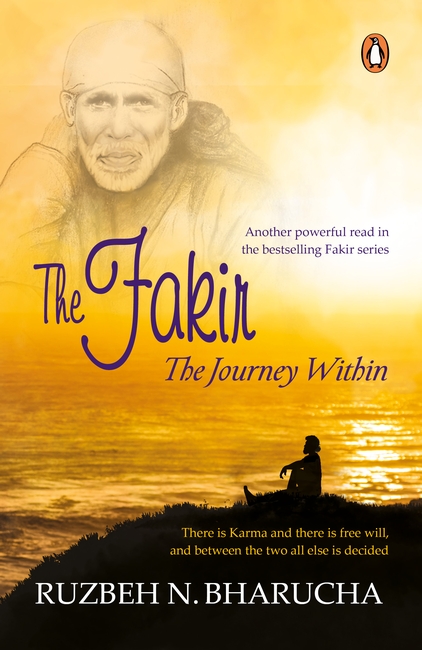
To be a better spiritual being and to better even that with every step is the goal of every soul so it can then ultimately merge into The One . . .
Rudra is exactly where he wants to be-with his kind, loving BABA, talking about life and the laws of the spiritual realm. He is taken to various villages to see for himself what the right way to live and pray is.
As he serves his BABA and asks Him questions, much is revealed to him: ‘When you pray with such intensity that The One shall listen to your prayer, then your purity, intensity, devotion and yearning will get wings to reach The One’
BABA also talks about how we should be in life, how our relationships should be, how jealousy and anger are detrimental to the development of good karma and how conducting oneself without cribbing and complaining takes on to the higher plane.
In The Fakir once again Rudra is the student and BABA the teacher as well at the MASTER.
The Ramcharitmanas 3
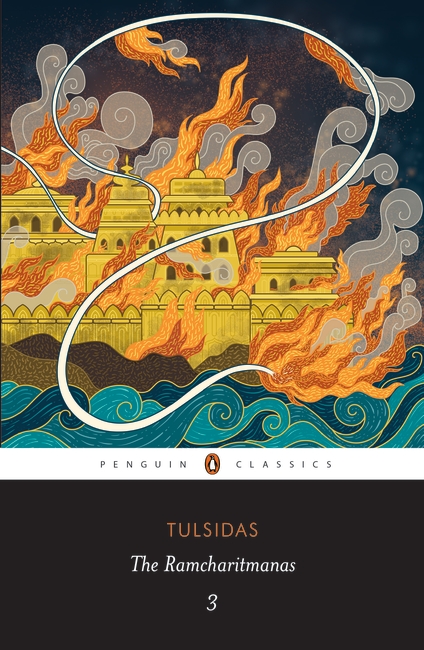
The most popular devotional text recounting the adventures of the Hindu god Ram
The Ramcharitmanas, composed by the poet-saint Tulsidas in the sixteenth century during a dynamic period of religious reform, was instrumental in making the story of Ram-and his divine feats against Ravan, the demon king of Lanka-widely accessible to the common people for the first time. Prior to that, this tale was exclusively the preserve of the priestly class who could read Valmiki’s Sanskrit epic, The Ramayana. By reimagining Valmiki’s text in the vernacular language, as a poem to be imbibed through recitation rather than reading, Tulsidas kindled a devotional revolution, forever changing the religious and social landscape of northern India.
Rohini Chowdhury’s exquisite translation brings Tulsidas’s magnum opus vividly to life, and her detailed introduction sheds crucial light on the poet and his work, placing them both in the wider context of Hindi literature.
The Ramcharitmanas 1
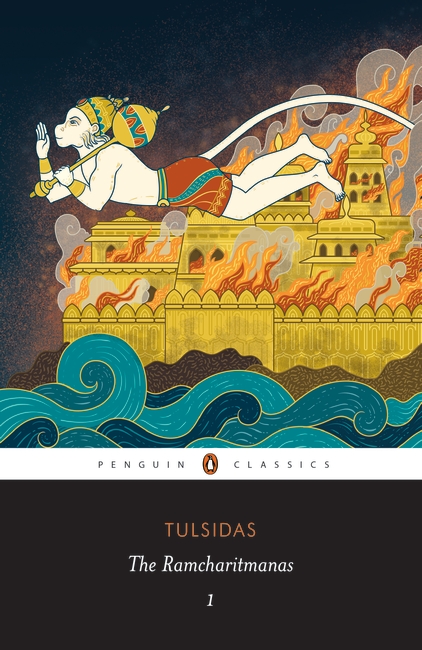
The most popular devotional text recounting the adventures of the Hindu god Ram
The Ramcharitmanas, composed by the poet-saint Tulsidas in the sixteenth century during a dynamic period of religious reform, was instrumental in making the story of Ram-and his divine feats against Ravan, the demon king of Lanka-widely accessible to the common people for the first time. Prior to that, this tale was exclusively the preserve of the priestly class who could read Valmiki’s Sanskrit epic, The Ramayana. By reimagining Valmiki’s text in the vernacular language, as a poem to be imbibed through recitation rather than reading, Tulsidas kindled a devotional revolution, forever changing the religious and social landscape of northern India.
Rohini Chowdhury’s exquisite translation brings Tulsidas’s magnum opus vividly to life, and her detailed introduction sheds crucial light on the poet and his work, placing them both in the wider context of Hindi literature.
The Ramcharitmanas 2
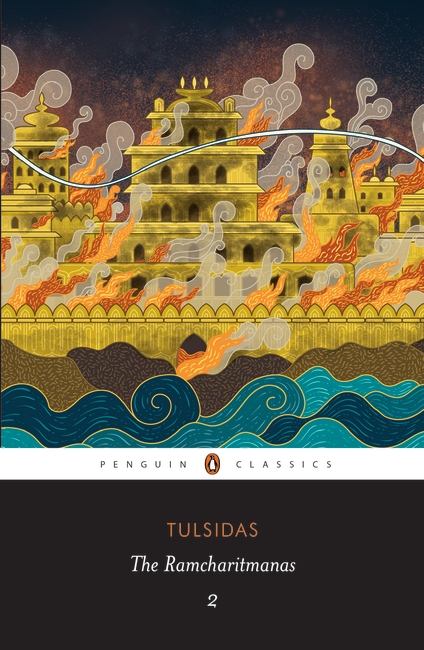
The most popular devotional text recounting the adventures of the Hindu god Ram
The Ramcharitmanas, composed by the poet-saint Tulsidas in the sixteenth century during a dynamic period of religious reform, was instrumental in making the story of Ram-and his divine feats against Ravan, the demon king of Lanka-widely accessible to the common people for the first time. Prior to that, this tale was exclusively the preserve of the priestly class who could read Valmiki’s Sanskrit epic, The Ramayana. By reimagining Valmiki’s text in the vernacular language, as a poem to be imbibed through recitation rather than reading, Tulsidas kindled a devotional revolution, forever changing the religious and social landscape of northern India.
Rohini Chowdhury’s exquisite translation brings Tulsidas’s magnum opus vividly to life, and her detailed introduction sheds crucial light on the poet and his work, placing them both in the wider context of Hindi literature.
The Minority Conundrum
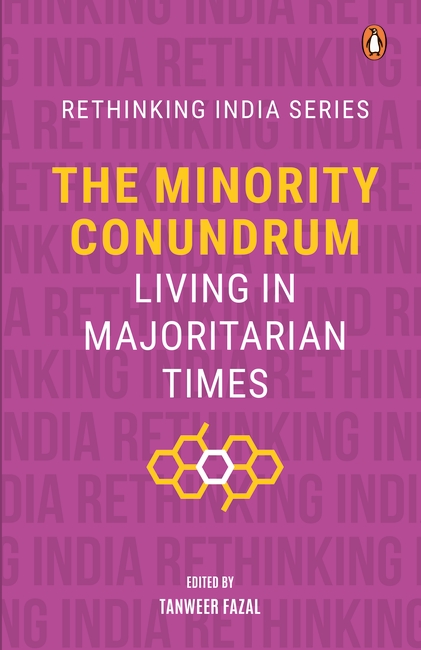
The second volume in the Rethinking India series explicates what it means to be a minority in majoritarian times. The contributors identify vulnerabilities that encumber the quest for the realization of substantive citizenship by minority groups. The essays deal with educational attainments, employment prospects in a liberalized economy, possibilities of equal opportunity, violence of the state and vigilante groups, emerging questions of citizenship and employment, linking language with the material life of its speakers, and the receding political voice of minorities amidst a majoritarian upswing.
Also examined is the concept of minority being inextricably bound with two allied ideas equally foundational to the vision of the Indian Republic: secularism and nationalism. The three together form a conceptual whole to the extent that none finds its manifestation without reference to the other two. The take-offs of the minority question in India include the archetypal nationalist’s disapproval of the very endurance of the subject post-Independence. The secular-modernists and the Hindutva nationalists converge in prescribing assimilation-one into a modernist project, the other into a national culture defined by Sanskritic Hinduism-while the pluralist vision, tolerant of divergent practices, follies in assuming cultures and religious observances as frozen. This, along with several allied issues, forms the heart of this thought-provoking volume.
Land Of The Seven Rivers-Pb
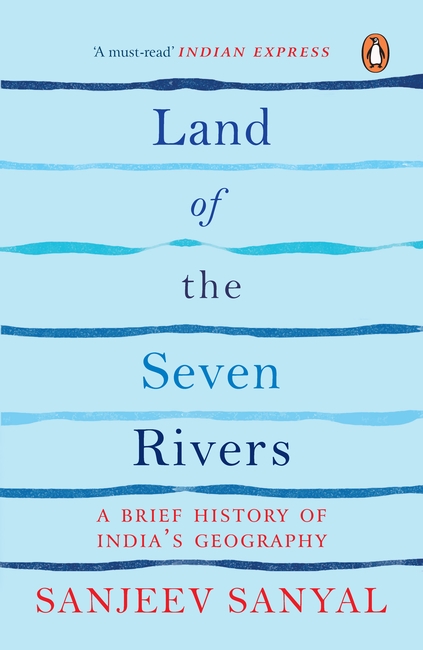
Did ancient India witness the Great Flood? Why did the Buddha give his first sermon at Sarnath? How did the Europeans map India?
Combining scholarship with sparkling wit, Sanjeev Sanyal sets out to explore how India’s history was shaped by its geography-answering questions you may have never thought to ask. Moving from geological and genetic origins to present-day Gurgaon, Land of the Seven Rivers is riveting, wry and full of surprises.
The Book Of Woman

Find your own potential
In this book, based on his discourses, Osho talks about woman not in his capacity as a man, but as a ‘consciousness, an awareness’.
Osho talks about various issues like motherhood, relationships, family and birth control. Questioning the concept of marriage, he says it is the ‘ugliest institution invented by man’ as its aim is to monopolize a woman. He is equally critical of the institution of family which ‘corrupts the human mind’. A woman, he says, should not imitate man: ‘Rejoice in your feminine qualities, make a poetry out of them.’ The perfect state of being, according to Osho, is a synthesis between the head and the heart, with the heart remaining the master. The rare sensitivity of Osho’s words will appeal to both men and women.
Sadhguru
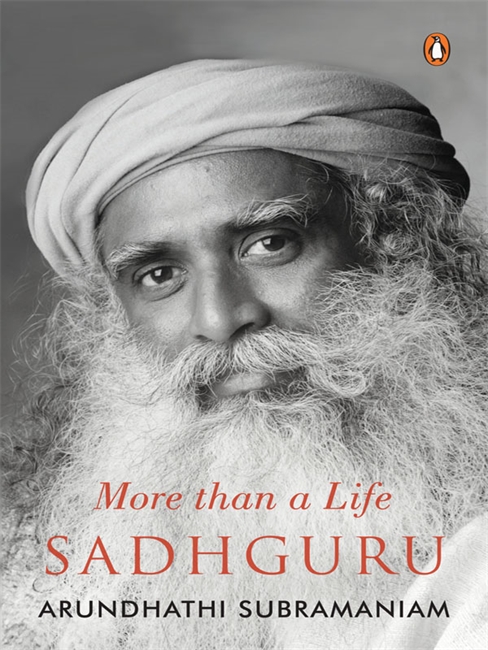
‘The thirst to be boundless is not created by you; it is just life longing for itself.’ —Sadhguru
This is the extraordinary story of Sadhguru—a young agnostic who turned yogi, a wild motorcyclist who turned mystic, a sceptic who turned spiritual guide. Pulsating with his razor-sharp intelligence, bracing wit and modern-day vocabulary, the book empowers you to explore your spiritual self and could well change your life.
It seeks to re-create the life journey of a man who combines rationality with mysticism, irreverence with compassion, ancient wisdom with a provocatively contemporary outlook and a deep knowledge of the self with a contagious love of life. Described as ‘a profound mystic, visionary humanitarian and prominent spiritual leader of our times’, he is equally at home in a satsangh in rural Tamil Nadu as at the PBI – World Economic Forum in Davos.
In his early years, Jaggi Vasudev (or Sadhguru as he is now known) was a chronic truant, a boisterous prankster, and later a lover of motorbikes and fast cars. It is evident that the same urgency, passion and vitality echo in his spiritual pursuits to this day, from his creation of the historic Dhyanalinga—the mission of three lifetimes—to his approach as a guru.
In Sadhguru’s view, faith and reason, spirituality and science, the sacred and the material, cannot be divided into easy binaries. He sees people as ‘spiritual beings dabbling with the material rather than the reverse’, and liberation as the fundamental longing in every form of life. Truth for him is a living experience instead of a destination, a conclusion, or a matter of metaphysical speculation. The possibility of self-realization, he strongly believes, is available to all.
Drawing upon extended conversations with Sadhguru, interviews with Isha colleagues and fellow meditators, poet Arundhathi Subramaniam presents an evocative portrait of a contemporary mystic and guru—a man who seems to pack the intensity and adventure of several lifetimes into a single one.
Flowers on the Path
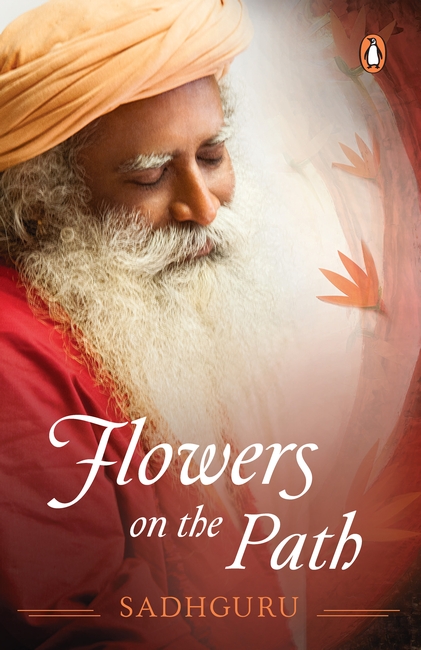
A pragmatic mind may deem flowers unworthy of notice-devoid as they are of the nourishment and utility of fruit, leaf, bark and root. Yet these fragile and ephemeral blooms dare to flaunt the wonders of Nature. From heady fragrance to miraculous colours and intricate design, it is this spirited extravagance which draws, touches and inspires us in remarkable ways.
A motley bouquet, the articles that comprise Flowers on the Path offer insights from Sadhguru that spark you with their incisive clarity, delight you with humour, or even render you in profound stillness within. Whether the subject covers social issues and worldly affairs, individual challenges, or dimensions of the beyond, Sadhguru’s ability to delve to the root and look at life in all its totality is evident.
As a flower can confound you with its brilliance and beauty, so too does each article hold the possibility to confuse you out of your conclusions, and pave the way towards true knowing.With a celebratory engagement with life on all levels, Sadhguru’s areas of active involvement encompass fields as diverse as architecture and visual design, poetry and painting, ecology and horticulture, sports and music. He is the designer of several unique buildings and consecrated spaces at the Isha Yoga Centre, which have received wide attention for their combination of intense sacred power with strikingly innovative eco-friendly aesthetics. Sadhguru is also the founder of Isha Foundation, a non-profit organization dedicated to the well-being of the individual and the world for the past three decades. Isha Foundation does not promote any particular ideology, religion, or race, but transmits inner sciences of universal appeal.