



War has spread from India’s borders to the forests in the very heart of the country. Here are four essays by Arundhati Roy including the heatedly debated ‘Walking with the Comrades’ that combines a clear-eyed, analytical overview with extraordinary reportage from the ground of the Maoist guerrilla zone and her most recent essay, ‘Capitalism: A Ghost Story’. Broken Republic examines the nature of progress and development in the emerging global superpower, and asks some fundamental questions about the real meaning of civilization itself.
Catagory: Sciences, technology & Medicine
Environmentalism
In this book Ramachandra Guha, an acclaimed historian of the environment, draws on many
years of research in three continents. He details the major trends, ideas, campaigns and
thinkers within the environmental movement worldwide. Among the thinkers he profiles are
John Muir, Mahatma Gandhi, Rachel Carson, and Octavia Hill; among the movements, the
Chipko Andolan and the German Greens. Environmentalism: A Global History documents
the flow of ideas across cultures, the ways in which the environmental movement in one
country has been invigorated or transformed by infusions from outside. It interprets the
different directions taken by different national traditions, and also explains why in certain
contexts (such as the former Socialist Bloc) the green movement is marked only by
its absence.
Massive in scope but pointed in analysis, written with passion and verve, this book
presents a comprehensive account of a significant social movement of our times,
and will be of wide interest both within and outside the academy. For this new edition,
the author has added a fresh prologue linking the book’s themes to ongoing
debates about the environmental impacts of global economic development.
The India Penguin Dictionary Of Alternative Medicine
The integration of alternative medicine with conventional medicine is revolutionizing healthcare across the world. This single volume dictionary features entries ranging from acupoint therapy and abdominal breathing to Iyengar Yoga.
Home Remedies Vol. 3
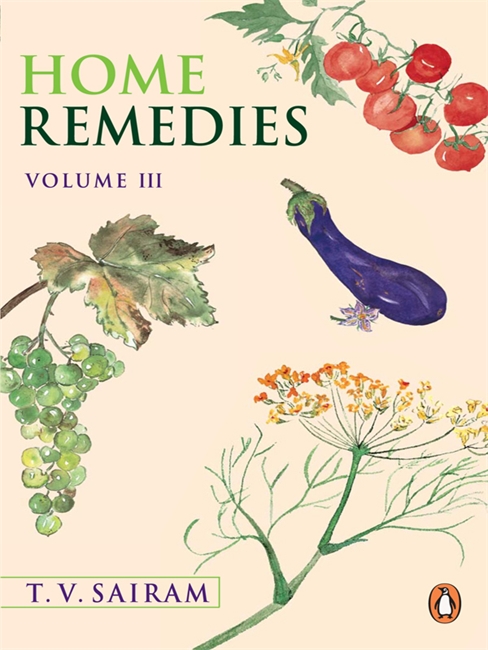
A comprehensive bibliography of scientific articles, separate glossaries of English and non-English technical terms, a multi-language index of plant names and detailed illustrations make this volume an illuminating rediscovery of herbs that have come into their own as purveyors of a health and happiness increasingly hard to come by.
Home Remedies Vol. 2
Masala Lab
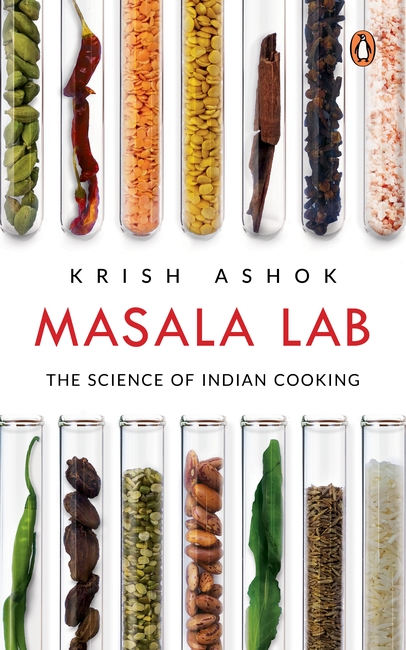
Ever wondered why your grandmother threw a teabag into the pressure cooker while boiling chickpeas, or why she measured using the knuckle of her index finger? Why does a counter-intuitive pinch of salt make your kheer more intensely flavourful? What is the Maillard reaction and what does it have to do with fenugreek? What does your high-school chemistry knowledge, or what you remember of it, have to do with perfectly browning your onions?
Masala Lab by Krish Ashok is a science nerd’s exploration of Indian cooking with the ultimate aim of making the reader a better cook and turning the kitchen into a joyful, creative playground for culinary experimentation. Just like memorizing an equation might have helped you pass an exam but not become a chemist, following a recipe without knowing its rationale can be a sub-optimal way of learning how to cook.
Exhaustively tested and researched, and with a curious and engaging approach to food, Krish Ashok puts together the one book the Indian kitchen definitely needs, proving along the way that your grandmother was right all along.
The Power Of Promise
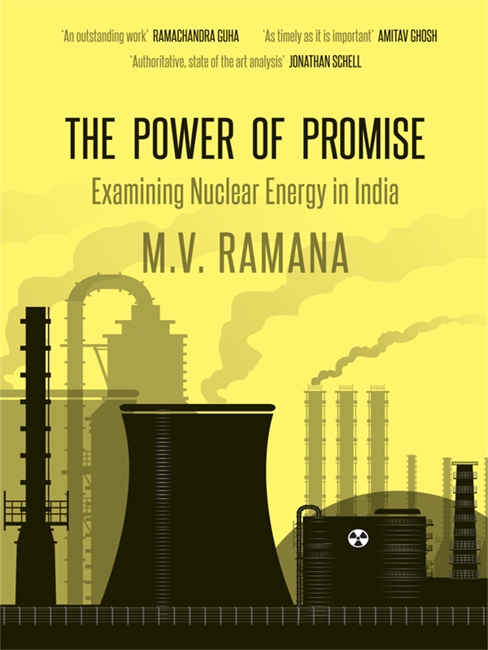
Nuclear power has been held out as possibly the most important source of energy for India. And the dream of a nuclear-powered India has been supported by huge financial budgets and high-level political commitment for over six decades. Nuclear power has also been presented as safe, environmentally benign and cheap.
Physicist and writer M.V. Ramana offers a detailed narrative of the evolution of India’s nuclear energy programme, examining different aspects of it and the claims of success made on its behalf. In The Power of Promise he makes a historically nuanced and compelling argument as to why the nuclear energy programme has failed in the past and why its future is dubious.
Ramana shows that nuclear power has been more expensive than conventional forms of electricity generation, that the ever-present risk of catastrophic accidents is heightened by observed organizational inadequacies at nuclear facilities, and that existing nuclear fuel cycle facilities have been correlated with impacts on public health and the environment. He offers detailed information and analysis that should serve to deepen the debate on whether India should indeed embark on a massive nuclear programme.
A Life in Science
A Bharat Ratna talks about his life in science in India
Dr C.N.R. Rao talks about his journey and what it takes to become a great scientist. With rare photos, the book covers his early years, his inspirations, the odds he had to overcome to pursue his dream and what it means to be a scientist in India.
The Scientific Edge
India has a rich history of scientific accomplishments. In the fifth century, nearly one millennium before Copernicus, the Indian astronomer and mathematician Aryabhata theorized that the earth spins on its axis. Likewise, in the twentieth century physicist Meghnad Saha’s ionization equation opened the door to stellar astrophysics.
But India’s scientific achievements have occurred as flashes of brilliance rather than as a clear trajectory of progress. So how did India, with its historic university system and
excellent observatories, lose its scientific edge?
Cosmologist, founder director of the Inter-University Centre for Astronomy and Astrophysics, and science fiction author Jayant V. Narlikar tracks the highs and lows of Indian
science across the millennia, distinguishing fact from fiction. Through a lively narrative of breakthroughs and failures, he explores the glories of India’s scientific advances and questions the more fanciful so-called discoveries. His essays are invigorated by his excitement for new findings, and he argues passionately for preserving the true scientific temperament instead of granting legitimacy to such pseudosciences as astrology.
Above all, Narlikar raises issues that both the layperson and the scientist need to consider as India seeks to lead the world in information technology and biotechnology.
Heart
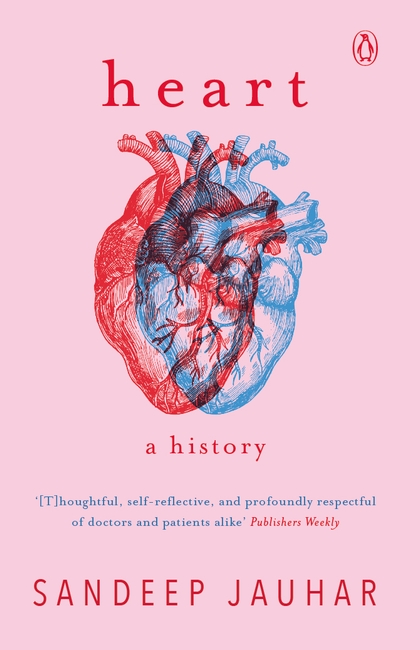
The spark of life, fount of emotion, house of the soul–the heart lies at the centre of every facet of our existence. It’s so bound up in our deepest feelings that it can physically change shape when we experience emotional trauma.
For centuries, the human heart seemed beyond our understanding: an inscrutable shuddering mass that was somehow the driver of emotion and the seat of the soul. As the cardiologist and bestselling author Sandeep Jauhar shows in Heart: A History, it was only recently that we demolished age-old taboos and devised the transformative procedures that have changed the way we live.
Deftly alternating between key historical episodes and his own work, combining his family’s own moving history of heart disease with gripping scenes from the operating theatre, Jauhar tells the colourful and little-known story of the doctors who risked their careers and the patients who risked their lives to know and heal our most vital organ. He introduces us to Daniel Hale Williams, the African American doctor who performed the world’s first open heart surgery in Gilded Age Chicago. We meet C. Walton Lillehei, who connected a patient’s circulatory system to a healthy donor’s, paving the way for the heart-lung machine. And we encounter Wilson Greatbatch, who saved millions by inventing the pacemaker?by accident. Jauhar deftly braids these tales of discovery, hubris, and sorrow with moving accounts of his family’s history of heart ailments and the patients he’s treated over many years. He also confronts the limits of medical technology, arguing that future progress will depend more on how we choose to live than on the devices we invent.
Affecting, engaging, and beautifully written, Heart: A History takes the full measure of the only organ that can move itself.