



Anil Ananthaswamy offers an intimate look at the latest neuroscience of schizophrenia, autism, Alzheimer’s disease, and Cotard’s syndrome among others to reveal the awesome power of the human sense of self. Extensive in-depth interviews venture into the lives of individuals who offer remarkable, sometimes heart-wrenching insights. One man cut off his own leg. Another became one with the universe. Where in the brain, or mind, or body is the self actually located? As Ananthaswamy elegantly reports, neuroscientists themselves now see that the elusive sense of self is both everywhere and nowhere in the brain. The Man Who Wasn’t There takes readers on an emotional, scientific, and intellectual journey, arriving at a new visceral understanding of something we have wondered about since humans existed.
Catagory: Sciences, technology & Medicine
Through two doors at once
Many great scientific minds have grappled with the ‘double slit’ experiment. Thomas Young devised it in the early 1800s to show that light behaves like a wave, and in doing so opposed Isaac Newton’s view that light is made of particles. But then Albert Einstein showed that light comes in quanta, or particles. Thus, quantum mechanics was born. This led to a fierce debate between Einstein and Niels Bohr over the nature of reality-subatomic bits of matter and its interaction with light-as revealed by the double slit experiment. Richard Feynman held that it embodies the central mystery of the quantum world. Decade after decade, hypothesis after hypothesis, scientists have returned to this ingenious experiment to help them answer deeper and deeper questions about the fabric of the universe.
How can a single particle behave both like a particle and a wave? Does a particle, or indeed reality, exist before we look at it, or does looking create reality, as the textbook ‘Copenhagen interpretation’ of quantum mechanics seems to suggest? How can particles influence each other faster than the speed of light? Is there a place where the quantum world ends and the familiar classical world of our daily lives begins, and if so, can we find it? And if there’s no such place, then does the universe split into two each time a particle goes through the double slit?
With his extraordinarily gifted eloquence, Anil Ananthaswamy travels around the world and through history, down to the smallest scales of physical reality we have fathomed. It is the most fantastic voyage you can take.
The Shape of the Beast
The Shape of the Beast is our world laid bare, with great courage, passion and eloquence, by a mind that has engaged unhesitatingly with its changing realities, often anticipating the way things have moved in the last decade. In the fourteen interviews collected here, conducted between January 2001 and March 2008, Arundhati Roy examines the nature of state and corporate power as it has emerged during this period, and the shape that resistance movements are taking. As she speaks, among other things, about people displaced by dams and industry, the genocide in Gujarat, Maoist rebels, the war in Kashmir and the global War on Terror, she raises fundamental questions about democracy, justice and non-violent protest. Unabashedly political, this is also a deeply personal collection. Through the conversations, Arundhati talks about the necessity of taking a stand, as also the dilemma of guarding the private space necessary for writing in a world that demands urgent, unequivocal intervention. And in the final interview, she discusses with uncommon candour her ambiguous feelings about success and both the pressures and the freedom that come with it.
Walking with the Comrades

‘The terse, typewritten note slipped under my door in a sealed envelope confirmed my appointment with “India’s single biggest internal security challenge”. I’d been waiting for months to hear from them…’ In early 2010, Arundhati Roy travelled into the forests of Central India, homeland to millions of indigenous people, dreamland to some of the world’s biggest mining corporations. The result is this powerful and unprecedented report from the heart of an unfolding revolution.
The Ocean of Churn
In this ambitious book, bestselling author Sanjeev Sanyal chronicles the grand sweep of history from East Africa to Australia, conjuring the great cities of Angkor and Vijayanagar, medieval Arab empires and Chinese ‘treasure fleets’ in rich, vivid detail. He explores remote archaeological sites, maritime trading networks and half-forgotten oral tales to challenge established historical narratives with fresh evidence. Shining new light on medieval geopolitics and long-lost cities, The Ocean of Churn is a mesmerizing journey into the heart of a vibrant civilization.
My Seditious Heart
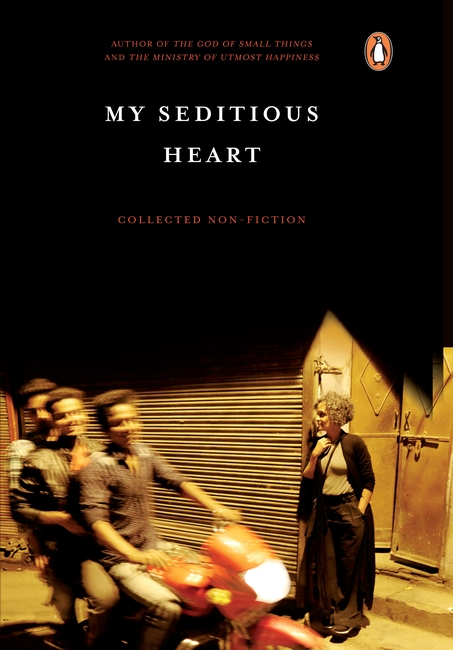
Twenty years, a thousand pages, and now a single beautiful edition of Arundhati Roy’s complete non-fiction.
My Seditious Heart collects the work of a two-decade period when Arundhati Roy devoted herself to the political essay as a way of opening up space for justice, rights and freedoms in an increasingly hostile environment. Taken together, these essays trace her twenty year journey from the Booker Prize-winning The God of Small Things to the extraordinary The Ministry of Utmost Happiness: a journey marked by compassion, clarity and courage. Radical and readable, they speak always in defence of the collective, of the individual and of the land, in the face of the destructive logic of financial, social, religious, military and governmental elites.
In constant conversation with the themes and settings of her novels, the essays form a near-unbroken memoir of Arundhati Roy’s journey as both a writer and a citizen, of both India and the world, from ‘The End of Imagination’, which begins this book, to ‘My Seditious Heart’, with which it ends.
The Great Derangement: From bestselling author and winner of the 2018 Jnanpith Award
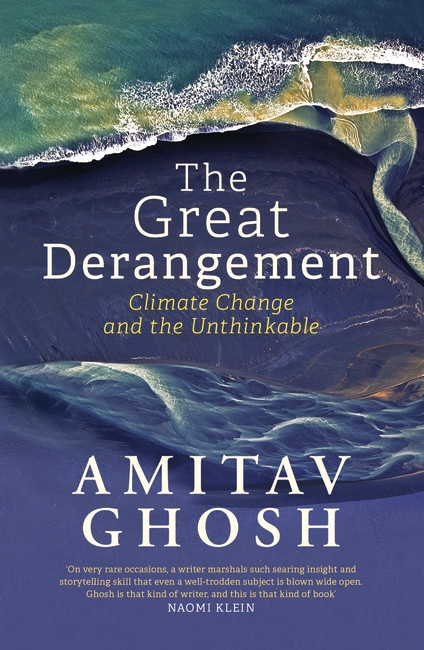
ARE WE DERANGED?
One of India’s greatest writers, Amitav Ghosh, argues that future generations may well think so. How else can we explain our imaginative failure in the face of global warming? In this groundbreaking return to non-fiction, Ghosh examines our inability-at the level of literature, history and politics-to grasp the scale and violence of climate change. The climate crisis asks us to imagine other forms of human existence-a task to which fiction, Ghosh argues, is the best suited of all forms. The Great Derangement serves as a brilliant writer’s summons to confront the most urgent task of our time.
‘An absorbing narrative on the subject, the impact of which is getting closer with each passing day’ HINDUSTAN TIMES
‘[A] broad-ranging and consistently stimulating indictment of our era . . . a bracing reminder that there is no more vital task for writers and artists than to clear the intellectual dead wood of a vulgarly boosterish age and create space for apocalyptic thinking-which may at least delay, if not avert, the catastrophes ahead’ GUARDIAN
Conflicts Of Interest
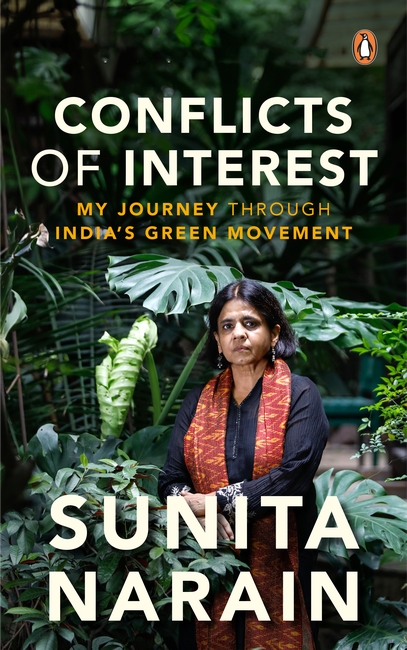
India’s foremost environmentalist, Sunita Narain, gives a personal account of her battles as part of the country’s green movement. While outlining the enormous environmental challenges that India faces today, Narain talks about how corporate lobbies and political interests often scuttle their effective resolution. She recounts some widely reported controversies triggered by research undertaken by her along with her team at the Centre for Science and Environment, such as a report on pesticides in colas, and a study on air pollution in Delhi, and includes a ringside view of global climate change negotiations. Conflicts of Interest also includes an ‘environmental manifesto’, a blueprint for the direction India must take if it is to deal with the exigencies of climate change and environmental degradation.
The Tell
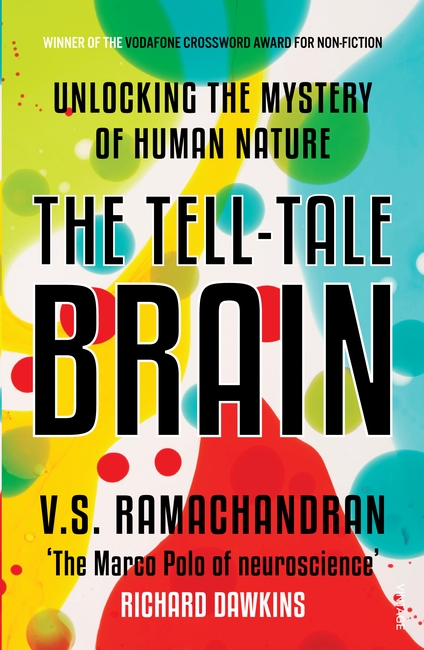
The brain remains a mystery to us. How can a three-pound mass of jelly that can fit in our palm imagine angels, contemplate the meaning of infinity, and even question its own place in the cosmos? Renowned neuroscientist Prof. V.S. Ramachandran takes us on a fascinating journey into the human brain by studying patients who exhibit bizarre symptoms and using them to understand the functions of a normal brain. Along the way he asks big questions: How did abstract thinking evolve? What is art? Why do we laugh? How are these hardwired into the neural mechanisms of the human brain, and why did they evolve? Brilliant, lucid, and utterly compelling, The Tell-Tale Brain is a path-breaking book from one of the leading neuroscientist
Indica
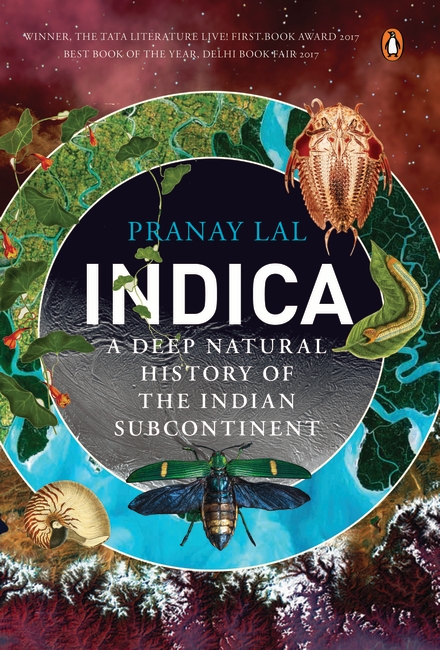
Did you know that the exquisite caves of Ellora were hewn from rock formed in the greatest lava floods the world has known-eruptions so enormous that they may well have obliterated dinosaurs? Or that Bengaluru owes its unique climate to a tectonic event that took place 88 million years ago? That the Ganga and Brahmaputra sequester nearly 20 per cent of global carbon, and their sediments over millions of years have etched submarine canyons in the Bay of Bengal that are larger than the Grand Canyon?Ever heard of Rajasaurus, an Indian dinosaur which was perhaps more ferocious than T rex? Many such amazing facts and discoveries-from 70-million-year-old crocodile eggs in Mumbai to the nesting ground of dinosaurs near Ahmedabad-are a part of Indica: A Deep Natural History of the Indian Subcontinent.
Researching across wide-ranging scientific disciplines and travelling with scientists all over the country, biochemist Pranay Lal has woven together the first compelling narrative of India’s deep natural history filled with fierce reptiles, fantastic dinosaurs, gargantuan mammals and amazing plants. This story, which includes a rare collection of images, illustrations and maps, starts at the very beginning-from the time when a galactic swirl of dust coalesced to become our life-giving planet-and ends with the arrival of our ancestors on the banks of the Indus. Pranay Lal tells this story with verve, lucidity and an infectious enthusiasm that comes from his deep, abiding love of nature.
Indica won the award for the best non-fiction debut award at the Tata Lit Fest in Mumbai in 2017, the best book award at the Delhi Book Fair 2017, and was named among the top 10 memorable books of the year by Amazon and The Hindu‘s non-fiction list of 2017