



Greening the Earth is a rare anthology that brings together global poetic responses to one of the major crises faced by humanity in our time: environmental degradation and the threat it poses to the very survival of the human species. Poets from across the world respond here in their diverse voices-of anger, despair, and empathy-to the present ecological damage prompted by human greed, pray for the re-greening of our little planet and celebrate a possible future where we live in harmony with every form of creation.
Catagory: Sciences, technology & Medicine
Lab Hopping
Embark on a one-of-a-kind journey through India’s science laboratories in pursuit of the true story behind the gender gap.
From Bhopal to Bhubaneswar, from Bangalore to Jammu, Aashima Dogra and Nandita Jayaraj engage in thought-provoking conversations with renowned scientists like Gagandeep Kang, Rohini Godbole, Kiran Mazumdar-Shaw and Prajval Shastri, as well as researchers at earlier stages of their scientific careers. These dialogues about the triumphs and challenges faced by women offer fresh perspectives on the gender gap that continues to haunt Indian science today.
Our labs are brimming with inspiring stories of women scientists persisting in science despite facing apathy, stereotypes, and sexism to systemic and organizational challenges. Stories that reveal both a broken system and the attempts by extraordinary women working to fix it. By questioning whether India is doing enough to support its women in science and if western models of science and feminism can truly be applied in India, the authors not only offer a comprehensive examination of the state of women in science but also offer a roadmap for the way forward.
India’s Vaccine Growth Story
THIS POTENT GROUP OF WEAPONS HAS NOTABLY ANNIHILATED SMALLPOX, PUSHED POLIO TO THE VERGE OF ELIMINATION AND IS NOW TAKING ON COVID-19
Indians practised inoculation centuries before the West discovered vaccines in 1796. India’s Vaccine Growth Story charts the journey of vaccines from the Jennerian era to the COVID-19 pandemic, covering multiple facets of vaccines from the Indian and global perspectives. Apart from discussing vaccine leadership, vaccine nationalism, vaccine hesitancy, eagerness and equity, as well as the latest diplomatic currency-the Vaccine Maitri- the book takes its readers through India’s exciting and meticulously planned project of executing the world’s largest vaccination drive.
The Scientific Sufi
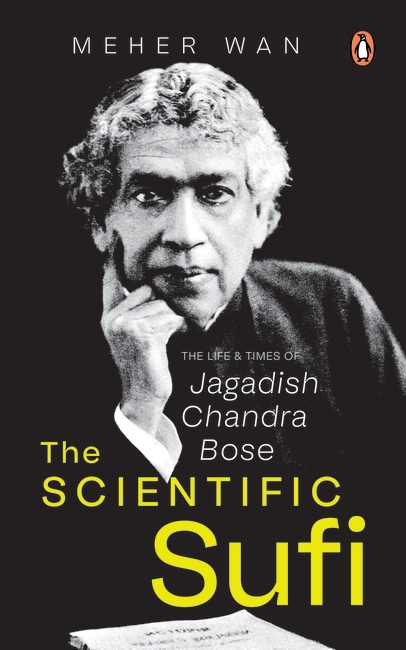
The Scientific Sufi is the most definitive English language biography of Sir Jagdish Chandra Bose, the father of modern science in India. In his time, he came close to, and many believe was robbed of, his due to winning at least two Nobel Prizes, if not one, for his work on wireless communication and the discovery of nervous system in plants. This biography carefully reconstructs his life, times, work, legacy, childhood, early years, influences and paint an intimate portrait of the father of modern science in India.
Dr. Cuterus
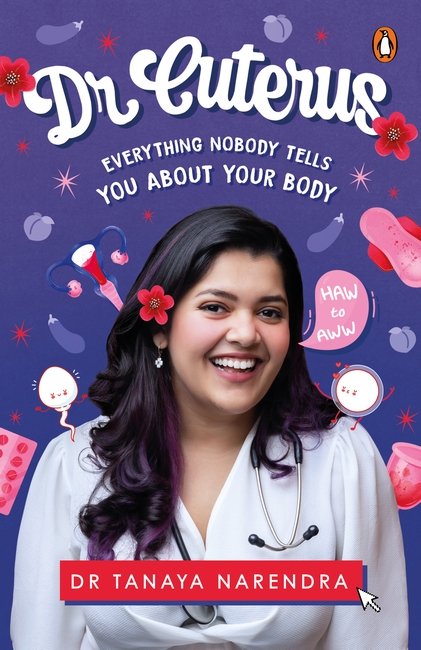
No matter what kind of bits you have, the ‘private’ bits between our legs often leave us with … many feelings and many questions.
Is it big enough? Is it too big? Why is it so dark? And hairy? How are babies made? Why do periods hurt? As John Mayer so beautifully sang, your body is a wonderland, but in the land of the Kama Sutra, we often forget this. Words like vagina, clitoris, penis, scrotum tend to confound and embarrass people.
Maybe even you, dear reader?
Even though everyone has a body, nobody wants to talk about it. Especially those ‘private’ bits. With so much shame and stigma, we have nowhere to go to learn and understand our bodies. Instead of a beautiful, technicolour musical, our relationship with our bodies remains a drab black and white production.
This is where this book comes in-a one-stop scientific, funny, and easy to understand guide to everything
you’ve always wondered about what’s ‘down there’.
Or even up there! Whatever your concern, Dr Cuterus has got you covered.
Penguin 35 Collectors Edition: I’ve Never been (Un)Happier
Screenwriter and fame-child Shaheen Bhatt has been a powerhouse of quiet restraint-until recently. In a sweeping act of courage, she now invites you into her head.
Shaheen was diagnosed with depression at eighteen, after five years of already living with it. In this emotionally arresting memoir, she reveals both the daily experiences and big picture of one of the most debilitating and critically misinterpreted mental illnesses in the twenty-first century. Shaheen takes us through the personal pendulum of understanding and living with depression in her privileged circumstances. With honesty and a profound self-awareness, Shaheen lays claim to her sadness, while locating it in the universal fabric of the human condition.
In this multi-dimensional, philosophical tell-all, Shaheen acknowledges, accepts and overcomes the peculiarities of living with depression. To anyone with mental health disorders, I’ve Never Been (Un)Happier stretches out its hand to gently provide solace and solidarity
Penguin 35 Collectors Edition: Being Mortal
Doctors are trained to keep their patients alive as long as possible. But they are never taught how to prepare people to die. And yet for many patients, particularly the old and terminally ill, death is a question of when, not if. Should the medical profession rethink its approach to them? And in what way? With aging populations and hospital costs rising globally, these questions have become increasingly relevant.
In his new book, Atul Gawande argues that an acceptance of mortality must lie at the center of the way we treat the dying. Using his experiences (and missteps) as a surgeon, comparing attitudes toward aging and death in the West and in India and drawing a powerful portrait of his father’s final years-a doctor who chose how he should go-Gawande has produced a work that is not only an extraordinary account of loss but one whose ideas are truly important.
Questioning, profound and deeply moving, Being Mortal is a masterpiece.
Heavens and Earth
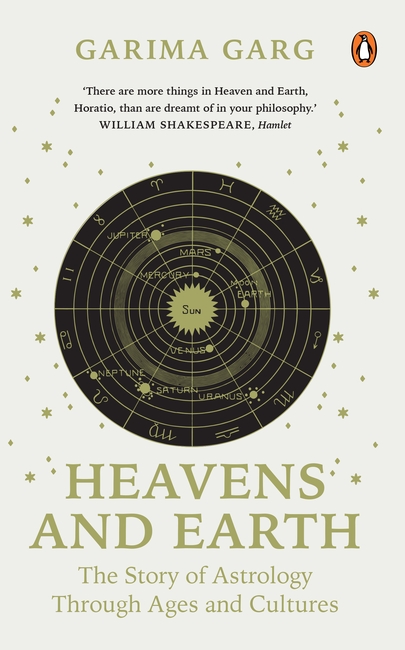
What will the future bring?
The ancient astrologer turned the impulse to answer this question into something meaningful by mapping the night skies and attempting to see in the movement of planets and stars an impact on human lives.
But did all astrologers see the same night sky? Did the observations of the Hindu astrologer match those of the Greek? How did the Egyptians and the Chinese understand the influence of the Sun and the Moon on our lives?
Over the centuries, as astrology developed and evolved, it also seeped into our philosophies, religions, literature and arts. And it grew and shape-shifted in step with the times. Whereas the ancient astrologer was as much seer as astronomer, the modern counterpart is a tech-savvy innovator.
Heavens and Earth examines the history of astrology, its many different systems and its development as a modern cultural phenomenon. Deeply researched and expertly narrated, the book contextualises the role of astrology in the ever-evolving human perspective of the cosmos and in understanding our place in it.
The Song of the Cell
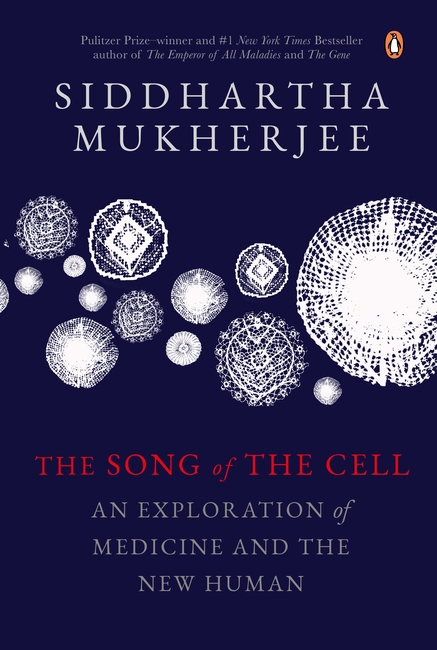
From Pulitzer Prize-winning and #1 New York Times bestselling author of The Emperor of All Maladies and The Gene, The Song of The Cell is the third book in this extraordinary writer’s exploration of what it means to be human-rich with Siddhartha Mukherjee’s revelatory and exhilarating stories of scientists, doctors, and all the patients whose lives may be saved by their work.
In the late 1600s, a distinguished English polymath, Robert Hooke, and an eccentric Dutch cloth merchant, Antonie van Leeuwenhoek, look down their handmade microscopes. What they see introduces a radical concept that sweeps through biology and medicine, touching virtually every aspect of the two sciences and altering both forever. It is the fact that complex living organisms are assemblages of tiny, self-contained, self-regulating units. Our organs, our physiology, our selves-hearts, blood, brains-are built from these compartments. Hooke christens them ‘cells’.
The discovery of cells-and the reframing of the human body as a cellular ecosystem-announced the birth of a new kind of medicine based on the therapeutic manipulations of cells. A hip fracture, a cardiac arrest, Alzheimer’s, dementia, AIDS, pneumonia, lung cancer, kidney failure, arthritis, COVID-all could be viewed as the results of cells, or systems of cells, functioning abnormally. And all could be perceived as loci of cellular therapies.
In The Song of the Cell, Mukherjee tells the story of how scientists discovered cells, began to understand them, and are now using that knowledge to create new humans. He seduces readers with writing so vivid, lucid, and suspenseful that complex science becomes thrilling. Told in six parts, laced with Mukherjee’s own experience as a researcher, doctor, and prolific reader,
Techproof Me
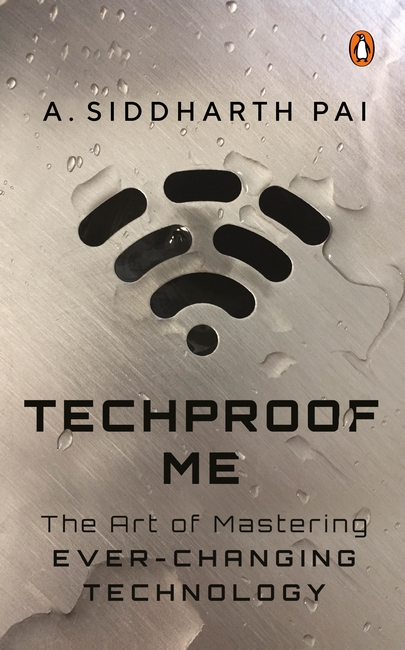
Today, we depend on technology for fulfilling almost all our needs. One thing that can be easily predicted about technology is that it is dynamic and the speed of change is intense. This book is about the new roles we need to play in our technology-oriented world. Discussing themes such as AI, machine learning and the Internet
of Things, among others, the book prepares readers for massive technology-led disruption. It provides
them with information and observations on a variety of technology-related subjects so that they can pivot
on a space as small as a coin when they need to. This book is the ultimate guide that can help readers remain relevant in the fast-changing world of technology.