



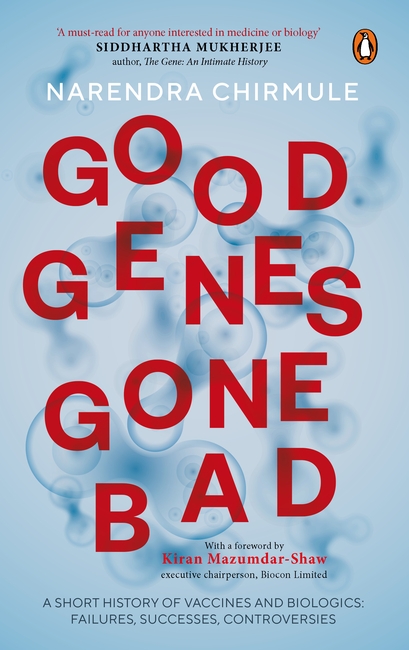
The field of biotechnology has evolved over the past four decades, developing medicines which are curing diseases. But this journey of success has been tough and arduous, built upon the shoulders of major failures.
Good Genes Gone Bad highlights seven such colossal failures in drug development-all of which culminated in the development of novel drugs-weaving together various analogies through the stories and thus allowing the reader to understand complex biological phenomena. These stories include treatment of medical conditions such as genetic clotting disorder (haemophilia), childhood-diarrhoea (rotavirus vaccine), preventing HIV infection, activation of the immune systems to treat cancer, gene therapy for treatment of diseases caused by gene-defects/mutations, cell therapy for treatment of leukaemias, and finally the success of Biocon’s approval of the first biologic drug for breast cancer.
Written by the former R&D head of Biocon, India’s largest pharmaceutical company, Good Genes Gone Bad is a fascinating look at the complex world of medicine and drug development, providing the readers with a sense of magnitude of challenges and the extent of difficulty that it takes to make novel medicines.
Catagory: Sciences, technology & Medicine
The Home Stretch
In their twilight years, people increasingly rely on friends and family to get through the day. In Indian homes, it is not unusual to see adult children sandwiched between parenting and caregiving obligations, with both young children and elderly parents in the house.
The Home Stretch is an empathetic, handy guide that seeks to simplify caregiving and equip readers with the tools
and guidance required to build a safer, happier and more comfortable life for the elders around them. From tips on
maintaining their health and independence to taking care of the bedridden, the book covers a wide range of topics
to meet the progressively complicated needs associated with caring for ageing loved ones.
A product of the author’s years of caregiving experience and interactions with countless doctors, counsellors, senior
citizens and other family caregivers, this book has the ability to transform how we look at ageing and the aged.
Invisible Empire
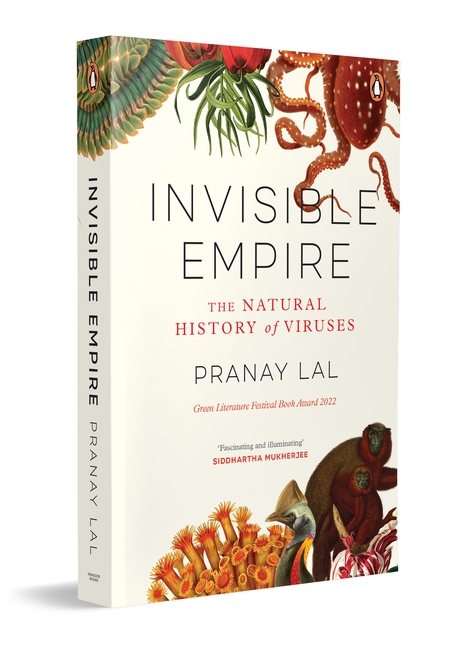
Viruses are the world’s most abundant life form, and now, when humanity is in the midst of a close encounter with their immense power, perhaps the most feared. But do we understand viruses? Possibly the most enigmatic of living things, they are sometimes not considered a life form at all. Everything about them is extreme, including the reactions they evoke. However, for every truism about viruses, the opposite is also often true. So complex and diverse is the world of viruses that it merits being labelled an empire unto itself. And whether we see them as alive or dead, as life-threatening or life-affirming, there is an ineluctable beauty, even a certain elegance, in the way viruses go about their lives-or so Pranay Lal tells us in Invisible Empire: The Natural History of Viruses.
This is a book that defies categorisation. It brings together science, history and great storytelling to paint a fascinating picture of viruses as a major actor, not just in human civilisation but also in the human body. With rare photographs, paintings, illustrations and anecdotes, it is a magnificent and an extremely relevant book for our times, when we are attempting to understand viruses and examining their role in the lives of humans.
The Nutmeg’s Curse
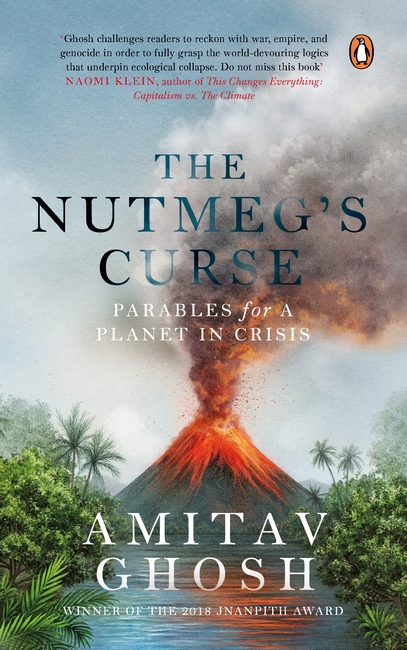
Before the 18th century, every single nutmeg in the world originated around a group of small volcanic islands east of Java, known as the Banda Islands. As the nutmeg made its way across the known world, they became immensely valuable – in 16th century Europe, just a handful could buy a house. It was not long before European traders became conquerors, and the indigenous Bandanese communities – and the islands themselves – would pay a high price for access to this precious commodity. Yet the bloody fate of the Banda Islands forewarns of a threat to our present day.
Amitav Ghosh argues that the nutmeg’s violent trajectory from its native islands is revealing of a wider colonial mindset which justifies the exploitation of human life and the natural environment, and which dominates geopolitics to this day.
Written against the backdrop of the pandemic and the Black Lives Matter protests, and interweaving discussions on everything from climate change, the migrant crisis, and the animist spirituality of indigenous communities around the world, The Nutmeg’s Curse offers a sharp critique of Western society, and reveals the profoundly remarkable ways in which human history is shaped by non-human forces.
Back to the Roots
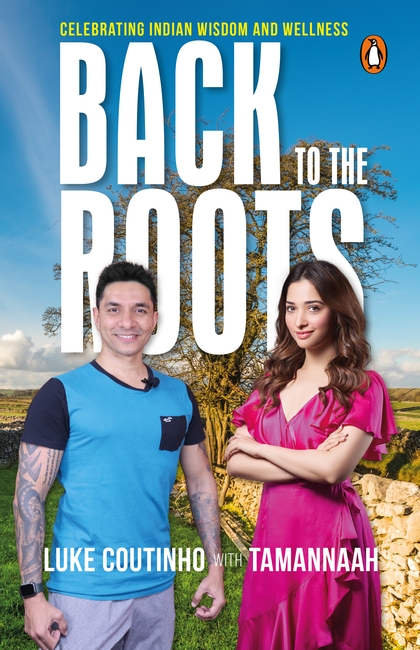
What are the benefits of the Indian squat? Why do Indians touch the feet of their elders? These and many such ancient rituals and tradition are a part of our growing up, and in the absence of modern scientific certification, it is convenient to dub them as myths. But observation and deductive reasoning have proved to be the bedrock of these age-old and time-tested practices.
In Back to the Roots, Luke Coutinho and Tamannaah offer the rationale behind over 100 such practices that go a long way in promoting long-term wellness. Learn about traditional Indian recipes, superfoods and tips that provide solutions to a host of ailments like constipation, acidity and even fever. Join us on this valuable journey to resurrect our ancient knowledge and learn how inexpensive it is to invest in our lifestyles, improve our health, prevent diseases, improve longevity and the quality of our lives.
My Family
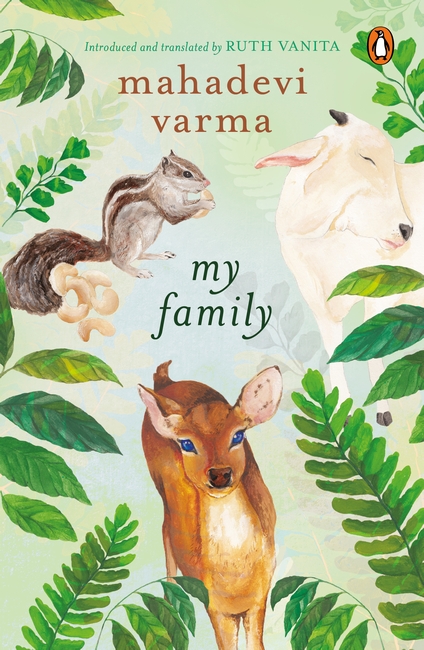
A classic of unmatched lyrical beauty by the ‘modern Mira’
For Mahadevi Varma, her animal companions were her chosen family. This family comes alive in Mahadevi’s lyrical prose, depicting the animals’ relationships with her, each other, and the human inhabitants of her home and her school. Rescued peacocks, squirrels, dogs, rabbits, and deer romp through these pages, each an unforgettable individual of many moods. Charming hand-drawn illustrations complement the delightful writing. Together, these portraits reveal an urban modernity permeated by nature.
In this first-ever translation of a little-known classic, Ruth Vanita brilliantly captures Mahadevi’s empathetic imagination, sparkling wit, and intense observation of detail. In her introduction, Vanita illuminates Mahadevi’s feminist and literary legacy, her powerful indictment of human cruelty, and how her prose sprang from the fount of her feelings for animals.
FROM THE BOOK
‘As [Neelkanth the peacock] stepped forward and backward, left and right, he would pause at some invisible point where rhythms meet . . . I cannot say how Neelkanth came to know that I liked his dancing very much, but one day, as soon as I approached the aviary, he suddenly descended from his swing and, spreading out the circular rainbow umbrella of his feathers, he stood in a dance pose.’
* * *
‘Animals recognize humans’ unpretentious affection but not high and low social status. I absorbed this truth from Sona [the doe] by osmosis. What had Sona to do with the grave and solemn Guru-ji [Mahadevi] of the girl students? . . . If Sona felt it necessary to jump over my head to express her affection, she would do so. It was impossible for her to be impressed by my status or circumstances.’
Right Between the Ears

Right Between the Ears reveals the secrets that allow brands to open up hidden domains in our minds through powerful psychological triggers. The power of cognitive brands is not accidental; it is architected by applying recent scientific advances in fields as disparate as psychology, behavioural economics, social anthropology and cognitive neuroscience. These consilient techniques now allow us to peer into the soul of a brand as never before.
Marketers have created truly phenomenal brands in the past. However, until now, our understanding of brain science was not quite enough to explain why some brand campaigns become so iconic while others fizzle. This book provides a new lens with which we can deconstruct those successes and failures. It takes the reader on a rollicking ride through examples and stories of brands as timeless as De Beers, Mastercard, Allstate and Guinness, as well as modern-day wonders like Madison Reed, Allbirds and Warby Parker.
The book is called Right between the Ears because that is where the brain is. Psychologists sometimes say that everything about sex happens not where you think but right between your ears. Everything about brands, too, happens there. This book reveals all you need to know to build your own epic brands.
To the Bravest Person I Know
To the Bravest Person I Know is a book on poems that help us deal with difficult challenges we face in life. It explores mental health situations/issues like depression, anxiety, and other insecurities to help overcome them.
“Through her work, she hopes readers understand that they are not alone in their struggles and it is not difficult to navigate life on your own terms.” – The Hindu
From growing up with dysfunctional families to coming of age, from dealing with heartbreak, pain and grief to learning to accept and forgive, To, the Bravest Person I Know is your guide through every difficult situation. It is modern therapy delivered to you through a series of poems and a letter in verse that runs as a footnote from the beginning to the end of the book.
The poems explore the whole construct of ‘normal’, of that which was created to make people feel less normal if they don’t fit in, to make them feel ‘abnormal’. The book tells us that depression is normal, as is fear; feeling insecure is normal, as is hurting people. And bravery is about facing all of this-it’s about facing everything life
throws at you every day.
To, the Bravest Person I Know cuts through rainbows and self-righteous dross to provide a vaccine of truth, liberating and reminding us that we are all in a tunnel, and that it’s normal to feel like we may never get out. But there is light at the end of it.
COVID-19

In early 2020, our lives were upended by a new virus that caused the most severe pandemic in over a century. In the span of a few weeks, even visiting a grocery store became a task in risk assessment. Cities and countries across the world closed their borders for their own citizens, as well as foreigners. Newspapers carried alarming accounts of rapidly rising numbers of COVID-positive cases, patients dying and migrant labourers desperately trying to reach home. One was struck every single day with the realization that the pandemic was not just a biological phenomenon, but also a social one.
Where did this virus, first called the novel coronavirus and later SARS coronavirus-2, come from? Did we see it coming? If so, why weren’t we better prepared for it? How lethal is it really? How can we protect ourselves from it? How will the pandemic end? What will life be like once it is over?
In this meticulously researched book, Anirban Mahapatra demystifies the virus and offers us a historical perspective. He charts the scientific progress made in understanding how the virus infects us and how we fight back, and also looks at the social tensions it has uncovered. In doing so, he offers us a clarity that enables us not only to understand the virus but also live with it.
Making Excellence A Habit

One of the few practising doctors in India who contributed to research, education and charity in such a large measure, the book documents the fundamentals of what makes a person achieve meaningful success. While hard work, passion and focus emerge as winning lessons, delicate and tender learnings from Dr Mohan’s life, such as empathy or spirituality, are not forgotten.
Written in Dr Mohan’s sagacious and affable voice, and peppered with examples of his bold and unusual ideas such as planning a diabetes expo or conducting a country-wide diabetes study, this book is a behind-the-scenes account of a person honoured internationally for delivering path-breaking care to hundreds of thousands of people with diabetes.