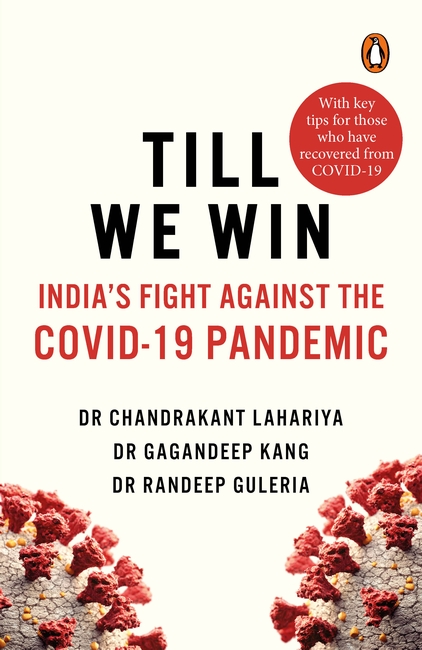
When will India win the fight against the COVID-19 pandemic?
How long do we have to use masks?
When can we expect a safe and effective vaccine? Do we need to wear masks even after we get a vaccine?
What if there is no definitive treatment against COVID-19?
How can we protect our family form this disease?
How should we respond to this ‘new normal’ as an individual and as a community?
What is the way forward?
Offering insights on how India continues to fight the pandemic, Till We Win is a must-read for everyone. It is a book for the people, for political leaders, policymakers and physicians, with the promise and potential to transform public health in India.

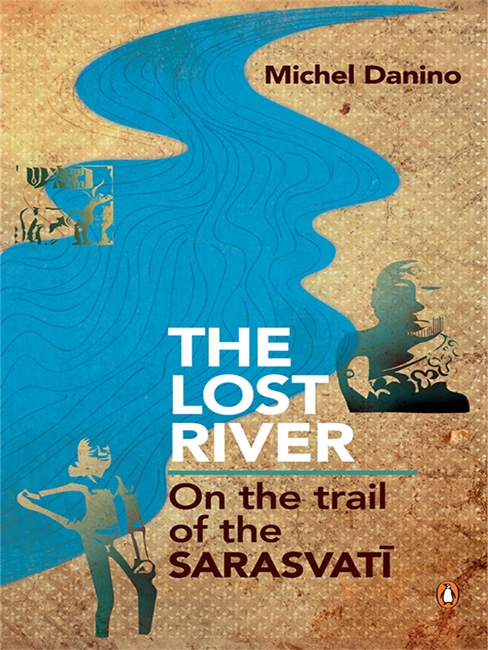
The Indian subcontinent was the scene of dramatic upheavals a few thousand years ago. The Northwest region entered an arid phase, and erosion coupled with tectonic events played havoc with river courses. One of them disappeared. Celebrated as -Sarasvati’ in the Rig Veda and the Mahabharata, this river was rediscovered in the early nineteenth century through topographic explorations by British officials. Recently, geological and climatological studies have probed its evolution and disappearance, while satellite imagery has traced the river’s buried courses and isotope analyses have dated ancient waters still stored under the Thar Desert. In the same Northwest, the subcontinent’s first urban society”the Indus civilization”flourished and declined. But it was not watered by the Indus alone: since Aurel Stein’s expedition in the 1940s, hundreds of Harappan sites have been identified in the now dry Sarasvati’s basin. The rich Harappan legacy in technologies, arts and culture sowed the seeds of Indian civilization as we know it now. Drawing from recent research in a wide range of disciplines, this book discusses differing viewpoints and proposes a harmonious synthesis”a fascinating tale of exploration that brings to life the vital role the -lost river of the Indian desert’ played before its waters gurgled to a stop.

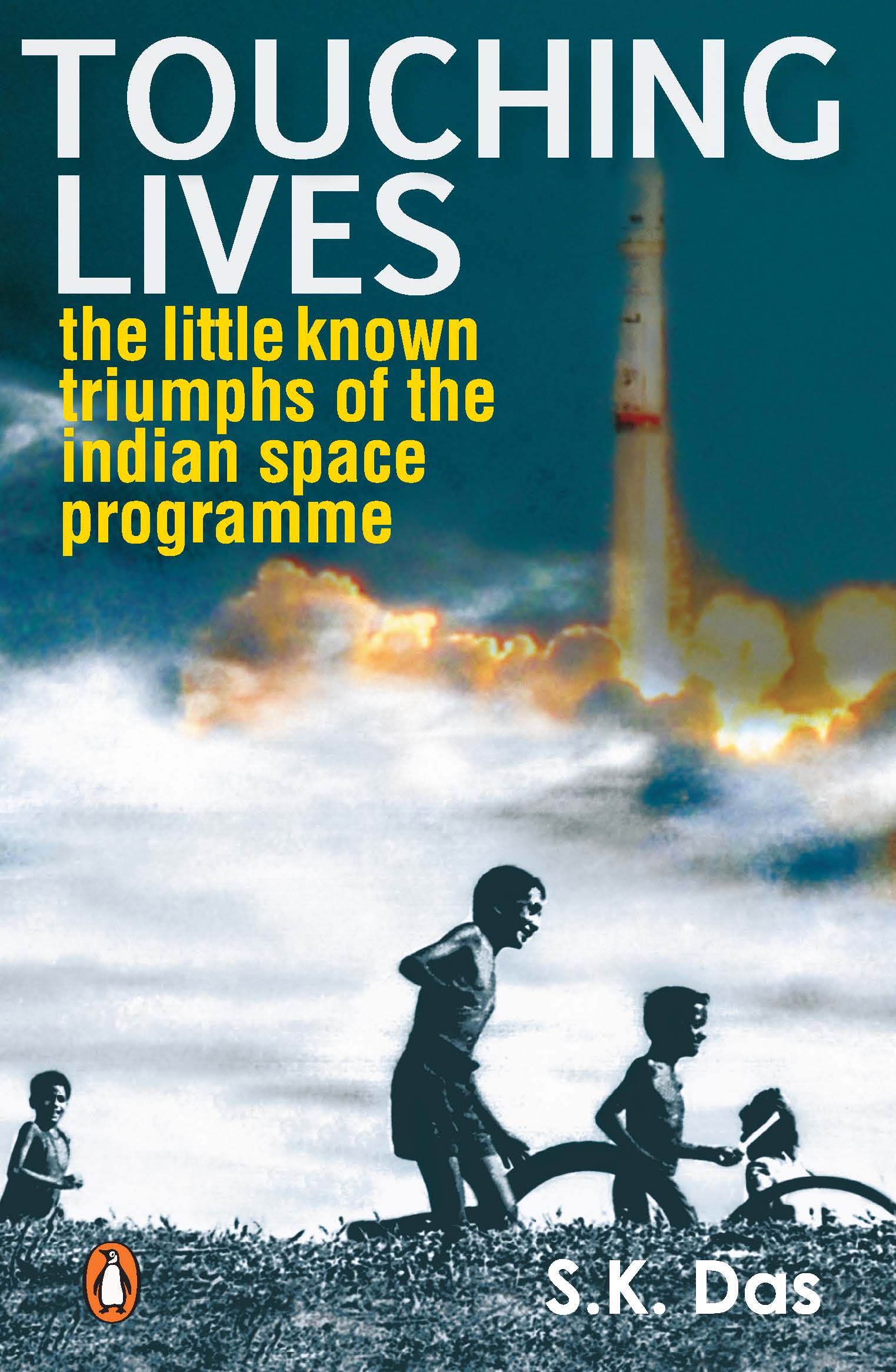
Touching Lives is is the story of journeys to far corners of India meeting people whose lives have been transformed by technology. It is the account of people who have forged a different destiny for themselves, breaking the cycle of poverty and helplessness, with a little help from ISRO. Throwing light on some of the million tiny revolutions sweeping the country, the book takes us from Jhabua to interior Karnataka, from the Sundarbans to Chamoli in Garhwal. It is our chance to meet everyday
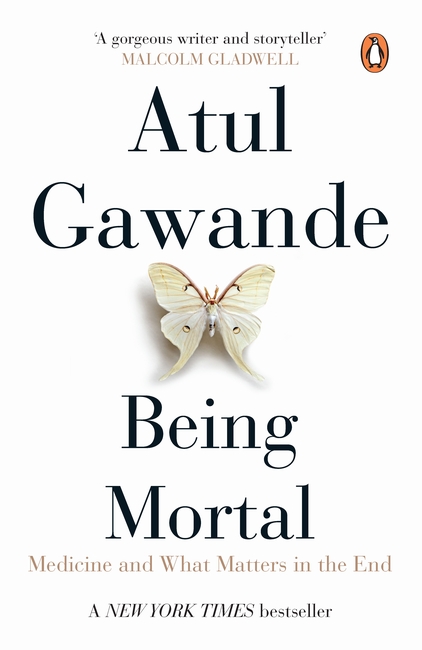
Doctors are trained to keep their patients alive as long as possible. But they are never taught how to prepare people to die. And yet for many patients, particularly the old and terminally ill, death is a question of when, not if. Should the medical profession rethink its approach to them? And in what way? With aging populations and hospital costs rising globally, these questions have become increasingly relevant.
In his new book, Atul Gawande argues that an acceptance of mortality must lie at the center of the way we treat the dying. Using his experiences (and missteps) as a surgeon, comparing attitudes toward aging and death in the West and in India and drawing a powerful portrait of his father’s final years-a doctor who chose how he should go-Gawande has produced a work that is not only an extraordinary account of loss but one whose ideas are truly important.
Questioning, profound and deeply moving, Being Mortal is a masterpiece.

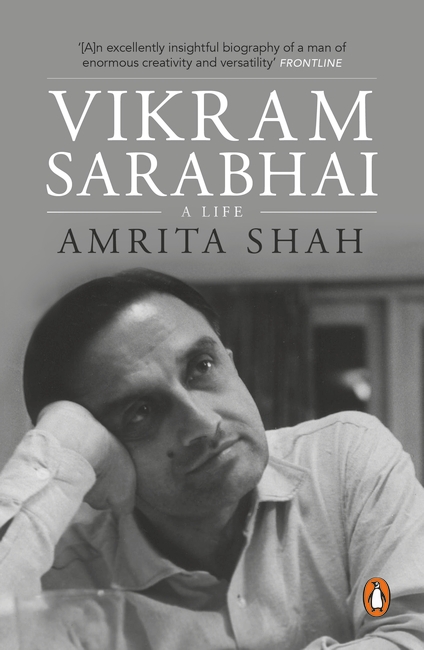
Vikram Sarabhai (1919-71), the renaissance man of Indian science, visualized the impossible and often made it happen. Founder of India’s space programme, Vikram dreamed of communication satellites that would educate people at a time when even a modest rocket programme seemed daring; of huge agricultural complexes serviced by atomic power and desalinated sea water. He envisioned research technology that would free Indian industry from foreign dependence, and of a world-class management college that would train managers for the public sector.
Vikram Sarabhai: A Life is the story of this dynamic visionary. Born into an immensely wealthy and politically conscious business family, Vikram had an early understanding of the power of money and the problems of a newly independent nation, to which he married a deep love for physics. Between 1947 and 1971, he built a thriving pharmaceutical business, conducted research into cosmic rays, set up India’s first textile research cooperative, ATIRA, the first market research organization, ORG, the Indian Institute of Management in Ahmedabad and the dance academy Darpana. He also headed the Atomic Energy Commission and laid the foundations for the world’s first entirely peaceful space programme.
Good-looking, charismatic, married to the glamorous classical dancer Mrinalini, and closely associated with the most influential figures of his time-C.V. Raman, Jawaharlal Nehru, Indira Gandhi, Homi Bhabha, Bruno Rossi, Louis Kahn and John Rockefeller III-Vikram seemed to have led a charmed existence. Yet, his personal life was troubled and his strong resistance to India’s move towards a nuclear explosion in the late 1960s put him at odds with powerful lobbies and fellow technologists.
Amrita Shah delves into the life and mind of this fascinating, complex individual. This is a vivid and intimate portrait of a multifaceted genius who died young, but whose vision still drives India’s ambitious space programme and inspires Indians in all walks of life.

Spanning the globe and several centuries, The Gene is the story of the quest to decipher the master-code that makes and defines humans, that governs our form and function.
The story of the gene begins in an obscure Augustinian abbey in Moravia in 1856, where a monk stumbles on the idea of a ‘unit of heredity’. It intersects with Darwin’s theory of evolution, and collides with the horrors of Nazi eugenics in the 1940s. The gene transforms post-war biology. It reorganizes our understanding of sexuality, temperament, choice and free will. Above all, this is a story driven by human ingenuity and obsessive minds-from Charles Darwin and Gregor Mendel to Francis Crick, James Watson and Rosalind Franklin, and the thousands of scientists still working to understand the code of codes.
This is an epic, moving history of a scientific idea being brought to life, by the author of The Emperor of All Maladies. But woven through The Gene, like a red line, is also an intimate history-the story of Mukherjee’s own family and its recurring pattern of mental illness, reminding us that genetics is vitally relevant to everyday lives. These concerns reverberate even more urgently today as we learn to ‘read’ and ‘write’ the human genome-unleashing the potential to change the fates and identities of our children.
Majestic in its ambition, and unflinching in its honesty, The Gene gives us a definitive account of the fundamental unit of heredity-and a vision of both humanity’s past and future.

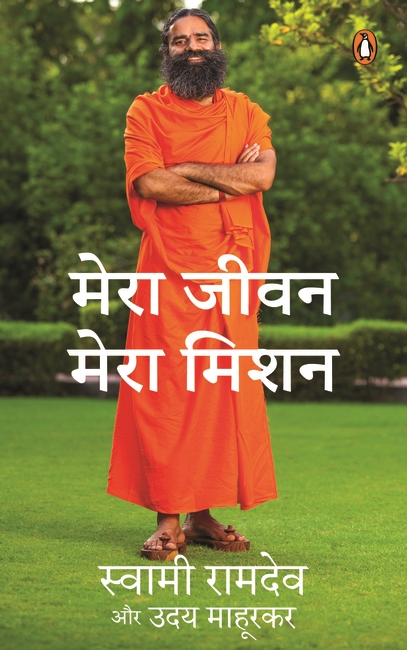
Swami Ramdev is a household name in India. But do you know where he was born?
Why did he take sanyas and get into spirituality?
What is his vision for India?
Fearless, driven and with a penchant for being outspoken, Swami Ramdev-for the first time-addresses the major controversies, turning points and achievements of his life. An autobiographical account, the book is written with senior journalist Uday Mahurkar and captures the seer’s journey from a small village in Haryana to the international stage. As we uncover the trials, tribulations and triumphs of his life, we realize that there is more to the ascetic than often meets the eye. The book provides insights into his childhood, his passion for yoga and good health, his friends and foes, and the Swadeshi campaign he has spearheaded. In 2006, the globally popular yoga teacher known for his work in Ayurveda, health and social issues, founded the Patanjali Group of Institutions that is now a major FMCG company with a turnover of about Rs 12,000 crores.
Engaging, revealing and inspiring, the book shows how determination, passion and tenacity can transform the ordinary into the extraordinary.

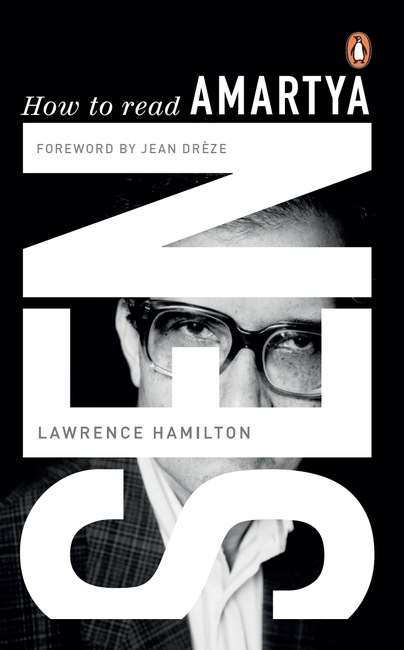
Nobel Laureate Amartya Sen is one of the world’s best-known voices for the poor and the downtrodden, and an inspiration for the proponents of justice across the globe. He has contributed almost without peer to the study of economics, philosophy and politics, transforming social choice theory, development economics, ethics, political philosophy and Indian political economy, to list but a few.
This book offers a much-needed introduction to Amartya Sen’s extraordinary variety of ideas. Lawrence Hamilton provides an excellent, accessible guide to the full range of Sen’s writings, contextualizing his ideas and summarizing the associated debates. In elegant prose, Hamilton reconstructs Sen’s critiques of the major philosophies of his time, assesses his now famous concern for capabilities as an alternative for thinking about poverty, inequality, gender discrimination, development, democracy and justice, and unearths some overlooked gems. Throughout, these major theoretical and philosophical achievements are subjected to rigorous scrutiny.
How to Read Amartya Sen is a major work on one of the most influential economists and philosophers of the last few centuries. It will be illuminating for readers keen to understand the breadth of Sen’s vision, and an invaluable resource for scholars, policy makers and global activists.

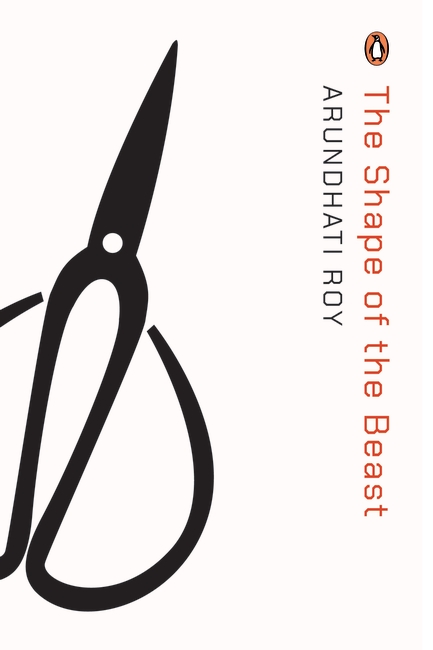
The Shape of the Beast is our world laid bare by a mind that has consistently and unhesitatingly engaged with its changing realities and often anticipated the way things have moved in the last decade.
In the fourteen interviews collected here, conducted between January 2001 and March 2008, Arundhati Roy examines the nature of state and corporate power as it has emerged during this period, and the shape that resistance movements are taking. As she speaks about people displaced by dams and industry, the genocide in Gujarat, Maoist rebels, the war in Kashmir and the global War on Terror, she raises fundamental questions about democracy, justice and non-violent protest.
Unabashedly political, this is also a deeply personal collection that talks about the necessity of taking a stand and about the dilemma of guarding the private space necessary for writing in a world that demands urgent, unequivocal intervention.

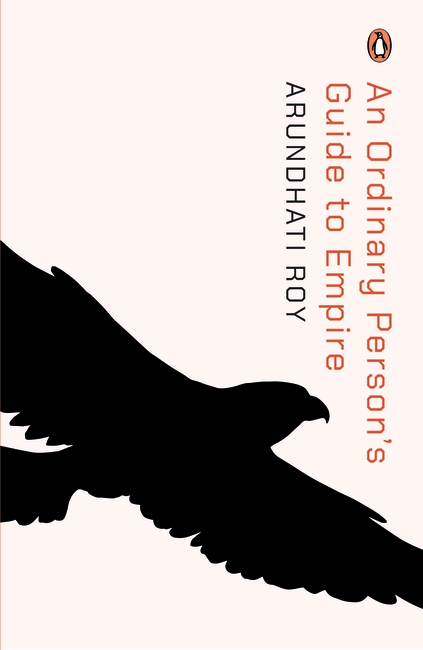
This second volume of Arundhati Roy’s collected non-fiction writing brings together fourteen essays written between June 2002 and November 2004. In these essays she draws the thread of empire through seemingly unconnected arenas, uncovering the links between America’s War on Terror, the growing threat of corporate power, the response of nation states to resistance movements, the role of NGOs, caste and communal politics in India, and the perverse machinery of an increasingly corporatized mass media. Meticulously researched and carefully argued, this is a necessary work for our times.