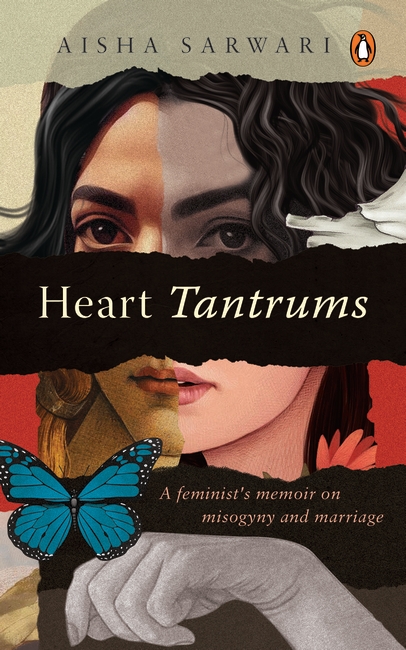
In order to be able to survive, Aisha Sarwari was told, love and devoted acts of service will always light the way. These however, become the very reason of her complete unravelling.
In this large and messy voice of a memoir, Heart Tantrums artfully describes the scatter of catastrophic losses-the loss of her father in early adolescence; leaving behind her family home in East Africa; and trying to fit into a completely different culture in Lahore after marriage. In 2017, when Aisha first held her husband Yasser Latif Hamdani’s brain MRI against the light, she began to also lose the man she loved to a personality-altering brain tumour.
Oscillating between being a good woman and a bad woman, Aisha has been adamant that the hard knocks of life would not define her. But even self-respect comes at a high price. The internal life of mental health chaos is like the very disease itself-degenerative. The book rejects the idea that love and domestic servitude saves the day.
Pakistan, she never thought, could become like living in a state of self-exile for the couple that married for country-Aisha Sarwari, a proud Pakistani feminist and career professional, and Yasser Latif Hamdani, a human rights lawyer turned internationally acclaimed biographer of Pakistan’s founding father, M.A. Jinnah. Often, they both failed to play for the team, but their fight for belonging was sometimes punctuated by the warmth of parenting and the joy of extraordinary friendships.
This book is a prayer on a page, with this immigrant girl finding her way in the dark through a raw and magnificently well-told story of grief, hybrid identity, immigration woes, systemic family oppression, caregiver fatigue and, of course, what every good literature tries hard to hack-the terror of oblivion.
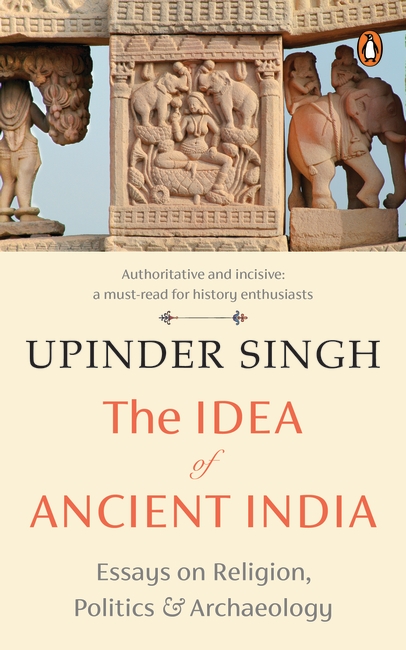
How can the complexities of ancient India be comprehended?
This book draws on a vast array of texts, inscriptions, archaeology, archival sources and art to delve into themes such as the history of regions and religions, archaeologists and the modern histories of ancient sites, the interface between political ideas and practice, violence and resistance, and the interactions between the Indian subcontinent and the wider world. It highlights recent approaches and challenges in reconstructing South Asia’s early history, and in doing so, brings out the exciting complexities of ancient India.
Authoritative and incisive, this revised Penguin edition-with two new chapters-is essential reading for students and scholars of ancient Indian history and for all those interested in India’s past.

THE NEW YORK TIMES BESTSELLER AND SUNDAY TIMES, OBSERVER AND BBC HISTORY BOOK OF THE YEAR
FINALIST FOR THE ORWELL PRIZE FOR POLITICAL WRITING 2022
‘Pacey and potentially revolutionary’ Sunday Times
‘Iconoclastic and irreverent … an exhilarating read’ The Guardian
For generations, our remote ancestors have been cast as primitive and childlike – either free and equal, or thuggish and warlike. Civilization, we are told, could be achieved only by sacrificing those original freedoms or, alternatively, by taming our baser instincts. David Graeber and David Wengrow show how such theories first emerged in the eighteenth century as a reaction to indigenous critiques of European society, and why they are wrong. In doing so, they overturn our view of human history, including the origins of farming, property, cities, democracy, slavery and civilization itself.
Drawing on path-breaking research in archaeology and anthropology, the authors show how history becomes a far more interesting place once we begin to see what’s really there. If humans did not spend 95 per cent of their evolutionary past in tiny bands of hunter-gatherers, what were they doing all that time? If agriculture, and cities, did not mean a plunge into hierarchy and domination, then what kinds of social and economic organization did they lead to? The answers are often unexpected, and suggest that the course of history may be less set in stone, and more full of playful possibilities than we tend to assume.
The Dawn of Everything fundamentally transforms our understanding of the human past and offers a path toward imagining new forms of freedom, new ways of organizing society. This is a monumental book of formidable intellectual range, animated by curiosity, moral vision and faith in the power of direct action.
‘This is not a book. This is an intellectual feast’ Nassim Nicholas Taleb
‘The most profound and exciting book I’ve read in thirty years’ Robin D. G. Kelley

‘Interesting and provocative… It gives you a sense of how briefly we’ve been on this Earth’ Barack Obama
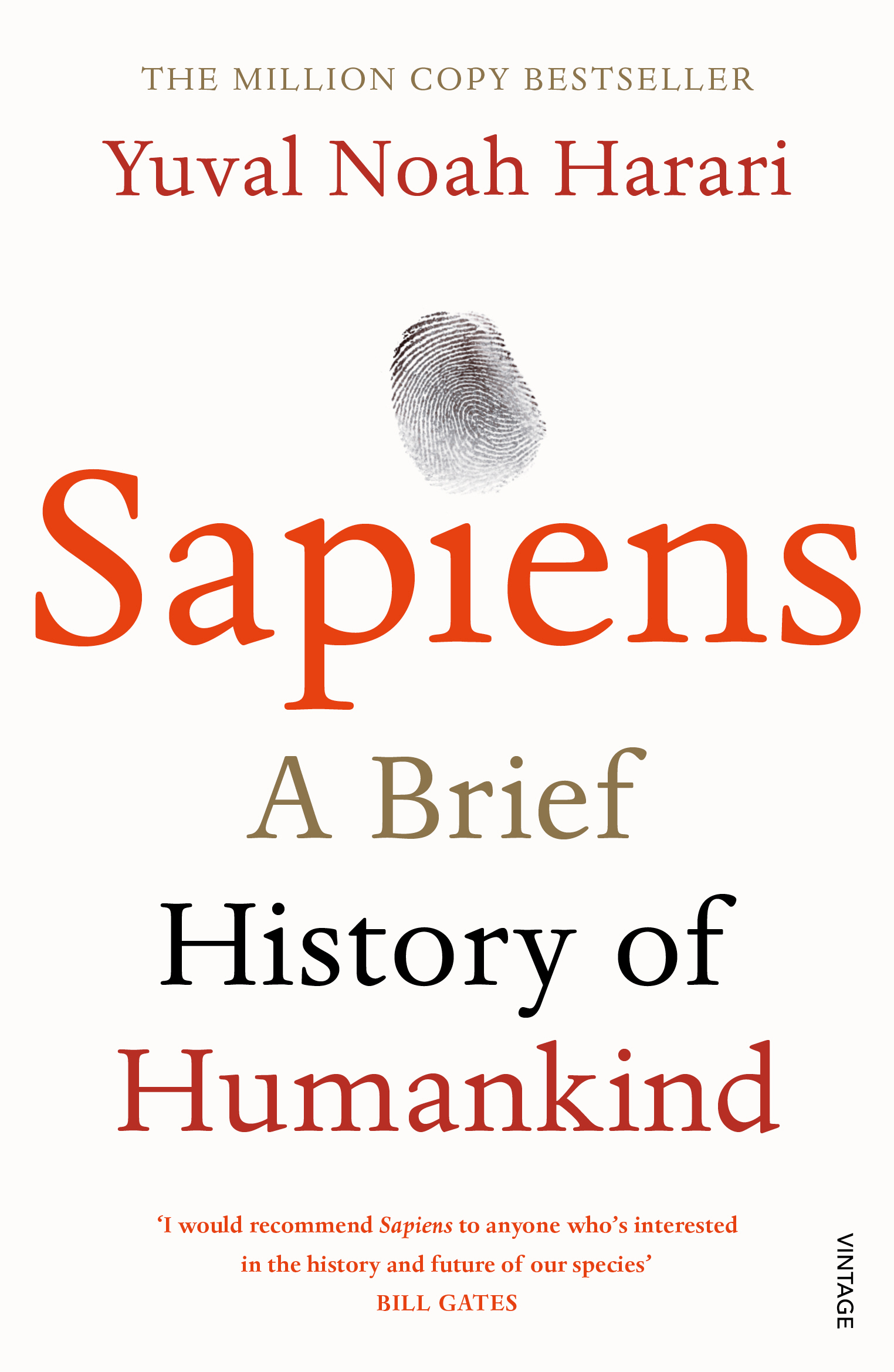
What makes us brilliant? What makes us deadly? What makes us Sapiens?
One of the world’s preeminent historians and thinkers, Yuval Noah Harari challenges everything we know about being human.
Earth is 4.5 billion years old. In just a fraction of that time, one species among countless others has conquered it: us.
In this bold and provocative book, Yuval Noah Harari explores who we are, how we got here and where we’re going.
**ONE OF THE GUARDIAN’S 100 BEST BOOKS OF THE 21st CENTURY**
PRAISE FOR SAPIENS:
‘Jaw-dropping from the first word to the last… It may be the best book I’ve ever read’ Chris Evans
‘Startling… It changes the way you look at the world’ Simon Mayo
‘I would recommend Sapiens to anyone who’s interested in the history and future of our species’ Bill Gates
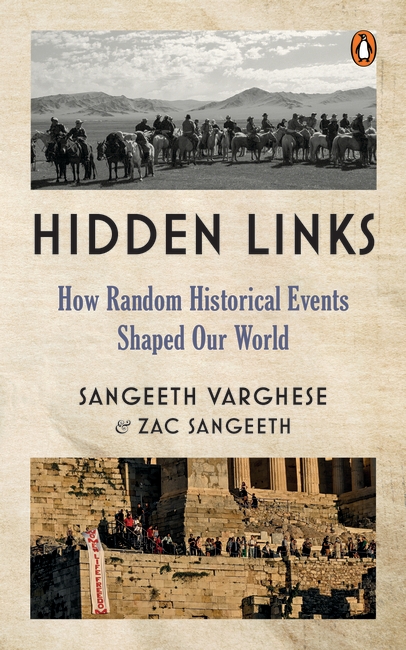
Will climate change wipe out and reset our world, as it did in 1700 BCE?
How are the Rajputs of India related to the Kims of Korea?
What startling parallels unveiled in China during the Mahabharata war?
How was misogyny injected into our DNAs by a band of nomads?
Uncover shocking secrets – as history meets suspense – in this mind bending book that will make you doubt everything from the past you thought you knew.
Unravelling thread by thread, this book investigates the disproportional effect of historically unconnected and random events like climate changes, imperial pursuits, pandemics, and nomadic migrations on our modern lives in the most unbelievable ways.

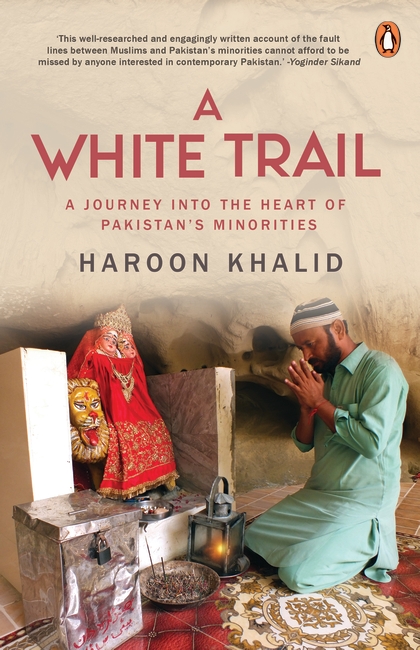
A travelogue and an ethnographic study that builds upon hundreds of oral testimonies, A White Trail tells the stories of the complex lived-realities of religious minorities in Pakistan-stories of their triumphs, insecurities, aspirations, marginalization and resilience. The book tells the tale of a group of young Hindu boys who came together to revive their festivals after decades of hidden celebrations. It narrates the story of the Sikh community in Nankana and how it began carving out an identity in a Muslim-dominated city. And it explores how the Christian community expresses its religious identity in a local, South-Asian flavour.
A White Trail is a journey through the different festivals of the five religious minorities of Pakistan, narrating the lives of the different communities in their own words. It reveals what it means to celebrate religious festivals under the shadow of rising intolerance, structural persecution and increased cases of religious violence.

‘A model work of historical scholarship’-Ramachandra Guha
‘The most well-researched, comprehensive history of contemporary Assam ever written’-Partha Chatterjee
The crucial battles of World War II fought in India’s north-east-followed soon after by Independence and Partition-had a critical impact on the making of modern Assam. In the three decades following 1947, the state of Assam underwent massive political turmoil, geographical instability, and social and demographic upheaval, among others. Later, the truncated state suffered widespread unrest as various groups believed their cultural identity and political leverage were under threat. New social energies and political forces were unleashed and came to the fore.
Definitive, comprehensive and unputdownable, The Quest for Modern Assam explores the interconnected layers of political, environmental, economic and cultural processes that shaped the development of Assam since the 1940s. It offers an authoritative account that sets new standards in the writing of regional political history. Not to be missed by any one keen on Assam, India, Asia or world history in the twentieth century.

The Penguin Book of Modern Tibetan Essays is a groundbreaking anthology of modern Tibetan non-fiction. This unprecedented collection celebrates the art of the modern Tibetan essay and comprises some of the best Tibetan writers working today in Tibetan, English and Chinese.
There are essays on lost friends, stolen inheritances, prison notes and secret journeys from-and to-Tibet, but there are also essays on food, the Dalai Lama’s Gar dancer, love letters, lotteries and the Prince of Tibet. The collection offers a profound commentary not just on the Tibetan nation and Tibetan exile, but also on the romance, comedy and tragedy of modern Tibetan life.
For this anthology, editor and translator Tenzin Dickie has commissioned and collected 28 essays from 22 Tibetan writers, including Woeser, Jamyang Norbu, Tsering Wangmo Dhompa, Pema Bhum and Lhashamgyal.
This book of personal essays by Tibetan writers is a landmark addition to contemporary Tibetan letters as well as a significant contribution to global literature.
Also available in a paperback edition outside the Indian subcontinent. To order online, visit https://www.amazon.com/Penguin-Book-Modern-Tibetan-Essays/dp/0143462326/ref=tmm_pap_swatch_0?_encoding=UTF8&qid=1685626767&sr=8-2

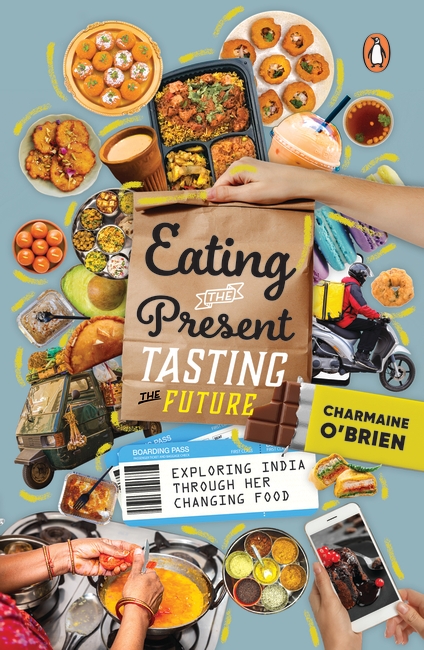
India’s food is one of her most remarkable features: its countless tastes and styles reflect the nation’s history, enduring traditions, and diversity of people and place.
But it is changing at a rapid rate beyond anyone’s imagination.
Eating the Present, Tasting the Future ventures ‘off the plate’ to journey through India’s contemporary foodscape to discover the myriad forces transforming what, how and where Indians are producing, trading and eating their food. At a time when food and our relationship with it are topics of increasing global interest, this is a timely, and important, work, offering unique insight into a complex society.
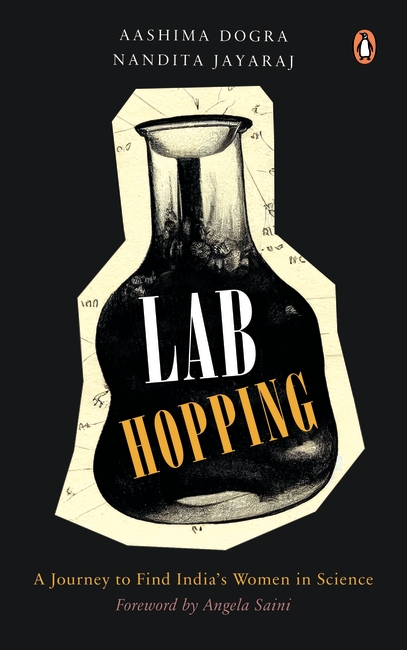
Embark on a one-of-a-kind journey through India’s science laboratories in pursuit of the true story behind the gender gap.
From Bhopal to Bhubaneswar, from Bangalore to Jammu, Aashima Dogra and Nandita Jayaraj engage in thought-provoking conversations with renowned scientists like Gagandeep Kang, Rohini Godbole, Kiran Mazumdar-Shaw and Prajval Shastri, as well as researchers at earlier stages of their scientific careers. These dialogues about the triumphs and challenges faced by women offer fresh perspectives on the gender gap that continues to haunt Indian science today.
Our labs are brimming with inspiring stories of women scientists persisting in science despite facing apathy, stereotypes, and sexism to systemic and organizational challenges. Stories that reveal both a broken system and the attempts by extraordinary women working to fix it. By questioning whether India is doing enough to support its women in science and if western models of science and feminism can truly be applied in India, the authors not only offer a comprehensive examination of the state of women in science but also offer a roadmap for the way forward.