Publish with Us

Follow Penguin

Follow Penguinsters

Follow Penguin Swadesh

The Penguin History of Early India

BY THE WINNER OF THE KLUGE PRIZE FOR LIFETIME ACHIEVEMENT 2008

A definitive account and ready reference of ancient Indian history

The Penguin History of Early India–a complete rewrite of Romila Thapar’s A History of India (Vol. 1)–brings to life thousands of years of India’s precolonial history: its prehistoric beginnings; the great cities of the Indus civilization; the emergence of mighty dynasties such as the Mauryas, Guptas and Cholas; the teachings of the Buddha; the creation of the Mahabharata and the Ramayana; and the evolution of regional cultures.

In exploring subjects as diverse as marriage, class, art, erotica and astronomy, Thapar provides an incomparably vivid and nuanced picture of India, creating a rich mosaic of diverse kingdoms, landscapes, languages and beliefs. As she explains how the interpretations of early Indian history have changed in the last half-century, Thapar offers fresh readings and raises new questions.

Sita

The vibration of the sacred sound of her beloved’s name, ‘Ram’, filled her mind as it emanated from the tiny Vanara. ‘His being is filled with Rama,’ she pondered, ‘but does he know me?’

Sita, the beloved princess of Mithila, is one of the most revered women in Indian history; so well known, yet probably the least understood. At every crossroad of her life, she chose acceptance and grace over self-pity. Her life was filled with sacrifice yet wherever she was, there was abundance. It was as if she was carved out of an intense longing for Rama, yet she had infinite patience. In every situation she reflected his light and he reflected her love.

In her, we find someone who is so divine yet so human.

In this poignant narration, Bhanumathi shows us the world through the eyes of Sita. We think what Sita thinks, we feel what she feels, and for these few special moments, we become a part of her. And perhaps, through this perspective, and Sita’s immortal story, we will discover the true strength of a woman.

A Thousand Cuts

KERALA SAHITYA AKADEMI AWARD WINNER

A Thousand Cuts is a harrowing, sobering and ultimately inspiring autobiography of Professor T.J. Joseph, who in 2010 became the victim of a brutal terrorist assault, accused of blasphemy after setting an exam question that enraged fundamentalists. This book is an important reminder of the pernicious effect of religious extremism and the duty of every person to speak out against those who would silence free expression’ SHASHI THAROOR

‘There is excruciating agony here, but also black humour and irony that enliven and lighten the narrative even at the height of anguish’ K. SATCHIDANANDAN

‘The poignant tale, with its sense of urgency and helplessness, has been sensitively translated as A Thousand CutsRANA SAFVI

A chilling account of religious extremism

In 2010, T.J. Joseph, a professor of Malayalam at Newman College, Kerala, framed an innocuous question for an internal examination that changed his life forever. Following a trumped-up charge of blasphemy, members of a radical Islamist organization set upon him in public, viciously maiming him and chopping off his right hand. His memoir, told with amazing restraint and wry humour, is the moving tale of his life and family as they went through hell and beyond. Here’s the extraordinary story of a man who survived dismembering only to be betrayed by his
own Church. Let alone stand by him, it robbed him of his livelihood and isolated him from his community, driving Joseph’s long-suffering wife to melancholia and eventual suicide. Joseph’s story is one of fortitude, will power, forgiveness and compassion, told with rare wit that will make readers chuckle through their tears.
This is a tale that will leave the reader seething, weeping and smiling by turns.

The Origin Story of India’s States

DO YOU KNOW THE STORY OF YOUR STATE?
You were born in an Indian state.
You went to school in an Indian state.
You live and work in an Indian state.
You, like every other Indian, call at least one state home.
Your state is a big part of your identity.
And yet, do you know the story of how your state was created?

The Origin Story of India’s States is a fascinating and illuminative account of the genesis of India’s states. It presents the incredible origin stories of each of India’s twenty-eight states and eight union territories, spanning from Independence until today.
The state that wasn’t even a part of India until 1975; the union territory that had a prime minister for a single day; the state that has not one or two but three capitals; and the union territory that has beaches on both coasts-this book looks into such unique aspects of Indian history and adds to our understanding of how our nation has been built.

Whose Samosa is it Anyway?

In this book, accompany Sonal Ved on a journey of taste through the various timelines across the Indian subcontinent. We go from the banks of the Indus in 1900 bc to the great kingdoms of the north many centuries later; from the time of the Mauryans to when the Mughal Sultanate reigned supreme. Meet the Europeans merchants desperate to trade in Indian treasures, be it the deep-blue indigo or the pricey pepper. On this trip discover answers to such questions as What are the origins of chutney or of the fruit punch, and how are they connected to India? Who taught us how to make ladi pav and kebabs, and how did the Burmese khow suey land up on the wedding menus of Marwaris? The author takes us through the food history and traditions from the mountains in Kashmir to the backwaters of Kanyakumari; from the ports of the Bay of Bengal to the shores of the Arabian Sea, where traders and travellers arrived from the world over. And, finally, we find out whose samosa it truly is . . .

Burning Bright

The true story of the ‘Iron Lady of Manipur’ who fasted for 16 years against AFSPA

Ten innocent people were mowed down by security forces in Malom, a village near Imphal, in November 2000. The perpetrators were not punished, protected under the Armed Forces Special Powers Act which empowers military and para-military personnel to arrest, shoot, even kill, anyone on the grounds of mere suspicion. In response to this tragedy–one among many such atrocities–Irom Sharmila, a young Manipuri, began an indefinite hunger strike. The government arrested her and force-fed her through nasal tubes. She was released and re-arrested innumerable times, but she stood by her demand. In July 2016, Irom brought her sixteen years of hunger strike to an end, and decided to contest the elections.

Burning Bright is a hard-hitting account of a people caught between the crossfire of militants and security forces; of a once-sovereign kingdom whose culture has been brutally violated; of the many voices of dissent-from underground groups to the Meira Paibis, a women’s movement opposed to all forms of violence whether by the state or insurgents and a moving portrait of ‘the Iron Lady of Manipur’.

What Millennials Want

India is one of the youngest countries in the world and the generation of millennials make up for over 400 million people. This is the largest generation of people in the world.

That means that the choices and trajectory of this generation have pivotal consequences on local, regional, and global politics and economics. So the important question is: What do Indian millennials want? What are their economic aspirations and their social views? Most importantly, what makes them tick?

It’s 2021 and more than 84% of them reported having an arranged marriage, and 65% listed a government job as their top priority. So are millennials really any different from previous generations?

In What Millennials Want, Vivan Marwaha documents the aspirations and anxieties of these young people scattered across more than 30,000 kilometers in 13 Indian states. Combining an expansive dataset along with personal anecdotes, he narrates an intimate biography of India’s millennials, investigating their attitudes towards sex, marriage, employment, religion, and politics.

How to Win Friends and Influence People (PREMIUM PAPERBACK, PENGUIN INDIA)

Command attention, charm your superiors, and win people over wherever you go. How to Win Friends and Influence People has helped thousands of readers gain self-confidence and unlock life-changing opportunities-and now, it’s your turn.

Master the fine art of communication, express your most important ideas, and create genuine impact with the help of international bestselling author Dale Carnegie. Written in his trademark conversational style, this book illustrates time-tested techniques through engaging anecdotes and events from the lives of legendary orators, historical figures, and successful leaders.

This book will help you:

– Become a great conversationalist, leaving a good impression wherever you go.

– Persuade people to do what you want, unlocking numerous life-changing opportunities as a result.

– Become a true leader, mastering the fine art of people management.

– Create incredible and long-lasting connections that offer you genuine value and growth opportunities

Full of timeless wisdom and sage advice, this practical handbook on human relations will equip you to navigate the treacherous waters of interpersonal relationships in both business and social settings. Now you too can unearth your true potential, forge long-lasting relationships, and discover How to Win Friends and Influence People in every walk of life!

Independent India

COMBO BOX SET OF INDIAN HISTORY BOOKS
TWO BESTSELLING BOOKS AT A GREAT PRICE FOR STUDENTS
500,000 COPIES SOLD OF BOTH BOOKS COMBINED

Indian History by the Experts
This is a combo pack of two bestselling titles by professors Bipan Chandra, Mridula Mukherjee and Aditya Mukherjee. They are classic reference books for exam preparation: UGC, NET, Civil Services, UPSC and international exams.

India’s Struggle for Independence
This is your go-to book for an in-depth and detailed overview on the Indian independence movement. It offers a well-documented history of India’s freedom struggle against the British rule. It is one of the most accurate books which have been painstakingly written after thorough research based on legal and valid verbal and written sources.

This book includes all the independence movements and struggles, irrespective of their size and impact, covering India in its entirety. It maps India’s first war of independence of 1857. A large part of the book is dedicated to Mahatma Gandhi’s non-cooperation and the civil disobedience movements. It contains detailed description of Subash Chandra Bose’s weapon heavy tactics and his charisma.

This book contains oral and written narratives from different parts of the country, making this book historically rich and diverse. The book captures the evolution of the Indian freedom struggle in full detail and leaves no chapter of this story untouched. This book is ideal for students of modern Indian history and especially for those preparing for UPSC examination with history as their subject.

India since Independence
The story of the forging of India, the world’s largest democracy, is a rich and inspiring one. This volume, a sequel to the bestselling India’s Struggle for Independence, analyses the challenges India has faced and the successes it has achieved in the light of its colonial legacy and century-long struggle for freedom. It covers the framing of the Constitution and the evolution of the Nehruvian political and economic agenda and basics of foreign policy; the consolidation of the nation and contentious issues like party politics in the Centre and the states, the Punjab problem and anti-caste politics and untouchability.

This revised edition offers a scathing analysis of the growth of communalism in India and the use of state power in furthering its cause. It also documents the fall of the National Democratic Alliance in the 2004 General Elections, the United Progressive Alliance’s subsequent rise to power and the Indo-US Nuclear Deal that served to unravel the political consensus at the centre. Apart from detailed analyses of Indian economic reforms since 1991 and wide-ranging land reforms and the Green Revolution, this new edition includes an overview of the Indian economy in the new millennium. These, along with objective assessments of Jawaharlal Nehru, Indira Gandhi, Jayaprakash Narayan, Lal Bahadur Shastri, Rajiv Gandhi, Vishwanath Pratap Singh, Atal Bihari Vajpayee and Manmohan Singh, constitute a remarkable overview of a nation on the move.

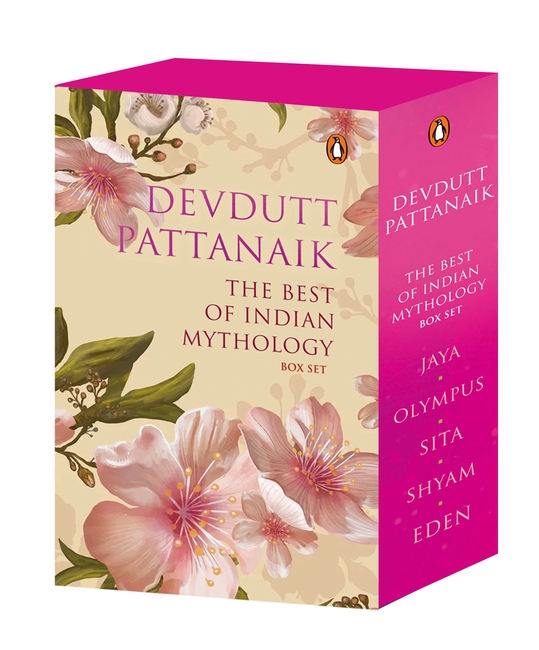
Eden

Eden is the garden of happiness that humankind lost when Adam and Eve the first human couple, disobeyed the one true god, i.e., God, and ate the fruit of the forbidden tree. To this garden all humanity shall return if we accept God’s love and follow God’s law. It represents paradise in Abrahamic lore, which emerged over 4,000 years ago in the Middle East and has since spread to every corner of the world in three forms: Judaism, Christianity and Islam.

Like the Ramayana and Mahabharata, Jewish, Christian and Islamic tales too are cultural memories and metaphors, i.e. mythologies. They seek to make life meaningful by establishing a worldview based on one God, one life, and one way of living based on God’s message transmitted through many messengers. But these stories contrast Indian mythologies that are rooted in rebirth, where the world is without beginning or end, where there are infinite manifestations of the divine, both within and without, personal and impersonal, simultaneously monotheistic, polytheistic and atheistic.

Eden explores the vast world of Abrahamic myths from a uniquely Indian prism, through storytelling that is intimate but not irreverent, and to introduce readers to the many captivating tales of angels, demons, prophets, patriarchs, judges and kings. It also retells stories from Mesopotamian, Egyptian and Zoroastrian mythologies that in?uenced Abrahamic monotheism over time.

error: Content is protected !!