How do you prepare for a future if you don’t know what it is? How do you specialize in anything if the horizon is constantly shifting? What’s the goalpost and how do we get there? Is there even a goalpost?
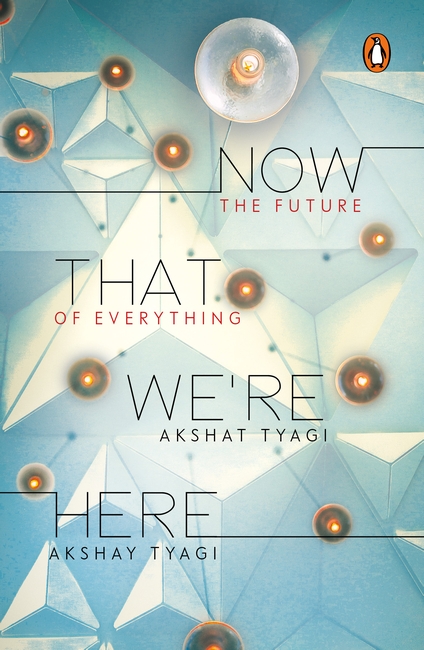
The hyperconnected world that once seemed futuristic is now here. And now that we’re here, it’s time for us to educate ourselves for sweeping and endless possibilities. One way to do that is to blur the lines between technology, democracy, design, economics and data, and reconfigure our approach to learning altogether. This book is a giant leap in that direction. By harnessing the wisdom of thought leaders and intellectuals throughout history, by blending business and humanity, industry and society, and by covering cross-disciplinary themes, authors Akshay Tyagi and Akshat Tyagi give us a groundbreaking, genre-defying and utterly mind-bending collection of essays that will help us prepare for the here and now.

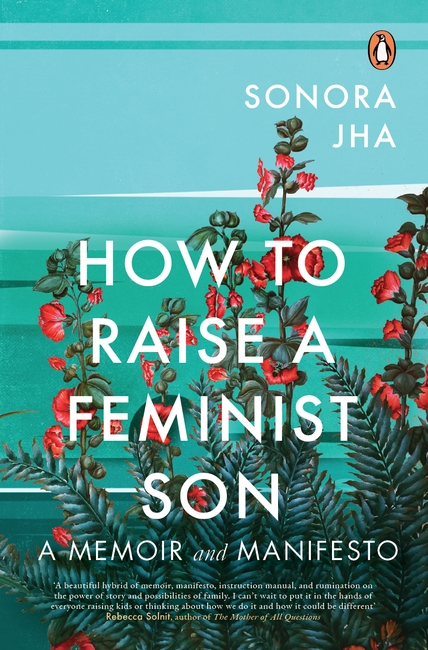
How to Raise a Feminist Son is a love story that will resonate with feminists who hope to change the world, one kind boy at a time. From teaching consent to counteracting problematic messages from the media, well-meaning family, and the culture at large, we have big work to do when it comes to our boys. This empowering book offers much-needed insight and actionable advice. It’s also a beautifully written and deeply personal story of struggling, failing, and eventually succeeding at raising a feminist son.
Informed by the author’s work as a professor of journalism specializing in social-justice movements and social media, as well as by conversations with psychologists, experts, and other parents and boys, this book follows one mother’s journey to raise a feminist son as a single parent. Through stories from her own life and wide-ranging research, Sonora Jha shows us all how to be better feminists and better teachers of the next generation of men in this electrifying tour de force.

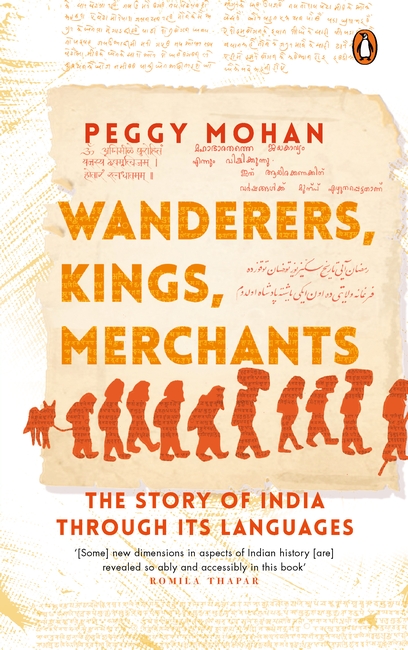
One of India’s most incredible and enviable cultural aspects is that every Indian is bilingual, if not multilingual. Delving into the fascinating early history of South Asia, this original book reveals how migration, both external and internal, has shaped all Indians from ancient times. Through a first-of-its-kind and incisive study of languages, such as the story of early Sanskrit, the rise of Urdu, language formation in the North-east, it presents the astounding argument that all Indians are of mixed origins.It explores the surprising rise of English after Independence and how it may be endangering India’s native languages.

In early 2020, our lives were upended by a new virus that caused the most severe pandemic in over a century. In the span of a few weeks, even visiting a grocery store became a task in risk assessment. Cities and countries across the world closed their borders for their own citizens, as well as foreigners. Newspapers carried alarming accounts of rapidly rising numbers of COVID-positive cases, patients dying and migrant labourers desperately trying to reach home. One was struck every single day with the realization that the pandemic was not just a biological phenomenon, but also a social one.
Where did this virus, first called the novel coronavirus and later SARS coronavirus-2, come from? Did we see it coming? If so, why weren’t we better prepared for it? How lethal is it really? How can we protect ourselves from it? How will the pandemic end? What will life be like once it is over?
In this meticulously researched book, Anirban Mahapatra demystifies the virus and offers us a historical perspective. He charts the scientific progress made in understanding how the virus infects us and how we fight back, and also looks at the social tensions it has uncovered. In doing so, he offers us a clarity that enables us not only to understand the virus but also live with it.

“I echo [the authors’] siren call for urgent disruptive change that will shatter patriarchal norms”–Winnie Byanyima, Executive Director of UNAIDS
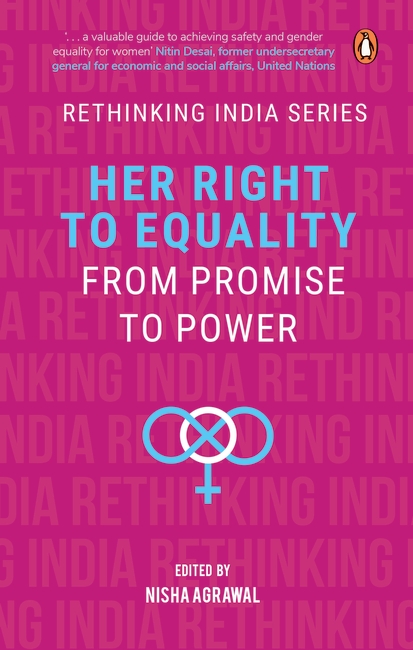
“…a valuable guide to achieving safety for women and gender equality at home and in social, political and economic life.”-Nitin Desai, former Under-Secretary General for Economic and Social Affairs, United Nations
“A must-read for anyone who believes that women in India deserve better…”-Alankrita Shrivastava, film director, Lipstick Under My Burkha
“Harvesting existent knowledge as a way of shaping the future is a valuable idea… [This book] fulfills exactly this need…”-Devaki Jain, feminist economist and author of The Brass Notebook
The sixth volume in the Rethinking India series, in collaboration with the Samruddha Bharat Foundation, looks at the reality of gender equality in the country against the promises of justice and equality made in the Constitution of India. What it finds is that even today, India remains an unequal country and that women control, at best, about 10-15 per cent of economic and political resources. While there has been progress in some areas, in many other areas there has been very little and uneven change.
One of the main reasons for this slow progress is that social norms that assign particular roles and identities to men and women are ‘sticky’ and hard to change. In India, a highly patriarchal society, these norms give very little power to women and, consequently, they have little control or influence over decisions taken within their households, in markets or in political spaces.
Challenging the status quo can cause a backlash, leading to high levels of violence against women in the domestic sphere, the workplace and in public places. If we are to see a more safe, just and equal society by 2047, a hundred years after Independence, it cannot be business as usual. Her Right to Equality argues that what we require is disruptive change through individual and collective leadership and action.
Essays by Flavia Agnes, Rajini R. Menon, Amita Pitra, Sumitra Mishra, Shubhika Sachdeva, Poonam Muttreja, Sanghamitra Singh, Swarna Rajagopalan, Ashwini Deshpande, Archana Garodia Gupta, Sushmita Dev, Kanimozhi Karunanidhi, Tara Krishnaswamy, Bina Agarwal.

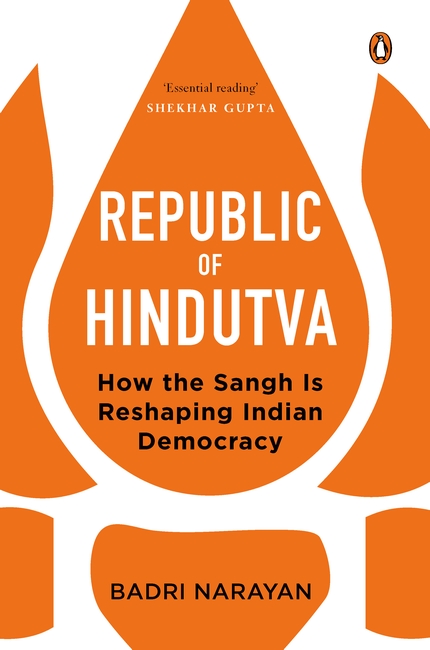
‘Essential reading’ ~ Shekhar Gupta
‘A handy insight into the activities, reach and influence of the RSS’ ~ Indian Express
‘[Yields] insights for students of Indian democracy’ ~ The Hindu
‘Very insightful and is recommended reading for both critics as well as admirers of the RSS’ ~ Financial Express
AN EXPLOSIVE ACCOUNT OF HOW THE RSS HELPS THE BJP WIN ELECTIONS
The RSS is like the tip of an iceberg, exerting its influence much beyond what is visible. Beginning with the choice of Narendra Modi as the forerunner for the 2014 general election up to the campaign for the 2019 election, RSS cadres have been a formidable force behind the staggering rise of the BJP in national politics.
In this eye-opening, necessary book, Badri Narayan offers an intimate glimpse of how the Sangh and its vast network of educational, cultural and social outfits have been digging deep roots in the Indian psyche. By refashioning its modes of mobilization as well as assimilating Dalits, OBCs, tribals and other marginalized communities, the RSS has made the Hindutva metanarrative appealing to a large section of Indians. During elections, the BJP-instead of wiping out caste from electoral politics-reaps rich political dividends from this social appropriation.
Drawing on extensive field research in the heartland of India and interviews with RSS volunteers, Narayan reveals how a new public is being forged at the grassroots, which will determine the course of Indian democracy.

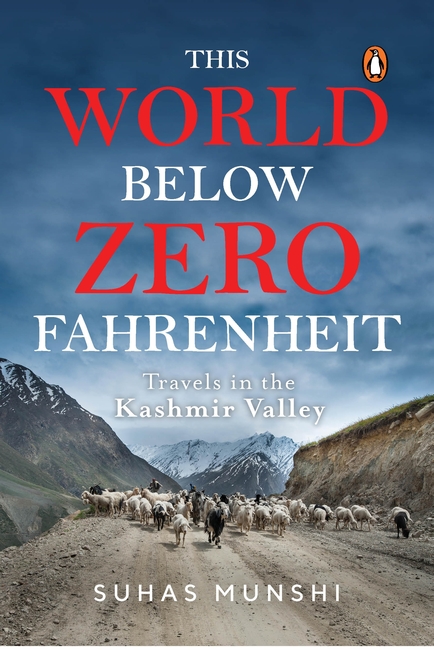
On 5 August 2019, Suhas Munshi was returning to Srinagar from a visit to legendary poet Habba Khatoon’s relic in Gurez, when an unprecedented curfew was imposed upon Jammu and Kashmir, and Article 370 was abrogated. Through his travels and conversations with people across the Valley, Munshi tries to give a sense of what that moment has meant to the common Kashmiri.
This insightful travelogue breaks away from the clichéd view of Kashmir, one that sees it either as an earthly paradise or a living hell. It takes you to unexpected places, into the homes of poets, playwrights and street performers; to a heartwarming Christmas service with the minuscule Christian community in Baramulla; and inside the barricaded city of Srinagar’s football stadium, which is a lively refuge for the elderly and their memories of a glorious past. Over three weeks, for fear of being abandoned in a harsh terrain, Munshi struggles to keep up with a group of Bakarwal nomadic shepherds as they make their way from Srinagar to Jammu over the mighty Pir Panjal mountains. And he finds a lone Pandit family living in a decrepit ghost colony in Shopian, the hub of militancy in Kashmir.
This World below Zero Fahrenheit presents a portrait of a people who’ve been overshadowed by the place they live in, even as it ruminates on the idea of home and exile.
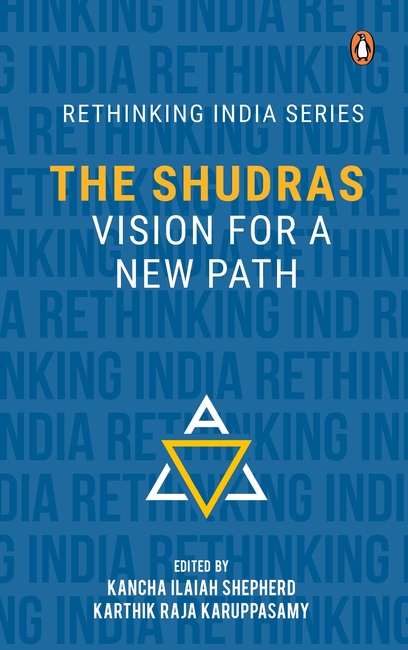
‘The Shudras echoes Dr Ambedkar’s question in Who Were the Shudras? that he asked in 1946. More than 70 years later, Kancha Ilaiah and his team of authors revisit this issue to give Shudras a voice again’ -CHRISTOPHE JAFFRELOT
The Shudras: Vision for a New Path weaves together multiple dimensions of the predicament of India’s productive castes–in the spiritual, social, political, economic, philosophical and historical spheres. It reformulates their current position as well as future pathways. It strives to provoke Shudras-including regional political party leaders-all over India to realize their unique historical role in fighting unequal caste structures. And it gives a call to resist Hindutva, in which they have no liberated, equal space with the Dwija castes. At a juncture when the Shudra castes are regionalized and the Dwijas have become ‘national’, the fifth volume of the Rethinking India series, in collaboration with the Samruddha Bharat Foundation, seeks to bring home the real picture of their marginalized status in all key structures of the nation. It posits that the emancipation and progress of the Shudras are vital to sustain Ambedkar’s constitutional democracy and move towards socio-spiritual equality.

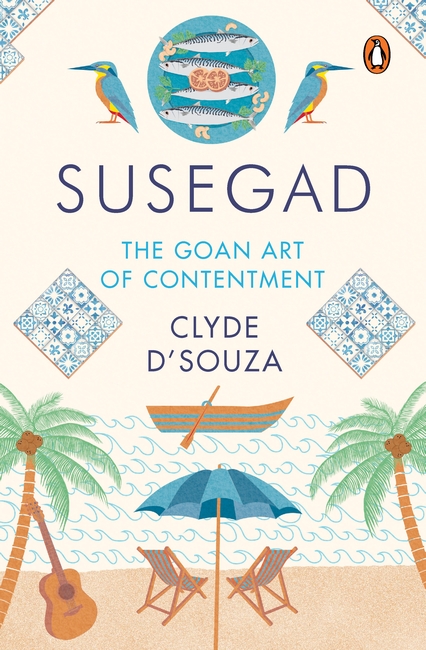
‘Susegad’ is a Konkani word that has no exact translation in English. Goans use it to convey the sense of contentment, fulfilment and relaxation that everyone associates with Goa and its culture. Clyde D’Souza, bestselling author and proud Goan, shows us the wonderful, unique elements that help Goans achieve susegad, and what you can do to add a pinch of this magic to your life, no matter where you live.
As Clyde takes us on a journey through Goa’s beautiful beaches, lush greenery, exquisite cuisine, mix of Portuguese and Konkani culture, its history, festivals, music and architecture, you’ll learn what makes Goans tick and how they’ve created habits and routines that lend happiness and calm to their lives. Interviews with noted Goans, short stories, recipes and pictures in this book bring out what it means to be Goan, and help you find your own susegad.

Leela is a bar dancer in Mumbai. She is young, beautiful, determined and hedonistic. And she is also self destructive, cynical and full of despair. When the dance bars in the city are banned, the young woman and her friends find their worlds slowly giving way. Journalist Sonia Faleiro followed Leela before and after the ban, meeting her friends, her lovers, and her family. In this extraordinary work of reportage, she draws an unforgettable portrait of the bar dancer and her subterranean night-time world.