‘A work of power, intimacy and magic’ Anees Salim, author
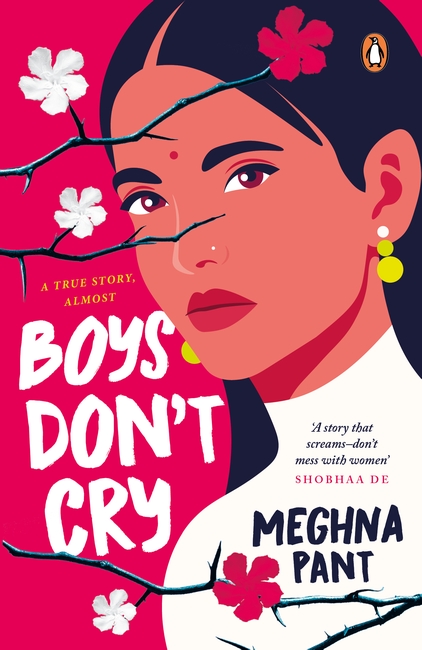
When Maneka Pataudi is arrested as the prime suspect for the murder of her ex-husband, she reveals a chilling tale of marital abuse and neglect.
But is her confession the truth or a lie? Is she telling the story as a victim or a perpetrator? And, is it better for women to kill for love or be killed for it?
Based on a true story (mostly), Boys Don’t Cry is a gripping, compelling and courageous novel that takes you behind the closed doors of a modern Indian marriage.

Taslima Nasrin is known for her powerful writing on women’s rights and uncompromising criticism of religious fundamentalism. This defiance on her part had led to the ban on the Bengali original of this book by the Left Front in West Bengal as well as the Government of Bangladesh in 2003. While the West Bengal government lifted the injunction after the ban was struck down by the Calcutta High Court in 2005, Nasrin was eventually driven out of Kolkata and forced to expunge passages from the book, besides facing a four-million-dollar defamation lawsuit. Bold and evocative, Split: A Life opens a window to the experiences and works of one of the bravest writers of our times.

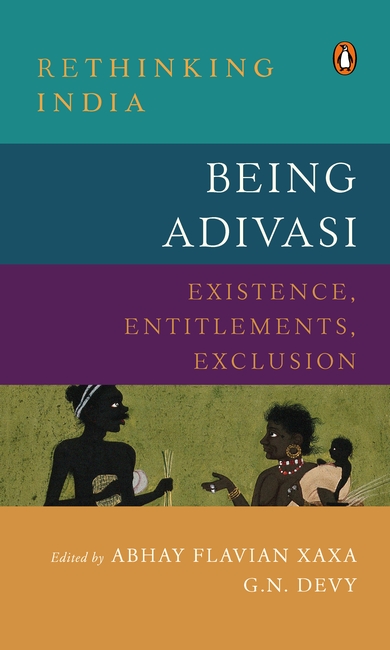
The Adivasis form nearly 8 per cent of the Indian population and live in most states. Despite being one of the oldest constituents of the Indian population, barring a few states in the North-east, they are in a minority in the rest. Persistent problems faced by them-like land alienation, indebtedness, vanishing minor forest products from government forests and displacement from their ancestral lands-have led to their impoverishment. The Panchayats (Extension to the Scheduled Areas) Act (PESA) and the Forest Rights Act (FRA), enacted by the previous governments, were decisive steps towards the empowerment of the Adivasis.
However, at present, the implementation of these provisions has taken a back seat. The seventh volume of the Rethinking India series, in collaboration with the Samruddha Bharat Foundation, presents the views of the Adivasis and the Denotified communities on the process of development and its clash with their rights.
This volume brings together the discussion of several issues from the Adivasi perspective, which is quite different from what is done in anthropology and ethnography.

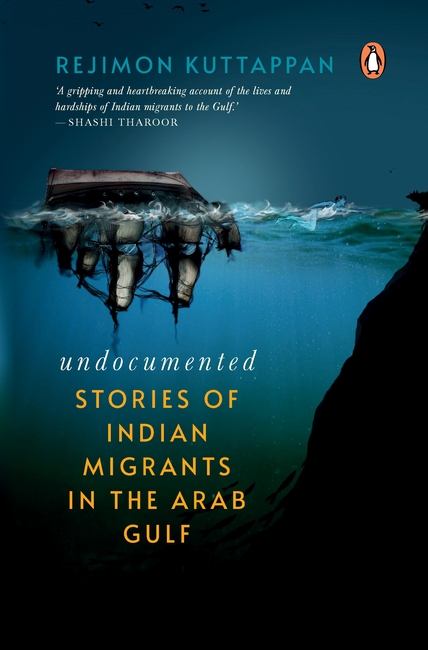
Our complicated and fragile global economy relies on the unacknowledged labour of a subterranean network of undocumented migrant workers. Despite them providing vital support to host economies, governments continue to turn a blind eye to these migrants’ woes without any consequences. In the absence of documents to speak for them, their human rights are systematically abused, their voices ignored, their existence refuted.
The women, as is often the case, suffer under the dual attacks of patriarchy and anonymity. Exigencies of bureaucracy ensure that the children are often unregistered and even lack passports. The result is a truly exploited populace without much relief in sight. They survive on sheer courage and perseverance, shedding blood, sweat and tears that end up fuelling the thumping home and host economies.
In Undocumented, journalist and migrant-rights researcher Rejimon Kuttappan brings to light the lives of these oft-ignored migrants through stories of six Indians in the Arab Gulf, and through them, voices the plight of millions more. Delving into histories both personal and national to establish where we are and how we got here, the author lays bare the lives of people betrayed by their own into human trafficking, into poverty, and into exile in a land that only glimmers with promise.

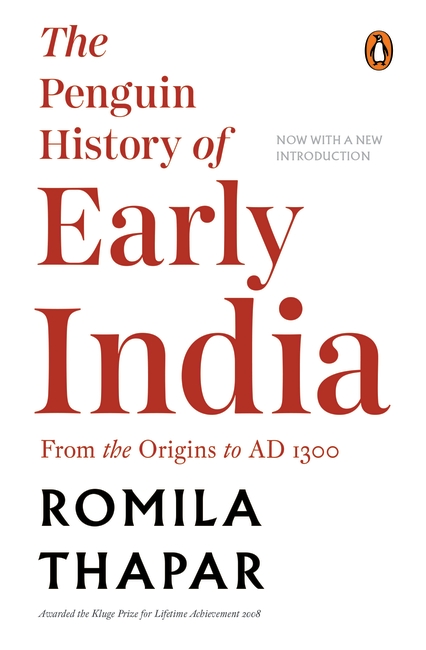
BY THE WINNER OF THE KLUGE PRIZE FOR LIFETIME ACHIEVEMENT 2008
A definitive account and ready reference of ancient Indian history
The Penguin History of Early India–a complete rewrite of Romila Thapar’s A History of India (Vol. 1)–brings to life thousands of years of India’s precolonial history: its prehistoric beginnings; the great cities of the Indus civilization; the emergence of mighty dynasties such as the Mauryas, Guptas and Cholas; the teachings of the Buddha; the creation of the Mahabharata and the Ramayana; and the evolution of regional cultures.
In exploring subjects as diverse as marriage, class, art, erotica and astronomy, Thapar provides an incomparably vivid and nuanced picture of India, creating a rich mosaic of diverse kingdoms, landscapes, languages and beliefs. As she explains how the interpretations of early Indian history have changed in the last half-century, Thapar offers fresh readings and raises new questions.
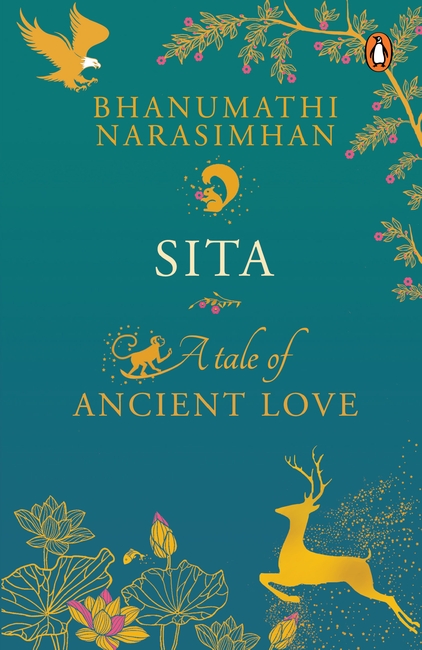
The vibration of the sacred sound of her beloved’s name, ‘Ram’, filled her mind as it emanated from the tiny Vanara. ‘His being is filled with Rama,’ she pondered, ‘but does he know me?’
Sita, the beloved princess of Mithila, is one of the most revered women in Indian history; so well known, yet probably the least understood. At every crossroad of her life, she chose acceptance and grace over self-pity. Her life was filled with sacrifice yet wherever she was, there was abundance. It was as if she was carved out of an intense longing for Rama, yet she had infinite patience. In every situation she reflected his light and he reflected her love.
In her, we find someone who is so divine yet so human.
In this poignant narration, Bhanumathi shows us the world through the eyes of Sita. We think what Sita thinks, we feel what she feels, and for these few special moments, we become a part of her. And perhaps, through this perspective, and Sita’s immortal story, we will discover the true strength of a woman.

KERALA SAHITYA AKADEMI AWARD WINNER
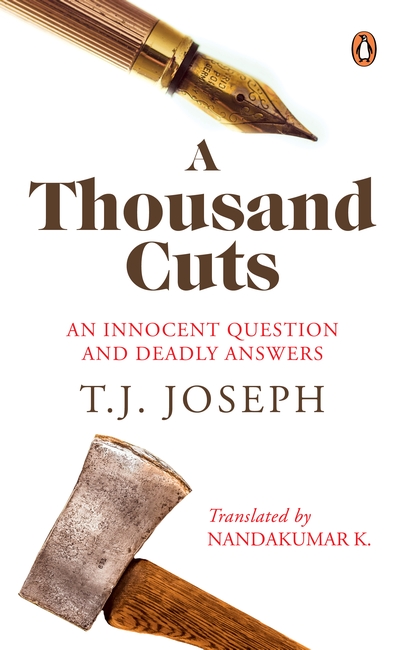
A Thousand Cuts is a harrowing, sobering and ultimately inspiring autobiography of Professor T.J. Joseph, who in 2010 became the victim of a brutal terrorist assault, accused of blasphemy after setting an exam question that enraged fundamentalists. This book is an important reminder of the pernicious effect of religious extremism and the duty of every person to speak out against those who would silence free expression’ SHASHI THAROOR
‘There is excruciating agony here, but also black humour and irony that enliven and lighten the narrative even at the height of anguish’ K. SATCHIDANANDAN
‘The poignant tale, with its sense of urgency and helplessness, has been sensitively translated as A Thousand Cuts‘ RANA SAFVI
A chilling account of religious extremism
In 2010, T.J. Joseph, a professor of Malayalam at Newman College, Kerala, framed an innocuous question for an internal examination that changed his life forever. Following a trumped-up charge of blasphemy, members of a radical Islamist organization set upon him in public, viciously maiming him and chopping off his right hand. His memoir, told with amazing restraint and wry humour, is the moving tale of his life and family as they went through hell and beyond. Here’s the extraordinary story of a man who survived dismembering only to be betrayed by his
own Church. Let alone stand by him, it robbed him of his livelihood and isolated him from his community, driving Joseph’s long-suffering wife to melancholia and eventual suicide. Joseph’s story is one of fortitude, will power, forgiveness and compassion, told with rare wit that will make readers chuckle through their tears.
This is a tale that will leave the reader seething, weeping and smiling by turns.

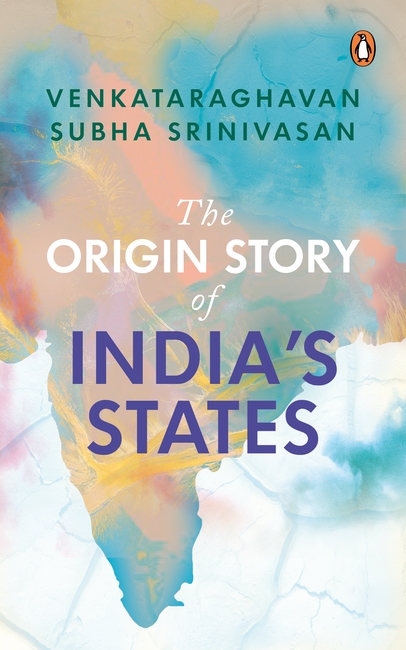
DO YOU KNOW THE STORY OF YOUR STATE?
You were born in an Indian state.
You went to school in an Indian state.
You live and work in an Indian state.
You, like every other Indian, call at least one state home.
Your state is a big part of your identity.
And yet, do you know the story of how your state was created?
The Origin Story of India’s States is a fascinating and illuminative account of the genesis of India’s states. It presents the incredible origin stories of each of India’s twenty-eight states and eight union territories, spanning from Independence until today.
The state that wasn’t even a part of India until 1975; the union territory that had a prime minister for a single day; the state that has not one or two but three capitals; and the union territory that has beaches on both coasts-this book looks into such unique aspects of Indian history and adds to our understanding of how our nation has been built.

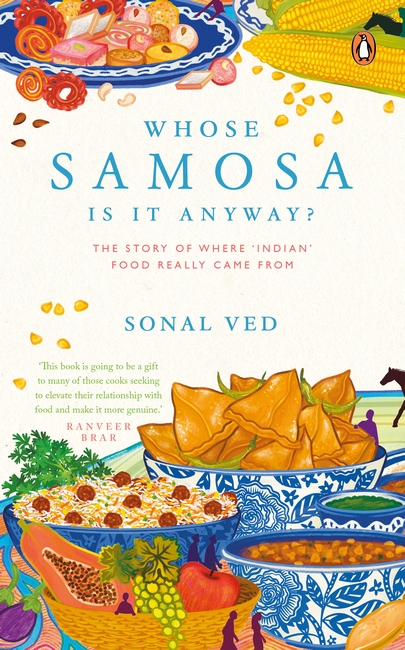
In this book, accompany Sonal Ved on a journey of taste through the various timelines across the Indian subcontinent. We go from the banks of the Indus in 1900 bc to the great kingdoms of the north many centuries later; from the time of the Mauryans to when the Mughal Sultanate reigned supreme. Meet the Europeans merchants desperate to trade in Indian treasures, be it the deep-blue indigo or the pricey pepper. On this trip discover answers to such questions as What are the origins of chutney or of the fruit punch, and how are they connected to India? Who taught us how to make ladi pav and kebabs, and how did the Burmese khow suey land up on the wedding menus of Marwaris? The author takes us through the food history and traditions from the mountains in Kashmir to the backwaters of Kanyakumari; from the ports of the Bay of Bengal to the shores of the Arabian Sea, where traders and travellers arrived from the world over. And, finally, we find out whose samosa it truly is . . .
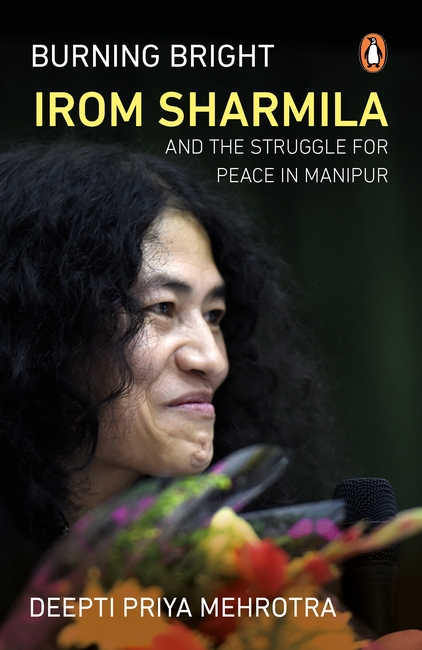
The true story of the ‘Iron Lady of Manipur’ who fasted for 16 years against AFSPA
Ten innocent people were mowed down by security forces in Malom, a village near Imphal, in November 2000. The perpetrators were not punished, protected under the Armed Forces Special Powers Act which empowers military and para-military personnel to arrest, shoot, even kill, anyone on the grounds of mere suspicion. In response to this tragedy–one among many such atrocities–Irom Sharmila, a young Manipuri, began an indefinite hunger strike. The government arrested her and force-fed her through nasal tubes. She was released and re-arrested innumerable times, but she stood by her demand. In July 2016, Irom brought her sixteen years of hunger strike to an end, and decided to contest the elections.
Burning Bright is a hard-hitting account of a people caught between the crossfire of militants and security forces; of a once-sovereign kingdom whose culture has been brutally violated; of the many voices of dissent-from underground groups to the Meira Paibis, a women’s movement opposed to all forms of violence whether by the state or insurgents and a moving portrait of ‘the Iron Lady of Manipur’.