



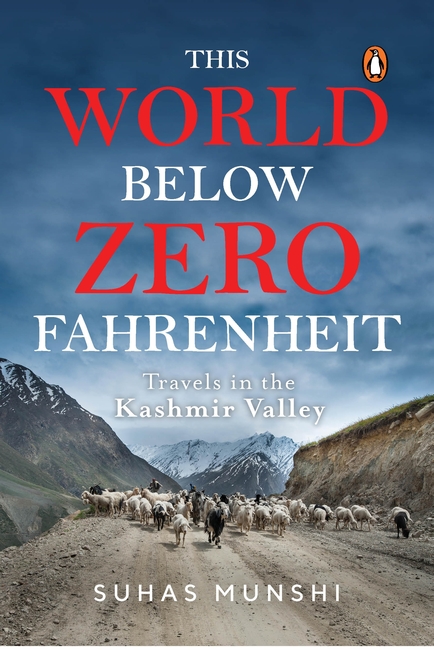
On 5 August 2019, Suhas Munshi was returning to Srinagar from a visit to legendary poet Habba Khatoon’s relic in Gurez, when an unprecedented curfew was imposed upon Jammu and Kashmir, and Article 370 was abrogated. Through his travels and conversations with people across the Valley, Munshi tries to give a sense of what that moment has meant to the common Kashmiri.
This insightful travelogue breaks away from the clichéd view of Kashmir, one that sees it either as an earthly paradise or a living hell. It takes you to unexpected places, into the homes of poets, playwrights and street performers; to a heartwarming Christmas service with the minuscule Christian community in Baramulla; and inside the barricaded city of Srinagar’s football stadium, which is a lively refuge for the elderly and their memories of a glorious past. Over three weeks, for fear of being abandoned in a harsh terrain, Munshi struggles to keep up with a group of Bakarwal nomadic shepherds as they make their way from Srinagar to Jammu over the mighty Pir Panjal mountains. And he finds a lone Pandit family living in a decrepit ghost colony in Shopian, the hub of militancy in Kashmir.
This World below Zero Fahrenheit presents a portrait of a people who’ve been overshadowed by the place they live in, even as it ruminates on the idea of home and exile.
Catagory: Society & Social Sciences
The Shudras
‘The Shudras echoes Dr Ambedkar’s question in Who Were the Shudras? that he asked in 1946. More than 70 years later, Kancha Ilaiah and his team of authors revisit this issue to give Shudras a voice again’ -CHRISTOPHE JAFFRELOT
The Shudras: Vision for a New Path weaves together multiple dimensions of the predicament of India’s productive castes–in the spiritual, social, political, economic, philosophical and historical spheres. It reformulates their current position as well as future pathways. It strives to provoke Shudras-including regional political party leaders-all over India to realize their unique historical role in fighting unequal caste structures. And it gives a call to resist Hindutva, in which they have no liberated, equal space with the Dwija castes. At a juncture when the Shudra castes are regionalized and the Dwijas have become ‘national’, the fifth volume of the Rethinking India series, in collaboration with the Samruddha Bharat Foundation, seeks to bring home the real picture of their marginalized status in all key structures of the nation. It posits that the emancipation and progress of the Shudras are vital to sustain Ambedkar’s constitutional democracy and move towards socio-spiritual equality.
Susegad
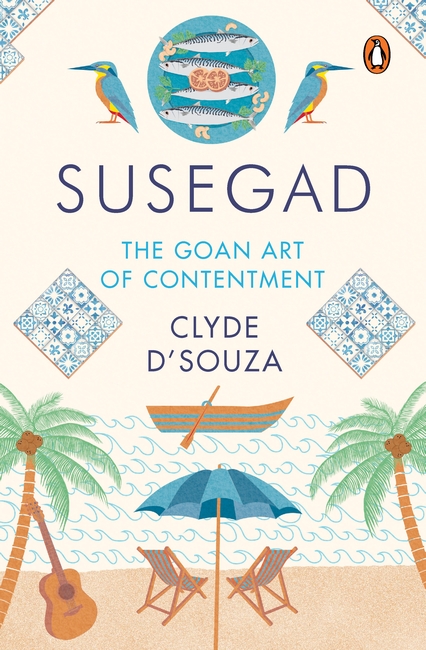
‘Susegad’ is a Konkani word that has no exact translation in English. Goans use it to convey the sense of contentment, fulfilment and relaxation that everyone associates with Goa and its culture. Clyde D’Souza, bestselling author and proud Goan, shows us the wonderful, unique elements that help Goans achieve susegad, and what you can do to add a pinch of this magic to your life, no matter where you live.
As Clyde takes us on a journey through Goa’s beautiful beaches, lush greenery, exquisite cuisine, mix of Portuguese and Konkani culture, its history, festivals, music and architecture, you’ll learn what makes Goans tick and how they’ve created habits and routines that lend happiness and calm to their lives. Interviews with noted Goans, short stories, recipes and pictures in this book bring out what it means to be Goan, and help you find your own susegad.
Beautiful Thing
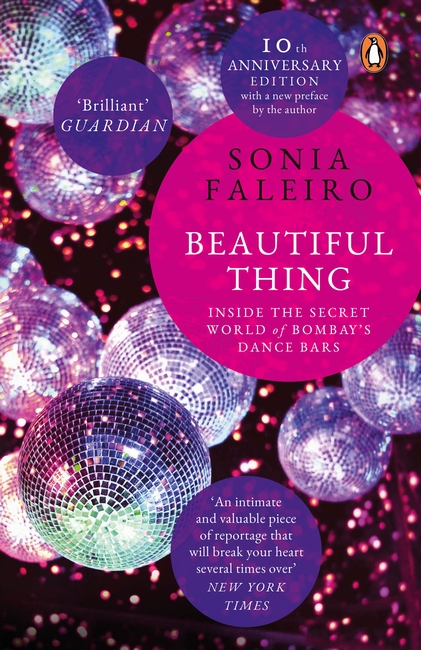
Leela is a bar dancer in Mumbai. She is young, beautiful, determined and hedonistic. And she is also self destructive, cynical and full of despair. When the dance bars in the city are banned, the young woman and her friends find their worlds slowly giving way. Journalist Sonia Faleiro followed Leela before and after the ban, meeting her friends, her lovers, and her family. In this extraordinary work of reportage, she draws an unforgettable portrait of the bar dancer and her subterranean night-time world.
Indians
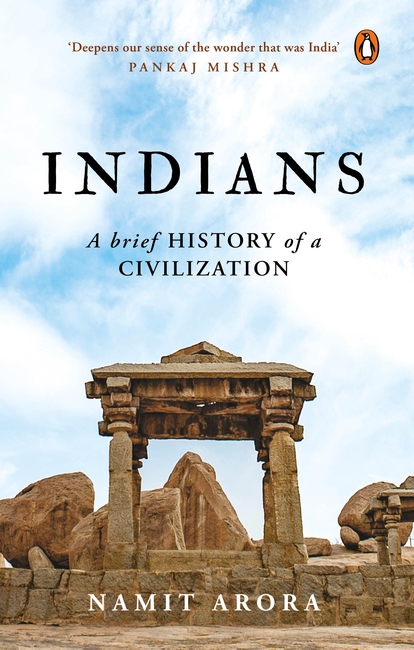
‘Deepens our sense of the wonder that was India’ ~ Pankaj Mishra
‘A gem of a book that is a joy to read . . . You can almost touch and feel the centuries and millennia as they pass by’ ~ Tony Joseph
‘Arora explores how Indians lived, ate, loved, built, fought and made sense of the material, rational and spiritual world down the ages . . . [A] mega-ambitious project’ ~ The Hindu
‘A wonderfully evocative book. Arora invites the reader to reflect on the past, without overwhelming her with dry historical facts but luring her in with vivid human stories’ ~ Prof. Mohan Rao
A BRILLIANT, ORIGINAL BOOK THAT REVEALS INDIA’S RICH AND DIVERSE HISTORIES
What do we really know about the Aryan migration theory and why is that debate so hot?
Why did the people of Khajuraho carve erotic scenes on their temple walls?
What did the monks at Nalanda eat for dinner?
Did our ideals of beauty ever prefer dark skin?
Indian civilization is an idea, a reality, an enigma. In this riveting book, Namit Arora takes us on an unforgettable journey through 5000 years of history, reimagining in rich detail the social and cultural moorings of Indians through the ages. Drawing on credible sources, he discovers what inspired and shaped them: their political upheavals and rivalries, customs and vocations, and a variety of unusual festivals. Arora makes a stop at six iconic places — the Harappan city of Dholavira, the Ikshvaku capital at Nagarjunakonda, the Buddhist centre of learning at Nalanda, enigmatic Khajuraho, Vijayanagar at Hampi, and historic Varanasi — enlivening the narrative with vivid descriptions, local stories and evocative photographs. Punctuating this are chronicles of famous travellers who visited India — including Megasthenes, Xuanzang, Alberuni and Marco Polo — whose dramatic and idiosyncratic tales conceal surprising insights about our land.
In lucid, elegant prose, Arora explores the exciting churn of ideas, beliefs and values of our ancestors through millennia — some continue to shape modern India, while others have been lost forever. An original, deeply engaging and extensively researched work, Indians illuminates a range of histories coursing through our veins.
Ghalib: A Wilderness at My Doorstep
Mirza Asadullah Khan Ghalib was born in Agra in the closing years of the eighteenth century. A precocious child, he began composing verses at an early age and gained recognition while he was still very young. He wrote in both Urdu and Persian and was also a great prose stylist. He was a careful, even strict, editor of his work who took to publishing long before his peers. His predilection for writing difficult, obscure poetry peppered with complex metaphors produced a unique commentarial tradition that did not extend beyond his work. Commentaries on his current Urdu divan have produced a field of critical writing that eventually lead to the crafting of a critical lens with which to view the classical ghazal.
The nineteenth century was the height of European colonialism. British colonialism in India produced definitive changes in the ways literature was produced, circulated and consumed. Ghalib responded to the cultural challenge with a far-sightedness that was commendable. His imagination sought engagement with a wider community of readers. His deliberate switch to composing in Persian shows that he wanted his works to reach beyond political boundaries and linguistic barriers.
Ghalib’s poetic trajectory begins from Urdu, then moves to composing almost entirely in Persian and finally swings back to Urdu. It is nearly as complex as his poetry. However, his poetic output in Persian is far more than what he wrote in Urdu. More important is that he gave precedence to Persian over Urdu. Ghalib’s voice presents us with a double bind, a linguistic paradox. Exploring his life, works and philosophy, this authoritative critical biography of Ghalib opens a window to many shades of India and the subcontinent’s cultural and literary tradition.
I Am No Messiah
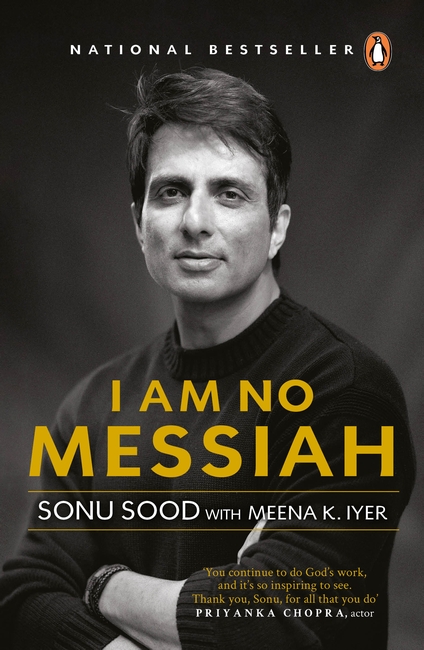
Sometimes, a little nudge from the universe pushes one to find his raison d’etre in life. If actor Sonu Sood had given in to the celebrity syndrome of sitting in his ivory tower and expressing his generosity by remote control, he would have never come face to face with the trauma of India’s migrant labourers or understood that a food packet was a woefully inadequate substitute for a ride back home.
During the nationwide lockdown, imposed in the wake of the COVID-19 pandemic, when a wave of poverty-stricken migrants set out on foot to make their arduous journey back home, the value of seva, service to mankind, instilled in him by his parents, spurred Sonu Sood into action. From taking to the streets and reaching out to the stranded, to setting up a dedicated team and making arrangements for national and international transport, Sonu managed to help thousands of helpless and needy workers. Thus, began his ‘Ghar Bhejo’ programme, carried out like a humanitarian mission. Chartered flights, buses and trains were sanitized and paid for. Distress calls from all over the world were answered. Soon, the movement snowballed into a campaign for providing jobs, medical facilities and educational aid to workers. The silver-screen villain transitioned into a real-life superhero.
In his memoir, I Am No Messiah, Sonu Sood combines the extraordinary experiences of his journey from Moga to Mumbai with the writing skills of veteran journalist and author Meena K. Iyer. Honest, inspirational and heart-warming, this is the story of Sonu Sood and of the people whose lives he continues to transform.
Bike Ambulance Dada
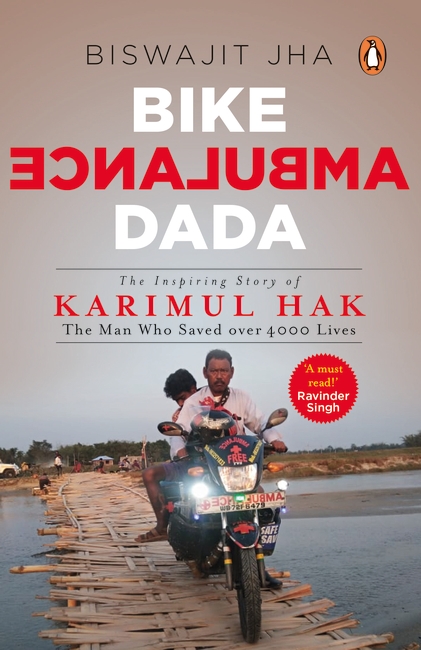
Twenty-five years ago, Karimul Hak lost his mother because he could not afford an ambulance and there was no other way to take her to a hospital. However, when his co-worker fell sick, Karimul resolved to ensure that history did not repeat itself.
Bike Ambulance Dada, the authorized biography of Padma Shri awardee Karimul Hak, is the most inspiring and heart-warming story you will read this year. It documents the extraordinary journey of a tea garden worker who saved thousands of lives by starting a free bike-ambulance service from his village to the nearest hospital in an attempt to fill the gap the insufficient rural healthcare created.
This book, about the extraordinary life of a man who has devoted his entire life to helping those around him and putting others before himself, is a must-read today, serving as an inspiration for us to do and be better.
The Good Girls

One night in the summer of 2014, two teenagers disappeared from their home in the village of Katra Sadatganj in Uttar Pradesh. The next morning, India woke up to the devastating image of their dead bodies hanging from a tree in a mango orchard.
The girls’ names were Padma and Lalli, but they were so inseparable that people in the village called them Padma Lalli. Sixteen-year-old Padma sparked and burned. Fourteen-year-old Lalli was an incorrigible romantic. Who were they and what had happened to them? In the ensuing months, the investigation into their deaths would implode everything that their small community held to be true and instigate a national conversation about sex and violence.
Slipping deftly behind political manoeuvring, caste systems and codes of honour in a village in northern India, The Good Girls returns to the scene of Padma and Lalli’s short lives and tragic deaths, and dares to ask: What is the human cost of shame?
Pakistan’s Terror Conundrum
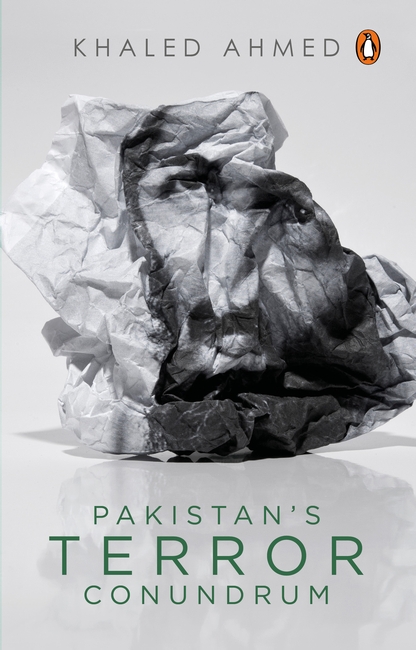
Pakistan was born amid communal violence and a collective consciousness of danger. Right from the outset, democracy was up for debate between the politicians nurtured by the British Raj and an orthodox clergy that advocated a utopia in which Islam was to be the ideological guide. Today, the threat of religion as an extra-legal force is causing many Pakistanis to think if the state can move forward into the future with Islam as its credo.
In this carefully curated collection of his writings in several publications, senior journalist Khaled Ahmed examines Pakistan’s policies regarding terrorism against the backdrop of increasing pressure from international organizations. Despite joining the US in its war against terror after 9/11, the country has been perceived as a safe haven and breeding ground for terrorists. Ahmed looks at the origins and activities of the various terrorist organizations, the role of the state and the ideology of its founding figures, some of whom seem to have been forgotten.