The greatest Indian story ever told of a war between two factions of a family, The Mahabharata has continued to sway the imagination of its readers over the past centuries.
While the dispute over land and kingdom between the warring cousins-the Pandavas and the Kauravas-forms the chief narrative, the primary concern of The Mahabharata is about the conflict of dharma. These conflicts are immense and various, singular and commonplace. Throughout the epic, characters face them with no clear indications of what is right and what is wrong; there are no absolute answers. Thus every possible human emotion features in The Mahabharata, the reason the epic continues to hold sway over our imagination.
The complete and unabridged Sanskrit classic, now masterfully and accessibly rendered for contemporary readers by Bibek Debroy.

Explore the Shobhaa De minsite here! ‘This is a story about India. My India. It is a very personal story. You see, I’m exactly as old as India is.’ It all began when, viewing the breathless preparations for independent India’s 60th birthday celebrations–and poised then on her own sixth decade—Shobhaa Dé was struck by the thought: ‘Surely my life has taken the same trajectory as the country’s?’ In an intimate confession to her readers, she answers that question, and many more: Does India really deserve to congratulate itself? Has it lived up to the early promises it made to its people? Does the author believe in India herself? Surveying the many images of the country, Dé points out that for every truism about India the opposite is also true: India as the land of the meek; India as inheritor of the earth; India gherao-ed by distinctly unfriendly neighbours; Indians fleeing to jobs in the West and then racing right back to a better life; Indians who ape their erstwhile colonizers and yet cling irrationally to tradition. In a departure from anything else she has written, Shobhaa Dé lasers in on Indian people and their place in the larger human society, pointing out her country’s historical failings and equally historical glories. Admitting to our knee-jerk reactions to much of what is happening at home and in the world, Dé reasons, nevertheless, that the nation has earned superstar status, and with humorous argumentativeness, she convinces the reader that India is not about to lose its glow.

Caste, and caste-based discrimination, are not just Indian issues. They are experienced throughout the world, from Britain to Bahrain, Canada to South Africa. This is a global phenomenon, demanding global solutions.
Leading scholar Suraj Milind Yengde shines a light on the Dalit experience internationally, from indentured labourers in the nineteenth-century Caribbean to present-day migrant workers in the Middle East. Combining history, ethnography and archival research, he offers a compelling, comparative approach to caste and race from ancient times to today. What have been the impacts of colonialism, religion and nationalism on caste-based hierarchies worldwide? What can we learn from caste-related movements in India and internationally? Why hasn’t the South Asian diaspora embraced the anti-caste struggles of the homeland? And what are the limits of Dalit–Black solidarity?
Exploring the global footprint of the anti-caste struggle—from its links with Black Lives Matter to the work of international Ambedkarite organisations—this is a powerful analysis of world politics from the perspective of one of the most oppressed communities on Earth. Asking probing questions about the nature of inequality, Yengde issues an energetic call for a cosmopolitan Dalit universalism, as a vital part of today’s fight for social justice and equality.
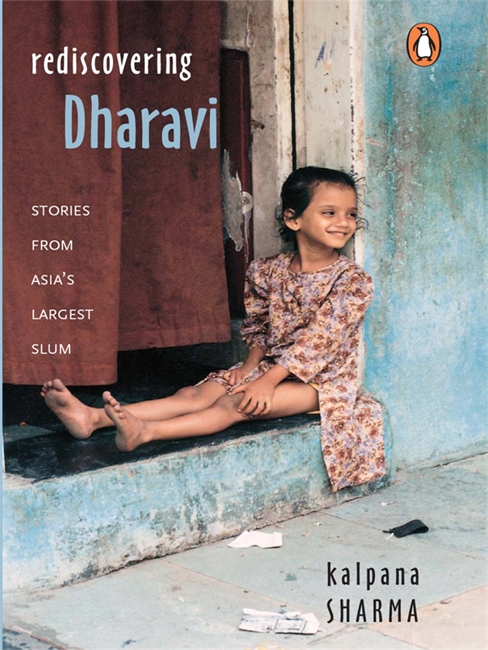
A book that challenges the conventional notion of a slum. Spread over 175 hectares and swarming with one million people, Dharavi is often called ‘Asia’s largest slum’. But Dharavi is much more than cold statistic. What makes it special are the extraordinary people who live there, many of whom have defied fate and an unhelpful State to prosper through a mix of backbreaking work, some luck and a great deal of ingenuity. It is these men and women whom journalist Kalpana Sharma brings to life through a series of spellbinding stories. While recounting their tales, she also traces the history of Dharavi from the days when it was one of the six great koliwadas or fishing villages to the present times when it, along with other slums, is home to almost half of Mumbai. Among the colourful characters she presents are Haji Shamsuddin who came to Mumbai and began life as a rice smuggler but made his fortune by launching his own brand of peanut brittle; the stoic Ramjibhai Patel, a potter, who represents six generations from Saurashtra who have lived and worked in Mumbai; and doughty women like Khatija and Amina who helped check communal passions during the 1992-93 riots and continue to ensure that the rich social fabric of Dharavi is not frayed. It is countless, often anonymous, individuals like these who have helped Dharavi grow from a mere swamp to a virtual gold mine with its many industrial units churning out quality leather goods, garments and food products. Written with rare sensitivity and empathy, Rediscovering Dharavi is a riveting account of the triumph of the human spirit over poverty and want.
The author is best known for his common man cartoons, and has created cartoons as a world that even the ubiquitous common man is not privy to. It is here that Laxman’s sense of parody and satire find some of their finest expressions. A selection of these rare and masterly cartoons which comment caustically on our social and political character were together in the first volume of ‘Laugh with Laxman’, and proved to be immensely popular. This is the second volume in the series replete with timeless gems that continue to amuse.

Malice. The word is synonymous with Khushwant Singh; his pen has spared no one. For over four decades as India’s most widely-read columnist, he has commented on just about everything: religion, politics, our future, our past, prohibition, impotency, presidents, politicians, cricket, dog-haters, astrologers, the banning of books, the secret of 1ongevity…the list is endless. Candid to the point of being outrageous, Khushwant Singh makes both his reader and subject wince. He writes unabashedly on nose picking, wife-bashing, bribing journalists, gender wars and the desires of an octogenarian; on Nehru and Edwina, Laloo, Bal Thackeray, Chandraswami and Sonia Gandhi, among host of others.
Khushwant Singh’s Big Book of Malice brings together some of his nastiest and most irreverent pieces. Witty, sharp and brutally honest, this collection is certain to delight and provoke readers of all ages.
‘Good people can be crashing bores. Evil men who combine evil-doing with drunkenness, debauchery and making illicit money make more interesting characters because they pack their lives with action. They do what most of us would like to do but do not have the guts to.’
-Khushwant Singh
Frontline Reports From Sri Lanka And Other South Asian Flashpoints.
Island Of Blood Is A Distillation Of The Experiences And Insights Of One Of The Finest Journalists India Has Ever Produced. During The Eighties And Nineties, When The Indian Media Rarely Ventured Into Flashpoints Like Sri Lanka And Afghanistan, Anita Pratap Braved The Odds To Send In Reports From The Front, Over And Over Again. War, Ethnic Conflict, Earthquakes, Cyclones And Droughts, Wherever There Was A Story To Be Told, She Would Track It Down. First In India, Then In Sri Lanka, Anita Managed To Gain Access To Ltte Chief Pirabhakaran, And Her Interviews With Him Made Headlines Around The World. In Afghanistan, She Eluded The Taliban Militia To Discover The Frightening Reality Of Women&Rsquo;S Lives Under A Terrifying Fanatical Regime.
Wherever She Went, Anita Saw And Faithfully Reported The Consequences Of Racial And Historical Prejudice, Religious And Sexual Discrimination, And Mindless Hatred And Fear. And Each Time, She Returned To The Comfort Of Home And Family With A Renewed Determination To Appreciate And Celebrate The Ordinary.

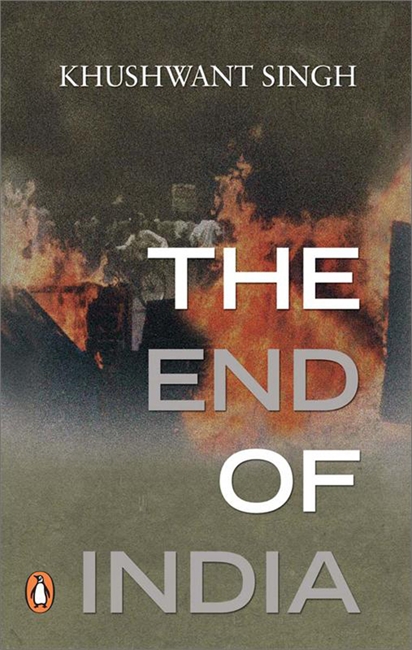
‘I thought the nation was coming to an end,’ wrote Khushwant Singh, looking back on the violence of Partition that he witnesses over half a century ago. He believed then, and for years afterwards, that he had seen the worst that India could do to itself. Over the last few years, however, he has had reason to feel that the worst, perhaps, is still to come.
In this fierce, uncompromising book, he shows us what few of us wish to see: why it is entirely likely that India will come undone in the foreseeable future. Analysing the communal violence in Gujarat in 2002, the anti-Sikh riots of 1984, the burning of Graham Staines and his children, the targeted killings by terrorists in Punjab and Kashmir, Khushwant Singh forces us to confront the absolute corruption of religion that has made us among the most brutal people on earth. He also points out that fundamentalism has less to do with religion than with politics. And communal politics, he reminds us, is only the most visible of the demons we have nurtured and let loose upon ourselves.
Insurgencies in Kashmir and the North-East, caste wars in Bihar, scattered Naxalite movements, and the ghettoization of minorities are proof that our obsession with caste and regional and racial identity has also splintered the nation, perhaps beyond repair. A brave and passionate book, The End of India is a wake-up call for every citizen concerned about his or her own future, if not the nation’s.
An indisputable classic of world literature, the Kamasutra remains one of the most enjoyable texts of antiquity. A work of philosophy, psychology, sociology, Hindu dogma, scientific inquiry and sexology, it has, at the same time, both affected Indian civilization and remained an indispensable key to the understanding of it. These excerpts from Sir Richard F. Burton’s celebrated English translation highlight aspects of sexual love and marriage, and show why the Kamasutra has continued to charm readers across the centuries.
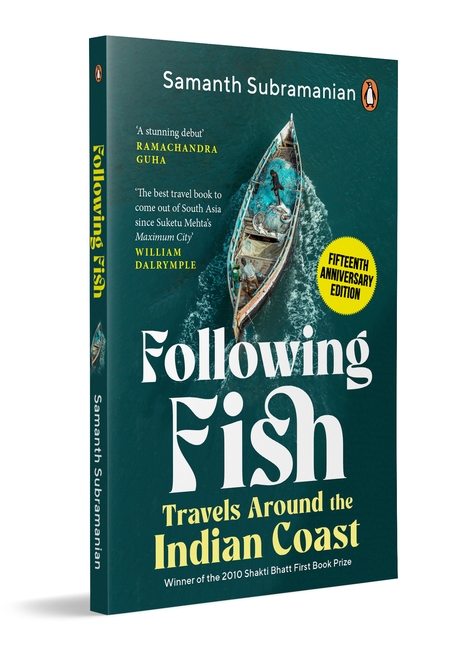
In a coastline as long and diverse as India’s, fish inhabit the heart of many worlds – food of course, but also culture, commerce, sport, history and society. Journeying along the edge of the peninsula, Samanth Subramanian reports upon a kaleidoscope of extraordinary stories. In nine essays, Following Fish conducts rich journalistic investigations: among others, of the famed fish treatment for asthmatics in Hyderabad; of the preparation and the process of eating West Bengal’s prized hilsa; of the ancient art of building fishing boats in Gujarat; of the fiery cuisine and the singular spirit of Kerala’s toddy shops; of the food and the lives of Mumbai’s first peoples; of the history of an old Catholic fishing community in Tamil Nadu; of the hunt for the world’s fastest fish near Goa. Throughout his travels, Subramanian observes the cosmopolitanism and diverse influences absorbed by India’s coastal societies, the withdrawing of traditional fishermen from their craft, the corresponding growth of fishing as pure and voluminous commerce, and the degradation of waters and beaches from over-fishing. Pulsating with pleasure, adventure and discovery, and tempered by nostalgia and loss, Following Fish speaks as eloquently to the armchair traveler as to lovers of the sea and its lore.