



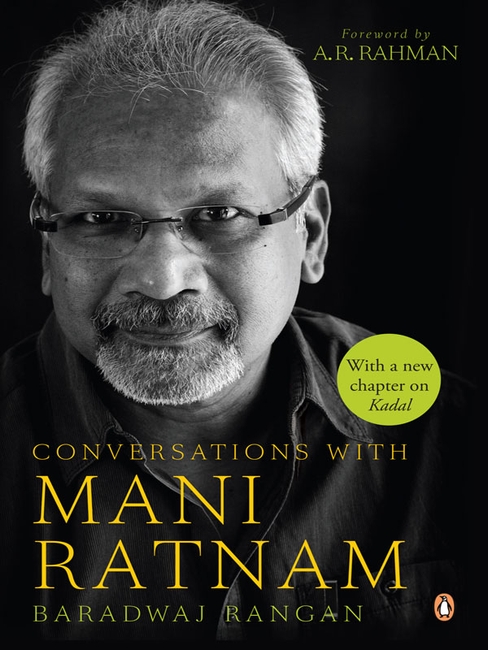
Mani Ratnam’s Nayakan is among Time’s ‘100 Best Movies Ever’; and Roja launched A.R. Rahman. This book, unique to Indian cinema, illuminates the genius of the man behind these and eighteen other masterly films. For the first time ever, Mani Ratnam opens up here, to Baradwaj Rangan, about his art, as well as his life before films.
In these freewheeling conversations—candid, witty, pensive, and sometimes combative—many aspects of his films are explored. Ratnam elaborates in a personal vein on his choice of themes, from the knottiness in urban relationships (Agni Natchatiram) to the rents in the national fabric (Bombay); his directing of children (Anjali); his artful use of songs; his innovative use of lighting; as also his making of films in Hindi and other languages. There are fond recollections of collaborations with stalwarts like Balu Mahendra, P.C. Sreeram, Thotta Tharrani and Gulzar, among many others. And delectable behind-the-scenes stories—from the contrasting working styles of the legendary composer Ilaiyaraaja and Rahman to the unexpected dimensions Kamal Haasan brought to the filming of Nayakan to what Raavan was like when originally conceived. In short, like Mani Ratnam’s films, Conversations surprises, entertains and stimulates.
With Rangan’s personal and impassioned introduction setting the Tamil and national context of the films, and with posters, script pages and numerous stills, this book is a sumptuous treat for serious lovers of cinema as well as the casual moviegoer looking for a peek behind the process.
Catagory: Society & Social Sciences
The Marwaris
In the nineteenth century, a tiny community from the deserts of Rajasthan spread out to every corner of India. The Marwaris controlled much of the country’s inland trade by the time of the First World War. They then turned their hand to industry and, by the 1970s, owned most of India’s private industrial assets. Today, Marwari businessmen account for a quarter of the Indian names on the Forbes billionaires list.// What makes the Marwaris so successful? Is it their indomitable enterprise, or their incredible appetite for risk? In this new book, Thomas Timberg shows how the Marwaris rely on a centuries-old system for conserving and growing capital which has stood them in good stead, alongside a strong sense of business ethics which has earned them respect.// Family businesses in general and the Marwaris in particular might have a vital role to play in shaping India’s economic future.
ARTHASHASTRA
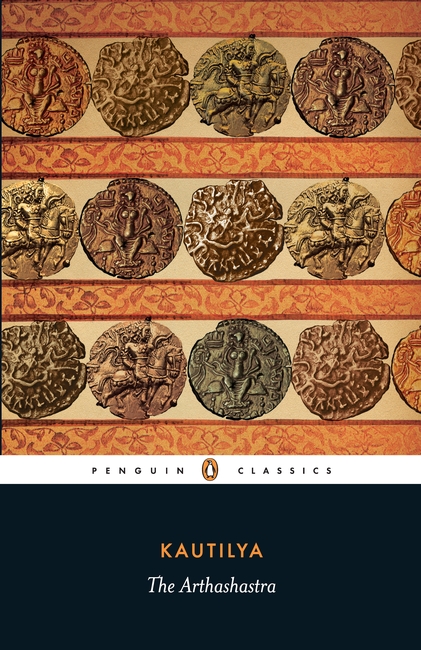
An extraordinary detailed manual on statecraft and the science of living by one of classical India’s greatest minds; Kautilya; also known as Chanakya and Vishnugupta; wrote the Arthashastra not later than 150 AD though the date has not been conclusively established. Legend has it that he was either a Brahmin from Kerala or from north India; however; it is certain that Kautilya was the man who destroyed the Nanda dynasty and installed Chandragupta Maurya as the King of Magadha. A master strategist who was well-versed in the Vedas and adept at creating intrigues and devising political stratagems; Kautilya’s genius is reflected in his Arthashastra which is the most comprehensive treatise of statecraft of classical times.
The text contains fifteen books which cover numerous topics viz.; the King; a complete code of law; foreign policy; secret and occult practices and so on. The Arthashastra is written mainly in prose but also incorporates 380 shlokas.
Artha; literally wealth; is one of four supreme aims prescribed by Hindu tradition. However; it has a much wider significance and the material well-being of individuals is just a part of it. In accordance with this; Kautilya’s Arthashastra maintains that the state or government of a country has a vital role to play in maintaining the material status of both the nation and its people. Therefore; a significant part of the Arthashastra has to do with the science of economics. When it deals with the science of politics; the Arthashastra describes in detail the art of government in its widest sense-the maintenance of law and order as also of an efficient administrative machinery.
The World of the Tamil Merchant
How did the Tamil merchant become India’s first link to the outside world?
The tale of the Tamil merchant is a fascinating story of the adventure of commerce in the ancient and early medieval periods in India. The early medieval period saw an economic structure dominated by the rise of powerful Tamil empires under the Pallava and Chola dynasties. This book marks the many significant ways in which the Tamil merchants impacted the political and economic development of south India.
This Divided Island
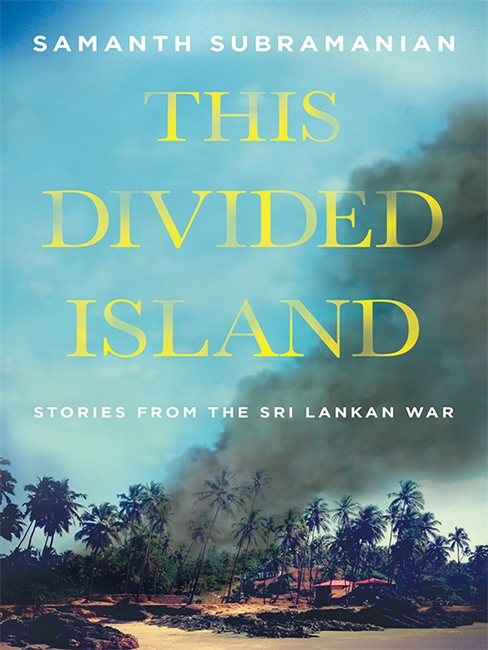
In the summer of 2009, the leader of the dreaded Tamil Tiger guerrillas was killed, bringing to a bloody end the stubborn and complicated civil war in Sri Lanka. For nearly thirty years, the war’s fingers had reached everywhere: into the bustle of Colombo, the Buddhist monasteries scattered across the island, the soft hills of central Sri Lanka, the curves of the eastern coast near Batticaloa and Trincomalee, and the stark, hot north. With its genius for brutality, the war left few places, and fewer people, untouched.What happens to the texture of life in a country that endures such bitter conflict? What happens to the country’s soul? Samanth Subramanian gives us an extraordinary account of the Sri Lankan war and the lives it changed. Taking us to the ghosts of summers past, and to other battles from other times, he draws out the story of Sri Lanka today-an exhausted, disturbed society, still hot from the embers of the war. Through travels and conversations, he examines how people reconcile themselves to violence, how religion and state conspire, how the powerful become cruel, and how victory can be put to the task of reshaping memory and burying histories.This Divided Island is a harrowing and humane investigation of a country still inflamed.
The East India Company
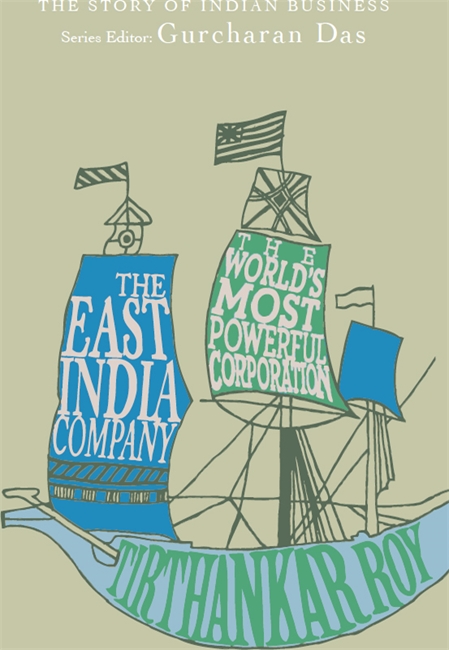
This groundbreaking study examines how the East India Company founded an empire in India at the same time it started losing ground in business. For over 200 years, the Company’s vast business network had spanned Persia, India, China, Indonesia and North America. But in the late 1700s, its career took a dramatic turn, and it ended up being an empire builder.
In this fascinating account, Tirthankar Roy reveals how the Company’s trade with India changed it-and how the Company changed Indian business. Fitting together many pieces of a vast jigsaw puzzle, the book explores how politics meshed so closely with the conduct of business then, and what that tells us about doing business now.
‘One of the first major attempts to tell the company’s story from an Indian business perspective’-Financial Express
Arthashastra
Ascribed to Kautilya (commonly identified as the prime minister of Chandragupta Maurya) and dating back more than 2,000 years, the Arthashastra is the world’s first manual in political economy. It has a pre-eminence in Indian thought that is akin to that of Machiavelli’s The Prince in Europe. Arthashastra (literally, ‘the science of wealth’) is a study of economic enterprise; specifically, Kautilya’s treatise advises the king on the business of creating prosperity. This ancient text provides a fascinating window into the social and economic structures of the time, and into the intricacies of statecraft—for the Arthashastra also addresses the question: what makes a good leader? This book is intended to be an introduction to the economic philosophy of the Arthashastra. Its goal is to analyse the relevance of this classic text in its own time—in a world in which kings were regulators of economic activities of their subjects, but also entrepreneurs themselves—in the conviction that it has much to teach us that has value in our own age
Red Lipstick

The world keeps taunting him as girlish but the fact is that, biologically, he is a boy. And, he is always attracted to guys. Is Laxmi both a man and a woman? Or, perhaps, neither a man nor a woman? The first inklings and stirrings of lust that Laxmi remembers came from noticing big, strong arms, the hint of a guy’s moustache over his lips, billboards that advertised men’s underwear. Laxmi found this puzzling initially. Was there a woman inside him who couldn’t really express herself because of some last-minute mix-up that god did at the time of his birth? Struggling with such existential questions, Laxmi Narayan Tripathi, eminent transgender activist, awakens to her true self: She is Laxmi, a hijra.
In this fascinating narrative Laxmi unravels her heart to tell the stories of the men-creators, preservers, lovers, benefactors, and abusers-in her life. Racy, unapologetic, dark and exceptionally honest, these stories open a window to a brave new world.
Orientalism
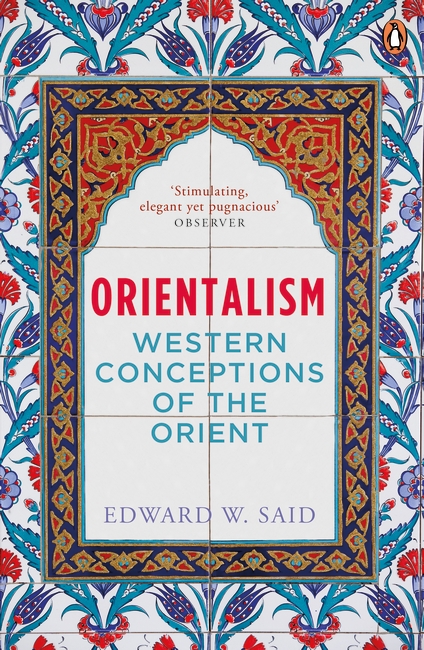
In this highly acclaimed seminal work, Edward Said surveys the history and nature of Western attitudes towards the East, considering Orientalism as a powerful European ideological creation-a way for writers, philosophers and colonial administrators to deal with the ‘otherness’ of Eastern culture, customs and beliefs. He traces this view through the writings of Homer, Nerval and Flaubert, Disraeli and Kipling, whose imaginative depictions have greatly contributed to the West’s romantic and exotic picture of the Orient. In the preface, Said examines the continuing effects of Western imperialism and racism, manifest in the events leading up to and post 9/11, establishing Orientalism as a canonical text of cultural studies.
Patriots And Partisans
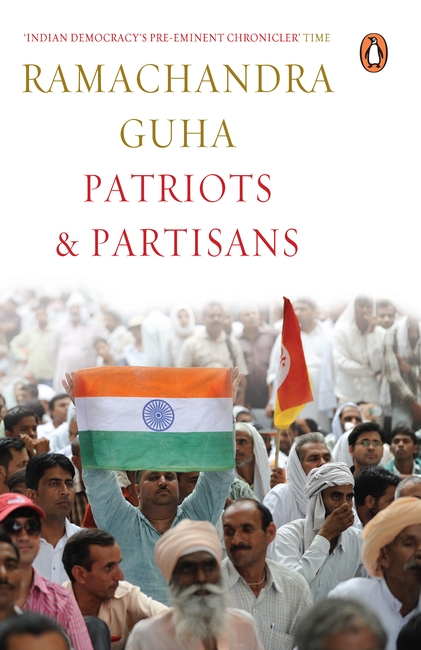
‘I am a person of moderate views,’ writes Ramachandra Guha, ‘these sometimes expressed in extreme fashion.’ In this wide-ranging and wonderfully readable collection of essays, Guha defends the liberal centre against the dogmas of left and right, and does so with style, depth, and polemical verve. The book begins with a brilliant overview of the major threats to the Indian Republic. Other essays turn a critical eye on Hindutva, the Communist left, and the dynasty-obsessed Congress party.
The essays in Part II of this book focus on writers and scholars, and include some sparkling portraits. Whether writing about politics or culture, whether profiling individuals or analysing social trends, Ramachandra Guha displays a masterly touch, confirming his standing as India’s most admired historian and public intellectual.