



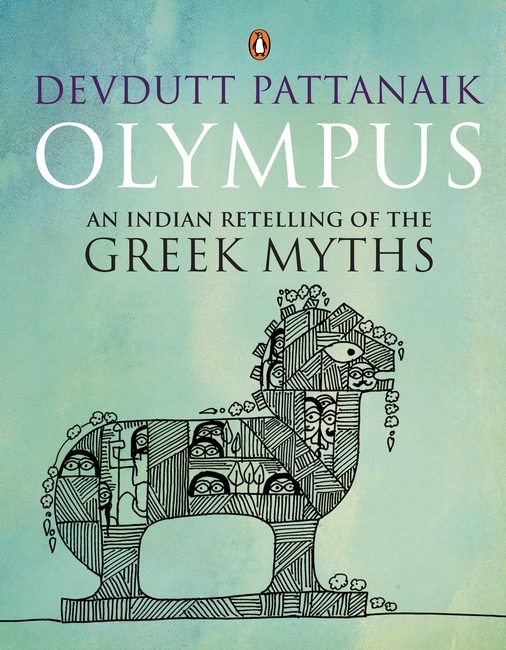
· Olympus is the home of the Greek gods, much like Amravati of the Hindu devas.
· Zeus, leader of Olympians, wields a thunderbolt like Indra, and rides an eagle like Vishnu.
· The feats of the Greek hero Heracles, known to Romans as Hercules, reminded many of Krishna, as did his name, ‘Hari-kula-esha’ or lord of the Hari clan.
· The Greek epic of a husband sailing across the sea with a thousand ships to bring his wife, Helen, back from Troy seems strikingly similar to the story of Ram rescuing Sita from Lanka.
Is there a connection between Greek and Hindu mythology then? Does it have something to do with a common Indo-European root? Or maybe an exchange of ideas in the centuries that followed the arrival of Alexander the Great, when Greek emissaries travelled to the kingdoms of Mathura and Magadha?
In this book, mythologist Devdutt Pattanaik turns his attention to ancient Greek tales, and explores a new world of stories. Long have Europeans and Americans retold Indic mythologies. It is time for Indians to reverse the gaze.
Catagory: Society & Social Sciences
Savaging The Civilized
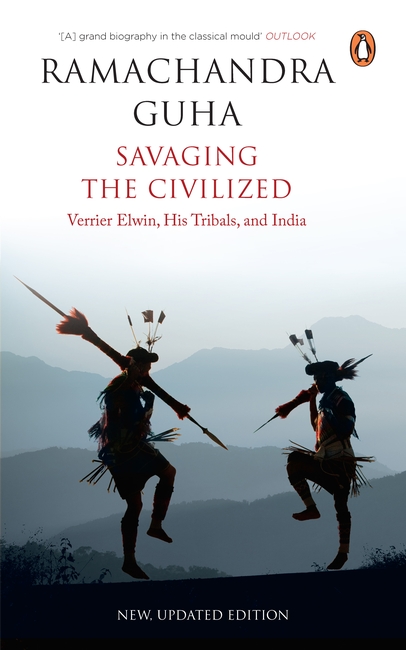
This evocative and beautifully written book brings to life one of the most remarkable figures of twentieth-century India. Verrier Elwin (1902-64) was an anthropologist, poet, Gandhian, hedonist, Englishman, and Indian.
Savaging the Civilized reveals a many-sided man, a friend of the elite who was at home with the impoverished and the destitute; a charismatic charmer of women who was comfortable with intellectuals such as Arthur Koestler and Jawaharlal Nehru; an anthropologist who lived and loved with the tribes yet who wrote literary essays and monographs for the learned.
Savaging the Civilized is both biography and history, an exploration through Elwin’s life of some of the great debates of our times, such as the impact of economic development, and cultural pluralism versus cultural homogeneity. For this new edition, Ramachandra Guha has added a long new introduction, stressing the relevance of Elwin’s work to current debates on adivasis, Naxalites, and Indian democracy.
The Communist Manifesto
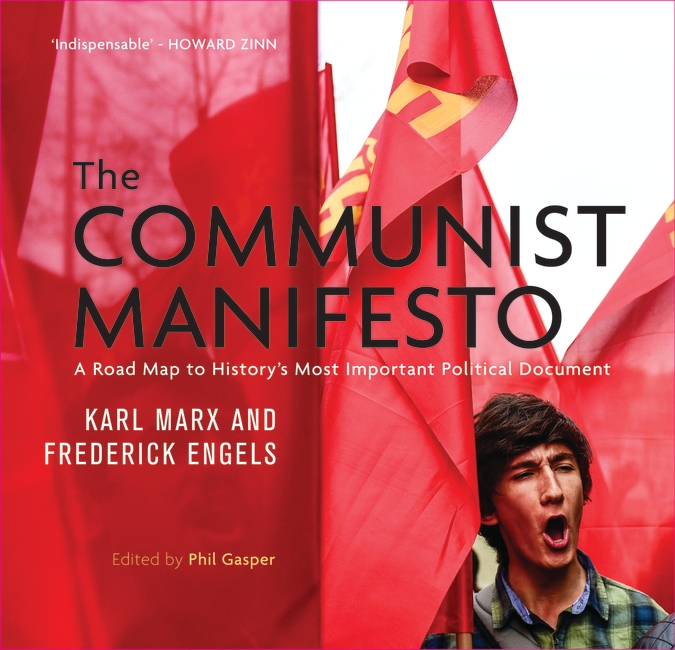
On the occasion of Karl Marx’s 200th birth anniversary, here is an authoritative edition of The Communist Manifesto
‘Apart from Charles Darwin’s Origin of Species,’ notes the Los Angeles Times, The Communist Manifesto ‘is arguably the most important work of nonfiction written in the 19th century.’ The Washington Post calls Marx ‘an astute critic of capitalism.’ Writing in The New York Times, Columbia University Professor Steven Marcus describes the Manifesto as a ‘masterpiece’ with ‘enduring insights into social existence.’
Since it was first written in 1848, the Manifesto by Marx and Engels has been translated into more languages than any other modern text. It has been banned, censored, burned and declared ‘dead’. But year after year, the text only grows more influential and more relevant, and is required reading in courses on philosophy, politics, economics and history.
In this extensively researched edition, renowned Marxist scholar Phil Gasper provides an authoritative introduction to history’s most important political document, with the full text of the Manifesto. Thoughtfully presented in a reader-friendly format, it is fully annotated, with clear historical references and explanations, additional related texts, and a glossary that will bring the text to life for students as well as the general reader.
The New Yorker recently described Karl Marx as ‘The Next Thinker’ for our era. This book shows readers why.
India Transformed
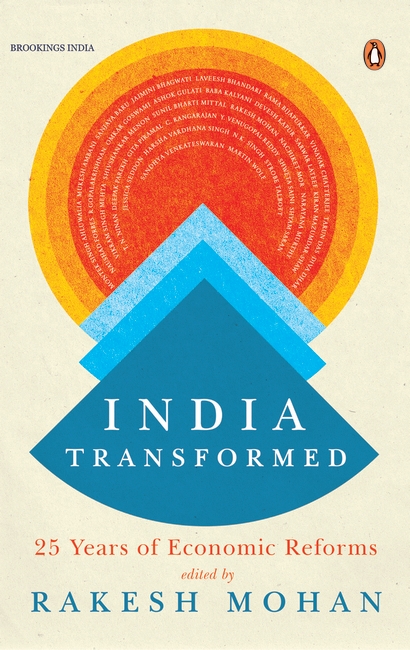
In this commemorative volume, India’s top economic luminaries and business leaders come together to provide a balanced picture of the economic reform process initiated in 1991 and its consequences. They ask themselves some imperative questions: What were the reforms? What were they intended for? How have they affected the overall functioning of the economy?
Covering the impact of the reforms on the evolution of India businesses, India’s foreign and security policy, the changing face of Indian governance and sectoral and human developments, among other themes, India Transformed delves deep into the life of liberalized India through the eyes of the people who helped transform it.
Doab Dil
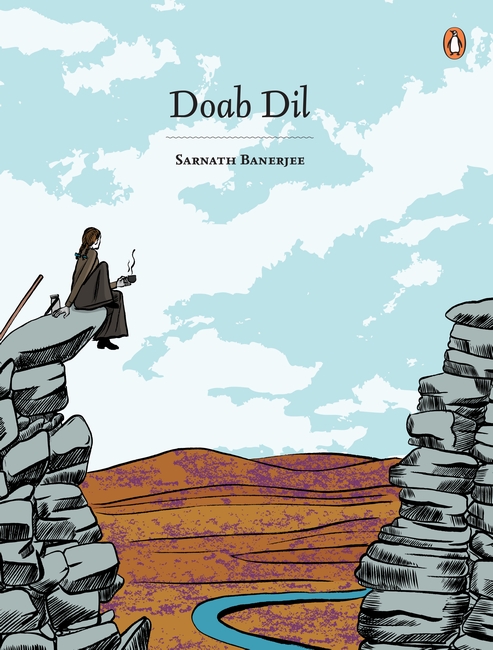
Why was the appreciation of gardens considered a symbol of Victorian aristocracy? Why do the Japanese find it easy to power-nap in public spaces? Why did Charles Baudelaire ascribe Samuel Taylor Coleridge’s restless nocturnal wanderings to a pathological dread of returning home? Why is a tense Gurgaon CEO hitting anxiety-laden golf balls into the night? Why was an obscure ninth-century Arab scholar’s library confiscated? And what do any of these mean for the average person immersed in the ‘daily decathlon’ of life?
Employing a philosopher’s mind and an artist’s eye, Banerjee takes us to still places in a moving world, the place where two rivers (do ab) meet and forests write themselves into history.
Tipu Sultan
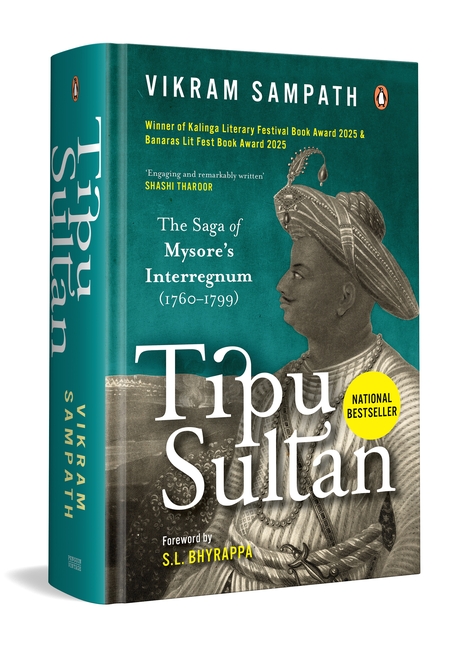
Over two centuries have passed since his death on 4 May 1799, yet Tipu Sultan’s contested legacy continues to perplex India and her contemporary politics. A fascinating and enigmatic figure in India’s military past, he remains a modern historian’s biggest puzzle as he simultaneously means different things to different people, depending on how one chooses to look at his life and its events.
Tipu’s ascent to power was accidental. His father Haidar Ali was a beneficiary of the benevolence of the Maharaja of Mysore. But in a series of fascinating events, the Machiavellian Haidar ran with the hare and hunted with the hounds; he ended up overthrowing his own benefactor and usurping the throne of Mysore from the Wodeyars in 1761. In a war-scarred life, father and son led Mysore through four momentous battles against the British, termed the Anglo-Mysore Wars. The first two, led by Haidar, brought the English East India Company to its knees. Chasing the enemy to the very gates of Madras, Haidar made the British sign such humiliating terms of treaties that sent shockwaves back in London.
In the hubris of this success, Tipu obtained the kingdom on a platter, unlike his father, who worked up the ranks to achieve glory. In a diabolical war thirst, Tipu launched lethal attacks on Malabar, Mangalore, Travancore, Coorg, and left behind a trail of death, destruction and worse, mass-conversions and the desecration of religious places of worship. While he was an astute administrator and a brave soldier, the strategic tact with opponents and the diplomatic balance that Haidar had sought to maintain with the Hindu majority were both dangerously upset by Tipu’s foolhardiness on matters of faith. The social report card of this eighteenth-century ruler was anything but clean. And yet, one simply cannot deny his position as a renowned military warrior and one of the most powerful rulers of Southern India.
Meticulously researched, authoritative and unputdownable, Tipu Sultan: The Saga of Mysore’s Interregnum (1760–1799) opens a window to the life and times of one of the most debated figures from India’s history.
Ramayana, Mahabharata, Bhagavata
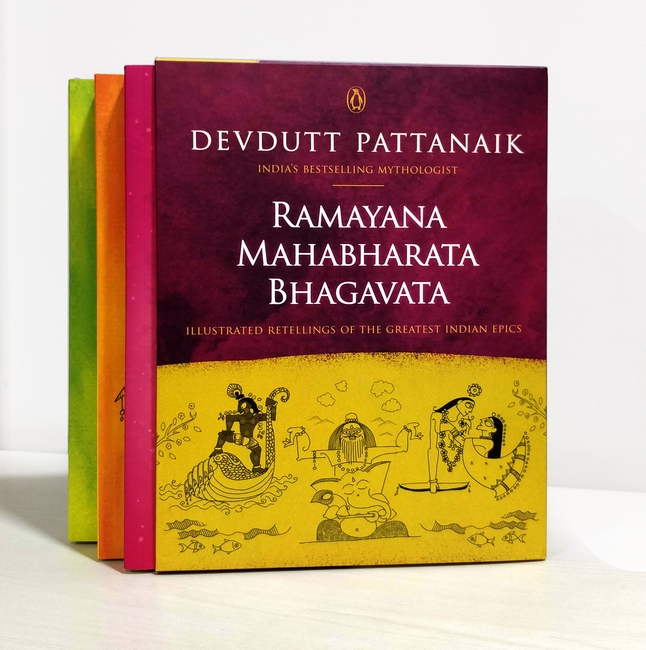
An enthralling retelling of India’s greatest epic, the Mahabharata, Jaya seamlessly weaves into a single narrative plots from the Sanskrit classic as well as its many folk and regional variants. With clarity and simplicity, the tales in this elegant volume reveal the eternal relevance of the Mahabharata and the complex and disturbing meditation on the human condition that has shaped Indian thought for over 3000 years.
Sita approaches Ram and the Ramayana by speculating on the titular character: her childhood with her father, Janaka, who hosted sages mentioned in the Upanishads; her stay in the forest with her husband, who had to be a celibate ascetic while she was in the prime of her youth; her interactions with the women of Lanka, recipes she exchanged, the emotions they shared; her role as a goddess, the untamed Kali as well as the demure Gauri, in transforming the stoic prince of Ayodhya into God.
The Bhagavata is the story of Krishna, known as Shyam to those who find beauty, wisdom and love in his dark complexion. Shyam tells the story of Krishna’s birth and his death, bringing together the fragments of this great epic composed over thousands of years, first as the Harivamsa, then as the Bhagavata Purana, and finally as the passionate songs of poet-sages in various regional languages.
Facing the Mirror
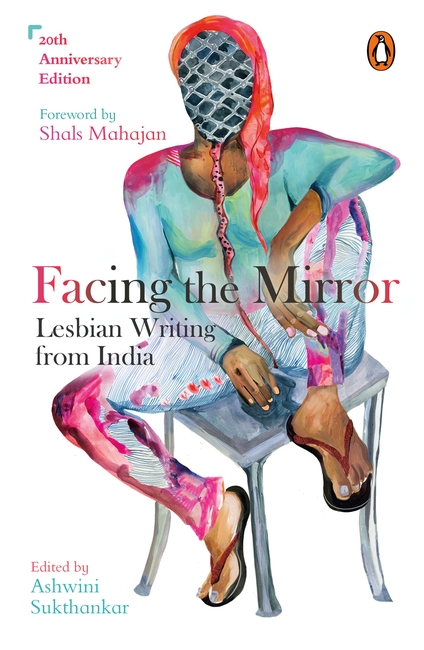
A groundbreaking book where lesbians found their voice for the first time
For decades, most lesbians in India did not know the extent of their presence in the country: networks barely existed and the love they had for other women was a shameful secret to be buried deep within the heart. In Facing the Mirror, Ashwini Sukthankar collected hidden, forgotten, distorted, triumphant stories from across India, revealing the richness and diversity of the lesbian experience for the first time. Going back as far as the 1960s and through the forms of fiction and poetry, essays and personal history, this rare collection mapped a hitherto unknown trajectory.
In celebration of the Supreme Court’s reading down of the draconian Section 377 of the Indian Penal Code, this twentieth-anniversary edition, with a foreword by author and activist Shals Mahajan, brings to readers a remarkable history that illuminates the blood and the tears, the beauty and the magic of the queer movement in India. The raw anger and passion in them still alive, the writings in Facing the Mirror proudly proclaim the courage, the sensuality, the humour and the vulnerability of being lesbian.
Fearless Freedom
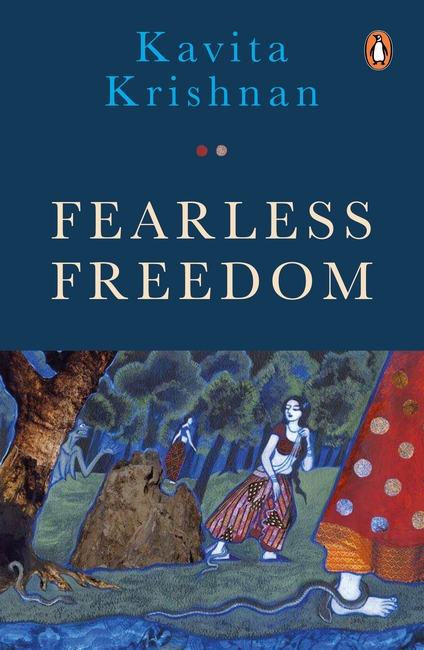
‘Safety’ for women in India is, more often than not, coded as curtailment of autonomy. To be ‘safe’, women are told they must allow themselves to be kept under constant surveillance. Their movement is restricted to specific spaces, often homes and hostels. Extreme levels of control are exercised to confine their mobility.
But is freedom really incompatible with safety? In this ground-breaking and radical book, Kavita Krishnan locates the personal and political repercussions of erasing women from public spaces. She argues that many real and violent threats to female autonomy are, in fact, hidden in plain sight. Often challenging conventional wisdom, this is a blazing, fiery manifesto for greater equality, political and economic independence, and, most of all, personal freedom.
Republic of Religion
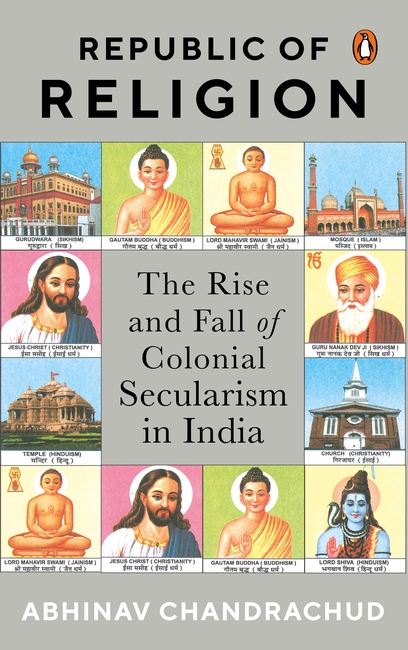
How did India aspire to become a secular country? Given our colonial past, we derive many of our laws and institutions from England. We have a parliamentary democracy with a Westminster model of government. Our courts routinely use catchphrases like ‘rule of law’ or ‘natural justice’, which have their roots in London. However, during the period of colonial rule in India, and even thereafter, England was not a ‘secular’ country. The king or queen of England must mandatorily be a Protestant. The archbishop of Canterbury is still appointed by the government. Senior bishops still sit, by virtue of their office, in the House of Lords.
Thought-provoking and impeccably argued, Republic of Religion reasons that the secular structure of the colonial state in India was imposed by a colonial power on a conquered people. It was an unnatural foreign imposition, perhaps one that was bound, in some measure, to come apart once colonialism ended, given colonial secularism’s dubious origins.