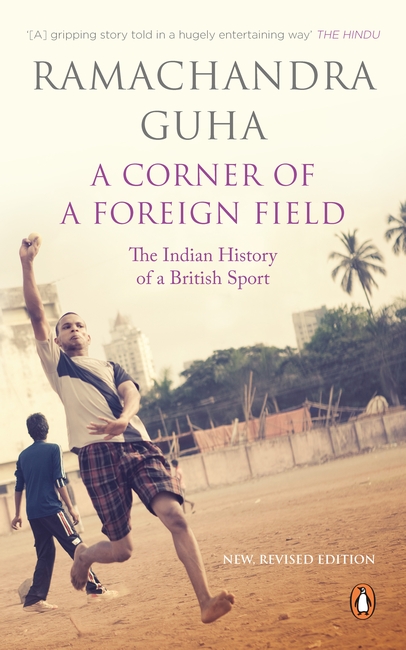
A Corner of a Foreign Field seamlessly interweaves biography with history, the lives of famous or forgotten cricketers with wider processes of social change. C. K. Nayudu and Sachin Tendulkar naturally figure in this book, but so, too, in unexpected ways, do B. R. Ambedkar, Mahatma Gandhi, and M. A. Jinnah. The Indian careers of those great British cricketers, Lord Harris and D. R. Jardine, provide a window into the operations of Empire. The remarkable life of India’s first great slow bowler, Palwankar Baloo, provides an arresting new perspective on the struggle against caste discrimination. Later chapters explore the competition between Hindu and Muslim cricketers in colonial India and the destructive passions now provoked when India plays Pakistan.
For this new edition, Ramachandra Guha has added a long epilogue bringing the story up to date to cover, among other things, the advent of the Indian Premier League and the Indian team’s victory in the World Cup of 2011, these linked to social and economic transformations in contemporary India.
A pioneering work, essential for anyone interested in either of those vast themes, cricket and India, A Corner of a Foreign Field is also a beautifully written meditation on the ramifications of sport in society at large.

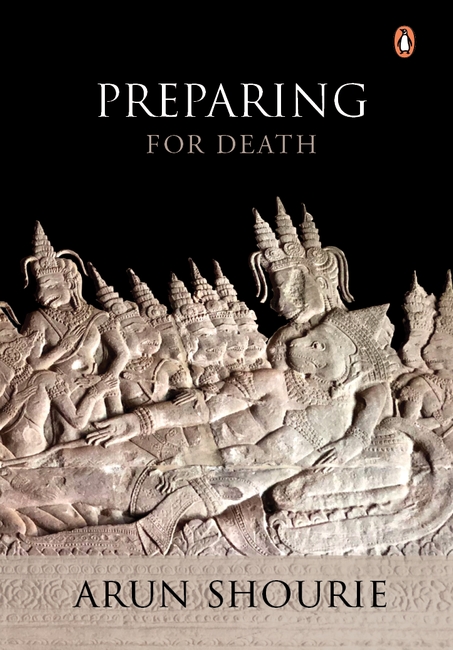
The one certainty in life, the one appointment which each of us will just have to face, is the one for which we do the least to prepare-death. From the lives and last days of the Buddha, Ramakrishna Paramahamsa, Ramana Maharshi, Gandhiji, Vinoba; from our religious texts; from the teachings of great meditation masters; from santhara to sannyas to practices by which we may tame our mind-leavening all these by his personal experiences-Arun Shourie presents clues to ensure that we face our end with equanimity.
In the process, he lays down what we must do if rituals, pilgrimages and mantras are to help us. He leads us to ask whether texts such as The Tibetan Book of the Dead are for the dead, or do they set out lessons for us, the living? He leads us to see through the sedatives that we are fed. Even as we are being frightened by accounts of ‘hell’, are we not actually being lulled to sleep? Does the fact that we will face extreme tortures in hell not mean that in some form we will survive death? To experience them, after all, we must be present.
Religions entice us into the great questions. Is there a soul that is never born and never dies? Is there life after death? Is there rebirth? Is there God? What is real and what is just maya? The greatest teachers and mystics have come up with different answers. Each of them has had direct experience of what she or he has proclaimed to be the truth. How, then, are we to proceed?

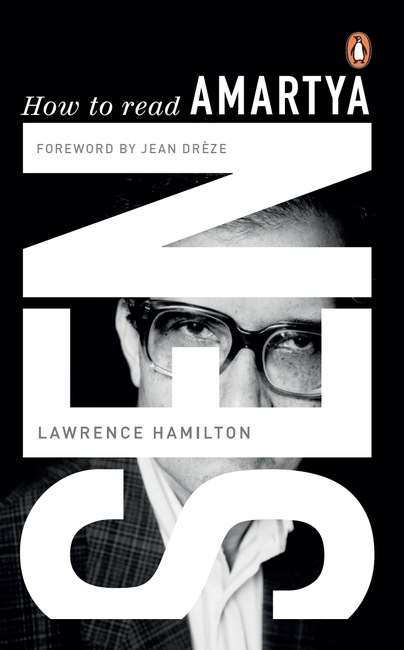
Nobel Laureate Amartya Sen is one of the world’s best-known voices for the poor and the downtrodden, and an inspiration for the proponents of justice across the globe. He has contributed almost without peer to the study of economics, philosophy and politics, transforming social choice theory, development economics, ethics, political philosophy and Indian political economy, to list but a few.
This book offers a much-needed introduction to Amartya Sen’s extraordinary variety of ideas. Lawrence Hamilton provides an excellent, accessible guide to the full range of Sen’s writings, contextualizing his ideas and summarizing the associated debates. In elegant prose, Hamilton reconstructs Sen’s critiques of the major philosophies of his time, assesses his now famous concern for capabilities as an alternative for thinking about poverty, inequality, gender discrimination, development, democracy and justice, and unearths some overlooked gems. Throughout, these major theoretical and philosophical achievements are subjected to rigorous scrutiny.
How to Read Amartya Sen is a major work on one of the most influential economists and philosophers of the last few centuries. It will be illuminating for readers keen to understand the breadth of Sen’s vision, and an invaluable resource for scholars, policy makers and global activists.

This second volume of Arundhati Roy’s collected non-fiction writing brings together fourteen essays written between June 2002 and November 2004. In these essays she draws the thread of empire through seemingly unconnected arenas, uncovering the links between America’s War on Terror, the growing threat of corporate power, the response of nation states to resistance movements, the role of NGOs, caste and communal politics in India, and the perverse machinery of an increasingly corporatized mass media. Meticulously researched and carefully argued, this is a necessary work for our times.

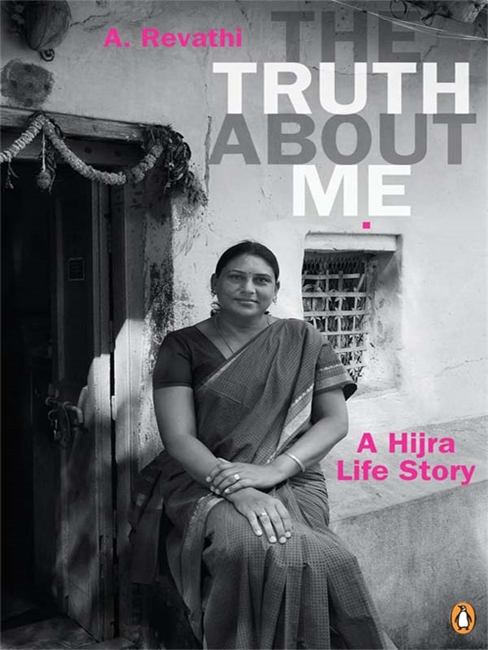
Revathi was born a boy, but felt and behaved like a girl. In telling her life story, Revathi evokes marvellously the deep unease of being in the wrong body that plagued her from childhood. To be true to herself, to escape the constant violence visited upon her by her family and community, the village-born Revathi ran away to Delhi to join a house of hijras. Her life became an incredible series of dangerous physical and emotional journeys to become a woman and to find love. The Truth about Me is the unflinchingly courageous and moving autobiography of a hijra who fought ridicule, persecution and violence both within her home and outside to find a life of dignity.

In the summer of 1995, six tourists were kidnapped in the mountains of Kashmir. The ransom note said the kidnappers were from an unheard of Islamic outfit and that they wanted the release of Pakistani militant leader Maulana Masood Azhar (later responsible for the attack on the Indian parliament). The kidnapping electrified the world and for the first time put the global spotlight on Kashmir. Within four days, one of the prisoners had made a hair-raising escape. A month on, was found, beheaded by his captors who had carved their name into his flesh. In the background, camped out in Delhi, the families of the missing struggled to keep their hopes alive, while international governments negotiated frantically with India, and the army, police and intelligence services tried to follow the trail. But the remaining four hostages were never found, their case forgotten – until now.
The Discovery of India has acquired the status of a classic since it was first published in 1946. Nehru’s brilliant intellect, deep humanity, and lucid style make ‘The Discovery of India’ essential reading for anyone interested in India, both its past and its present.
Written over five months when Jawaharlal Nehru was imprisoned in the Ahmadnagar Fort, The Discovery of India has acquired the status of a classic since it was first published in 1946.
In this work of prodigious scope and scholarship, one of the greatest figures of Indian history unfolds the panorama of the country’s rich and complex past, from prehistory to the last years of British colonial rule. Analysing texts like the Vedas and the Arthashastra, and personalities like the Buddha and Mahatma Gandhi, Nehru brings alive an ancient culture that has seen the flowering of the world’s great traditions of philosophy, science and art, and almost al its major religions.
Nehru’s brilliant intellect, deep humanity and lucid style make The Discovery of India essential reading for anyone interested in India, both its past and its present.

Today, India is likely to become one of the major economies of the twenty-first century. But many unresolved questions remain about the sustainability of such growth and its effect on the stability of the nation. Veteran journalist Mark Tully draws on thirty years of reporting India and travels the length and breadth of the country to find the answers. Have the changes had any impact on the poor and marginalised? How can the development of the country’s creaking infrastructure be speeded up to match its huge advances in technology and industry? With a gift for finding the human stories behind the headlines, he looks at the pressing concerns in different areas of life such as governance, business, spirituality and ecology.
In revealing interviews with captains of industry and subsistence farmers, politicians and Dalits, spiritual leaders and bandits, Mark Tully captures the voices of the nation.
From the survival of India’s languages and the protection of wildlife, to the nation’s thriving industries and colourful public affairs, Non-Stop India is a testament to India’s vibrant history and incredible potential, offering an unforgettable portrait of this emerging superpower at a pivotal moment of its history.
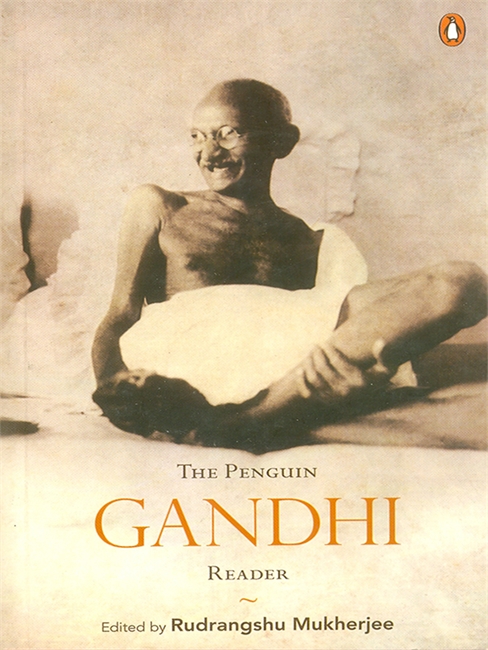
Mohandas Karamchand Gandhi (1869-1948) was born in Porbander on the western coast of India. His childhood and early upbringing were undistinguished but as an adult he initiated and was involved in a series of novel forms of peaceful protests which established him as one of the most important leaders of the twentieth century and one whose message and relevance transcended national boundaries. This meticulously edited volume culled from the Collected Works of Gandhi contains a representative selection of his writings focusing on themes which were central to Gandhi’s philosophy.
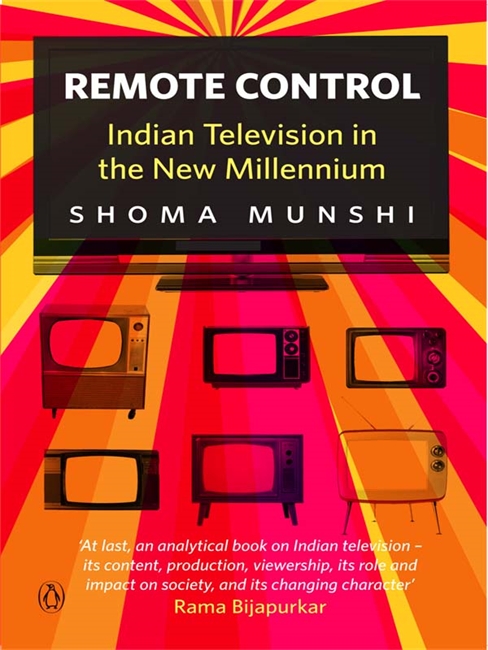
Television is the single most powerful and dynamic agent of change in India today. It is also the country’s most popular and accessible form of entertainment. Remote Control examines three kinds of programming-24×7 news, soap operas and reality shows-that have changed Indian television forever, and analyzes how these three genres, while drawing on different sources, are hybridized, indigenized and manage to ultimately project a distinctively Indian identity. Shoma Munshi’s book shows us how everyday reality in India in the twenty-first century shapes television; and how television, in turn, shapes us.