“Beware of a land where celibate men decide what good sex is.”
Hindu mythology makes constant references to queerness, questioning the notions of maleness and femaleness. A casual reading of any Indian ancient text reveals as much. Then why do we still tiptoe around discussions about queerness and/or ideas that challenge our traditional understanding of gender and sexuality today?
If these ancient texts from centuries ago could be inclusive of the spectrum of sexuality, what changed over the years? The courts of India have always upheld secularism and human rights. But this courtesy has not been extended to queer people yet. Can our ancient texts hold the answers we’ve been too scared to look for?
Read on as Devdutt Pattanaik, the master of mythology, examines instances of queerness and analyzes what led to the evolution of queer rights in India.

Books not Borders was a project undertaken in the year 2017 to bring together two cultures sundered by history and joined by an immense shared heritage. This is a heritage of pain and loss, but also one of a mutual emotional palette, the same passion for home and hearth and in the quiet places with ordinary people, a recognition of our mirrored identity. Literature has always been a space that finds common ground in that which was discrete, and this collection of Indian and Pakistani authors have come together to create a conversation of the ordinary people that constitute the hearts and minds of these two nations, in the hope that conversation brings understanding, and understanding plants the seed toward growing peace.
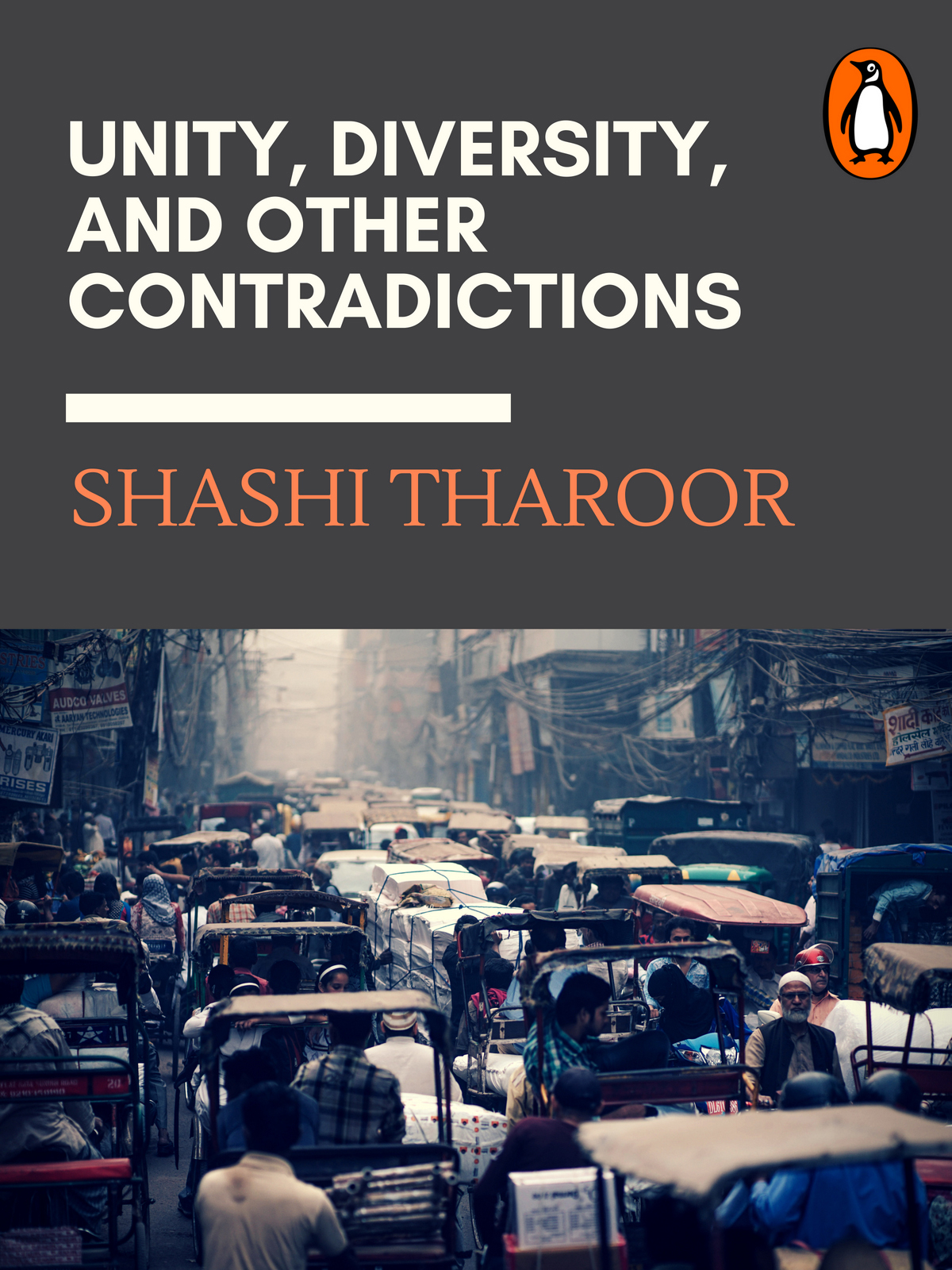
Indians are often proud of the ‘Unity in Diversity’ adage that is commonly used to describe the country’s ethos. However, diversity in India has most often brought about an array of conflicts—the most significant between Hindus and Muslims—some of which continues to this day.
‘Hinduism’, the term most commonly associated with India, actually embraces an eclectic range of doctrines and practices, from pantheism to agnosticism and from faith in reincarnation to belief in the caste system. It is a religion without fundamentals. And yet, Hindu fundamentalism is one of the biggest threats that secular India faces today. So how is one to make sense of this country?
Read on as Shashi Tharoor, eminent thinker and writer, analyses the many inconsistencies and idiosyncrasies that make up India in ‘Unity, Diversity, and Other Contradictions’.
‘India is more than the sum of its contradictions. She is a myth and an idea, a dream and a vision, and yet very real and present and pervasive.’
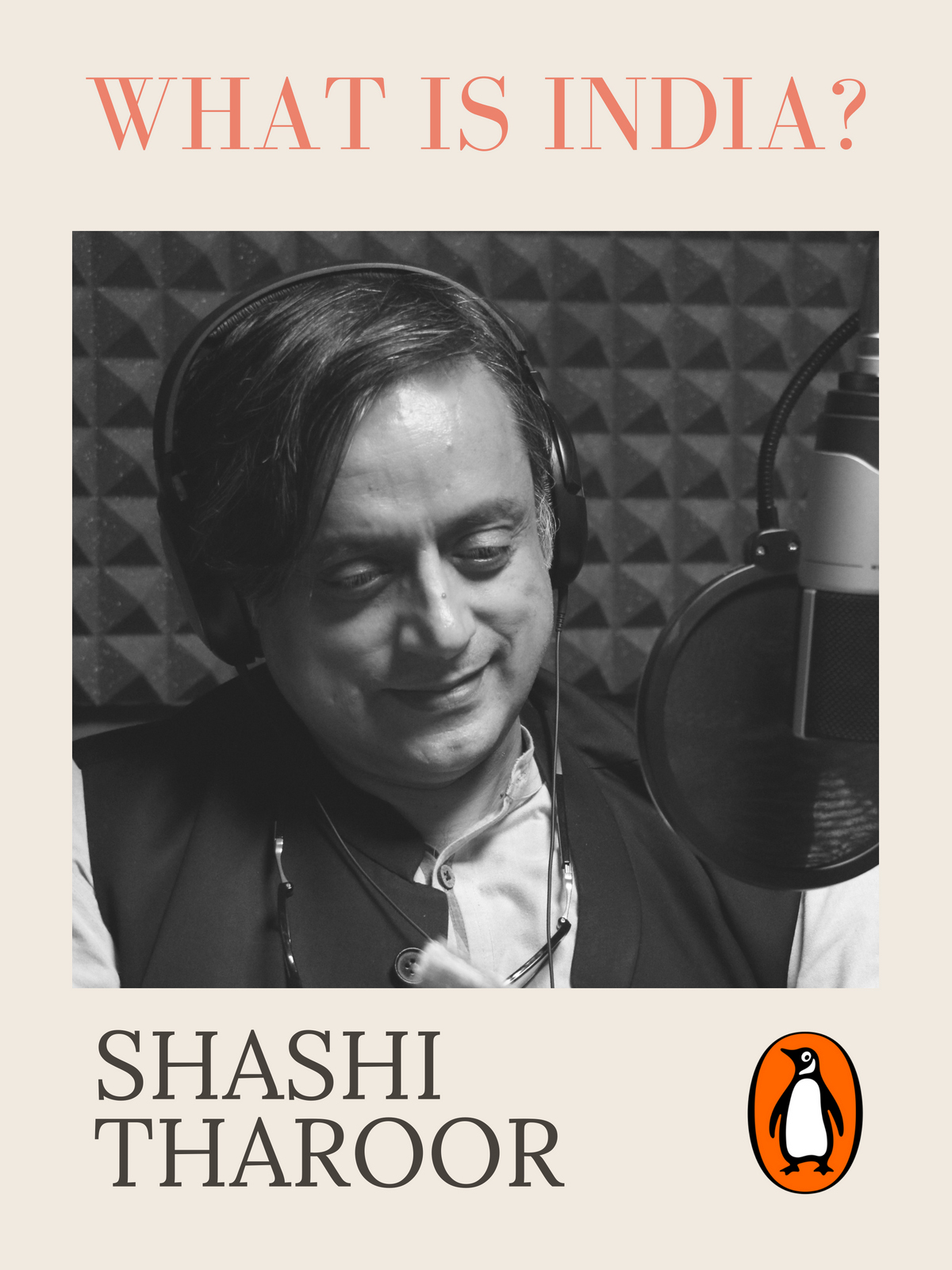
No other country in the world embraces the extraordinary mixture of ethnic groups, the profusion of mutually incomprehensible languages, the varieties of topography and climate, the diversity of religions and cultural practices, and the range of levels of economic development quite like India does.
It truly is a wonder how India has not only managed to survive but thrive in this manner. The country is far from gaining the efficiency of a well-oiled machine, and yet, things always seem to be making some kind of headway. So how does it all work?
Read on as Shashi Tharoor, one of India’s most prolific writers, attempts to answer that question in ‘What is India?’
Saba Gul grew up living a life of privilege, studying in Karachi and going on to a degree in computer science at the coveted MIT. Now she runs a business dedicated to empowering adolescent girls and lifting their families out of poverty through education and empowerment.
Business and Life Skills School, or BLISS, is the result of an idea that refused to let go once it took hold of Gul. Seeing young girls drop out of school to become another source of income for their families even as she led a comfortable life didn’t quite seem right to her. By starting BLISS, Gul not only managed to get hundreds of young girls—and their mothers—back into classrooms, but also figured out a way to compensate them.
Read on to discover the inspiring story of Saba Gul, a StartingBloc Fellow, 2011, as well as an Unreasonable Institute Fellow, 2011, who managed to empower and create a community of artisans from the remote villages of Pakistan.

REVISED AND UPDATED
THE WORLD THROUGH A FEMINIST LENS
For Nivedita Menon, feminism is not about a moment of final triumph over patriarchy but about the gradual transformation of the social field so decisively that old markers shift forever. From sexual harassment charges against international figures to the challenge that caste politics poses to feminism, from the ban on the veil in France to the attempt to impose skirts on international women badminton players, from queer politics to domestic servants’ unions to the Pink Chaddi campaign, Menon deftly illustrates how feminism complicates the field irrevocably.
Incisive, eclectic and politically engaged, Seeing like a Feminist is a bold and wide-ranging book that reorders contemporary society.

From tracing the possible first arrival of man in India to writing about love, sex, money, parenting and values in Indian society and discussing nationalism, religion and democracy, Miniya Chatterji presents an accessible yet brilliant intellectual treatise about issues that affect Indians the most. Indian Instincts is a seminal and deeply philosophical work, presented tactfully with entertaining and memorable instances. It is a must-read for anyone who wants to know what makes an Indian. The vivid and insightful examples make us reflect: Are we willingly entrapped in the institutions of our own making? Have these institutions-the government, corporations, religion-become sources of the problem in India, increasing economic inequality?
This book, a collection of fifteen powerful essays that argue for greater equality and opportunity in contemporary India, holds up a mirror to what we Indians have become.
WITH A NEW AFTERWORD
Winston Churchill has been venerated as a resolute statesman and one of the great political minds of the last century. But, as Madhusree Mukerjee reveals in this groundbreaking historical investigation, his deep-seated bias against Indians precipitated one of the world’s greatest man-made disasters — the Bengal Famine of 1943 — resulting in the deaths of over four million Indians. Combining meticulous research with a vivid narrative, Churchill’s Secret War places this overlooked tragedy into the larger context of World War II, India’s freedom struggle and Churchill’s legacy.

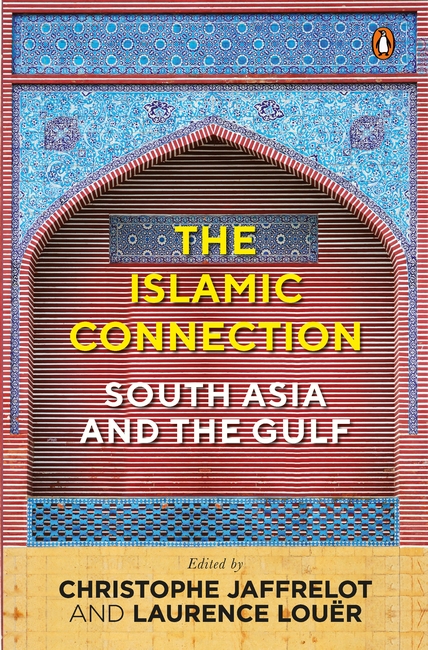
The region inhabited by the largest number of Muslims-roughly 500 million-today is South Asia. In the course of the Islamization process that began in the eighth century, the region developed a distinct Indo-Islamic civilization that culminated in the Mughal Empire. In the Gulf, while paying lip service to the power centres, including Mecca and Medina, this civilization cultivated its own variety of Islam, which was based on Sufism.
Over the last fifty years, pan-Islamic ties have intensified between these two regions. Gathering together some of the best specialists on the subject, this volume explores these ideological, educational and spiritual networks, which have gained momentum due to political strategies, migration flows and increased communications. At stake are both the resilience of the civilization that imbued South Asia with a specific identity and the relations between Sunnis and Shias in a region where Saudi Arabia and Iran are fighting a cultural proxy war. The Islamic Connection investigates the nature and implications of the cultural, spiritual and socio-economic rapprochement between these two Islams.

In the forest of insecurities, is it possible to discover humanity through pleasure?
Can we stop seeing each other as predator, prey, rival or mate, and rediscover ourselves as lovers?
Does the divine reside in sensual delight, in emotional intimacy and in aesthetic experience?
Yes, yes, yes.
That is the promise of the Bhagavata.
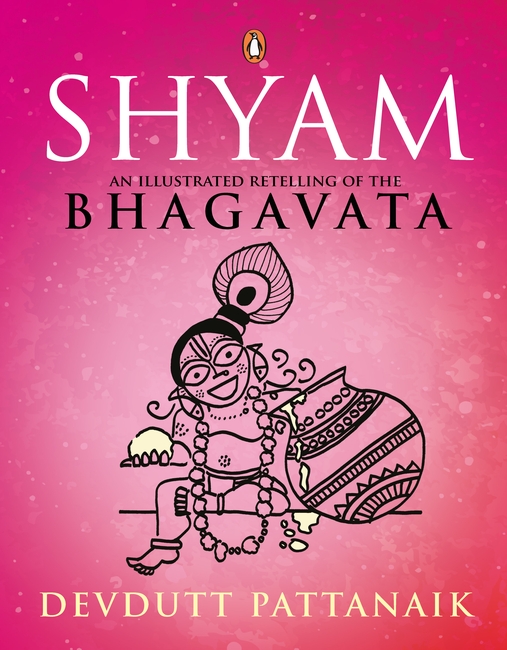
The Bhagavata is the story of Krishna, known as Shyam to those who find beauty, wisdom and love in his dark complexion. It is the third great Hindu epic after the Mahabharata and the Ramayana. However, this narration was composed in fragments over thousands of years, first as the Harivamsa, then as the Bhagavata Purana, and finally as the passionate songs of poet-sages in various regional languages.
This book seamlessly weaves the story from Krishna’s birth to his death, or rather from his descent to the butter-smeared world of happy women to his ascent from the blood-soaked world of angry men.