



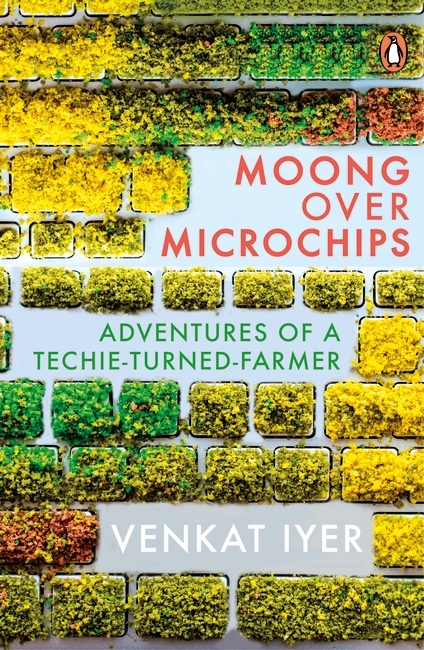
Venkat Iyer was living a fast-paced life in the IT world in Mumbai when he decided to stop and take a long, hard look at where he was headed. Disheartened by his stressful existence in the city, he decided to give it all up and take up organic farming in a small village near Mumbai. But it wasn’t easy. With no experience in agriculture, his journey was fraught with uncertainty. He soon went from negotiating tough clients, strict deadlines and traffic to looking forward to his first bumper crop of moong. As he battled erratic weather conditions and stubborn farm animals, he discovered a world with fresh air and organic food, one where he could lead a more wholesome existence. At times hilarious, and other times profound, this book follows his extraordinary story.
Catagory: Society & Social Sciences
Supreme Whispers
In 1980, a brilliant young American scholar, George H. Gadbois, Jr., met five judges of the Supreme Court of India. The judges gave him astonishing details: about what they actually thought of their colleagues, about the inner workings and politics of the court, their interactions with the government and the judicial appointments process, among many other things. This was only the beginning. Over the course of that decade, Gadbois visited India on two more occasions and conducted over 116 interviews with more than sixty-six judges of the Supreme Court of India (nineteen of whom held the post of chief justice of India),
and others such as senior lawyers, politicians, relatives of deceased judges, and court staff. During each meeting, Gadbois diligently took down handwritten notes, which he later typed up on his typewriter, recording nearly every detail of what the judges had told him, sometimes to a fault.
Relying on these typewritten interviews, Abhinav Chandrachud sheds light on a decade of politics, decision-making and legal culture in the Supreme Court of India. This book yields a fascinating glimpse into the secluded world of the judges of the Supreme Court in the 1980s and earlier.
The Indian Rennaissance
One thousand years ago, India was at the height of its power, influencing the world with its ideas and trade. Now, ten centuries later, India’s recent economic performance is once again attracting world attention as the country re-awakens not just as an economy but as a civilization.
In The Indian Renaissance: India’s Rise after a Thousand Years of Decline, Sanjeev Sanyal looks at the processes that led to ten centuries of decline. He also examines the powerful economic and social forces that are working together to transform India beyond recognition. These range from demographic shifts to rising literacy levels and, the most important revolution, the opening of minds and changed attitude towards innovation and risk-fundamental, if India is to take advantage of the twenty-first century.
Imagining Lahore
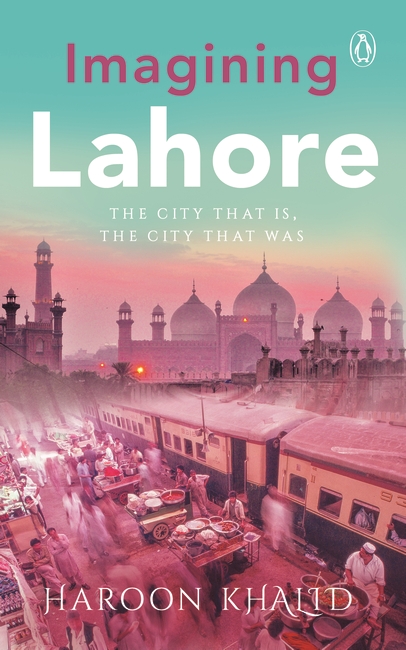
An anecdotal travelogue about Lahore – which begins in the present and travels through time to the mythological origins of the city attributed to Ram’s son, Lav. Through the city’s present – its people, communities, monuments, parks and institutions – the author paints a vivid picture of the city’s past. From its emergence under Mahmud Ghaznavi to the Mughal centuries where several succession intrigues unfolded on its soil, its recasting as the capital of Maharaja Ranjit Singh’s Khalsa Empire, the role it played in preserving the British Raj, to acting as an incubator of revolutionaries and people’s movements, Lahore influenced the subcontinent’s political trajectory time and again.
Today, too, Lahore often determines which way the wind will blow on Pakistan’s political landscape. The Lahore Resolution of 1940, which laid the blueprint for the creation of the country, was signed here. The city saw the birth of Zulfikar Ali Bhutto’s PPP, as well as his downfall. It was to Lahore that Benazir Bhutto returned to combat a military dictator, and where Imran Khan heralded his arrival as a main contender on the political battlefield. As the capital of Punjab, Lahore continues to cast a long shadow over the federal state.
India Moving
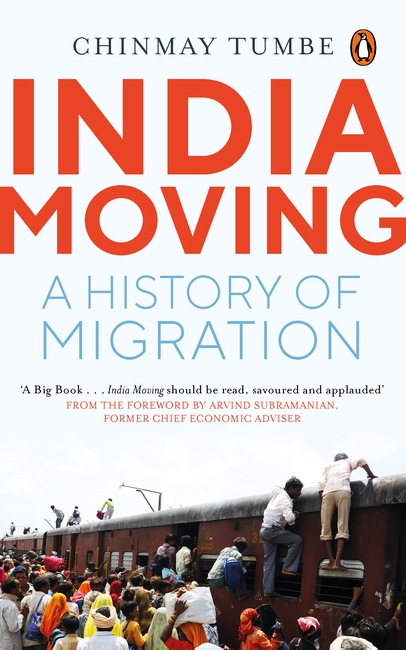
From adventure to indenture, martyrs to merchants, Partition to plantation, from Kashmir to Kerala, Japan to Jamaica and beyond,
the many facets of the great migrations of India and the world are mapped in India Moving, the first book
of its kind.
To understand how millions of people have moved-from, to and within India-the book embarks on a journey laced with evidence, argument and wit, providing insights into topics like the slave trade and migration of workers, travelling business communities such as the Marwaris, Gujaratis and Chettiars, refugee crises and the roots of contemporary mass migration from Bihar and Kerala, covering terrain that often includes diverse items such as mangoes, dosas and pressure cookers.
India Moving shows the scale and variety of Indian migration and argues that greater mobility is a prerequisite for maintaining the country’s pluralistic traditions.
Kannur
Kannur, a sleepy coastal district in the scenic south Indian state of Kerala, has metamorphosed into a hotbed of political bloodshed in the past few decades. Even as India heaves into the age of technology and economic growth, the town has been making it to the national news for horrific crimes and brutal murders with sickening regularity.
What makes this region so susceptible to vendetta politics and such deadly violence? How is it an anomaly in Kerala, the state with the highest social development parameters in India? Born in Kannur and brought up amidst some of the tallest political leaders of the state, author Ullekh N.P. delves into his personal experiences while drawing a modern-day graph that charts out the reasons, motivations and the local lore behind the turmoil. He analyses the numbers that lay bare the truth behind the hype, studies the area’s political and cultural heritage, and speaks to the main protagonists and victims. With his journalistic skills and years of on-the-field reporting, he paints a gripping narrative of the ongoing bloodbath and the perceptions around it.
Ullekh’s investigations and interviews reveal a bigger game at work involving players who will stop at nothing to win.
Feminist Rani
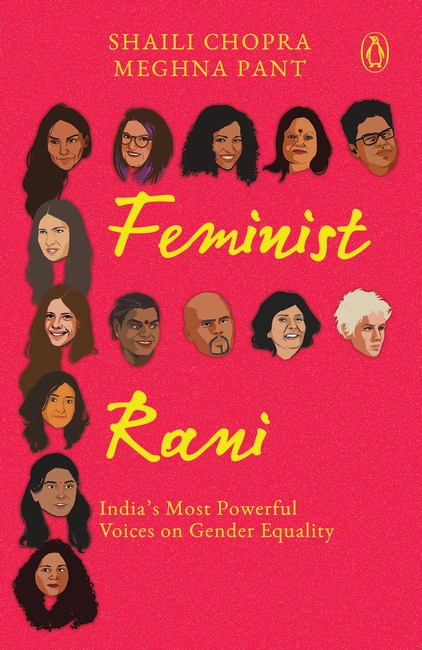
Feminist Rani is a collection of interviews with path-breaking and fascinating opinion leaders–Kalki Koechlin, Tanmay Bhatt, Gul Panag, Aditi Mittal, Gauri Sawant, and many more. These are women and men who have advocated gender equality and women’s rights through their work. These compelling conversations provide a perspective on the evolving concept of feminism in an age when women are taking charge and leading the way.
India and the World
What is the earliest evidence of human history in India and how does that compare with other parts of the world? What was happening in India when the pyramids were being built in Egypt? What was different about Ashoka’s inscriptions when compared with the public inscriptions of other emperors? How have different civilizations pictured the divine? How did rulers promote themselves through grand court art and aesthetics? What have been the routes of civilizational exchange over land and sea that make India a part of the world? And have those exchanges always been peaceful? How have different countries and communities articulated their quest for freedom in recent history? Does everyone in the world perceive history and time in the same way?
Objects-be they coins, sculptures, documents or paintings-tell rich stories. India & the World accompanies a collaborative exhibition that creates dialogues between the world and India through a fascinating array of artefacts. On the one hand they reveal how different people have responded to situations in their own way, and on the other, they provide an understanding of the complex panorama of a deeply interconnected global history.
What We Talk about When We Talk about Rape
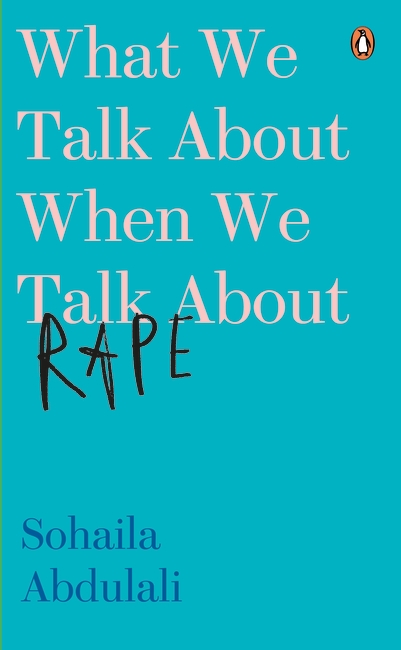
Sohaila Abdulali was the first Indian survivor to speak out about rape. Gang-raped as a teenager in Bombay and indignant at the deafening silence on the issue in India, she wrote an article for a woman’s magazine questioning how we perceive rape and rape victims. Thirty years later, she saw the story go viral in the wake of the fatal 2012 Delhi rape and the global outcry that followed.
Writing from the viewpoint of a survivor, writer, counsellor and activist, and drawing on three decades of grappling with the issue personally and professionally and her work with hundreds of survivors, Sohaila Abdulali looks at what we-women, men, politicians, teachers, writers, sex workers, feminists, sages, mansplainers, victims and families-think about rape and what we say.
She also explores what we don’t say. She asks pertinent questions: Is rape always a life-defining event? Does rape always symbolize something? Is rape worse than death? Is rape related to desire? Who gets raped? Is rape inevitable? Is one rape worse than the other? Who rapes? What is consent? How do you recover a sense of safety and joy? How do you raise sons? Who gets to judge?
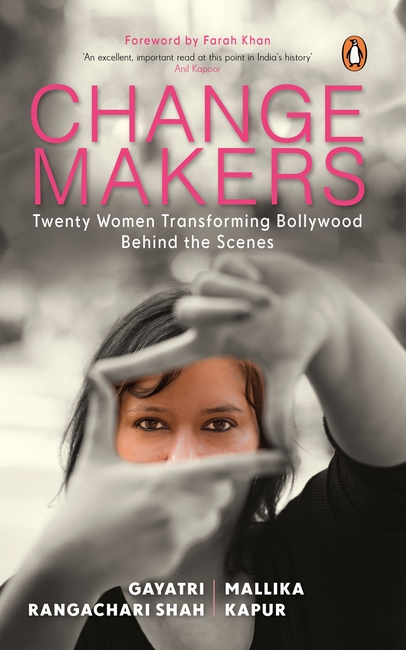
Changemakers
Blurb:
Since Bollywood’s earliest days, women have played a part in its success, both in front of the camera and away from it. Yet it has taken more than half a century for women to assert their presence in significant numbers in Bollywood. Today, Hindi cinema relies on a record number of women who work tirelessly, sometimes invisibly, to keep the world’s largest dream factory buzzing.
This book tells the story of twenty incredible women, many with no prior connections in the industry, who have carved successful careers despite significant challenges. They often work away from the public gaze-as studio heads, producers, directors, make-up artists, stylists, script writers, lyricists,editors, choreographers, stunt artists, set designers, and in the many other jobs that support the making of a movie. These women deserve to be applauded and their journeys acknowledged, as they transform Bollywood and in the process, create a new India.