



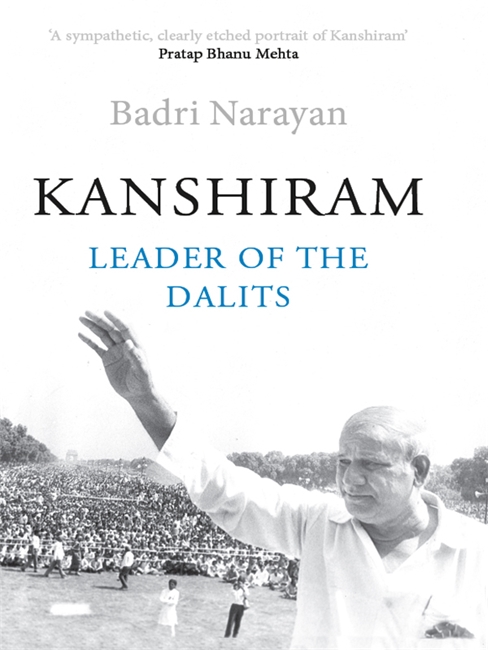
Venerated as a dalit icon, Kanshiram (1934–2006) is regarded as being next only to Ambedkar today. This book illuminates his journey, from the early years in rural Punjab and with Ambedkarites in Pune, to his launching BAMCEF, an umbrella organization uniting backward castes, scheduled tribes, dalits and minorities, and eventually the Bahujan Samaj Party in 1984.
Drawing on myriad oral and written sources, Badri Narayan shows how Kanshiram mobilized dalits with his homespun idiom, cycle rallies and, uniquely, the use of local folk heroes and myths, rousing their self-respect, and how he struck opportunistic alliances with higher-caste parties to seize power for dalits. Evocatively described is his extraordinary relationship with Mayawati, right until his death, and the role she has played in fulfilling his vision, during and after his lifetime.
Contrasting the approach of the two men, Narayan highlights the turn Kanshiram gave to Ambedkar’s ideas. Unlike Ambedkar, who sought its annihilation, he saw caste as a basis for forging a dalit identity and a source of political empowerment.
Authoritative and insightful, this is a rare portrait of the man who changed the face of dalit society and, indeed, of Indian politics.
Catagory: Society & Social Sciences
Finding Radha
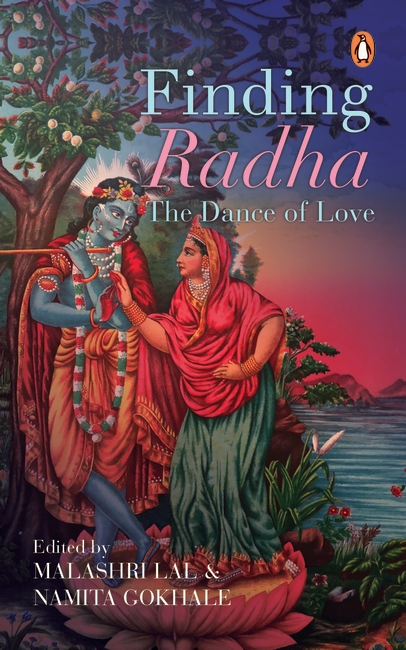
Who was Radha, and why has she captured the imagination of so many writers across centuries? No other goddess combines the elements of bhakti and shringara quite as exquisitely as the divine milkmaid. She spans a vivid rainbow of imagery-from the playfulness of the Ras Lila to the soulfulness of her undying love, from the mystic allure of her depictions in poetry, art and sculpture to her enduring legacy in Vrindavan. In a way that sets her apart from other female consorts, Radha is idealized and dreamed of in a way that is almost more elemental than mythical.
Namita Gokhale and Malashri Lal, who brought us In Search of Sita: Revisiting Mythology, now present an anthology on the mysterious Radha, the epitome of love, who defies all conventional codes yet transcends social prohibitions through the power of the spiritual and the sensual, the sacred and the erotic. Finding Radha is the first of its kind: a collection of poetry, prose and translation that enter the historical as well as the artistic dimensions of the eternal romance of Radha and Krishna.
Invisible Men
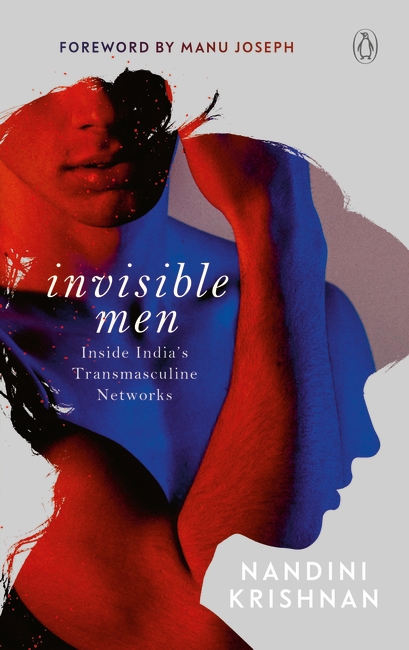
Female-to-male transgender people, or transmasculine people as they are called, are just beginning to form their networks in India. But their struggles are not visible to a gender-normative society that barely notices, much less acknowledges, them. While transwomen have gained recognition through the extraordinary efforts of activists and feminists, the brotherhood, as the transmasculine network often refers to itself, remains imponderable, diminished even within the transgender community. For all intents and purposes, they do not exist. In a country in which parents wish their daughters were sons, they exile the daughters who do become sons.
In this remarkable, intimate book, Nandini Krishnan burrows deep into the prejudices encountered by India’s transmen, the complexities of hormonal transitions and sex reassignment surgery, issues of social and family estrangement, and whether socioeconomic privilege makes a difference. With frank, poignant, often idiosyncratic interviews that braid the personal with the political, the informative with the offhand, she makes a powerful case for inclusivity and a non-binary approach to gender.
Above all, she asks the question: what does manhood really mean?
Why I Am a Liberal
The stamping out of difference, the quelling of diversity and the burial of argument is, in fact, most un-Indian. Anyone who seeks to end that dialogue process is ignoring Indianness and patriotism. The liberal Indian argues for the rights of the marginalized in the tradition of Gandhi for trust, mutual understanding and bridge-building. Real patriotism lies in old-fashioned ideas of accommodation, friendship and generosity; not in force, muscle flexing and dominance. Why I Am a Liberal is Sagarika Ghose’s impassioned meditation on why India needs to be liberal.
Democrats and Dissenters
A major new collection of essays by Ramachandra Guha, Democrats and Dissenters is a work of rigorous scholarship on topics of compelling contemporary interest, written with elegance and wit.
The book covers a wide range of themes: from the varying national projects of India’s neighbours to political debates within India itself, from the responsibilities of writers to the complex relationship between democracy and violence. It has essays critically assessing the work of Amartya Sen and Eric Hobsbawm, commentaries on the tragic predicament of tribals in India–who are, as Guha demonstrates, far worse off than Dalits or Muslims, yet get a fraction of the attention–and on the peculiar absence of a tradition of conservative intellectuals in India.
Each essay takes up an important topic or an influential intellectual, as a window to explore major political and cultural debates in India and the world. Democrats and Dissenters is a book that is widely read, and even more widely discussed.
Animal Intimacies
What do we really know of the intimate-and intense-moments of care, kinship, violence, politics, indifference and desire that occur between human and non-human animals?
Built on extensive ethnographic fieldwork in the mountain villages of India’s Central Himalayas, Radhika Govindrajan’s book explores the number of ways that human and animal interact to cultivate relationships as interconnected, related beings. Whether it is through the study of the affect and ethics of ritual animal sacrifice, analysis of the right-wing political project of cow protection, or examination of villagers’ talk about bears who abduct women and have sex with them, Govindrajan illustrates that multispecies relatedness relies on both difference and ineffable affinity between animals.
The Hungryalists
What happens to a highbrow literary culture when its fault lines-along caste, class and gender-are brutally exposed? What happens to the young iconoclasts who dare to speak and write about these issues openly? Is there such a thing as a happy ending for revolutionaries? Or are they doomed to be forever relegated to the footnotes of history?
This is the never-before-told true story of the Hungry Generation (or ‘the Hungryalists’)-a group of barnstorming, anti-establishment poets, writers and artists in Bengal in the 1960s. Braving social boycott, ridicule and arrests, the Hungryalists changed the literary landscape of Bengal (and many South Asian countries) forever. Along the way, they also influenced iconic poets, such as Allen Ginsberg, who struck up a lifelong friendship with the Hungryalists.
The Spell Of The Flying Foxes
Champaran, 1845. Drawn to the rich, fertile land to farm Blue Gold, indigo, Alfred Augustus Tripe settles by the river Baghmati. A whole village of workers emerges nearby as Tripe starts a family with an Indian heiress. Nearly a century later, Tripe’s sprawling home and most of his family are destroyed in the devastating Bihar earthquake of 1934. Now his only granddaughter, Gladys, must find a way to stop her unscrupulous cousin Harry from usurping her entire inheritance and turning her young children destitute. A formidable dacoit leader miraculously comes to her rescue, India gains independence, and the flying foxes, the bearers of good fortune, disappear.
In sparkling, lyrical prose, Sylvia Dyer, Gladys’s daughter, brings to life a world of picturesque beauty, love and hope intertwined with social ills, and a time when the passionate freedom struggle threatened the very existence of Anglo-Indians in India.
The Radical in Ambedkar
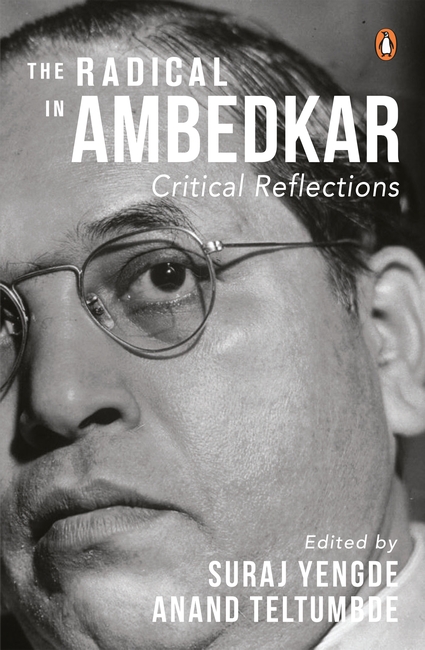
This landmark volume, edited and introduced by Anand Teltumbde and Suraj Yengde, establishes B.R. Ambedkar as the most powerful advocate of equality and fraternity in modern India. While the vibrant Dalit movement recognizes Ambedkar as an agent for social change, the intellectual class has celebrated him as the key architect of the Indian Constitution and the political establishment has sought to limit his concerns to the question of reservations. This remarkable volume seeks to unpack the radical in Ambedkar’s legacy by examining his life work from hitherto unexplored perspectives.
Although revered by millions today primarily as a Dalit icon, Ambedkar was a serious scholar of India’s history, society and foreign policy. He was also among the first dedicated human rights lawyers, as well as a journalist and a statesman. Critically evaluating his thought and work, the essays in this book-by Jean Drèze, Partha Chatterjee, Sukhadeo Thorat, Manu Bhagavan, Anupama Rao and other internationally renowned names-discuss Ambedkar’s theory on minority rights, the consequences of the mass conversion of Dalits to Buddhism, Dalit oppression in the context of racism and anti-Semitism, and the value of his thought for Marxism and feminism, among other global concerns.
An extraordinary collection of immense breadth and scholarship that challenges the popular understanding of Ambedkar, The Radical in Ambedkar is essential reading for all those who wish to imagine a new future.
The Reluctant Family Man
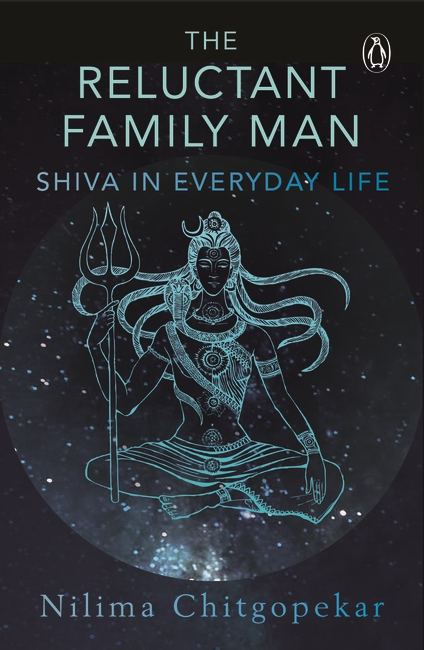
He’s the destroyer of evil, the pervasive one in whom all things lie. He is brilliant, terrifying, wild and beneficent. He is both an ascetic and a householder, both a yogi and a guru. He encompasses the masculine and the feminine, the powerful and the graceful, the Tandava and the Laasya, the darkness and the light, the divine and the human.
What can we learn from this bundle of contradictions, this dreadlocked yogi? How does he manage the devotions and duties of father, husband and man of the house, and the demands and supplications of a clamorous cosmos?
In The Reluctant Family Man, Nilima Chitgopekar uses the life and personality of Shiva-his self-awareness, his marriage, his balance, his detachment, his contentment-to derive lessons that readers can practically apply to their own lives.With chapters broken down into distinct frames of analysis, she defines concepts of Shaivism and interprets their application in everyday life.