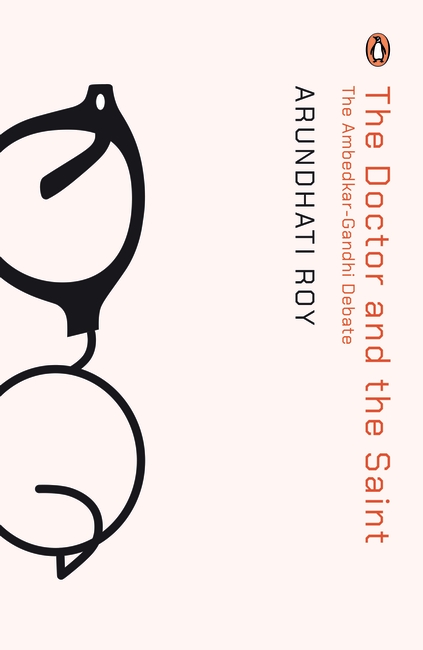
To best understand and address the inequality in India today, Arundhati Roy insists we must examine both the political development and influence of M.K. Gandhi and why B.R. Ambedkar’s brilliant challenge to his near-divine status was suppressed by India’s elite. In Roy’s analysis, we see that Ambedkar’s fight for justice was systematically sidelined in favor of policies that reinforced caste, resulting in the current nation of India: independent of British rule, globally powerful, and marked to this day by the caste system.
This book situates Ambedkar’s arguments in their vital historical context-namely, as an extended public political debate with Mohandas Gandhi. ‘For more than half a century-throughout his adult life-[Gandhi’s] pronouncements on the inherent qualities of black Africans, untouchables and the laboring classes remained consistently insulting,’ writes Roy. ‘His refusal to allow working-class people and untouchables to create their own political organizations and elect their own representatives remained consistent too.’
In The Doctor and the Saint, Roy exposes some uncomfortable, controversial, and even surprising truths about the political thought and career of India’s most famous and most revered figure. In doing so she makes the case for why Ambedkar’s revolutionary intellectual achievements must be resurrected, not only in India but throughout the world.
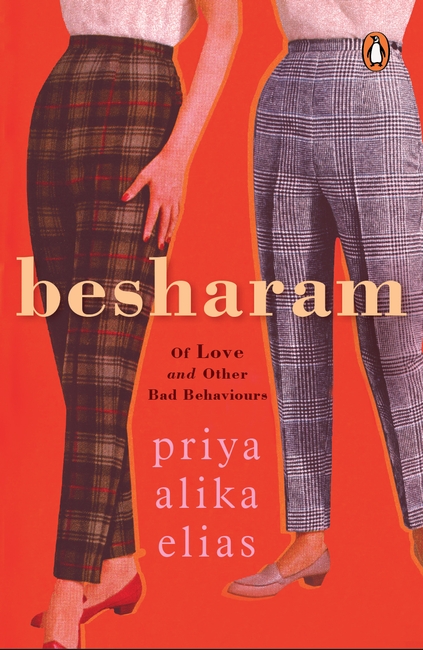
Besharam is a book on young Indian women and how to be one, written from the author’s personal experience in several countries. It dissects the many things that were never explained to us and the immense expectations placed on us. It breaks down the taboos around sex and love and dating in a world that’s changing with extraordinary rapidity. It tackles everything, from identity questions like what should our culture mean to us? to who are we supposed to be on social media? Are we entitled to loiter in public spaces like men do? Why do we have so many euphemisms for menstruation? Like an encyclopedia, or a really good big sister, Besharam teaches young Indian women something that they almost never hear: it’s okay to put ourselves first and not feel guilty for it.
Part memoir, part manual, Besharam serves up ambitious feminism for the modern Indian woman.

The RSS is the most influential cultural organization in India today, with affiliates in fields as varied as politics, education and trade. This book fundamentally addresses three key questions: Why has the Rashtriya Swayamsevak Sangh (RSS) and its affiliates expanded so rapidly over the past twenty-five years? How have they evolved in response to India’s new socio-economic milieu? How does their rapid growth impact the country’s politics and policy?
With unprecedented access, Walter K. Andersen and Shridhar D. Damle lift the curtains to help us understand the inner workings of the Sangh.
Backed by deep research and case studies, this book explores the evolution of the Sangh into its present form, its relationship with the ruling party, the BJP, their overseas affiliates and so much more.

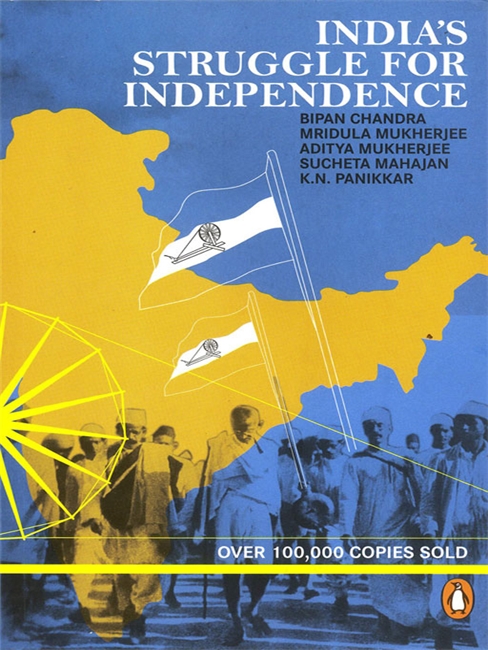
The definitive book on the Indian struggle for freedom by some of the most authoritative historians of modern India by best-selling author Bipin Chandra. Over 3,50,000 copies sold.
“Indispensable for students and for all those who want to know our past in order to understand the present” – Indian Express
India’s Struggle for Independence is the first and most reliable study of India’s epic struggle for freedom. This classic work begins with the abortive revolt against the British in 1857 and culminates in Indian Independence in 1947. Based on years of research as well as personal interviews with hundreds of freedom fighters, it presents a lucid and enduring view of the history of the period.

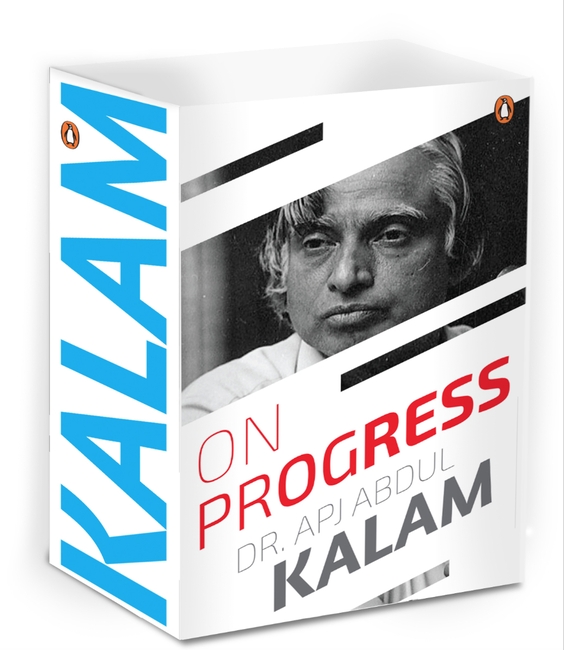
The box set contains:
Target 3 Billion: Innovative Solutions Towards Sustainable Development:
The book talks about the 3 billion people across the globe who live in villages and are often deprived of basic resources. It integrates the challenges and opportunities of the present human civilization and elaborates on providing Urban Amenities in Rural Areas (PURA), a sustainable and environment-friendly system that will uplift the rural masses. The authors pose the question-what can I do to empower 3 billion people? The answers have been provided from the perspectives of citizens, students and senior citizens.
India 2020: A Vision for the New Millennium:
The authors offer a blueprint for India to be counted among the world’s top five economic powers by the year 2020. They cite growth rates and development trends to show that the goal is not unrealistic. Past successes-the green revolution and satellite-based communication linking remote regions of the country, for instance bear them out.
Beyond 2020: A Vision for Tomorrow’s India:
Kalam and Rajan argue that a renewed policy focus is now needed for agriculture, manufacturing, mining, the chemicals industry, healthcare and infrastructure to invigorate these sectors and boost economic growth. India can still make it to the list of developed nations in a decade.

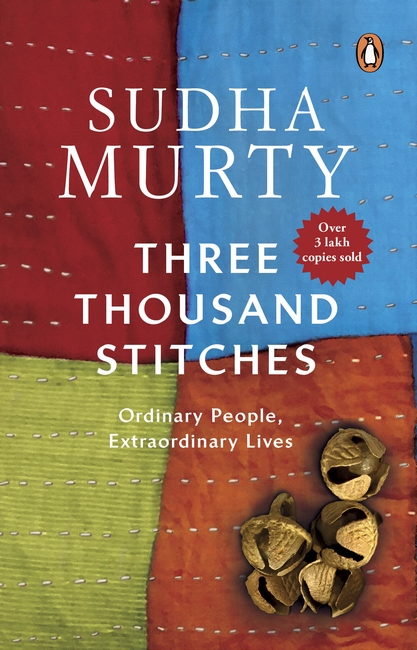
So often, it’s the simplest acts of courage that touch the lives of others. Sudha Murty-through the exceptional work of the Infosys Foundation as well as through her own youth, family life and travels-encounters many such stories . . . and she tells them here in her characteristically clear-eyed, warm-hearted way. She talks candidly about the meaningful impact of her work in the devadasi community, her trials and tribulations as the only female student in her engineering college and the unexpected and inspiring consequences of her father’s kindness. From the quiet joy of discovering the reach of Indian cinema and the origins of Indian vegetables to the shallowness of judging others based on appearances, these are everyday struggles and victories, large and small.
Unmasking both the beauty and ugliness of human nature, each of the real-life stories in this collection is reflective of a life lived with grace.
A must-read for children and everyone alike.
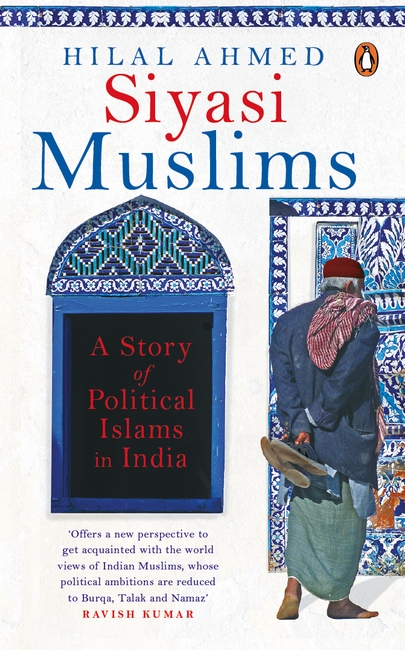
How do we make sense of the Muslims of India?
Do they form a political community?
Does the imagined conflict between Islam and modernity affect the Muslims’ political behaviour in this country?
Are Muslim religious institutions-mosques and madrasas-directly involved in politics?
Do they instruct the community to vote strategically in all elections?
What are ‘Muslim issues’?
Is it only about triple talaq?
Are Muslims truly nationalists? Or do they continue to remain just an ‘other’ in India?
While these questions intrigue us, we seldom debate to find pragmatic answers to these queries. Examining the everydayness of Muslims in contemporary India, Hilal Ahmed offers an evocative story of politics and Islam in India, which goes beyond the given narratives of Muslim victimhood and Islamic separation.
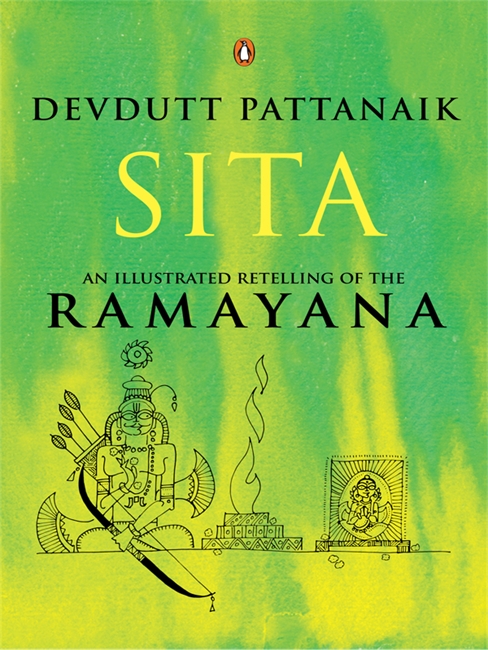
It is significant that the only character in Hindu mythology, a king at that, to be given the title of ekam-patni-vrata, devoted to a single wife, is associated with the most unjust act of abandoning her in the forest to protect family reputation. This seems a deliberate souring of the narrative, made even more complex by Ram’s refusal to remarry despite the pressure on royalty to produce an heir. The intention seems to be to provoke thought on notions of fidelity, property and self-image. And so mythologist and illustrator Devdutt Pattanaik narrates the Ramayan, drawing attention to the many oral, visual and written retellings composed in different times by different poets, each one trying to solve the puzzle in their own unique way. This book approaches Ram by speculating on Sita-her childhood with her father, Janak, who hosted sages mentioned in the Upanishads; her stay in the forest with her husband who had to be a celibate ascetic while she was in the prime of her youth; her interactions with the women of Lanka, recipes she exchanged, emotions they shared; her connection with the earth, her mother; her role as the Goddess, the untamed Kali as well as the demure Gauri, in transforming the stoic prince of Ayodhya into God.
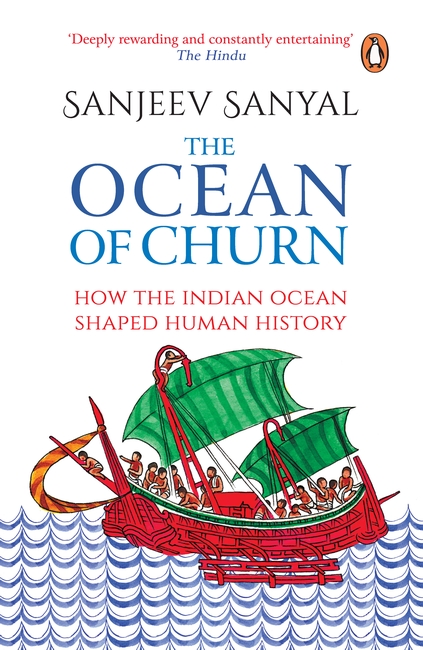
In this ambitious book, bestselling author Sanjeev Sanyal chronicles the grand sweep of history from East Africa to Australia, conjuring the great cities of Angkor and Vijayanagar, medieval Arab empires and Chinese ‘treasure fleets’ in rich, vivid detail. He explores remote archaeological sites, maritime trading networks and half-forgotten oral tales to challenge established historical narratives with fresh evidence. Shining new light on medieval geopolitics and long-lost cities, The Ocean of Churn is a mesmerizing journey into the heart of a vibrant civilization.

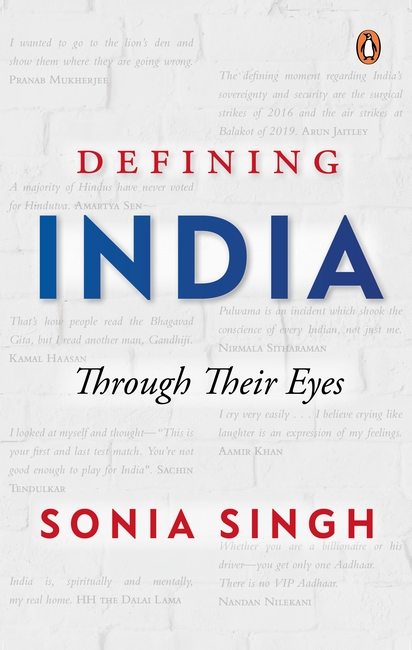
From Amartya Sen to Aamir Khan, Raghuram Rajan, Sachin Tendulkar, His Holiness the Dalai Lama, Pranab Mukherjee, Arun Jaitley, Nirmala Sitharaman and Sania Mirza among others, in this book eminent journalist Sonia Singh opens a window to the myriad worlds of these stalwarts, who share their idea of India in freewheeling conversations. Chatty, candid and amazingly gripping these 15 interviews uncover the pivotal moments in their lives that have become defining moments in the history of the nation.