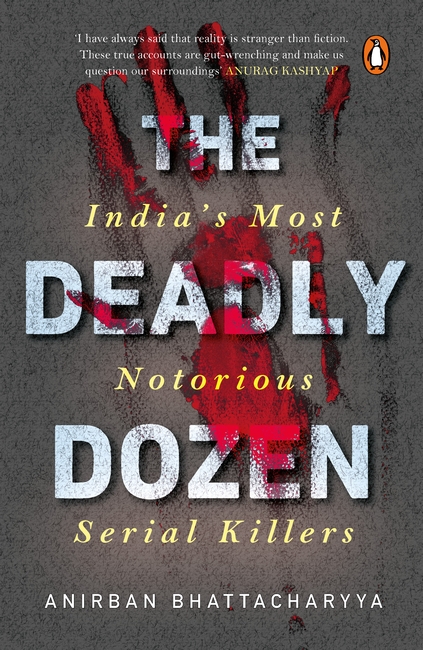
A schoolteacher who killed multiple paramours with cyanide; a mother who trained her daughters to kill children; a thug from the 1800s who slaughtered more than 900 people, a manservant who killed girls and devoured their body parts.
If you thought serial killers was a Western phenomenon, think again!
These bone-chilling stories in The Deadly Dozen will take you into the hearts and heads of India’s most devious murderers and schemers, exploring what made them kill and why?

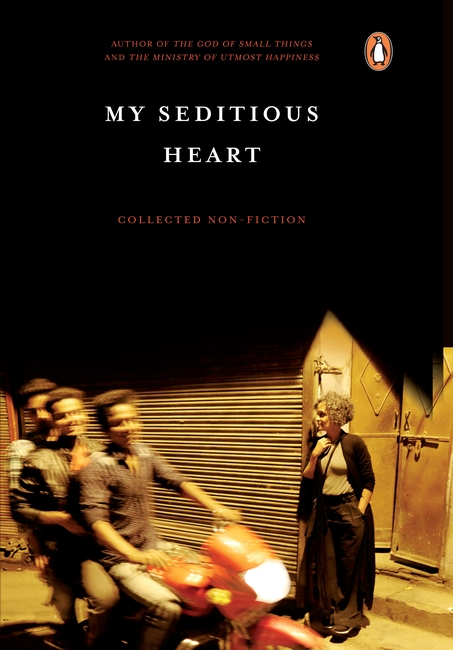
Twenty years, a thousand pages, and now a single beautiful edition of Arundhati Roy’s complete non-fiction.
My Seditious Heart collects the work of a two-decade period when Arundhati Roy devoted herself to the political essay as a way of opening up space for justice, rights and freedoms in an increasingly hostile environment. Taken together, these essays trace her twenty year journey from the Booker Prize-winning The God of Small Things to the extraordinary The Ministry of Utmost Happiness: a journey marked by compassion, clarity and courage. Radical and readable, they speak always in defence of the collective, of the individual and of the land, in the face of the destructive logic of financial, social, religious, military and governmental elites.
In constant conversation with the themes and settings of her novels, the essays form a near-unbroken memoir of Arundhati Roy’s journey as both a writer and a citizen, of both India and the world, from ‘The End of Imagination’, which begins this book, to ‘My Seditious Heart’, with which it ends.

Downward dog, tree pose, Marichyasana . . .
Have you ever wondered how these names for yoga poses came about, inspired from animals, nature, and even sages?
Using thirty carefully researched asanas, yoga teacher Pragya Bhatt draws upon her own yoga practice and research to make a connection between ancient Indian mythology and modern yoga practice.
By depicting the beauty and form of each asana through the lens of Joel Koechlin, this book intends to add meaning and value for practitioners and non-practitioners alike, shedding new light on a familiar subject.

High above the sky stands Swarga, paradise, abode of the gods. Still above is Vaikuntha, heaven, abode of God.
The doorkeepers of Vaikuntha are the twins, Jaya and Vijaya, both whose names mean ‘victory’. One keeps you in Swarga; the other raises you into Vaikuntha. In Vaikuntha there is bliss forever, in Swarga there is pleasure for only as long as you deserve.
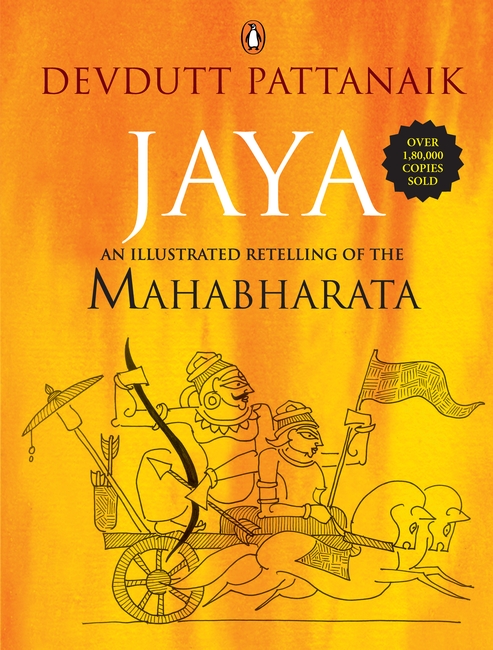
What is the difference between Jaya and Vijaya? Solve this puzzle and you will solve the mystery of the Mahabharata. In this enthralling retelling of India’s greatest epic, the Mahabharata, originally known as Jaya, Devdutt Pattanaik seamlessly weaves into a single narrative plots from the Sanskrit classic as well as its many folk and regional variants, including the Pandavani of Chattisgarh, Gondhal of Maharashtra, Terukkuttu of Tamil Nadu, and Yakshagana of Karnataka.
Richly illustrated with over 250 line drawings by the author, the 108 chapters abound with little-known details such as the names of the hundred Kauravas, the worship of Draupadi as a goddess in Tamil Nadu, the stories of Astika, Madhavi, Jaimini, Aravan and Barbareek, the Mahabharata version of the Shakuntalam and the Ramayana, and the dating of the war based on astronomical data. With clarity and simplicity, the tales in this elegant volume reveal the eternal relevance of the Mahabharata, the complex and disturbing meditation on the human condition that has shaped Indian thought for over 3000 years.

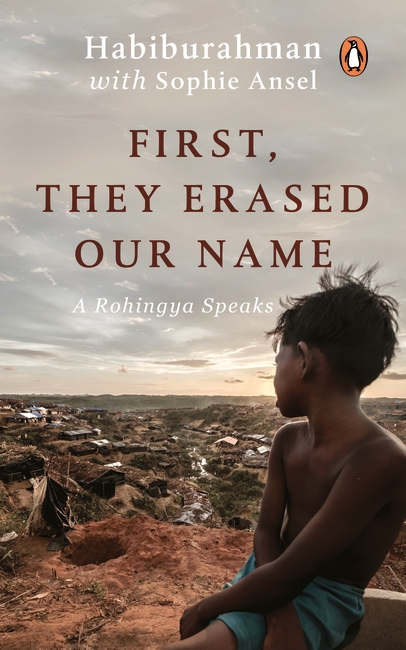
Habiburahman was born in 1979 and raised in a small village in western Burma. When he was three years old, the country’s military leader declared that his people, the Rohingya, were not one of the 135 recognised ethnic groups that formed the eight ‘national races’. He was left stateless in his own country.
Since 1982, millions of Rohingya have had to flee their homes as a result of extreme prejudice and persecution. In 2016 and 2017, the government intensified the process of ethnic cleansing, and over 600,000 Rohingya people were forced to cross the border into Bangladesh.
Here, for the first time, a Rohingya speaks up to expose the truth behind this global humanitarian crisis. Through the eyes of a child, we learn about the historic persecution of the Rohingya people and witness the violence Habiburahman endured throughout his life until he escaped the country in 2000.
First, They Erased Our Name is an urgent, moving memoir about what it feels like to be repressed in one’s own country and a refugee in others. It gives voice to the voiceless.

Following the form of the raga in Indian classical music, Amitav Ghosh slowly builds the tempo of The Circle of Reason. The first part spans several decades, the second unfolds over a few weeks, and the third, like a scherzo, races through a day. Ghosh’s debut novel centres on Alu, an orphan enlisted by his foster father as a soldier in his crusade against the forces of myth and unreason. Suspected of terrorism, they are about to be arrested when a tragic accident forces Alu to flee his village. Pursued by a misguided police officer, Alu finds his way through Calcutta to Goa and on to a trawler that runs illegal immigrants to Africa. Tracing Alu’s journey across two continents, The Circle of Reason is an exceptional novel by one of India’s most celebrated writers in English.

The Imam and the Indian is an extensive compilation of Amitav Ghosh’s non-fiction writings. Sporadically published between his novels, in magazines, journals, academic books and periodicals, these essays and articles trace the evolution of the ideas that shape his fiction. He explores the connections between past and present, events and memories, people, cultures and countries that have a shared history. Ghosh combines his historical and anthropological bent of mind with his skills of a novelist, to present a collection like no other.

‘Masculine’ is most commonly defined in direct contrast to ‘feminine’. Masculinity is thus often seen as an antithesis of femininity, the two ideas apparently locked in a tussle over the allocation of characteristics. Joseph Alter bypasses this opposition altogether in his original exploration of the concept of masculinity in modern India. He offers a strikingly new interpretation of Indian ‘maleness’, one that refers to itself, and not to an ‘other’. Through the distinct yet interrelated lenses of nationalism, yoga, wrestling, the concept of brahmacharya and male chastity, Alter examines the moral, material and biological roots of Indian masculinity. Unusually, it is the ideal of the celibate male that is the basis for this exploration. Moral Materialism: Sex and Masculinity in Modern India offers an elegant and inventive perspective on the multiple meanings of Indian masculinity.

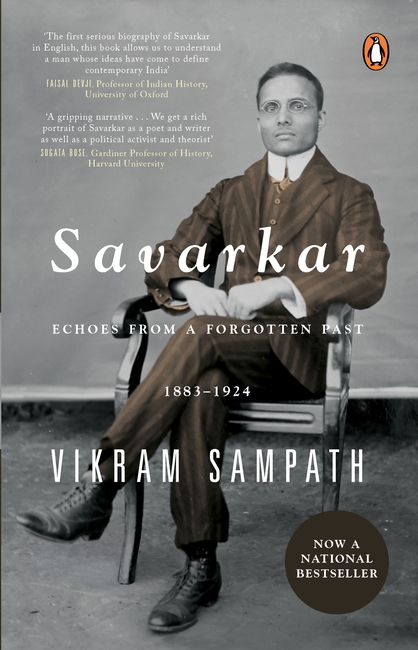
As the intellectual fountainhead of the ideology of Hindutva, which is in political ascendancy in India today, Vinayak Damodar Savarkar is undoubtedly one of the most contentious political thinkers and leaders of the twentieth century. Accounts of his eventful and stormy life have oscillated from eulogizing hagiographies to disparaging demonization. The truth, as always, lies somewhere in between and has unfortunately never been brought to light. Savarkar and his ideology stood as one of the strongest and most virulent opponents of Gandhi, his pacifist philosophy and the Indian National Congress.
An alleged atheist and a staunch rationalist who opposed orthodox Hindu beliefs, encouraged inter-caste marriage and dining, and dismissed cow worship as mere superstition, Savarkar was, arguably, the most vocal political voice for the Hindu community through the entire course of India’s freedom struggle. From the heady days of revolution and generating international support for the cause of India’s freedom as a law student in London, Savarkar found himself arrested, unfairly tried for sedition, transported and incarcerated at the Cellular Jail, in the Andamans, for over a decade, where he underwent unimaginable torture.
From being an optimistic advocate of Hindu-Muslim unity in his treatise on the 1857 War of Independence, what was it that transformed him in the Cellular Jail to a proponent of ‘Hindutva’, which viewed Muslims with suspicion?
Drawing from a vast range of original archival documents across India and abroad, this biography in two parts-the first focusing on the years leading up to his incarceration and eventual release from the Kalapani-puts Savarkar, his life and philosophy in a new perspective and looks at the man with all his achievements and failings.
With 750 million people living in villages, India has the largest rural population in the world. Based on his Indian experience, Dr Kalam recommends a sustainable and inclusive development system called PURA—Providing Urban Amenities in Rural Areas—to uplift the rural masses not by subsidies but through entrepreneurship with community participation. To make his case, Dr Kalam cites the examples of individuals and institutions, in India and from across the world, who, with an entrepreneurial spirit and a burning desire to make a difference, have successfully generated and tapped into the potential of the rural masses. Fabio Luiz de Oliveira Rosa changed the face of the rural district of Palmares, Brazil, by acquiring for the farmers access to electricity and water, which effect combined with better agricultural methods led to an increase in prosperity and stemmed the migration to the cities The 123-strong Magar clan owned Magarpatta, a 430-acre plot on the outskirts of Pune, Maharashtra. In the 1990s, they organized and set up the Magarpatta city which is now home to over 35,000 residents and a working population of 65,000, and boasts of an IT park.