



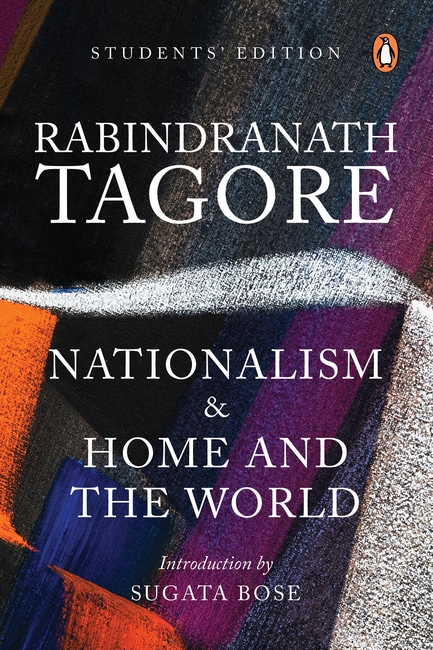
Combining two classic texts by Rabindranath Tagore, this special edition features a new Introduction by eminent scholar Sugata Bose. Nationalism is based on Tagore’s lectures, warning the world of the disasters of narrow sectarianism and xenophobia. Home and the World is a classic novel, exploring the ever-relevant themes of nationalism, violent revolution and women’s emancipation.
Catagory: Society & Social Sciences
The Minority Conundrum
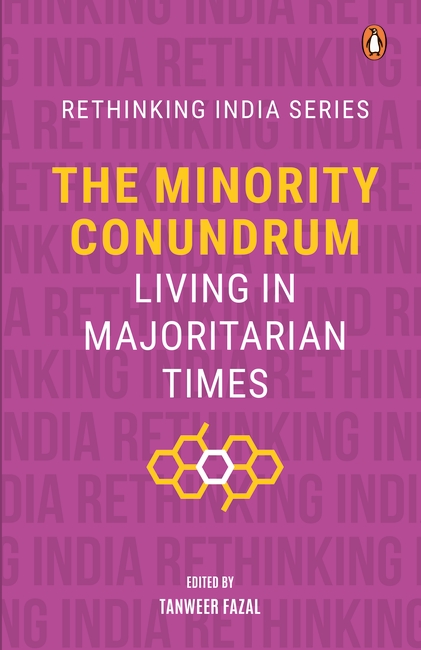
The second volume in the Rethinking India series explicates what it means to be a minority in majoritarian times. The contributors identify vulnerabilities that encumber the quest for the realization of substantive citizenship by minority groups. The essays deal with educational attainments, employment prospects in a liberalized economy, possibilities of equal opportunity, violence of the state and vigilante groups, emerging questions of citizenship and employment, linking language with the material life of its speakers, and the receding political voice of minorities amidst a majoritarian upswing.
Also examined is the concept of minority being inextricably bound with two allied ideas equally foundational to the vision of the Indian Republic: secularism and nationalism. The three together form a conceptual whole to the extent that none finds its manifestation without reference to the other two. The take-offs of the minority question in India include the archetypal nationalist’s disapproval of the very endurance of the subject post-Independence. The secular-modernists and the Hindutva nationalists converge in prescribing assimilation-one into a modernist project, the other into a national culture defined by Sanskritic Hinduism-while the pluralist vision, tolerant of divergent practices, follies in assuming cultures and religious observances as frozen. This, along with several allied issues, forms the heart of this thought-provoking volume.
Bridgital Nation
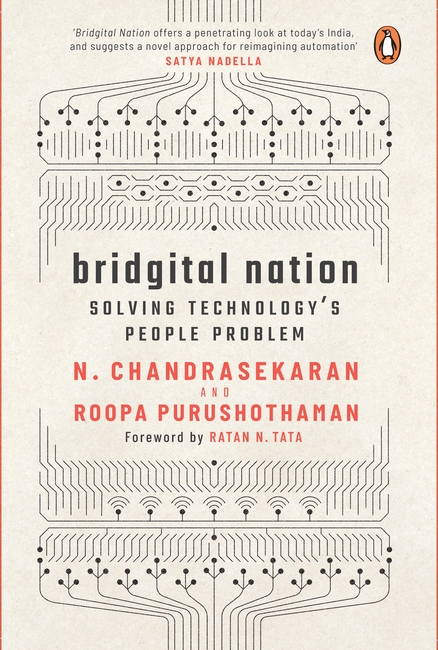
It is 2030. India is among the world’s top three economies. All Indians use advanced technology to either do their job or get their job done. All Indians have access to quality jobs, better healthcare and skill-based education. Technology and human beings coexist in a mutually beneficial ecosystem.
This reality is possible. It is within reach. With Bridgital.
In this ground-breaking book, N. Chandrasekaran, chairman of Tata Sons, presents a powerful vision for the future. To the coming disruption of artificial intelligence, he proposes an ingenious solution, where India is perfectly positioned to pave a unique path from the rest of the world. Instead of accepting technology as an inevitable replacement for human labour, India can use it as an aid; instead of taking them away, AI can generate jobs.
Chandrasekaran and his co-author, Roopa Purushothaman, chief economist of the Tata Group, survey the country for inspirational stories of resilience and determination, and seek the ideal way to bring Indians closer to their dreams through on-ground application of a cutting-edge approach called ‘Bridgital’. This brilliant concept addresses India’s biggest challenges by bridging the huge chasm between rural and urban, illiteracy and education, aspirations and achievement. From healthcare to education to business, the model can be applied in various sectors, and, by a conservative estimate, it can create and impact 30 million jobs by 2025.
One of the country’s foremost industry leaders and pioneers, N. Chandrasekaran brings his expertise of over thirty years with the Tata Group to offer a blueprint for building a prosperous India, where everyone is included in the growth story.
Foreword by Ratan N. Tata
Everybody Loves a Good Drought
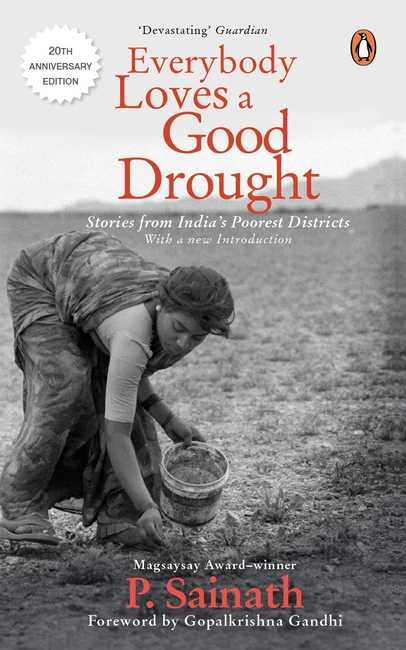
A CLASSIC OF REPORTAGE FROM RURAL INDIA BY AWARD-WINNING AUTHOR, WITH A FOREWORD BY GOPALKRISHNA GANDHI
– Prescribed in over 100 universities
– Reveals the human face of poverty
– Key to understanding issues of globalization, human rights, development economics in India
– One of the classics of journalism
Acclaimed across the world, prescribed in over 100 universities and colleges, and included in part in The Century’s Greatest Reportage (Ordfront, 2000), alongside the works of Gabriel Garcia Marquez, Studs Terkel and John Reed, Everybody Loves a Good Drought is the established classic on rural poverty in India. Twenty years after publication, it remains unsurpassed in the scope and depth of reportage, providing an intimate view of the daily struggles of the poor and the efforts, often ludicrous, made to uplift them.
An illuminating introduction accompanying this twentieth-anniversary edition reveals, alarmingly, how a large section of India continues to suffer in the name of development so that a small percentage may prosper. Besides exposing chronic misgovernance, it is also a devastating comment on the media’s failure to speak for the voiceless.
Land Of The Seven Rivers-Pb
Did ancient India witness the Great Flood? Why did the Buddha give his first sermon at Sarnath? How did the Europeans map India?
Combining scholarship with sparkling wit, Sanjeev Sanyal sets out to explore how India’s history was shaped by its geography-answering questions you may have never thought to ask. Moving from geological and genetic origins to present-day Gurgaon, Land of the Seven Rivers is riveting, wry and full of surprises.
Super 30
Anand Kumar, a mathematics prodigy, defied all challenges to set up one of the most successful and innovative teaching initiatives in the world-Super 30.
Born in Chandipur Bela, Patna, Anand secured a place in Cambridge University but couldn’t attend because he had no money and sold papads in the evenings instead. He dealt with his own disappointment by setting up an innovative school in 2002 to prepare underprivileged students for the IIT JEE examination. Super 30 has an astonishing success rate and on an average, twenty-seven to twenty-eight of the thirty students crack the exam every year.
Stirring and heart-wrenching, this is the extraordinary story of a visionary who has elevated these bright sparks and, through education, given them hope to rise above crippling poverty.
Vanara
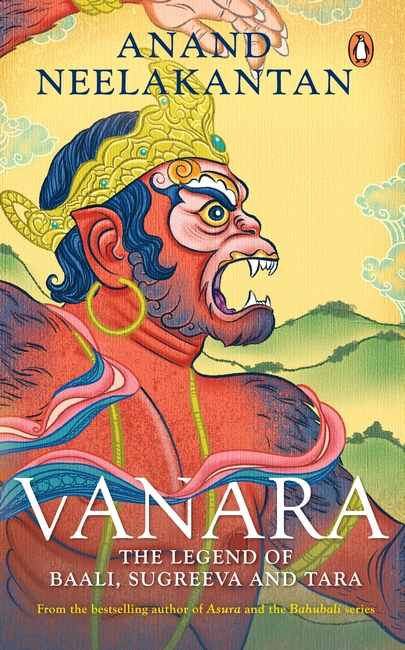
Baali and Sugreeva of the Vana Nara tribe were orphan brothers who were born in abject poverty and grew up as slaves like most of their fellow tribesmen. They were often mocked as the vanaras, the monkey men. Sandwiched between the never-ending war between the Deva tribes in the north and the Asura tribes in the south, the Vana Naras seemed to have lost all hope. But Baali was determined not to die a slave. Aided by his beloved brother, Sugreeva, Baali built a country for his people. The capital city, Kishkindha, became a beacon of hope for emancipated slaves from across the world. It was a city of the people, by the people, for the people, where there was no discrimination based on caste, creed, language or the colour of skin. For a brief period in history, it seemed as if mankind had found its ideal hero in Baali. But then fate intervened through the beautiful Tara, the daughter of a tribal physician. Loved by Baali and lusted after by Sugreeva, Tara became the cause of a fraternal war that would change history for ever.
The love triangle between Baali, Tara and Sugreeva is arguably the world’s first. Written by Anand Neelakantan who gave a voice to Ravana in Asura, Duryodhana in the Ajaya series and Sivagami in the Baahubali series, Vanara is a classic tale of love, lust and betrayal. Shakespearean in its tragic depth and epic in its sweep, Vanara gives voice to the greatest warrior in the Ramayana-Baali.
Where Will Man Take Us?
The first person who will live to be 150 years old has already been born.
The screen that we peer into will soon be within us.
We could soon be taking happiness pills before breakfast.
The perfect partner might need to be charged before bed.
This is a new world we are walking into. And the man who began this journey won’t be the man who ends this journey. Where Will Man Take Us? explores the changes technology is bringing about in us-as a society and as a species. What will the next generation turn into, what will it be like, how will the new Adam and Eve live and love?
In this book, Atul Jalan tackles nanotechnology, artificial intelligence, quantum computing and genetics, seamlessly weaving the future of technology with the changing dynamics of human love, morality and ethics.
The Best Of Ruskin Bond (The Ultimate Collection of Ruskin Bond’s Best Stories Poems and Essays including Delhi Is Not Far)
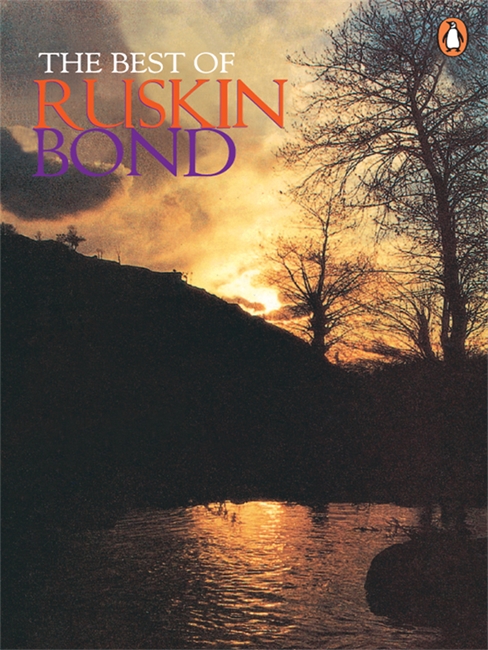
The weekends of Ruskin Bond fans just became even more exciting:
Are you a fan of Ruskin Bond? Have you been trying to compile his best works and read them along? If yes, then The Best of Ruskin Bond is the perfect solution for you. These exemplary stories from the legendary author are here for the taking, all compiled in a single book and provided with some of the best excerpts ever written. This consolidated volume brings together selected prose and poetries that have been written by the award winning author, Ruskin Bond. During his entire career, he has captivated readers across the world with his writing talent.
Experience the best of four decades of Ruskin Bond’s career in one book:
Over four decades of writing, this book consists of some of his best work to date. Backed by an endearing collection of essays, beautiful excerpts from different stories, serene poems and short stories, this book finds a way to create a unique literary landscape. And what could be a better to spend your leisure time by?
This anthology is here to stay:
Grab hold of this consolidated anthology which has selections from all of Ruskin’s major books and includes his classic novel Delhi Is Not Far. With many more beautiful stories to read from, this book is a one stop solution for all Ruskin Bond fans. Readers in general will get drawn towards his simple writing style which is articulate in nature and focuses on the significant details.
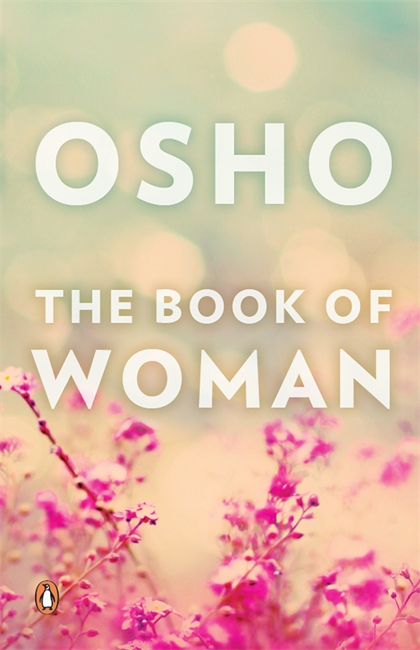
The Book Of Woman
Find your own potential
In this book, based on his discourses, Osho talks about woman not in his capacity as a man, but as a ‘consciousness, an awareness’.
Osho talks about various issues like motherhood, relationships, family and birth control. Questioning the concept of marriage, he says it is the ‘ugliest institution invented by man’ as its aim is to monopolize a woman. He is equally critical of the institution of family which ‘corrupts the human mind’. A woman, he says, should not imitate man: ‘Rejoice in your feminine qualities, make a poetry out of them.’ The perfect state of being, according to Osho, is a synthesis between the head and the heart, with the heart remaining the master. The rare sensitivity of Osho’s words will appeal to both men and women.