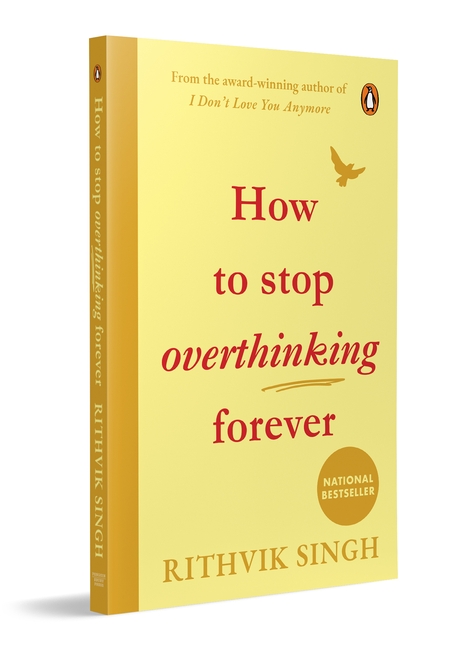
A HIGHLY REQUESTED SELF-HELP GUIDE BY THE AWARD-WINNING, NATIONAL BESTSELLING AUTHOR OF ‘I DON’T LOVE YOU ANYMORE’
This is the beginning of a new chapter in your life. This book was meant to find you. I’m proud of you for choosing peace. I know you overthink a lot. I know you feel everything too deeply. But I also know that there’s immense strength in you. You’re strong enough to deal with all the challenges life throws your way. You’ve been through so much in the past but you’re still here—moving forward bravely with a smile on your face.
I’m proud of you for being so brave.
This book will help you prioritise what’s important and let go of what’s harmful to your well-being.
Read this book if you want to:
1. Start trusting your potential and improve your self-esteem
2. Feel better about yourself
3. Let go of toxic thoughts and people
4. Get out of the loop of overthinking forever
5. Learn how to be kind to yourself
6. Be patient with your journey
7. Identify toxic friends and learn how to deal with toxic relatives
8. Understand yourself better and build a stronger relationship with yourself
9. Understand what self-love truly means
10. Become more emotionally intelligent
Above all, this book will simplify your life and show you how to achieve freedom from overthinking.

Three historians. Three generations. Spanning nearly a century of work, Romila Thapar, Kumkum Roy and Preeti Gulati, reflect on their lives and their engagement with one of the most demanding, and most crucial, disciplines of our times. Personal narratives of growing up—learning about history, charting new and distinct paths as researchers, the challenges of teaching—meld effortlessly into a larger and complex changing context: the emergence of an independent nation, of movements that have helped shape the process, and of resistance. To what extent, the authors ask, have feminisms made a difference? Can these interventions lead to redefining or rejuvenating the discipline, transforming it into a more inclusive space where diverse voices can be acknowledged and heard with respect and understanding? These and other questions inform this accessible and lucid text.
Most people on Earth today live in a country where birth rates already are too low to stabilize the population: fewer than two children for every two adults. In After the Spike, economists Dean Spears and Michael Geruso sound a wakeup call, explaining why global depopulation is coming, why it matters, and what to do now.
It would be easy to think that fewer people would be better—better for the planet, better for the people who remain. This book invites us all to think again. Despite what we may have been told, depopulation is not the solution we urgently need for environmental challenges like climate change. Nor will it raise living standards by dividing what the world can offer across fewer of us. Spears and Geruso investigate what depopulation would mean for the climate, for living standards, for equity, for progress, for freedom, for humanity’s general welfare. And what it would mean if, instead, people came together to share the work of caregiving and of building societies where parenting fits better with everything else that people aspire to.
With new evidence and sharp insights, Spears and Geruso make a lively and compelling case for stabilizing the population—without sacrificing our dreams of a greener future or reverting to past gender inequities. They challenge us to see how depopulation threatens social equity and material progress, and how welcoming it denies the inherent value of every human life. More than an assembly of the most important facts, After the Spike asks what future we should want for our planet, for our children, and for one another.

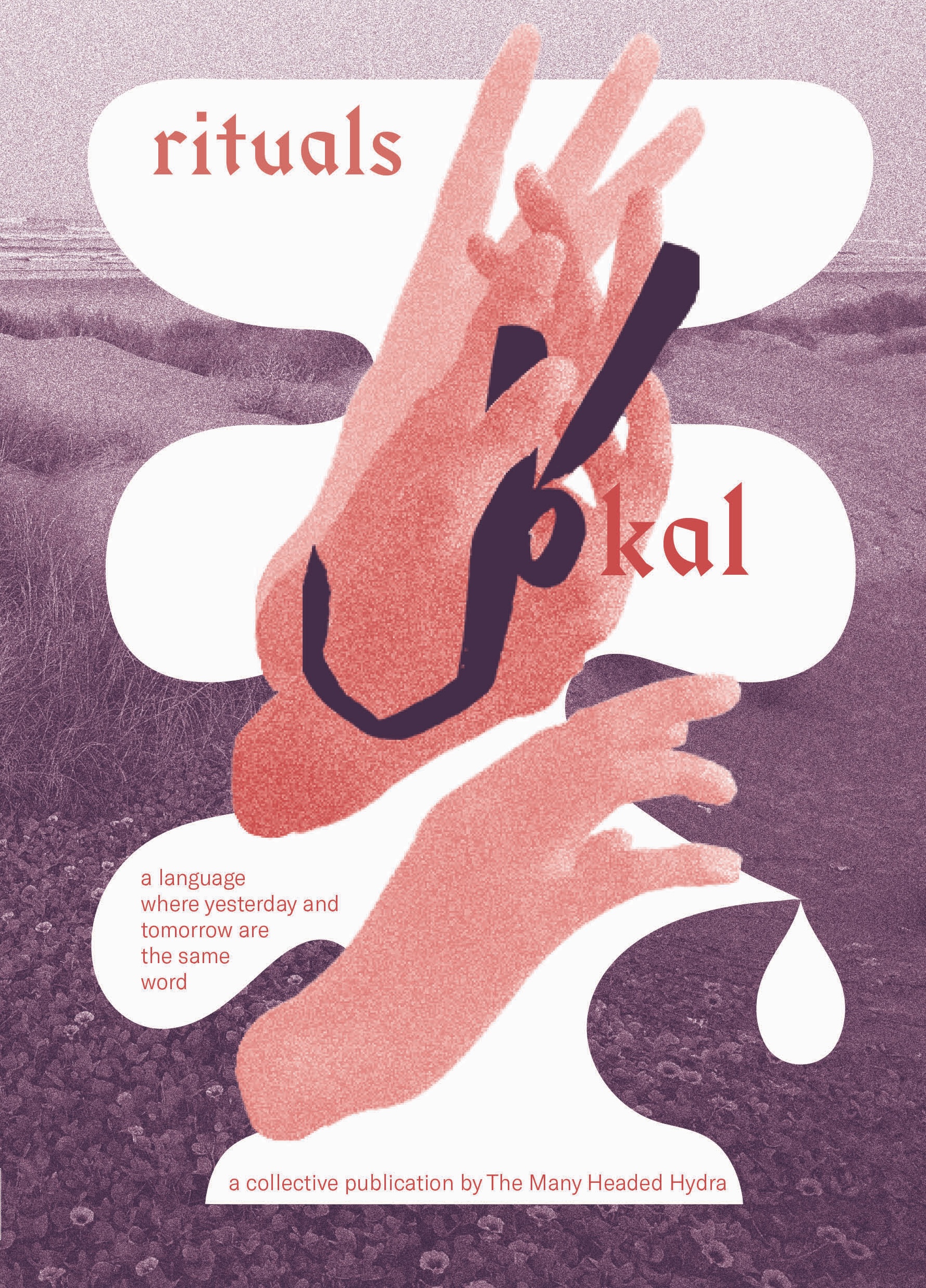
The first in a series of publications emerging from the transoceanic platform kal, RITUALS proposes queer and trans- feminist ecologies, embodiments and mythmaking. The contributions trace and disrupt cross-colonial legacies through bodies of water lapping at the shorelines of the Arabian Sea, the Indian Ocean, and the Atlantic. kal RITUALS is an ode to transterritorial alliances that disrupt binary contours of time and being. A collective work by The Many Headed Hydra, kal RITUALS connects art, research and publishing. Put together by a self-organized artistic platform that spans Karachi, Berlin and beyond, the book emerges from a language where yesterday and tomorrow are the same word, kal. Zubaan

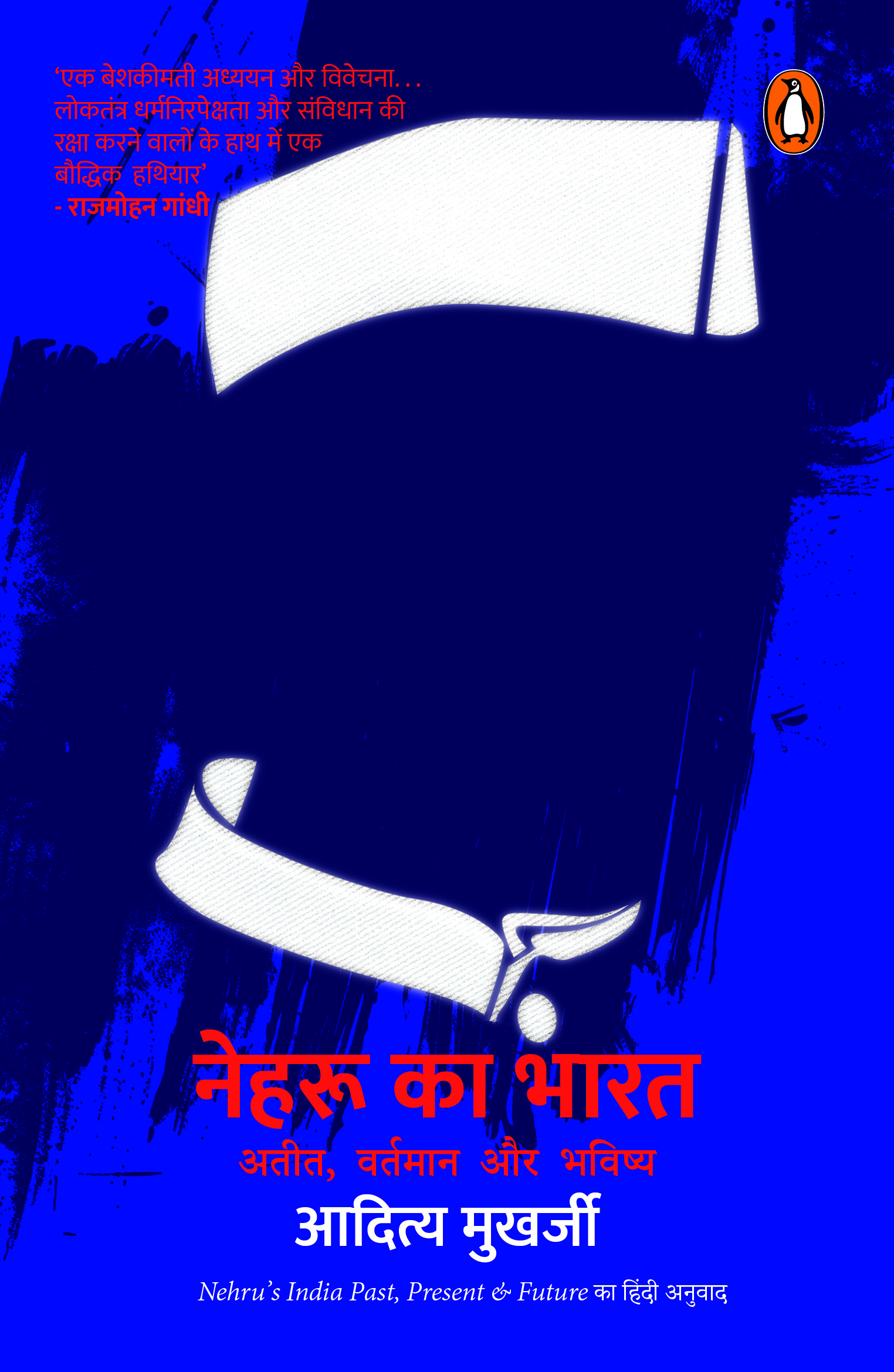
संप्रभुता, लोकतंत्र, धर्मनिरपेक्षता, गरीब समर्थक दृष्टिकोण और आधुनिक वैज्ञानिक दृष्टिकोण – भारतीय स्वतंत्रता आंदोलन के मूल मूल्यों को संक्षेप में ‘भारत का विचार’ कहा गया है। जवाहरलाल नेहरू ने न केवल स्वतंत्रता संग्राम के दौरान इन मूल्यों के लिए लड़ाई लड़ी, बल्कि स्वतंत्रता के बाद नवजात राष्ट्र में उन्हें लागू करने में भी महत्वपूर्ण भूमिका निभाई। उनका जीवन, दर्शन और कार्य भारत के लिए उनके दृष्टिकोण पर प्रकाश डालते हैं : इसका सभ्यतागत अतीत, स्वतंत्रता के बाद के राष्ट्र के लिए रोड मैप और भविष्य की संभावनाएँ। इतिहास और भारत के सांस्कृतिक अतीत के बारे में नेहरू की समझ पर ध्यान केंद्रित करते हुए, पुस्तक सांप्रदायिकता की उनकी गहरी समझ और धर्मनिरपेक्षता के प्रति उनकी प्रतिबद्धता के लिए एक खिड़की खोलती है। लोकतांत्रिक समाज में उनका पूर्ण विश्वास और भारतीय धरती पर इसके पोषण में उनका अमूल्य योगदान, और वैज्ञानिक सोच से ओतप्रोत समाज के साथ-साथ एक स्वतंत्र और समतावादी अर्थव्यवस्था के निर्माण में उनके प्रयास, हमें बीसवीं सदी के महानतम व्यक्तियों में से एक के जीवन और कार्य के बारे में कई अंतर्दृष्टि प्रदान करते हैं। उनके निधन के छह दशक बाद, क्या नेहरू के सिद्धांत, जो भारत के स्वतंत्रता आंदोलन के मूल्यों को दर्शाते हैं, अभी भी प्रासंगिक हैं?

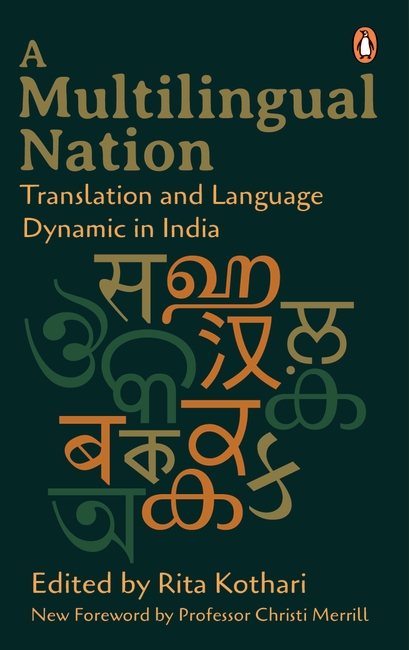
How does India live through the oddity of being both a nation and multilingual? Is multilingualism in India to be understood as a neatly laid set of discrete languages or a criss-crossing of languages that runs through every source language and text? The questions take us to reviewing what is meant by language, multilingualism and translation. Challenging these institutions,
A Multilingual Nation illustrates how the received notions of translation discipline do not apply to India. It provocatively argues that translation is not a ‘solution’ to the allegedly chaotic situation of many languages, rather it is its inherent and inalienable part.
An unusual and unorthodox collection of essays by leading thinkers and writers, new and young researchers, it establishes the all-pervasive nature of translation in every sphere in India and reverses the assumptions of the steady nature of language, its definition and the peculiar fragility that is revealed in the process of translation.
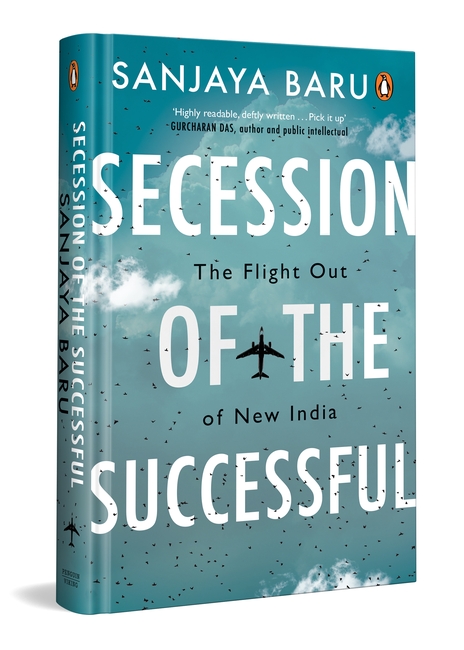
Why are so many of our fellow citizens disentangling from the political and economic future of India to invest in the destiny of other nations? Are Non-Resident Indians turning irreversibly into Non-Returning Indians? Is enhancing soft power a fair trade off for losing priceless human capital? And, perhaps most pertinently, is India becoming, after Russia and China, the constricting land of intolerance and authoritarianism from which the elites flee in droves, seeking greener and more liberal pastures—not to forget tax havens.
Marshalling his magisterial scholarship into highly readable prose, Sanjaya Baru raises all these questions and more in Secession of the Successful: The Flight Out of New India, which more than being a tome is a wakeup call we had better heed.

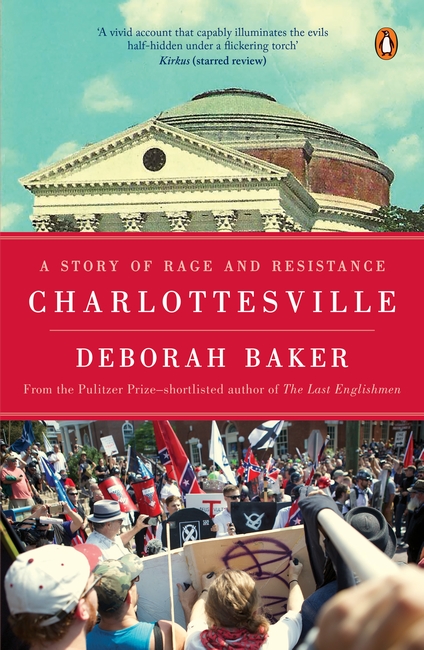
In August 2017, over a thousand neo-Nazis, fascists, Klan members, and neo-Confederates descended on a small southern city to protest the pending removal of a statue of Robert E. Lee. Within an hour of their arrival, the city’s historic downtown was a scene of bedlam as armored far-right cadres battled activists in the streets. Before the weekend was over, a neo-Nazi had driven a car into a throng of counter-protesters, killing a young woman and injuring dozens.
Pulitzer Prize finalist Deborah Baker has written a riveting and panoptic account of what unfolded that weekend, focusing less on the rally’s far-right leaders than on the story of the city itself. University, local, and state officials, including law enforcement, were unable or unwilling to grasp the gathering threat. Clergy, activists, and organizers from all walks of life saw more clearly what was coming and, at great personal risk, worked to warn and defend their city.
To understand why their warnings fell on deaf ears, Baker does a deep dive into American history. In her research she discovers an uncannily similar event that took place decades before when an emissary of the poet and fascist Ezra Pound arrived in Charlottesville intending to start a race war. In Charlottesville, Baker shows how a city more associated with Thomas Jefferson than civil unrest became a flashpoint in a continuing struggle over a nation’s founding myths.
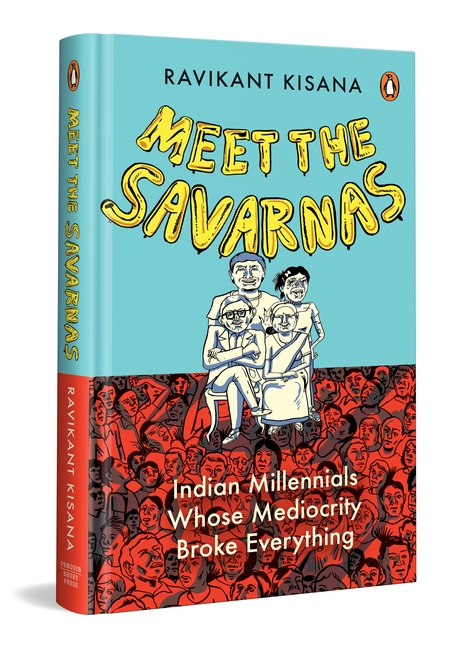
In the early 2000s, India was expected to ‘shine’ and emerge as a rising superpower. It was the post-1990s golden generation— professionals fresh out of B-schools and engineering programmes —who were supposed to take us there. The Great Indian Dream was ready to lift-off. Except we never left the ground.
No one could really explain what went wrong. Some blamed politicians, some corruption, some capitalism and some communal polarization. Most people missed the giant elephant in the room—caste.
Caste in India is mostly researched and reported from the experience of the oppressed. Caste as a privilege is not understood well. How do caste elites respond to modernity? How do they understand culture, intimacy, love and tradition? Were their ideas, institutions and imaginations ever even capable of delivering upon the Great Indian Dream?
In Meet the Savarnas, Ravikant Kisana goes where few authors have dared: to document the lives, the concerns and crises of India’s urban elites, to frame the savarnas as a distinct social cohort, one that operates within itself and yet is oblivious of its own social rules, privileges and systems.
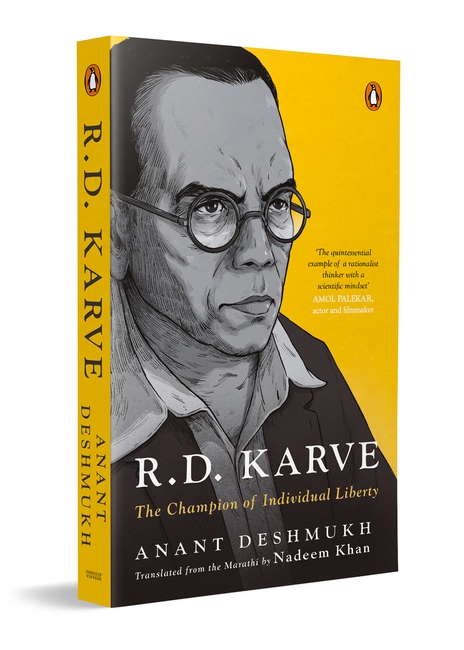
Raghunath Dhondo Karve was among the stormy and controversial figures of his time in Maharashtra. Born to Dhondo Keshav Karve, a social reformer who advocated for women’s rights and widow remarriage, RD Karve studied the subjects of birth control and the science of lovemaking. In 1927, Raghunath started the Samaaj Sawaasthya (Health of the Society) magazine in Marathi. The thoughts he propagated through this magazine were too radical for the society of his time and the orthodoxy who often raised obstacles and filed several cases against him. Originally written in Marathi by Dr Anant Deshmukh, and translated by Nadeem Khan, RD Karve: The Champion of Individual Liberty is a meticulously researched biography of a reformer and a social criticism of the times.