



Moovalur Ramamirtham Ammaiyar spent almost her entire life fighting against the devadasi system in Tamil Nadu, a practice that dedicated young girls to temples, where they were meant to be available for the sexual needs of priests and landowners. Sold off by her parents, and brought up to dedicate herself as a dasi, she managed to escape this fate and make a life for herself. Her battle against the devadasi system was met with considerable resistance, not only by those with vested interests in keeping the devadasis inside temples, but often by the devadasis themselves. But Moovalur persisted, taking her cause, and its wider ramifications into the broader politics of the Congress party, and later the Self-Respect Movement. Despite this, in the annals of recent Tamil history, she was hardly known, until the publication, in 2006 of Moovalur Ramamirtham: Vazhvum Paniyum (translated here as The Life and Work of Moovalur Ramamirtham Ammaiyar). Put together through interviews with her surviving relatives and fragments garnered from a handwritten manuscript, this is the first book to document the ‘braveheart’ of Dravidian history, Moovalur Ramamirtham Ammaiyar.
Catagory: Society & Social Sciences
Why Would I Be Married Here?
Why Would I Be Married Here? examines marriage migration undertaken by rural bachelors in North India, unable to marry locally, who travel across the breadth of India seeking brides who do not share the same caste, ethnicity, language, or customs as themselves.
Combining rich ethnographic evidence with Dalit feminist and political economy frameworks, Reena Kukreja connects the macro- political violent process of neoliberalism to the micro-personal level of marriage and intimate gender relations to analyse the lived reality of this set of migrant brides in cross-region marriages among dominant-peasant caste Hindus and Meo Muslims in rural North India.
Why Would I Be Married Here? reveals how predatory capitalism links with patriarchy to dispossess many poor women from India’s marginalized Dalit and Muslim communities of marriage choices in their local communities. It reveals how, within the context of the increasing spread of capitalist relations, these women’s pragmatic cross-region migration for marriage needs to be reframed as an exercise of their agency that simultaneously exposes them to new forms of gender subordination and internal othering of caste discrimination and ethnocentrism in conjugal communities. Why Would I Be Married Here? offers powerful examples of how contemporary forces of neoliberalism reshape the structural oppressions compelling poor women from marginalized communities worldwide into making compromised choices about their bodies, their labour, and their lives.
Rethinking India: The Politics of the Marginalized
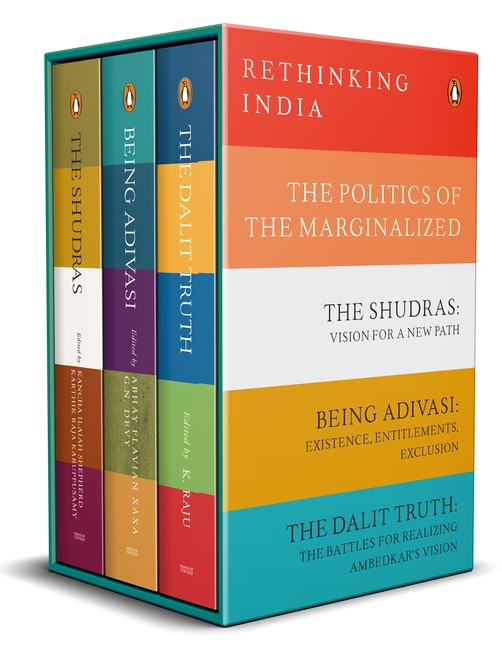
The Rethinking India series, spearheaded by the Samruddha Bharat Foundation and Penguin Random House India, objectively rethinks the current socio-economic, political and cultural paradigms, and poses disruptive ideas addressing structural problems. Leveraging the unique intellectual vantage points of India’s foremost thinkers and practitioners, the three books included in this box set critically reflect on the lived realities of the Dalit, Shudra, Adivasi and Denotified communities. Sensitively juxtaposing ‘what should have been’ with ‘what is’, the books propose a visionary blueprint that will both deepen and further India’s constitutional promise for these communities. This is a must-have set for politicians, policymakers, academics, activists, journalists, students and anyone working on issues of social justice, equality, fraternity, liberty and welfare in India.
Women Who Work Too Much
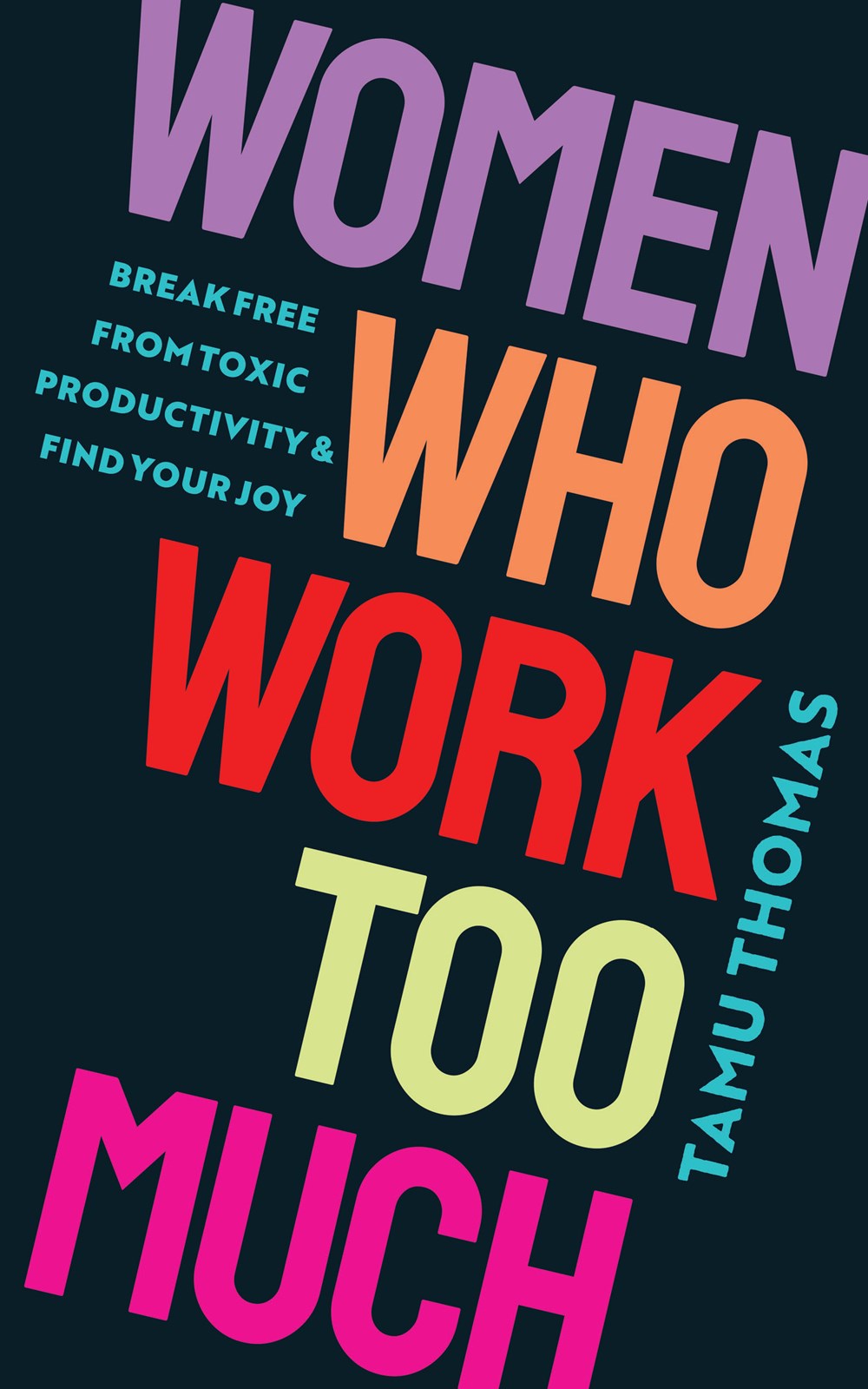
Women can have it all, but do we really want it? This book shows women how to escape the trap of toxic productivity, build boundaries, avoid burnout, and live with joy.
We have been conditioned into believing our value is in what we do rather than who we are. Do you find yourself saying “yes” because you were never taught how to say “no”? Are you working all hours of the day, but not feeling good about your achievements amplifying your perceived mistakes or weaknesses? Many of us believe that to be our best selves we should do more, but the result is often stress, burnout, and disillusionment. This book offers a healing hand to help you step out of the same old patterns of using success or overworking as a source of self-validation.
For women, work doesn’t stop in the workplace. There is a huge load at home that still falls to women—whether looking after children, caring for aging parents, or simply taking the reins of running the household. This is a book for women who work too much. It is for women who are ready to hear the wake-up call coming from within: coming from their frazzled nervous system, from that sense of underlying anxiety they have learnt to normalize over the years, and from an inner knowing that—just maybe—it doesn’t have to be this way.
Women Who Work Too Much will help you to:
• become your own advocate
• feel at home with who you already are and in your own skin
• know what needs to be done, rather than trying to do it all
This book is a manifesto for change and a call to inaction.
Women Who Work Too Much will support you to establish healthier boundaries, stop over-committing, and move into a feeling of safety so that you can thrive, prosper, and flourish.
Middle of Diamond India (Hindi)/Amrit Kaal Ka Bharat/अमृत काल का भारत
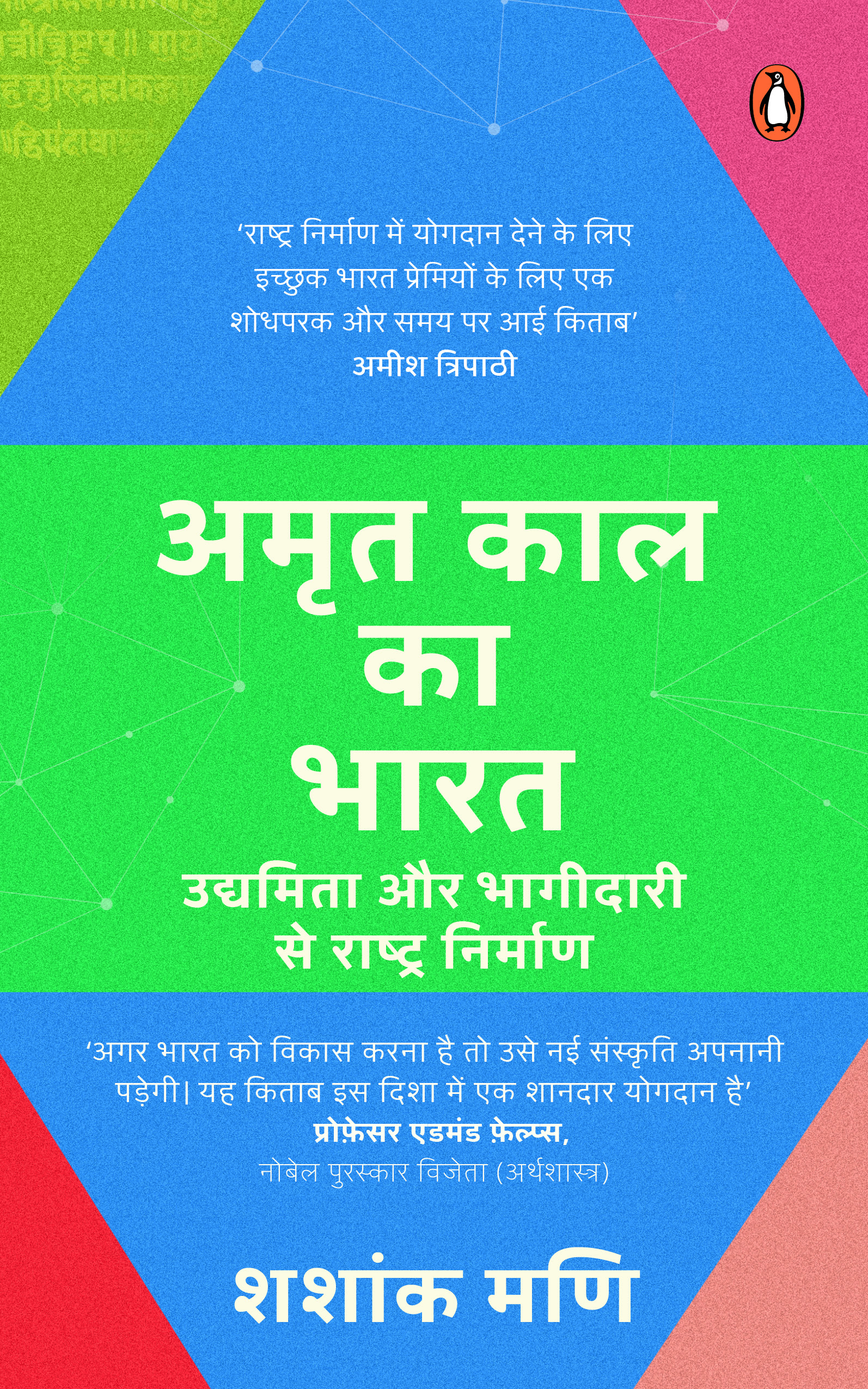
अमृत काल का भारत एक क्रांतिकारी विचार प्रस्तुत करती है कि कैसे भारत अपने छोटे-छोटे नगरों और कस्बों में रहने वाले प्रतिभाशाली लोगों के विशाल वर्ग पर ध्यान देकर अपनी तरक्की का रास्ता खोल सकता है, जो लंबे समय से उपेक्षित रहे हैं।
यह किताब देश के उस हिस्से की छुपी हुई कहानियों को सामने लाती है जिन्हें उनकी भौगिलिक स्थिति और भाषा की वजह से अब तक नजरअंदाज किया गया है।
Sanatan (Shortlisted for the JCB Prize for Literature 2024)
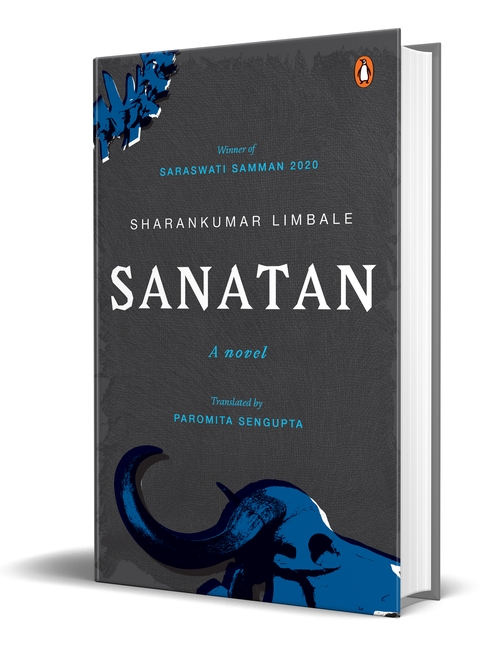
Sanatan is the gut-wrenching story of Bhimnak Mahar and his ilk, who have been subjected to barbaric abuse and inhuman discrimination by the upper castes over centuries. The story begins with the young Bhimnak in pre-Independence India. It then traverses time and geographical boundaries to end with Bhimnak’s grandson. The circular narrative pattern is reflective of the endless cycle of pain that the Mahars are unable to break free from, no matter how hard they try, no matter where they go, no matter if they change their identity and religion. Using myths, the Puranas and historical texts as resources, Sharankumar Limbale rewrites Dalit history in this novel as he attempts to tell the truth, with an intention to build what he calls ‘a new and progressive social order’. Limbale not just brings his reader face to face with uncomfortable realities, he also suggests what could be an alternative social order in the future.
Sati Savitri
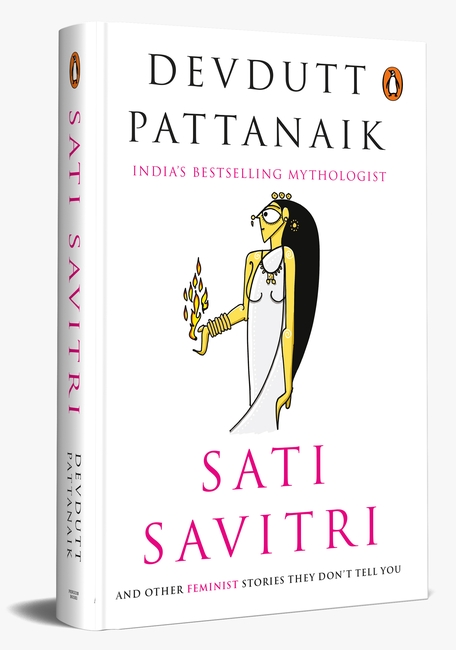
Manu said that a woman’s dharma is to be mother, daughter, sister and wife in service of men, regardless of the caste. In modern times we call this patriarchy. In the Veda, the need to control and favour hierarchy, is an expression of an anxious mind.
Hindu, Buddhist and Jain lore is full of tales where women do not let men define their dharma. In modern times we call this feminism. In the Veda, the acceptance of a woman’s choice is an expression of a wise and secure mind.
While in Western myth, patriarchy is traditional and feminism is progressive, in Indian myth both patriarchy and feminism have always co-existed, in eternal tension, through endless cycles of rebirth. Liberation thus is not a foreign idea. It has always been here.
You have heard tales of patriarchy. This book tells you the other tales—the ones they don’t tell you.
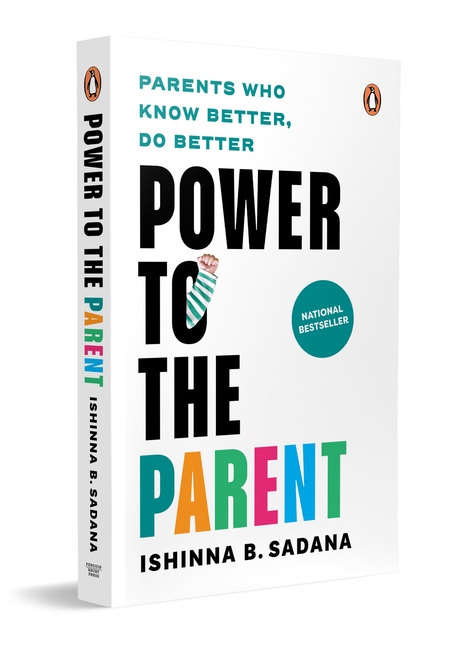
Power to the Parent
How do you be a gentle parent and still set boundaries?
How do you remain calm and prepare your child to face the real world?
How do you face the new parenting challenges that come up almost every day?
This book holds the answers to the most asked questions and the most confounding dilemmas that parents today find themselves confronted with.
Through Power to the Parent, Dr Ishinna B. Sadana talks to parents to understand their most vulnerable doubts and fears, provides them with a safe space without judgement or preconceived notions, empowers them to deal with their children in different situations and connects with them in a positive way.
Using Dr Ishinna’s practical ways of dealing with kids, many parents have seen transformational results in their relationship with their children. She writes with clarity and simplicity, using real-life examples and case studies so that parents can start applying the lessons they take from the book immediately and see the changes.
Ultimately, Power to the Parent enables parents everywhere not only to raise happy and resilient children, but also to become happier and more confident parents.
BEST OF VINTAGE CLASSICS COLLECTION (5 BOOKS BOX SET)

A beautifully designed slipcase containing five of the greatest novels ever written in English.
The Best of Vintage Classics Collection is a boxset of five of the greatest novels ever written in English. Discover a satire of the madness of war, a genre-bending literary quest, a visionary dystopia, a tortured love affair and a gangster thriller – all the finest examples of their genre. This is a selection of must-read classic books.
Contains:
Catch-22 by Joseph Heller
Brave New World by Aldous Huxley
If On A Winter’s Night A Traveller by Italo Calvino
Brighton Rock by Graham Greene
Of Human Bondage by W. Somerset Maugham
Career and Family: Women’s Century-Long Journey Toward Equality
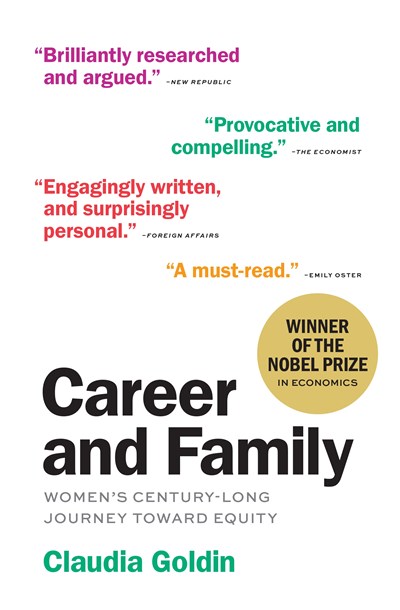
Winner of the 2023 Nobel Prize in Economics
A renowned economic historian traces women’s journey to close the gender wage gap and sheds new light on the continued struggle to achieve equity between couples at home.
A century ago, it was a given that a woman with a college degree had to choose between having a career and a family. Today, there are more female college graduates than ever before, and more women want to have a career and family, yet challenges persist at work and at home. This book traces how generations of women have responded to the problem of balancing career and family as the twentieth century experienced a sea change in gender equality, revealing why true equity for dual career couples remains frustratingly out of reach.
Drawing on decades of her own groundbreaking research, Claudia Goldin provides a fresh, in-depth look at the diverse experiences of college-educated women from the 1900s to today, examining the aspirations they formed—and the barriers they faced—in terms of career, job, marriage, and children. She shows how many professions are “greedy,” paying disproportionately more for long hours and weekend work, and how this perpetuates disparities between women and men. Goldin demonstrates how the era of COVID-19 has severely hindered women’s advancement, yet how the growth of remote and flexible work may be the pandemic’s silver lining.
Antidiscrimination laws and unbiased managers, while valuable, are not enough. Career and Family explains why we must make fundamental changes to the way we work and how we value caregiving if we are ever to achieve gender equality and couple equity.