Publish with Us

Follow Penguin

Follow Penguinsters

Follow Penguin Swadesh

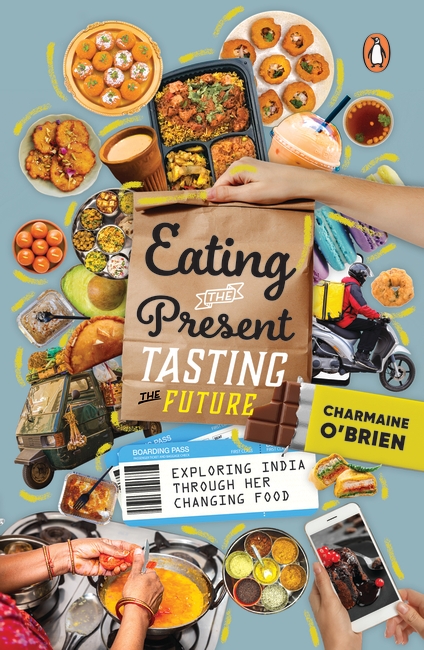
Eating the Present, Tasting the Future

India’s food is one of her most remarkable features: its countless tastes and styles reflect the nation’s history, enduring traditions, and diversity of people and place.

But it is changing at a rapid rate beyond anyone’s imagination.

Eating the Present, Tasting the Future ventures ‘off the plate’ to journey through India’s contemporary foodscape to discover the myriad forces transforming what, how and where Indians are producing, trading and eating their food. At a time when food and our relationship with it are topics of increasing global interest, this is a timely, and important, work, offering unique insight into a complex society.

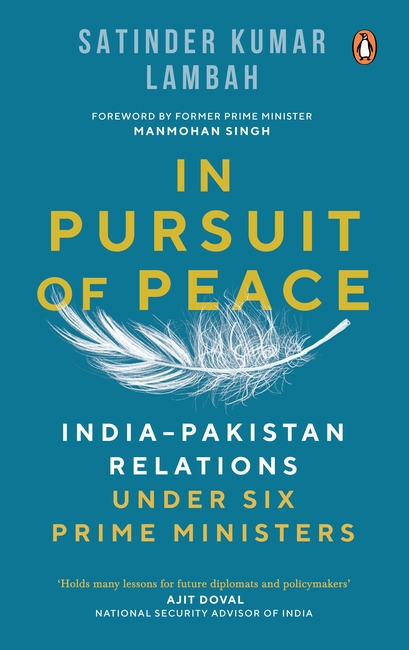
In Pursuit of Peace

No relationship has been as complex and so difficult to manage as India’s relations with Pakistan. Four wars, cross-border terrorism, and Pakistan’s persistent hostility and relentless campaign on “Kashmir issue” have been a source of strategic challenge for every Indian leader. Yet, each has pursued peace in the interest of India’s progress and security with differing strategies, but with the same result.

As a diplomat who served around the world and in Pakistan, the late Satinder Kumar Lambah’s unique position helps tell an insider’s story of the turbulent history between India and Pakistan. He writes of his personal experiences of India-Pakistan relations having served six Indian Prime Ministers, whom he worked directly with and offered counsel. This includes his role as Prime Minister’s Special Envoy for back-channel talks under PM Manmohan Singh and India’s quick diplomatic moves in the post-Taliban Afghanistan. With insight, he also traces the roots of Pakistan’s evolution since its birth and the challenges its army-driven polity poses for India and reflects on the way forward in dealing with Pakistan to secure peace in the region.

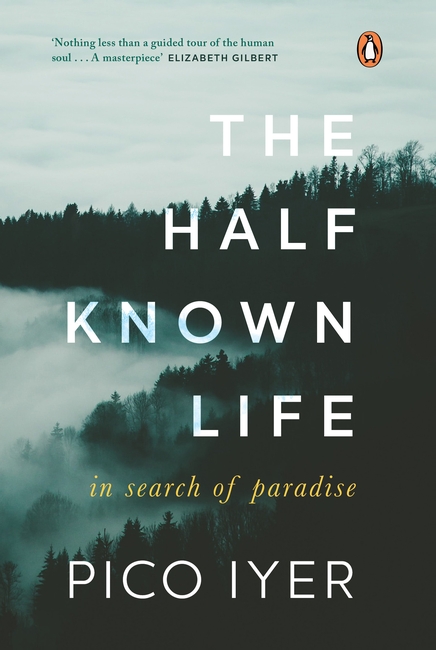
The Half Known Life

Paradise: that elusive place where the anxieties, struggles, and burdens of life fall away. Most of us dream of it, but each of us has very different ideas about where it is to be found. For some it can be enjoyed only after death; for others, it’s in our midst-or just across the ocean-if only we can find eyes to see it.

Traveling from Iran to North Korea, from the Dalai Lama’s Himalayas to the ghostly temples of Japan, Pico Iyer brings together a lifetime of explorations to upend our ideas of utopia and ask how we might find peace in the midst of difficulty and suffering. Does religion lead us back to Eden or only into constant contention? Why do so many seeming paradises turn into warzones? And does paradise exist only in the afterworld – or can it be found in the here and now?

For almost fifty years Iyer has been roaming the world, mixing a global soul’s delight in observing cultures with a pilgrim’s readiness to be transformed. In this culminating work, he brings together the outer world and the inner to offer us a surprising, original, often beautiful exploration of how we might come upon paradise in the midst of our very real lives.

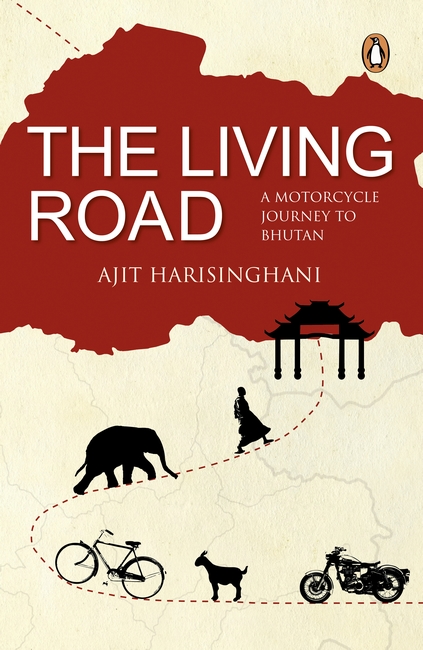
The Living Road

A solo motorcycle ride across India, and into Bhutan, becomes much more than just a test of physical endurance when 57-year-old, Pune-based, speech therapist Ajit Harisinghani decides to go in the pursuit of that most elusive of all human desires-happiness.
With the idea of Bhutan’s gross national happiness on his mind, he traverses a potpourri of terrain, riding through landscapes that change daily. From arid land to verdant fields, from jungles with glimpses of elephants and tigers to tea gardens…
Along the way, he meets a yogi and his singing goat, explores ancient caves, is frightened in a wild life sanctuary, sees a Schizophrenic bicycle and helps a police inspector overcome his stammering problem. A variety of experiences later, he is finally in Thimpu where a Buddhist monk reveals the road-map to being happy.
A funny, honest and entertaining real-life adventure story that promises to surprise, shock and perhaps even liberate!

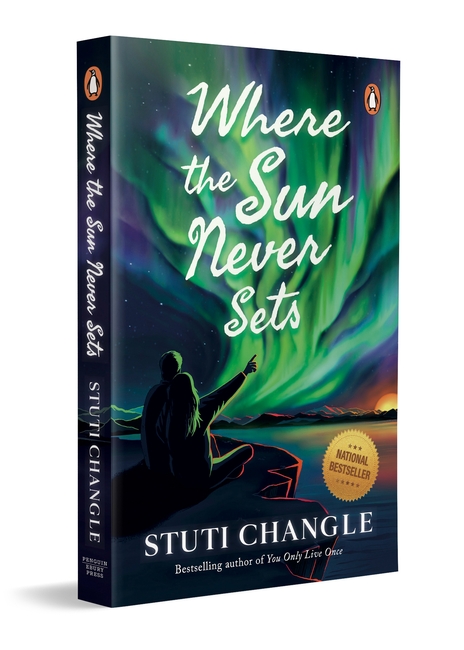
Where the Sun Never Sets (from the bestselling author of You Only Live Once)

ORDER NOW AND GET A SIGNED COPY FROM THE AUTHOR OF YOU ONLY LIVE ONCE

‘A story about finding hope in the darkest of times that will brighten your day!’

If you find someone’s diary, would you dare open it?

Well, if you chance upon your old diary, would you dare read through your past?

Iti is forced to move back to her hometown of Mussoorie amid worldwide lockdown to work on her first movie script. Iti’s chance encounter with her first love, Nishit, reunion with her estranged best friend, Shelly, and nights spent reading her well-kept diary, make her best memories and worst nightmares come to life. She has always run away from her past, but now has no choice.
Will reading her diary prove to be an adventure worth taking for completing the script? Will life be the same? Ever?

Set in the COVID-19 lockdown, from the national bestselling author of On the Open Road and You Only Live Once, Where the Sun Never Sets is a riveting personal account of unforgettable childhood dreams, turbulent teenage years, complicated close relationships, human resilience, and the never-ending journey of growing up.

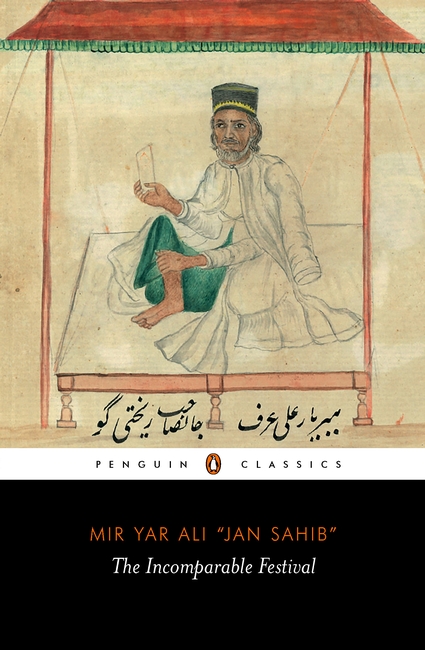
The Incomparable Festival (A masterpiece of Indo-Islamic literary culture)

An indispensable translation of Jan Sahib’s poetic ethnography of nineteenth-century performers-Pasha M. Khan, chair in Urdu Language and Culture, McGill University

This is a truly extraordinary work, an important contribution to the cultural history of the subcontinent-Muneeza Shamsie, writer and literary critic

The translation is experimental, challenging traditional expectations in its approach to rhyme and meter-Carla Petievich, South Asia Institute, The University of Texas at Austin

The Incomparable Festival (Musaddas Tahniyat-e-Jashn-e-Benazir) by Mir Yar Ali (whose pen name was Jan Sahib) is a little known but sumptuous masterpiece of Indo-Islamic literary culture, presented here for the first time in English translation. The long poem, written in rhyming sestet stanzas, is about the royal festival popularly called jashn-e-benazir(the incomparable festival), inaugurated in 1866 by the Nawab Kalb-e-Ali Khan (r. 1865-87) with the aim of promoting art, culture and trade in his kingdom at Rampur in northern India. The task of commemorating the sights and wonders of the festival was given to the hugely popular writer of rekhti verse, the tart and playful sub-genre of the ghazal, reflecting popular women’s speech, of which Jan Sahib is one of the last practitioners.

Structured as an ode to the nawab, the poem is a world-album depicting various classes on the cusp of social upheaval. They include the elite, distinguished artists and commoners, brought together at the festivities, blurring the distinction between poetry, history and biography, and between poetic convention and social description. The book is a veritable archive of the legendary khayal singers, percussionists, and instrumentalists, courtesans, boy-dancers, poets, storytellers (dastango) and reciters of elegies (marsiyago). But, above all, the poem gives voice to the ‘lowest’ denizens of the marketplace by bringing to light their culinary tastes, artisanal products, religious rituals and beliefs, and savoury idioms, thereby focusing on identities of caste and gender in early modern society.

This Penguin Classics edition will be of interest not just to the Urdu and Hindi literary historian, but to specialists and readers interested in the histories of music, dance, and the performative arts, as well as scholars of gender and sexuality in South Asia. Lovers of Urdu poetry will find in it a forgotten masterpiece.

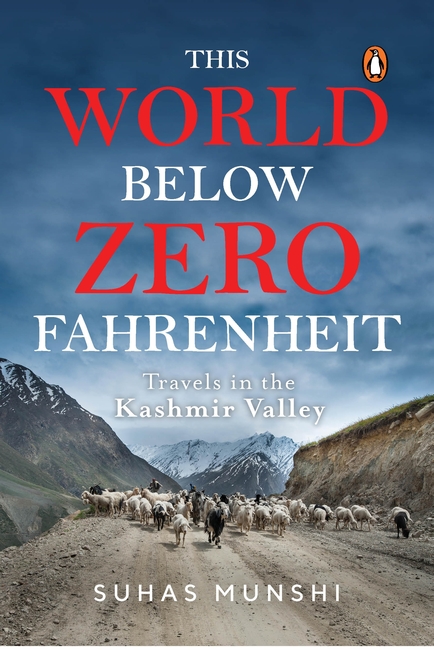
This World Below Zero Fahrenheit

On 5 August 2019, Suhas Munshi was returning to Srinagar from a visit to legendary poet Habba Khatoon’s relic in Gurez, when an unprecedented curfew was imposed upon Jammu and Kashmir, and Article 370 was abrogated. Through his travels and conversations with people across the Valley, Munshi tries to give a sense of what that moment has meant to the common Kashmiri.
This insightful travelogue breaks away from the clichéd view of Kashmir, one that sees it either as an earthly paradise or a living hell. It takes you to unexpected places, into the homes of poets, playwrights and street performers; to a heartwarming Christmas service with the minuscule Christian community in Baramulla; and inside the barricaded city of Srinagar’s football stadium, which is a lively refuge for the elderly and their memories of a glorious past. Over three weeks, for fear of being abandoned in a harsh terrain, Munshi struggles to keep up with a group of Bakarwal nomadic shepherds as they make their way from Srinagar to Jammu over the mighty Pir Panjal mountains. And he finds a lone Pandit family living in a decrepit ghost colony in Shopian, the hub of militancy in Kashmir.
This World below Zero Fahrenheit presents a portrait of a people who’ve been overshadowed by the place they live in, even as it ruminates on the idea of home and exile.

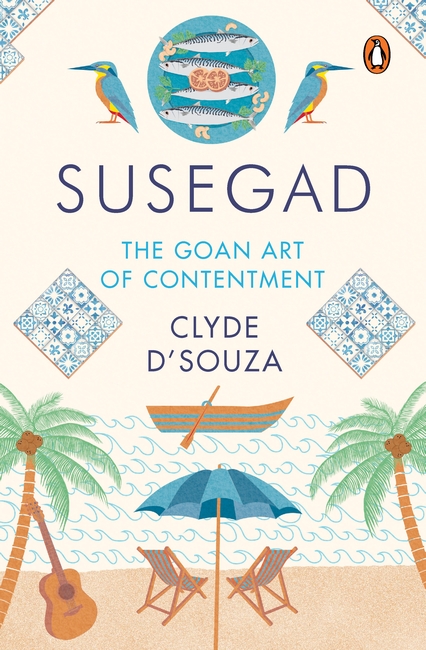
Susegad

‘Susegad’ is a Konkani word that has no exact translation in English. Goans use it to convey the sense of contentment, fulfilment and relaxation that everyone associates with Goa and its culture. Clyde D’Souza, bestselling author and proud Goan, shows us the wonderful, unique elements that help Goans achieve susegad, and what you can do to add a pinch of this magic to your life, no matter where you live.
As Clyde takes us on a journey through Goa’s beautiful beaches, lush greenery, exquisite cuisine, mix of Portuguese and Konkani culture, its history, festivals, music and architecture, you’ll learn what makes Goans tick and how they’ve created habits and routines that lend happiness and calm to their lives. Interviews with noted Goans, short stories, recipes and pictures in this book bring out what it means to be Goan, and help you find your own susegad.

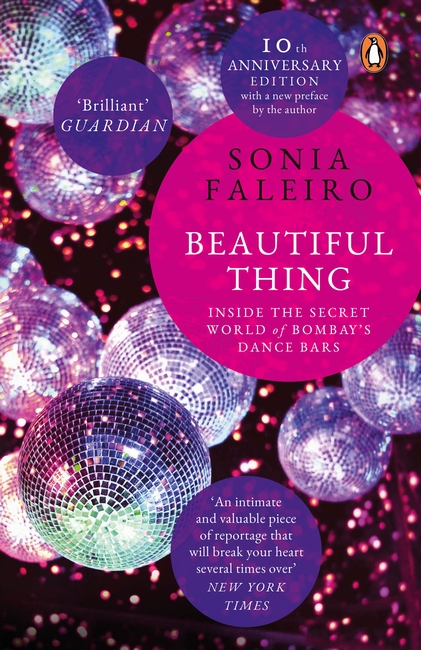
Beautiful Thing

Leela is a bar dancer in Mumbai. She is young, beautiful, determined and hedonistic. And she is also self destructive, cynical and full of despair. When the dance bars in the city are banned, the young woman and her friends find their worlds slowly giving way. Journalist Sonia Faleiro followed Leela before and after the ban, meeting her friends, her lovers, and her family. In this extraordinary work of reportage, she draws an unforgettable portrait of the bar dancer and her subterranean night-time world.

Indians

‘Deepens our sense of the wonder that was India’ ~ Pankaj Mishra

‘A gem of a book that is a joy to read . . . You can almost touch and feel the centuries and millennia as they pass by’ ~ Tony Joseph

‘Arora explores how Indians lived, ate, loved, built, fought and made sense of the material, rational and spiritual world down the ages . . . [A] mega-ambitious project’ ~ The Hindu

‘A wonderfully evocative book. Arora invites the reader to reflect on the past, without overwhelming her with dry historical facts but luring her in with vivid human stories’ ~ Prof. Mohan Rao

A BRILLIANT, ORIGINAL BOOK THAT REVEALS INDIA’S RICH AND DIVERSE HISTORIES

What do we really know about the Aryan migration theory and why is that debate so hot?
Why did the people of Khajuraho carve erotic scenes on their temple walls?
What did the monks at Nalanda eat for dinner?
Did our ideals of beauty ever prefer dark skin?

Indian civilization is an idea, a reality, an enigma. In this riveting book, Namit Arora takes us on an unforgettable journey through 5000 years of history, reimagining in rich detail the social and cultural moorings of Indians through the ages. Drawing on credible sources, he discovers what inspired and shaped them: their political upheavals and rivalries, customs and vocations, and a variety of unusual festivals. Arora makes a stop at six iconic places — the Harappan city of Dholavira, the Ikshvaku capital at Nagarjunakonda, the Buddhist centre of learning at Nalanda, enigmatic Khajuraho, Vijayanagar at Hampi, and historic Varanasi — enlivening the narrative with vivid descriptions, local stories and evocative photographs. Punctuating this are chronicles of famous travellers who visited India — including Megasthenes, Xuanzang, Alberuni and Marco Polo — whose dramatic and idiosyncratic tales conceal surprising insights about our land.

In lucid, elegant prose, Arora explores the exciting churn of ideas, beliefs and values of our ancestors through millennia — some continue to shape modern India, while others have been lost forever. An original, deeply engaging and extensively researched work, Indians illuminates a range of histories coursing through our veins.

error: Content is protected !!