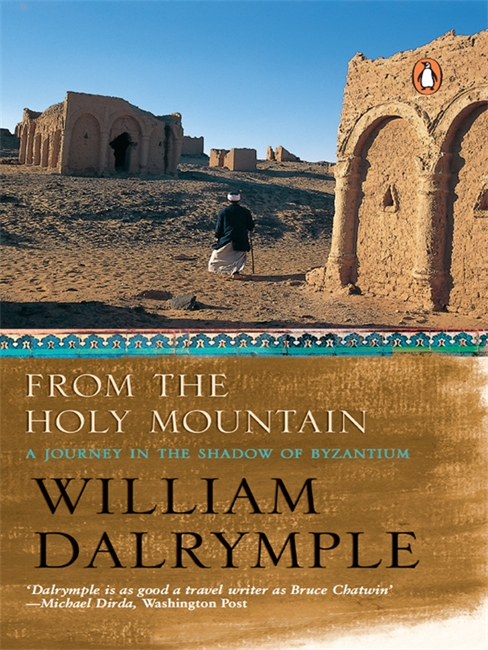
A Journey in the Shadow of Byzantium
‘In his third book William Dalrymple has dug deep to present the case of the Middle East’s downtrodden Christians. More hard-hitting than either of his previous books, From the Holy Mountain is driven by indignation. While leavened with his characteristic jauntiness and humour, it is also profoundly shocking. Time and time again in the details of Dalrymple’s discoveries I found myself asking: why do we not know this?
The sense of unsung tragedy accumulates throughout the chapters of this book…From the Holy Mountain is the most rewarding sort of travel book, combining flashes of lightly-worn scholarship with a powerful sense of place and the immediacy of the best journalism. But more than that it is a passionate cri de coeur for a forgotten people which few readers will be able to resist’—Philip Marsden, Spectator.
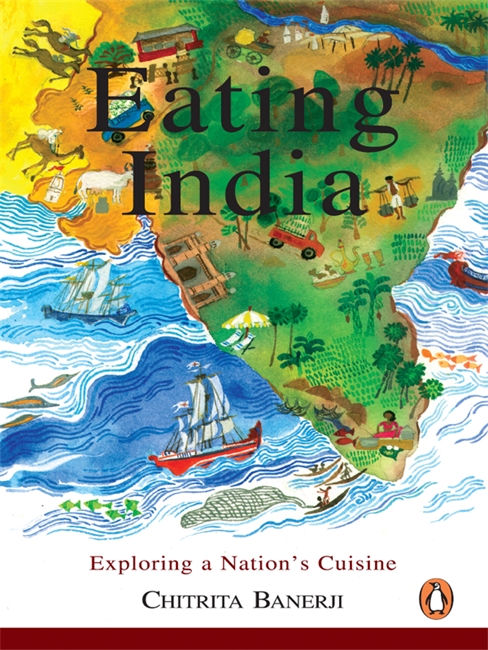
In Eating India, award-winning food writer Chitrita Banerji takes us on an extraordinary journey through a national cuisine formed by generations of arrivals, assimilations and conquests. Traveling across the length and breadth of the country-from Bengal to Goa and Karnataka, via the Grand Trunk Road, then northwards to Amritsar, Lucknow and Varanasi, on to Bombay and Kerala-Banerji discovers a civilization with an insatiable curiosity, one that consumes the old and the new with eager voracity. Weaving together myths and folklore associated with food, the people and their culture, the author narrates captivating accounts of life in the subcontinent: the legend behind the week-long harvest festival of Onam; the strictly observed rules of kosher in the Jewish households of Cochin; the best Benarasi thandai that has a dollop of bhang in it; and the food and culture of the indigenous people who hover on the edges of mainstream consciousness, among others. Eating India is also peppered with fascinating tidbits from India’s history: the use of ‘shali’ rice to make pilafs during the Mughal period; the advent of chillies with the arrival of the Portuguese; British, apart from Goan, influence on Parsi society that prompted the Parsis to open the first girls’ school in India in 1849; and the medieval movable feast that unfolded on the travellers’ platter as they moved from east to west on Sher Shah Suri’s Sarak-i-Azam. At different points in her journey, Banerji shows us how restructuring old customs and making innovations is what India is all about: food in India has always been and still is fusion-one that is forever evolving. Certain to enchant anyone enamoured of Indian food and culture, Eating India is a heady blend of travelogue and food writing.
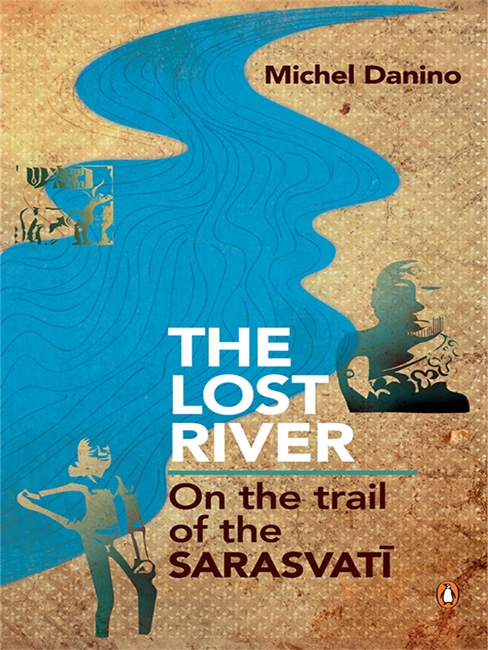
The Indian subcontinent was the scene of dramatic upheavals a few thousand years ago. The Northwest region entered an arid phase, and erosion coupled with tectonic events played havoc with river courses. One of them disappeared. Celebrated as -Sarasvati’ in the Rig Veda and the Mahabharata, this river was rediscovered in the early nineteenth century through topographic explorations by British officials. Recently, geological and climatological studies have probed its evolution and disappearance, while satellite imagery has traced the river’s buried courses and isotope analyses have dated ancient waters still stored under the Thar Desert. In the same Northwest, the subcontinent’s first urban society”the Indus civilization”flourished and declined. But it was not watered by the Indus alone: since Aurel Stein’s expedition in the 1940s, hundreds of Harappan sites have been identified in the now dry Sarasvati’s basin. The rich Harappan legacy in technologies, arts and culture sowed the seeds of Indian civilization as we know it now. Drawing from recent research in a wide range of disciplines, this book discusses differing viewpoints and proposes a harmonious synthesis”a fascinating tale of exploration that brings to life the vital role the -lost river of the Indian desert’ played before its waters gurgled to a stop.

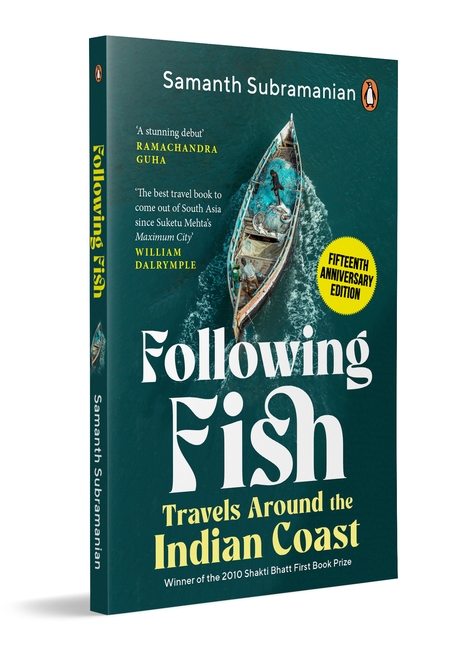
In a coastline as long and diverse as India’s, fish inhabit the heart of many worlds – food of course, but also culture, commerce, sport, history and society. Journeying along the edge of the peninsula, Samanth Subramanian reports upon a kaleidoscope of extraordinary stories. In nine essays, Following Fish conducts rich journalistic investigations: among others, of the famed fish treatment for asthmatics in Hyderabad; of the preparation and the process of eating West Bengal’s prized hilsa; of the ancient art of building fishing boats in Gujarat; of the fiery cuisine and the singular spirit of Kerala’s toddy shops; of the food and the lives of Mumbai’s first peoples; of the history of an old Catholic fishing community in Tamil Nadu; of the hunt for the world’s fastest fish near Goa. Throughout his travels, Subramanian observes the cosmopolitanism and diverse influences absorbed by India’s coastal societies, the withdrawing of traditional fishermen from their craft, the corresponding growth of fishing as pure and voluminous commerce, and the degradation of waters and beaches from over-fishing. Pulsating with pleasure, adventure and discovery, and tempered by nostalgia and loss, Following Fish speaks as eloquently to the armchair traveler as to lovers of the sea and its lore.

Many people dream of escaping the stresses and strains of urban life and moving to Goa. Katharina Kakar and her husband, the psychoanalyst and writer Sudhir Kakar, followed their dream and boldly took that plunge-buying a charming old house in a tranquil south Goa village, where they hoped to find a whole new way of living and working. Ten years later, they are still there, living the idyll-and the reality-of life in Goa. So which is the real Goa? Is it all about sun and sand, beaches and bikinis, feni and vindaloo? This book captures the allure of all these, as well as the festivals and rituals that punctuate the rhythm of village life. It portrays fascinating local characters, ranging from ageing hippies, beach boys and elusive workmen to the aristocratic residents of Goa’s grand old mansions. But it also reveals lesser-known aspects of Goa: the hidden-often shocking-histories of its colonial past; and the debates and fissures that engage and divide Goan society today. In part personal memoir and travelogue, in part an insightful look at Goan history and society, this book portrays Goa with all its paradoxes and problems, its seductive pleasures and, above all, its unique and enduring charm.
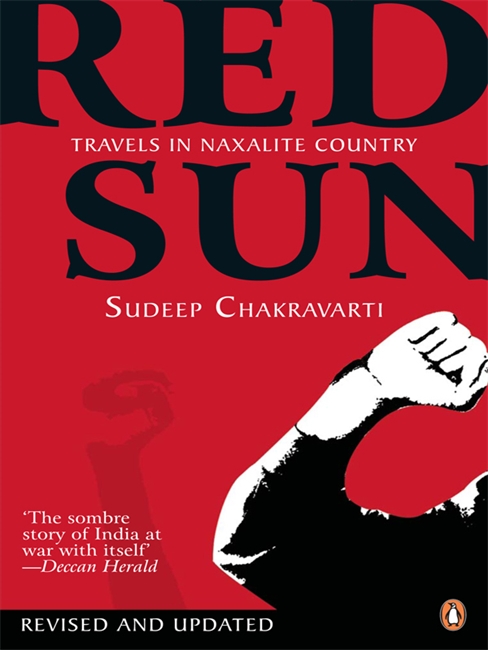
A revealing journey into the heartland of India’s insurgency problem
Spread over fifteen of the country’s twenty-eight states, India’s Maoist movement is now one of the world’s biggest and most sophisticated extreme-left movements. Hardly a week passes without people dying in strikes and counter-strikes by the Maoists-interchangeably known as the Naxalites-and the police and paramilitary forces. In this brilliant and sobering examination of the ‘Other India’, Sudeep Chakravarti combines reportage, political analysis and individual case histories as he takes us to the heart of Maoist zones in the country-areas of extreme destitution, bad governance and perpetual war.

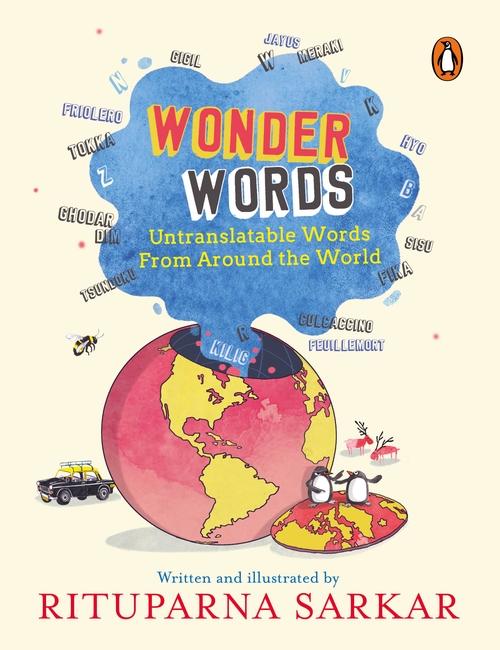
What’s the word for . . .?
People in different countries speak different languages-and sometimes these languages have words that are untranslatable into English. Did you know that Japanese has a word for pretending not to be at home when someone rings the doorbell? Or that there’s a German word for the weight that you put on because of emotional eating? Or even that there’s a Yiddish word for thinking of a witty comeback only when it’s too late?
Wonder Words is a gorgeous, illuminating and often hilarious lexicon of unique words from all over the globe. It will open up your world, making you aware of emotions, cultures and practices from far and beyond. Join author-illustrator Rituparna Sarkar in finding the joy of new words in different languages that you always hoped would exist in English!
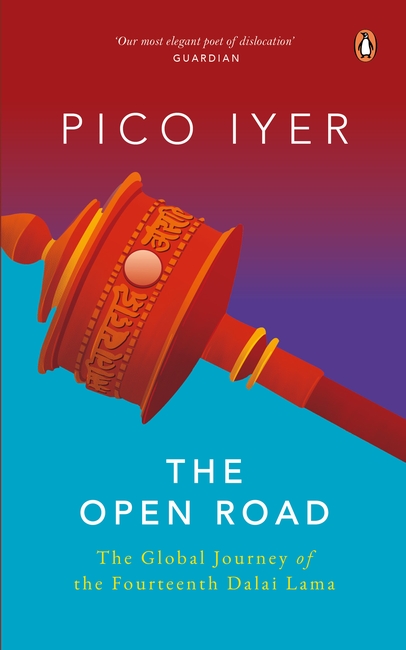
Pico Iyer has been engaged in conversation with the Dalai Lama (a friend of his father’s) for the last many decades-about his message and its effectiveness. Now, in this insightful, impassioned book, Iyer captures the paradoxes the Dalai Lama embodies: he is a religious leader who warns against being needlessly distracted by religion; a Tibetan head of state who suggests that exile from Tibet can be an opportunity; an incarnation of a Tibetan god who champions globalism and technology.
Moving from Dharamsala, India, to Lhasa, Tibet, to venues in the West-where the Dalai Lama’s pragmatism, rigour and scholarship are sometimes lost on an audience yearning for mystical visions-The Open Road illuminates the hidden life, the transforming ideas and the daily challenges of a global icon.

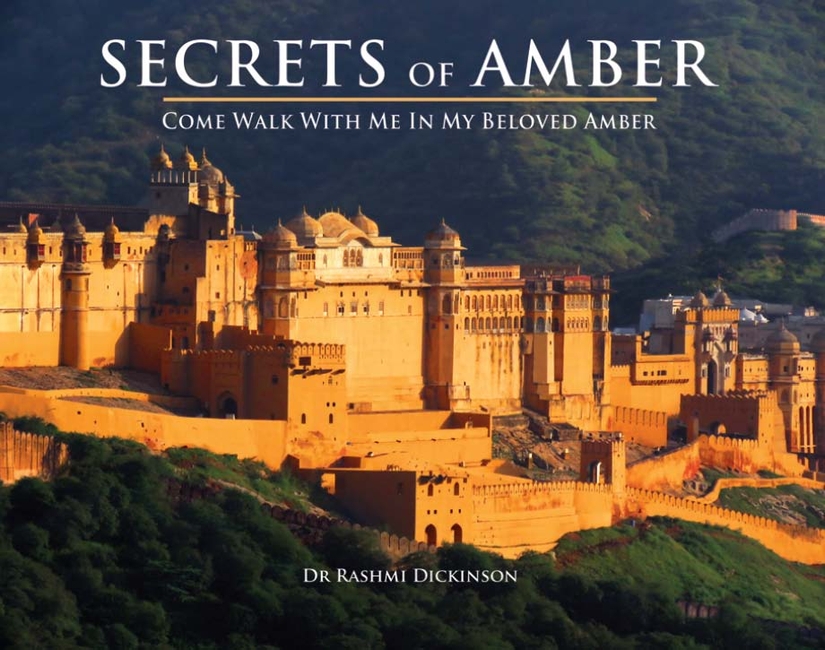
Secrets of Amber is a voyage of discovery to Amber, the royal walled city of Rajasthan, through twelve walks in and around the heritage heart of the town. Away from the unusual crowded tourist trail, delight in the magical dialogue with the landscape and the living heritage while scaling a soaring battlement wall, strolling through a medieval lane or exploring the wooded royal hunting grounds. This intimate visual anthem to one of India’s greatest historical landscapes will lead you to unearth an unprecedented treasure trove of delights and vistas.

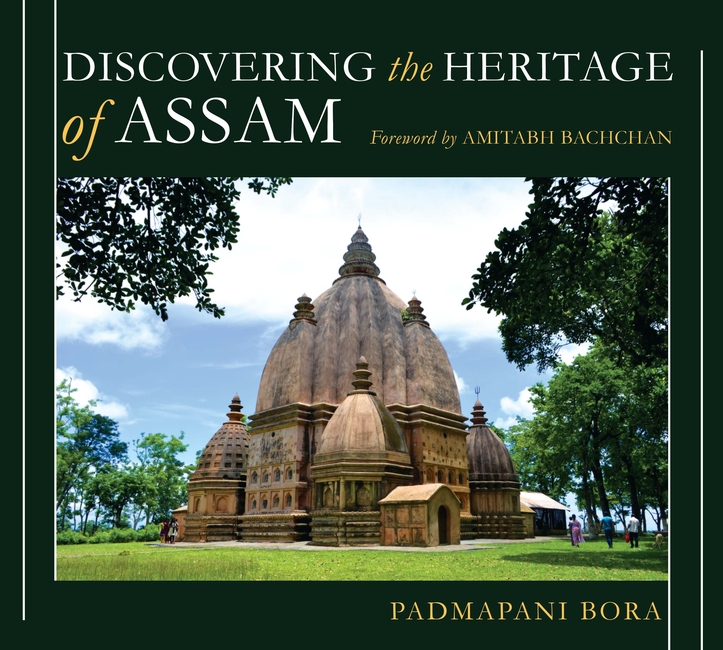
The book Discovering the Heritage of Assam takes a comprehensive look at the nature, culture and traditions that symbolize the true essence of the Indian state of Assam. The history of the state, beginning from the Paleolithic age to the British era, is well supported by innumerable ruins, interesting shrines, incredible wildlife, and a variety of living heritage, some of which are now part of the UNESCO’s list of world heritage sites.
The Ahoms, who ruled over Assam for 600 years, has had a significant imprint on its history. Neo-Vaishnavism popularized by the great saint Srimanta Sankardeva and venerated institutions like the Namghars and Satras constitute the prime components the state’s heritage.
This coffee table book is divided into five broad chapters-Ancient Period Heritage, Medieval Period Heritage, Modern Heritage, Natural Heritage and Living Heritage – and contains beautiful photographs and informative illustrations of the various heritage sites of Assam.