



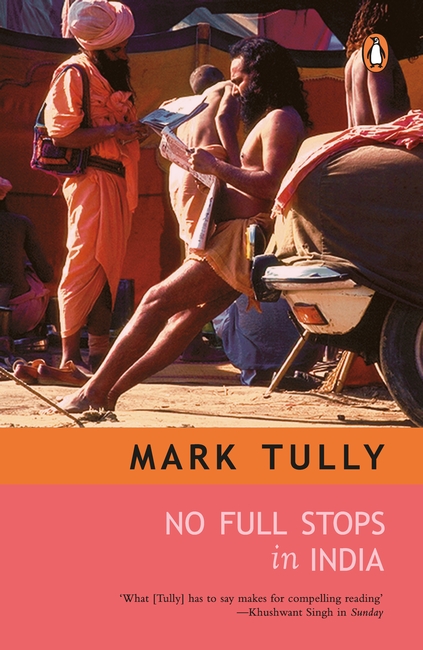
India’s Westernized elite, cut off from local traditions, ‘want to write a full stop in a land where there are no full stops’. From that striking insight Mark Tully has woven a superb series of ‘stories’ which explore Calcutta, from the Kumbh Mela in Allahabad (probably the biggest religious festival in the world) to the televising of a Hindu epic. Throughout, he combines analysis of major issues with a feel for the fine texture and human realities of Indian life. The result is a revelation.
‘The ten essays, written with clarity, warmth of feeling and critical balance and understanding, provide as lively a view as one can hope for of the panorama of India.’ K. Natwar-Singh in the Financial Times
Catagory: Travel
Maximum City
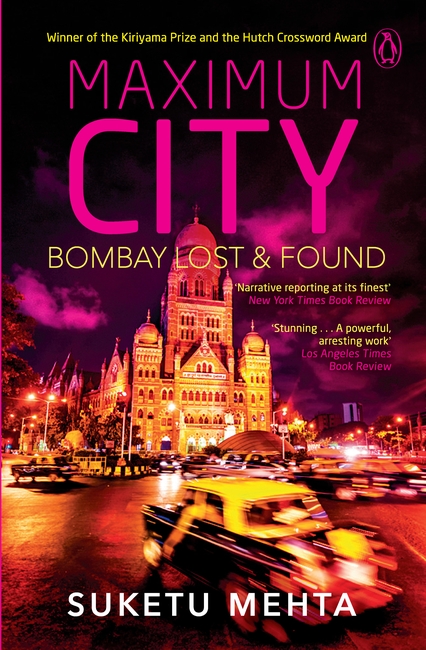
A native of Bombay, Suketu Mehta gives us an insider’s view of this stunning metropolis. He approaches the city from unexpected angles, taking us into the criminal underworld of rival Muslim and Hindu gangs, following the life of a bar dancer raised amid poverty and abuse, opening the door into the inner sanctums of Bollywood, and delving into the stories of the countless villagers who come in search of a better life and end up living on the sidewalks.
As each individual story unfolds, Mehta also recounts his own efforts to make a home in Bombay after more than twenty years abroad. Candid, impassioned, funny, and heartrending, Maximum City is a revelation of an ancient and ever-changing world.
The Travel Gods Must Be Crazy
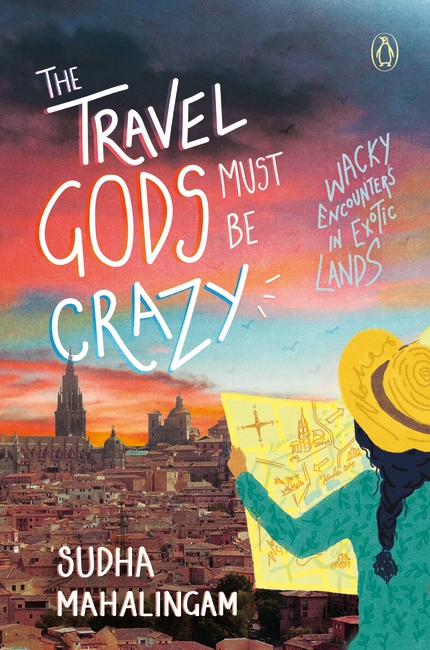
Ever suffered the collective flatulence of eighty co-passengers while sailing on a serene Asian river? Or called out for rescue in true Bollywood style while locked up in a minaret in Persia? Or had to cross a pack of hyenas en route to the loo?
Dreaming of glorious sunrises and architectural marvels in exotic places, Sudha often landed up in situations that were uproariously bizarre or downright dangerous. Tongue firmly in cheek, she recounts her journeys through the raw wildernesses of Borneo and the African savannah, into the deserts of Iran and Uzbekistan, and up the Annapurna and the Pamirs, revealing the quirky side of solo travel to side-splitting effect. Punctuating her droll stories with breathtaking descriptions and stunning photographs, Sudha invites readers on an unexpected and altogether memorable tour around the world!
Carpenters and Kings
Jordanus Catalani, the first bishop of the Church of Rome in India, introduced the northern part of the subcontinent to his readers in fourteenth-century Europe in this manner. Two hundred years before the advent of Vasco da Gama, Western Christianity-which comprises the Catholic Church, the Anglican Communion and Protestant denominations today-had already arrived in India, finding among its diverse people and faiths the Church of the East already at home since the beginning of Christianity.
This is an account of how global events, including the Crusades and the Mongol conquests, came together to bring Western Christianity to India.
A gripping narrative of two diagonally opposite impulses in Christianity: of humble scholars trying to live the Christian ideal, and of ambitious ecclesiastical empire-builders with more earthly goals.
Carpenters and Kings is a tale of Christianity, and, equally, a glimpse of the India which has always existed: a multicultural land where every faith has found a home through the centuries.
Journeys
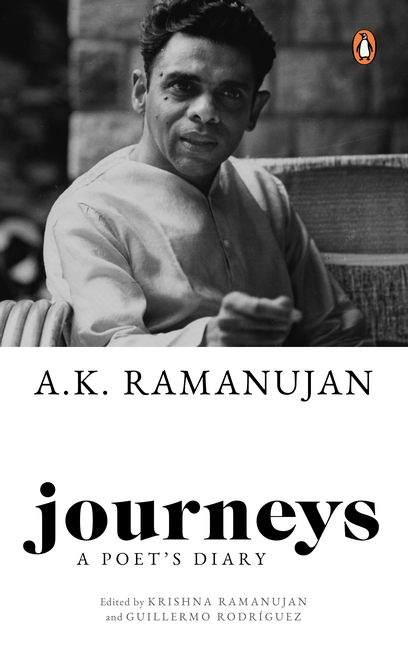
A.K. Ramanujan (1929-1993), one of India’s finest poets, translators, folklorists, essayists and scholars of the twentieth century, is a stalwart in India’s literary history. His translations of ancient Tamil and medieval Kannada poetry, as well as of UR Ananthamurthy’s novel Samskara, are considered as classics in Indian literature. A pioneering modernist poet, during his lifetime he produced four poetry collections in English, and he had also intended to publish the journals he had kept throughout the decades. After his premature death 25 years ago, his journals, diaries, papers and other documents-spanning fifty years from 1944 to 1993-were given by his family to the Special Collections Research Center at the Regenstein Library of the University of Chicago in June 1994. These unpublished writings, meticulously preserved and catalogued at the University of Chicago, were waiting for someone to unveil them to a wider readership.
Edited by Krishna Ramanujan and Guillermo Rodríguez, Journeys offers access to Ramanujan’s personal diaries and journals, providing a window into his creative process. It will include literary entries from his travels, his thoughts on writing, poetry drafts, and dreams. His diaries and journals served as fertile ground where he planted the seeds for much of his published work.
Delhi Darshan
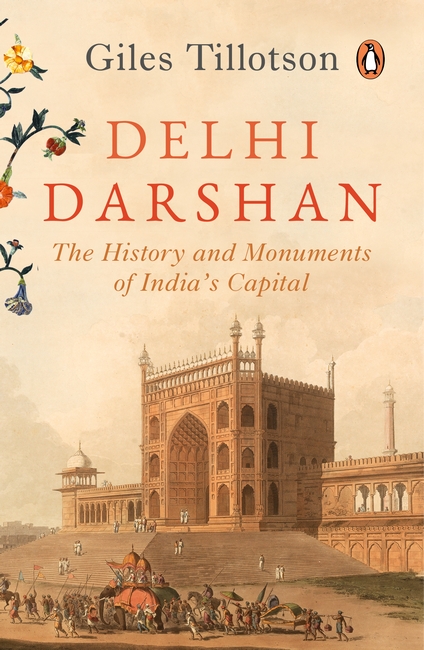
Giles Tillotson provides a fascinating account of Delhi’s built heritage, from the traces of the earliest settlements at Indraprastha, through the grand legacies of the Delhi Sultans and the great Mughals to the ordered symmetries of Lutyens’ Delhi and the towering skyscrapers of Gurgaon. Filled with quirky details and original insights, as well as a section on important monuments, this is a lively and informed account of the many fascinating twists and turns in the national capital’s built history and an original reflection on the many transformations of its urban landscape.
In An Antique Land: From bestselling author and winner of the 2018 Jnanpith Award

Packed with anecdote and exuberant detail, In an Antique Land provides magical and intimate insights into Egypt from the Crusades to Operation Desert Storm. It exposes the indistinguishable and intertwining ties that bind together India and Egypt, Hindus and Muslims and Jews. By combining fiction, history, travel writing and anthropology, to create a single seamless work of imagination, Ghosh characteristically makes us rethink the political boundaries that divide the world and the generic boundaries that divide narratives.
The Beauty of All My Days
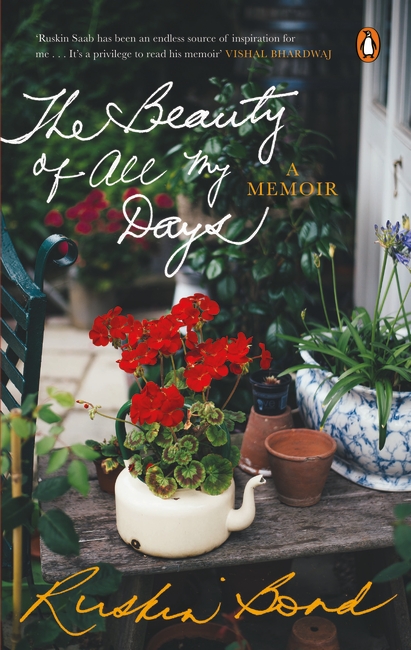
So here I am, delving into the past like Monsieur Poirot, not to solve a mystery, but to try to understand some of the events that have helped define the sort of person I have become. Some of it, naturally, is in the genes; but much of it is in the environment, in the circumstances in which we grow up, in the people who come into our lives, even in the air we breathe.
Had I grown up in London or Timbuktu, I would have been a different sort of person, I’m sure. My parents (and those before them) made me. But India made me too. The soil, the air, the wind, the rain, the trees, the grass, the proximity of people-all these things made me . . .
Different things at different times helped to make the individual that is me, just as different things at different times helped to make you, just as they went into making your brothers and sisters, who are very different from you.
‘Do I contradict myself? Very well, then, I contradict myself,’ said Walt Whitman.
Each chapter of this memoir is a remembrance of times past, an attempt to resurrect a person or a period or an episode, a reflection on the unpredictability of life. Some paths lead nowhere; others lead to a spring of pure water. Take any path and hope for the best. At least it will lead you out of the shadows.
Autumn Light
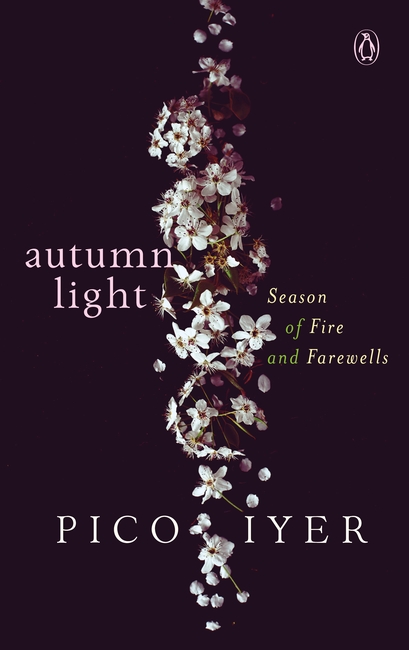
Returning to his long-time home in Japan after a sudden death, Pico Iyer picks up the steadying patterns of his everyday rites: going to the post office, watching the maples begin to blaze, engaging in furious games of ping-pong every evening. As he does so, he starts to unfold a meditation on changelessness that anyone can relate to: parents age, children scatter, and he and his wife turn to whatever can sustain them as everything falls away.
After his first year in Japan, almost thirty years ago, Iyer gave us a springtime romance for the ages, The Lady and the Monk; now, half a lifetime later, he shows us a more seasoned place-and observer-looking for what lasts in a life that feels ever more fragile.
A Beginner’s Guide to Japan
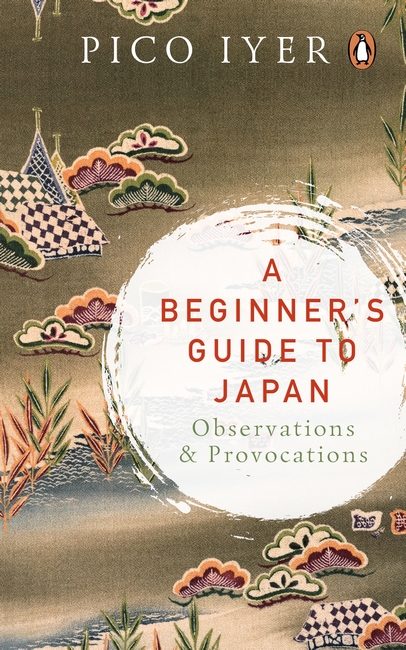
After thirty-two years in Japan, Pico Iyer can use everything from anime to Oscar Wilde to show how his adopted home is both hauntingly familiar and the strangest place on earth. He draws on readings, reflections and conversations with Japanese friends to illuminate an unknown place for newcomers, and to give longtime residents a look at their home through fresh eyes.
A Beginner’s Guide to Japan is a playful and profound guidebook full of surprising, brief and incisive glimpses into Japanese culture. Iyer’s adventures and observations as he travels from a meditation-hall to a love-hotel, from West Point to Kyoto Station, make for a constantly surprising series of provocations guaranteed to pique the interest and curiosity of those who don’t know Japan, and to remind those who do of the wide range of fascinations the country and culture contain.