Pico Iyer-one of the most compelling and profoundly provocative travel writers-invites us to accompany him on an array of exotic explorations, from L.A. to Yemen to Haiti and Ethiopia, from a Bolivian prison to a hidden monastery in Tibet. He goes to Cambodia, where the main tourist attraction is a collection of skulls from the Khmer Rouge killing fields, and travels through southern Arabia in the weeks before 11 September 2001. He practices meditation with Leonard Cohen and discusses geopolitics with the Dalai Lama, travels to Easter Island and through the imaginative terrains of W.G. Sebald and Kazuo Ishiguro, weaving physical and psychological challenges together into a seamless narrative.
Throughout his travels, the familiar thrill of adventure is haunted by the unsettling questions that arise for Iyer everywhere he goes: How do we reconcile suffering with the sunlight often found around it? How does the foreign instruct the traveler, precisely by discomfiting him? And, how does travel take us more deeply into reality, both within us and without? Intensely affecting, Iyer’s explorations are a road map of thinking in new ways about our changing world.

When Pico Iyer decided to go to Kyoto and live in a monastery, he did so to learn about Zen Buddhism from the inside, to get to know Kyoto, one of the loveliest old cities in the world, and to find out something about Japanese culture today-not the world of businessmen and production lines, but the traditional world of changing seasons and the silence of temples, of the images woven through literature, of the lunar Japan that still lives on behind the rising sun of geopolitical power.
All this he did. And then he met Sachiko.
Vivacious, attractive, thoroughly educated, speaking English enthusiastically, if eccentrically, the wife of a Japanese ‘salaryman’ who seldom left the office before 10 p.m., Sachiko was as conversant with tea ceremonies and classical Japanese literature as with rock music, Goethe and Vivaldi. With the lightness of touch that made Video Night in Kathmandu so captivating, Pico Iyer fashions from their relationship a marvellously ironic yet heartfelt book that is at once a portrait of cross-cultural infatuation-and misunderstanding-and a delightfully fresh way of seeing both the old Japan and the very new.
What does the elegant nostalgia of Argentina have in common with the raffish nonchalance of Australia? And what do both these countries have in common with North Korea? They are all ‘lonely places’ cut off from the rest of the world by geography, ideology or sheer weirdness. And they have all attracted the attention of Pico Iyer.
Whether he is documenting the cruising rites of Icelandic teenagers, being interrogated by tipsy Cuban police or summarizing the plot of Bhutan’s first feature film (‘a $6500 spectacular about a star-crossed couple: she dies, he throws himself on the funeral pyre, and both live happily ever after as an ox and a cow’), Iyer is always uncannily observant and acerbically funny.
Ever since he first read Graham Greene, Pico Iyer has been obsessed by the figure of the writer and by one of the great themes of Greene’s work: what it means to be an outsider. Wherever he has travelled-usually as an outsider himself-Iyer has found reminders of Greene’s life, observed scenes that might have been written by Greene, written stories that recall Greene. Yet, as Iyer recounts the history of his obsession, another phantom image begins to assert itself, one that Iyer had long banished from his inner life-that of his father.
More people have embarked on a quest for the sacred in India than anywhere else.
Pilgrim’s India is about all journeys impelled by the idea of the sacred. It brings together essays and poems-from the Katha Upanishad, Fa-Hien, Basavanna and Kabir to Paul Brunton, Richard Lannoy, Amit Chaudhuri, Arun Kolatkar and others-about various aspects of trips undertaken in the name of God. Readers will encounter the watchful reserve of a British journalist in southern India, the vigorous prose of a contemporary Sikh pilgrim, a French author-adventurer’s appraisal of the Ellora caves, a modern-day Zoroastrian’s reflections on Udvada and a woman’s impression of what it means to be Muslim in India.
Mystics, witnesses and wanderers write about the Supreme Being, about journeys and destination, false starts, bottlenecks and blind alleys, about humour, rage and revelation-all of which make this anthology a deeply absorbing and idiosyncratic take on pilgrims and pilgrim trails in India.

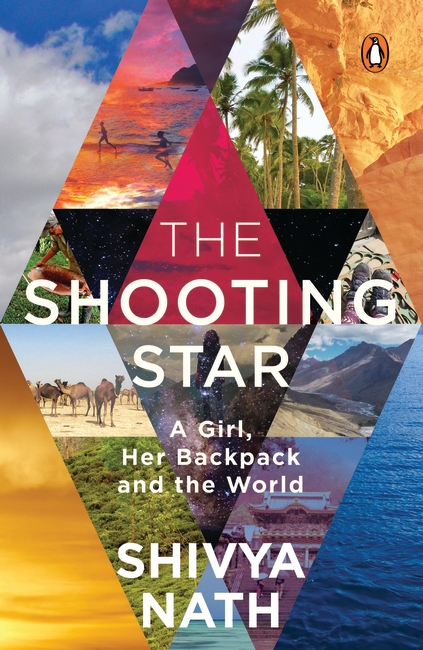
Shivya Nath quit her corporate job at age twenty-three to travel the world. She gave up her home and the need for a permanent address, sold most of her possessions and embarked on a nomadic journey that has taken her everywhere from remote Himalayan villages to the Amazon rainforests of Ecuador. Along the way, she lived with an indigenous Mayan community in Guatemala, hiked alone in the Ecuadorian Andes, got mugged in Costa Rica, swam across the border from Costa Rica to Panama, slept under a meteor shower in the cracked salt desert of Gujarat and learnt to conquer her deepest fears.
With its vivid descriptions, cinematic landscapes, moving encounters and uplifting adventures, The Shooting Star is a travel memoir that maps not just the world but the human spirit.
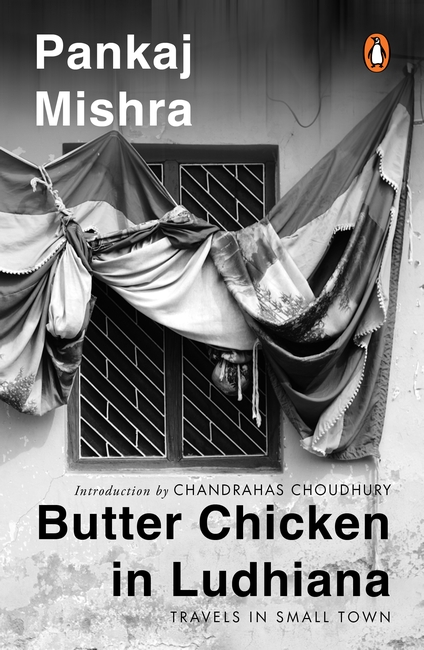
In Butter Chicken in Ludhiana, Pankaj Mishra captures an India which has shrugged off its sleepy, socialist air, and has become instead kitschy, clamorous and ostentatious. From a convent-educated beauty pageant aspirant to small shopkeepers planning their vacation in London, Pankaj Mishra paints a vivid picture of a people rushing headlong to their tryst with modernity. An absolute classic, this is a witty and insightful account of India’s aspirational middle class.

WINNER,STANFORD DOLMAN TRAVEL BOOK OF THE YEAR
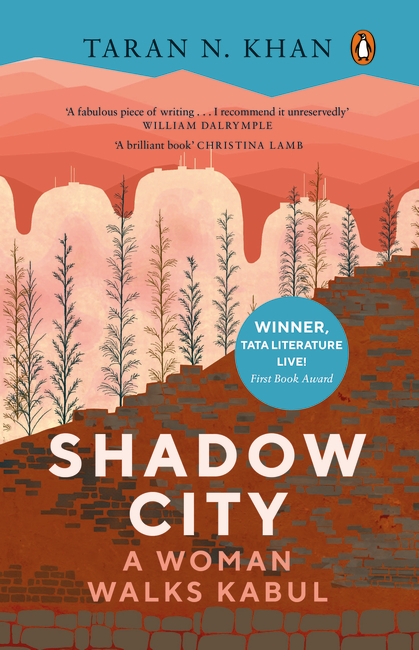
WINNER, TATA LITERATURE LIVE! FIRST BOOK AWARD 2020 – NON-FICTION
‘A fabulous piece of writing . . . I recommend it unreservedly’ – William Dalrymple
‘A brilliant book’ – Christina Lamb
When Taran N. Khan first arrived in Kabul in the spring of 2006-five years after the Taliban government was overthrown-she found a city both familiar and unknown. Falling in with poets, archaeologists and film-makers, she begins to explore the city and, over the course of several returns, discovers a Kabul quite different from the one she had expected.
Shadow City is an account of these expeditions, a personal and meditative portrait of a city we know primarily in terms of conflict. With Khan as our guide, we move from the glitter of wedding halls to the imperilled beauty of a Buddhist monastery, slip inside a beauty salon and wander through book markets. But as these walks take us deeper into the city, it becomes clear that to talk of Kabul’s various wars in the past tense is a mistake.
Part reportage and part reflection, Shadow City is an elegiac prose map of Kabul’s hidden spaces-and the cities that we carry within us.

As a fledgling doctor, what would you choose: practising medicine in rural India or going abroad in search of financial security?
How would you face the people who depend on you if your wealth is wiped out in the stock market?
How would you pursue a dream project, knowing the many challenges that lie ahead?
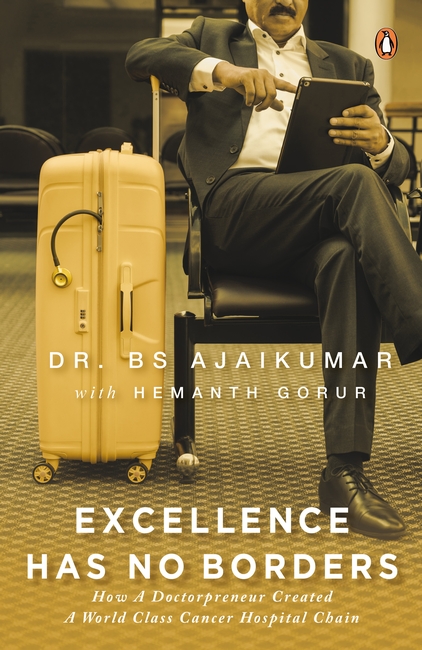
In Excellence Has No Borders, Dr B.S. Ajaikumar, an oncologist, answers these questions in an inspiring and fascinating narrative. He details how he has made cancer treatment accessible to all and created a chain of world-class cancer hospitals across India. Providing a captivating account of his entrepreneurial journey, Dr Ajaikumar recounts the challenges and successes on the path to becoming a doctorpreneur. The book, containing lessons from his life, shows how tenacity, hard work and self-confidence can go a long way in achieving the unimaginable. It is a must-read for anyone looking for inspiration.
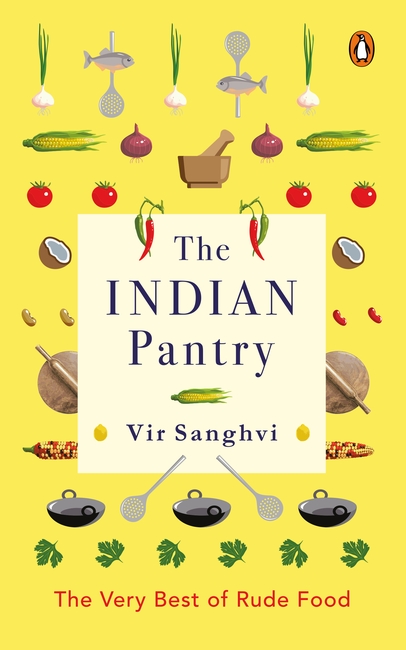
WINNER OF THE GOURMAND WORLD COOKBOOK AWARD 2019
The way we look at our food has changed a lot in the last few years. With a slow-growing awareness about what we eat and where our food is coming from, we all wish there was an expert who could tell us everything we need to know. Why is haldi suddenly so popular around the world? Do avocados live up to the craze? Which fruit and vegetables are indigenous to India?
From food columnist and star journalist Vir Sanghvi comes a collection of insightful, witty and myth-busting pieces about the ingredients in our kitchens.
In his distinctive, no-holds-barred style, Sanghvi introduces the reader to not only the Indian pantry but also the culture, history and unique experiences that make Indian food so popular the world over.