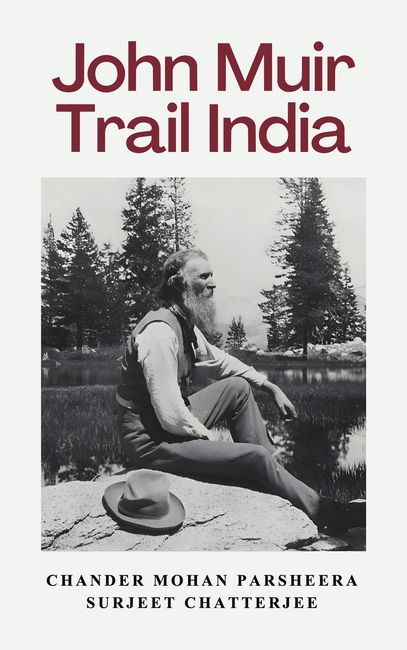
In 1903, legendary naturalist John Muir, the foremost architect of Yosemite National Park, journeyed across India. His travels took him through the living traditions of Calcutta (Kolkata) and its historic botanic gardens, the mist-laden landscapes of Darjeeling, the spiritual depths of Benares (Varanasi), and the Mughal grandeur and British legacy of Lucknow, Kanpur, Agra, and Delhi. He further explored the majestic Himalayan peaks and deodar forests of Shimla, concluding his India tour in Bombay (Mumbai) before he sailed onwards to Suez.
John Muir Trail India retraces this 123-year-old route that captures the essence of India as Muir experienced it. Drawing on rare archival research and immersive fieldwork, this book reimagines India as a living trail—one rooted in conservation, wonder, and Muir’s enduring philosophy of ‘leave no trace.’

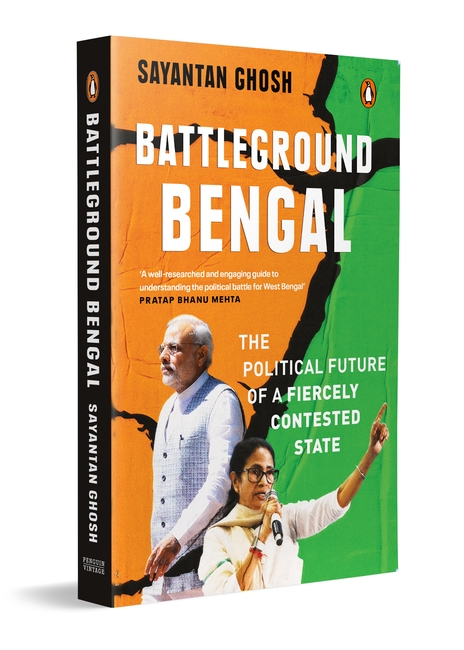
Long considered a bastion of the Left, the state of West Bengal has been politically dominated by the Trinamool Congress (TMC) for more than a decade, to the extent that the opposition parties here have been reduced to electoral irrelevance. But over the last few years, the TMC has been faced with a new challenger: the Bharatiya Janata Party (BJP), which has slowly made inroads into the state’s political arena, winning seventy-seven seats in the 2021 assembly election, a significant jump from its 2016 tally of three assembly seats.
Does this mean that the end is near for the TMC as the BJP prepares for a historic wipeout, reminiscent of the Left’s decimation in 2011? Or will Mamata Banerjee manage to hold her own by utilizing her grassroots presence and still-formidable public appeal? In Battleground Bengal, author and scholar Sayantan Ghosh attempts to answer these questions, and to gauge the anxiety and excitement in the build-up to the 2026 assembly election in the state.
Through archival documents, electoral data, interviews with political leaders and experts, and years of field reporting, Ghosh presents a critique of the contemporary political scene—from Mamata’s welfare-oriented populism to the BJP’s organizational crises—and looks back at the state’s recent history for clues about its possible future. In the final analysis, Battleground Bengal reveals how identity, patronage and fear continue to shape Bengal’s politics, regardless of who is at the helm.

‘If books can shape history, this is one.’ DAILY MAIL
‘Both devastating and uplifting … fearless and frank – angry and empowering. It speaks to the thousands of other victims out there about how to start fighting back.’ EMILY MAITLIS
Daughter. Prisoner. Survivor. Warrior. Nobody’s Girl … This is Virginia Roberts Giuffre’s last word.
In 2011, Virginia Roberts Giuffre hit the headlines as Jeffrey Epstein and Ghislaine Maxwell’s most outspoken victim: the woman whose decision to speak out helped send both serial abusers to prison and whose photograph with Prince Andrew catalyzed his fall from grace. But first and foremost, she became known as a voice of courage and resilience for women everywhere. This is her story, in her own words. A story that has never been told in full before now. It demonstrates with extraordinary power that victims are made, not born. And that once you come to truly understand the horrifying impact of abuse, you will never again question why a victim stays, or returns over and over again. In April 2025, Giuffre took her own life. She left behind a memoir written in the years preceding her death and stated unequivocally that she wanted it Pub Date: 21 October 2025 ISBN: 9781529986204 / 1529986206 Price: £17.99 Format: 234mm x 153mm Binding: Trade Paperback Extent: 400 pages Territory: Exclusive UK,IE,CW; ROW open mkt excluding US,PH,CA (with restrictions) Bar C ode: 9781529986204 Thema: True stories of survival of abuse and injustice, Memoirs, Modern slavery / Human trafficking, United States of America, USA, Australia, Later 20th century c 1950 to c 1999, Early 21st century c 2000 to c 2050, Relates specifically to the life experience of women or girls Web A ddress: www.penguin.co.uk A uthor Location: Near Perth, Australia Book Locale: global A I Last Updated: 11 February 2026 published. This is the powerful story of an ordinary girl who would grow up to confront adversity and trauma of the darkest form, yet found the strength to move forwards, reclaim her voice and shine a light on evil – advocating for others and fighting for a safer, fairer world. Nobody’s Girl is a remarkable recounting of one woman’s fortitude in the face of depravity and despair, and the legacy she leaves behind.
THE #1 NEW YORK TIMES BESTSELLER
THE #1 SUNDAY TIMES BESTSELLER
Once a year, the Mumbai Marathon passes by Silverline Apartments.
This year, seven more women are racing to the finish.
Set in the heart of the city, Mumbai Marathon follows the complicated lives of seven women. An actress who will risk everything for a billboard. A psychiatrist who cannot outrun her own past. A maid who sells her grief to survive. A widow who mourns strangers. A socialite left behind by the spotlight. A woman who learns that motherhood can arrive without birth. And a rich girl who wants to matter.
Each stands between what was and what comes next, stumbling forward without spectacle or applause. Because for women, stopping is not an option.
Aarambhh M Singh’s Mumbai Marathon is a finely observed novel about identity, ambition, and desire. It is not a story of victory, but of motion—of lives lived in the long, ordinary middle. A quiet, compelling read that stays with you long after the pages stop turning.
This book—Rohini’s third foray into the world of gastronomy—takes the reader through her encounters with Indian cuisine back in her childhood and later, recipes from the Rana heritage when she was a young bride in Nepal. In this book, she has tried to combine recipes from India and Nepal with the taste and flavours of cuisines encountered during her travels accompanying her husband on global postings. Rohini has woven these culinary memories into her craft, reviving the flavours of her childhood, recipes once nurtured by the khansamas of the British Raj, as well as forgotten and lost dishes of feudal India.
In Memories on a Platter, these treasured heritage culinary delights are combined with food prepared by the Bajais of Nepal’s Rana households and dishes from other parts of the world. Each of these beautiful recipes are either original or artfully marinated, sautéed, simmered and fused to harmonize with the modern palate and today’s lifestyle.

In February 2024, the Calcutta High Court ordered the change of the name of a lioness Sita in the Siliguri Safari Park. Some organizations had objected to her being housed with a lion named ‘Akbar’. In India today, even lions are subject to the same political pressure as Hindu-Muslim couples.
The propaganda, legislations and police actions are based on the premise that Muslim men are luring Hindu women into marriage, and that ‘love’ is a tool for ‘jihad’.
The book argues that ‘love jihad’ is not a category of relationship—it is a surveillance slogan. It allows vigilantes to enter homes, check phones, question faith and dissect the friendships of adult women.
The author explores the multidimensional lives of Hindu women, Muslim men and Dalit Bahujan masses and through humour, poetry and personal stories draws connections to reports, statistics and legal battles, making the work a truly delightful read.
Irreverent in its tone and blunt in its arguments, it is a book like no other.

Master the legendary personal productivity system that has transformed millions of lives worldwide. Tired of ending each day feeling like you accomplished nothing that truly mattered? Your biggest goals keep getting pushed aside by endless distractions? Legendary success and productivity coach Brian Tracy reveals the game-changing secret: eat your frogs first. Tackle your most challenging, most important task at the start of each day—everything else becomes easier. This isn’t just another time management book. It’s your blueprint for stopping procrastination and taking control. Tracy’s battle-tested system gives you 21 powerful principles: Plan every day in advance like a pro Break overwhelming tasks into manageable pieces Upgrade key skills to accelerate results Identify and eliminate constraints Build unstoppable momentum The fourth edition delivers brand-new tools: New chapter: “Form New Habits, Become a New Person”—rewire your brain for automatic productivity Four “accelerators”: calendar organization, productivity, self-discipline, and task completion systems Complete discussion and action guide: turn insights into immediate results The three essentials—decision, discipline, and determination—are within your reach. With practical action guides in every chapter, you’ll transform overwhelm into achievement. Your most important goals are waiting. It’s time to eat that frog.
Master the legendary personal productivity system that has transformed millions of lives worldwide. Tired of ending each day feeling like you accomplished nothing that truly mattered? Your biggest goals keep getting pushed aside by endless distractions? Legendary success and productivity coach Brian Tracy reveals the game-changing secret: eat your frogs first. Tackle your most challenging, most important task at the start of each day—everything else becomes easier. This isn’t just another time management book. It’s your blueprint for stopping procrastination and taking control. Tracy’s battle-tested system gives you 21 powerful principles: Plan every day in advance like a pro Break overwhelming tasks into manageable pieces Upgrade key skills to accelerate results Identify and eliminate constraints Build unstoppable momentum The fourth edition delivers brand-new tools: New chapter: “Form New Habits, Become a New Person”—rewire your brain for automatic productivity Four “accelerators”: calendar organization, productivity, self-discipline, and task completion systems Complete discussion and action guide: turn insights into immediate results The three essentials—decision, discipline, and determination—are within your reach. With practical action guides in every chapter, you’ll transform overwhelm into achievement. Your most important goals are waiting. It’s time to eat that frog.
Almost a million copies sold since first published in 2003, this updated edition of Brian Tracy’s self-help classic offers a step-by-step guide to setting and achieving your goals. Featuring 20% more content, including a new chapter, unlock your true potential with this tried-and-true productivity bestseller. Legendary time management and personal development expert Brian Tracy presents his simple, powerful, and effective system for setting and achieving goals. Each chapter introduces a principle key in reaching your goals, along with a toolkit full of both comprehensive insights and actionable steps. Using the twenty-two strategies Tracy outlines, you’ll be able to accomplish any goal you set for yourself—no matter how big. You’ll discover goal-setting strategies in various aspects of your life including: How to identify, clarify, and apply personal values in everyday actions How to take charge of your money to achieve financial freedom What it takes to overcome obstacles in your personal relationships How to make better choices in your health and wellbeing Responding to challenges in your career How to stop holding yourself back with self-doubt and procrastination Your time is important, so why not make the most of it? By following this time-tested and proven process you will not only reach your current goals, but also develop a life-long growth mindset that will guide you towards a more successful future.

महात्मा गांधी के आने से पहले अगर किसी ने भारत की आज़ादी की लौ जलाई, तो वे थे बाल गंगाधर तिलक। तिलक को ‘लोकमान्य’ कहा जाता था, जिसका मतलब है ‘लोगों में सबसे ज़्यादा इज़्ज़तदार’। उन्होंने आज़ादी की लड़ाई को सिर्फ पढ़े-लिखे लोगों की बात से निकालकर आम लोगों का आंदोलन बना दिया। उनकी ज़बरदस्त बातें, उनका लगातार काम और उनके बेबाक विचार अंग्रेज़ों के लिए सबसे बड़ी चुनौती बन गए। वैभव पुरंदरे ने अपनी इस किताब में तिलक की पूरी कहानी बताई है। उन्होंने दिखाया है कि कैसे तिलक ने कोंकण के एक छोटे से गाँव से पूरे भारत में अपनी पहचान बनाई। यह कहानी सिर्फ एक नेता के बारे में नहीं है, बल्कि उस हिम्मत और जज़्बे के बारे में है जो आज भी भारत की आत्मा में है। बाल गंगाधर तिलक की कहानी सिर्फ विरोध की नहीं, बल्कि मुश्किलों में भी डटे रहने और पक्के इरादों की मिसाल है। उनके विचार और काम आज भी हमें राह दिखाते हैं।