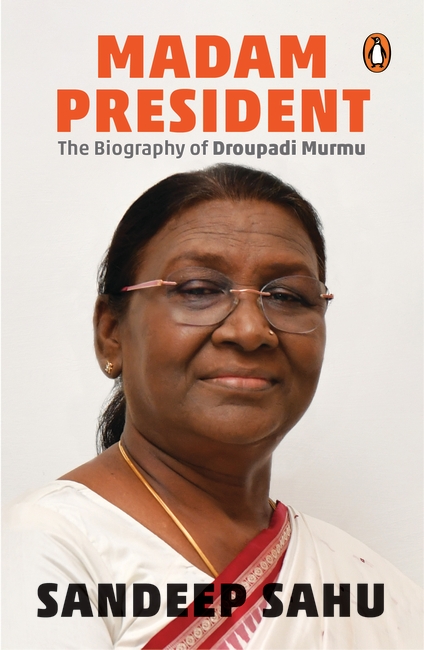
Madam President is the first-ever comprehensive and authentic biography of Droupadi Murmu, the fifteenth President of India, by senior journalist Sandeep Sahu. Murmu’s long and eventful political journey is a story of true perseverance and inspiration. Having battled early years of struggle in securing quality education, being struck by a series of personal tragedies such as the loss of her husband and two sons in quick succession,
and suffering electoral victories and losses, Murmu has risen through her circumstances with grace, fortitude and resilience that make her the well-revered leader she is today.
In this stellar biography, Sahu writes on Murmu’s life’s work, a journey that started as councillor in the Rairangpur civic body, having previously also served as Governor of Jharkhand, and reaching the Rashtrapati Bhavan. As the first Indian President from the tribal community, her phenomenal rise as an earnest and ambitious young woman, who would, with dedication and rigour, go on to become the most powerful woman in the country, presents a fascinating study of democratic empowerment in India.

The corporate masks we wear hide many a secret. The most potent are not the secret financial numbers or confidential strategy documents hidden away in locked drawers or in safes but the simple ones-good filter coffee, generosity and thirty minutes of me-time.
This book offers a selection of fascinating and useful secrets that can help you be far more successful at your workplace. As a bonus, they can make you happier as well. You will find within a range of subjects-whether the best methods of fighting exhaustion, organizing your work desk, the power of listening, why kindness is so important, workplace lessons from Hercule Poirot and what you can learn from the cookies that your colleagues eat.
Harish Bhat wields his pen with his signature insight to delight, inspire, provoke and change the way you see offices forever.
Nothing is as daunting as a goal. Many of us struggle with achieving them – be it in life, health, love and career. When you set unrealistic goals and keep failing, your intelligently designed brain tries to protect you from the pain and negative emotions that come with failure.
In Small Wins Every Day, Luke Coutinho presents a simple premise with powerful results, teaching you to rewire your brain for success. The hack? Break down your goals into small wins that you can achieve every day. Stacked over time, these contribute to significant lifestyle changes, good health and happiness.
Simple and bite-sized but packed with a punch, here are 100 wins to change your life.
Before Jeh started India’s first airline and changed the way the nation travelled, he was a boy who dreamt of flying.
In 1997, Kamal Shah’s world turned upside down. On his way to study in the US, Shah was completing the formalities for a student visa, which included preventive vaccinations for hepatitis, typhoid, measles, mumps and rubella. He developed a slight fever following his shots, which he dismissed as a normal side effect. Within twenty-four hours, Shah was forced to rethink. His condition deteriorated overnight, prompting an emergency rush to the hospital. Further tests revealed the unimaginable: an atypical hemolytic uremic syndrome (AHUS). Kamal needed a kidney transplant.
A year of painful haemodialysis later, Kamal underwent a renal transplant. His mother had donated her kidney to her son, in the hope that he could survive. The surgery was unsuccessful. In the last decade and a half, Kamal has switched between peritoneal and home dialysis. It has been a painful, terrifying journey, documented painstakingly on his personal blog. That blog was the kernel for NephroPlus, a company that was born from Kamal’s desire to ensure that dialysis became accessible for every patient. Kamal Shah is still on dialysis, but it has not dimmed his hope or his belief that being diagnosed with terminal kidney disease is not the end of life, nor can it prevent you from living the life you want to live. That hope has been the driving force behind NephroPlus.
Today, NephroPlus is one of Asia’s leading dialysis networks with 320+ centres across 4 countries, including India, Nepal, the Philippines and Uzbekistan. Since NephroPlus offers specialized dialysis, one factor that has been responsible for the overwhelming response has been their charges, which are 30-40 per cent lower than those in hospitals like Max or Apollo. This is the story not just of NephroPlus, but of an entrepreneur like no other.
This is a unique business memoir, with a strong, moving touch of the deeply personal. Kamal writes with raw honesty about pain and fear and the darker side of healthcare in India. Yet this is also a story of faith, of grit and determination and, ultimately, of success.

Felu, the super slueuth, is the nickname of Pradosh C. Mitter. Although Satyajit Ray wrote Feluda stories for the largely younger readers, soon it was found that they were being read by their parents as well. Soon longer stories followed-novelettes-taking place in a variety of picturesque settings.
From the historical setting of Lucknow-to solve the mystery of diamond ring, which once belonged tothe Mughal emperor Aurengzeb-to the Blue Beryl of Kailash Chowdhury, this is the first ever Feluda journal, which opens a window to unseen archiving materials, illustrations and rare publicity stills created by Ray.
A companion journal to scribble your thoughts, this collector’s edition brings to light the ever-popular adventures of Satyajit Ray’s enduring creation, Feluda!

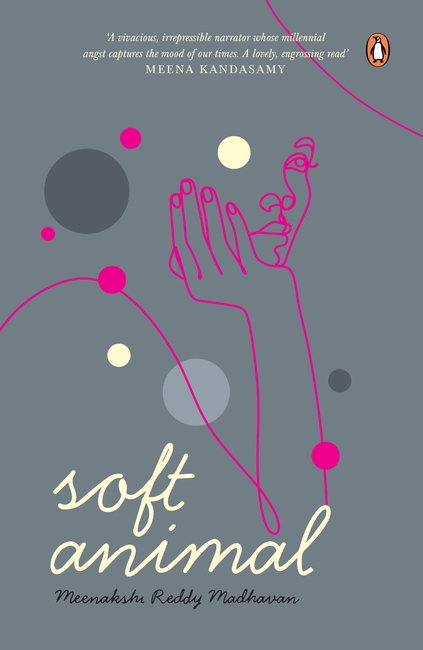
March 2020: Thirty-six-year-old Mallika Rao is largely insulated from the struggles of the millions fighting for their existence all over India. Instead, her Delhi flat and her husband threaten to imprison her as she searches for the confidence that has always eluded her. A rescue dog in her care provides more fulfilment than her husband, who is consumed by work and self-obsession, and she must also confront the universal challenges of having a woman’s body.
Soft Animal unfolds in urgent present tense with illuminating flashbacks, whip-smart dialogue and conspiratorial footnotes. Bringing the deftness of deadpan humour and the precision of meticulous social observation to the self-delusions of India’s privileged urban middle class, Meenakshi Reddy Madhavan’s latest channels an uncomfortably-and sometimes heartbreakingly-intimate experience of millennial marriage that is seldom portrayed but all too real.
Despite the dramatic developments in medical science, the health of the population worldwide has largely been on a decline and diseases have been found to be affecting people much earlier in life than before. This, in a large part, is affected by our dietary habits and patterns. My Food, My Health is an extremely accessible manual to healthy eating and healthful living through balanced nutrition, which compiles the wisdom of expert dieticians from the Apollo Group. Geared to cater to everyone-from toddlers and adolescents to mothers-to-be and senior citizens-this guide serves as a ready reckoner for healthcare professionals as well as the common man. It busts the myths and facts about various common diseases that pose serious public health challenges in India at the moment, such as obesity, diabetes, high blood cholesterol, high blood pressure, heart disease and cancer. Abundant in practical lifestyle changes and easy recipes to help you cook healthy food at home, this book will aid you in understanding and confidently managing your health better, so you can live a happy, healthy life!

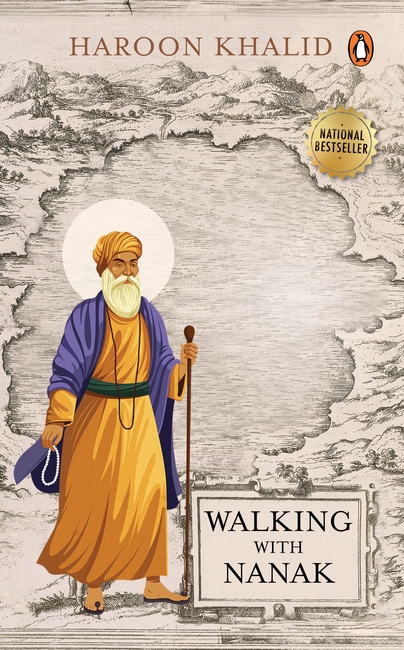
Haroon Khalid’s lifelong fascination with Guru Nanak was reignited when he came upon ‘Baburbani’, a poem written by the saint. This, and the discovery that Guru Nanak spent a large part of his life in Pakistan, inspired Khalid to undertake a journey that he hoped would help him learn more about the revered founder of Sikhism.
In this wonderful paean to Guru Nanak, Khalid describes his travels across the length and breadth of Pakistan as he visits the many gurdwaras and other locales associated with the saint, delving into their history and musing about their place and significance in a Muslim country. But this book is not merely a story about gurdwaras, it is also a re-telling of the story of Nanak the son, the poet, the wanderer, the father, the friend. Sifting through the stories of his miracles and poetry, we emerge with a picture of Nanak the man.
Also exploring the histories of all the subsequent Gurus after Nanak, the book traces the story of how an unorganized spiritual movement evolved into the institutionalized Khalsa of Guru Gobind Singh. Through the journeys of all the Gurus, the book describes how Nanak the poet became Guru Nanak the saint.

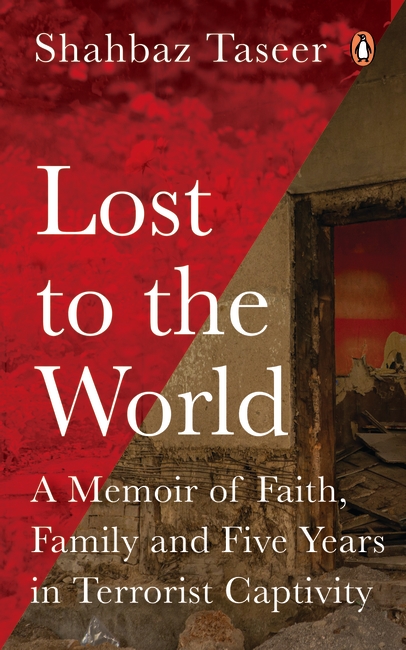
In late August of 2011, Shahbaz Taseer was driving to his office in Lahore, Pakistan when he was dragged from his car at gunpoint and kidnapped by a group of Taliban-affiliated terrorists.
Just seven months earlier, his father, Salman Taseer, the governor of Punjab Province, had been shot dead by his guard for speaking out against Pakistan’s blasphemy laws.
For almost five years Shahbaz was held captive, moved ever-deeper into the lawless Hindu Kush, frequently tortured and forced to endure extreme cruelty, his fate resting on his kidnappers’ impossible demands and the uneasy alliances between his captors, the Taliban and ISIS.
Lost to the World is the remarkable true story of Taseer’s time in captivity, and of his astonishing escape. It is a story of extraordinary faith, bravery and sorrow, with moments of kindness, humour and empathy, offering a hopeful light in the dark years of his imprisonment.
While deeply harrowing, this tale is also about resilience. Taseer countered his captors’ narrative of a holy war by immersing himself in the Quran in search of hope and a means to see his own humanity under even the most inhumane conditions, and ultimately to find a way back to his family.