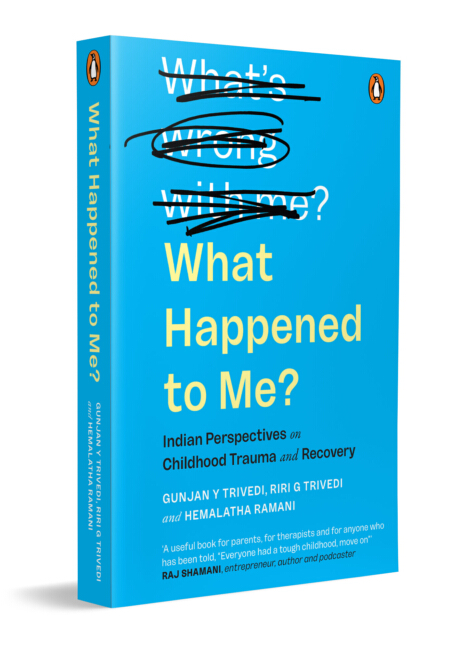
Do you struggle with anxiety, people-pleasing, perfectionism, burnout, or relationship difficulties? These aren’t flaws; they may be the quiet footprints of experiences you never had words for.
You’ve spent years asking, ‘What’s wrong with me?’ The kinder question is ‘What happened to me?’ That’s where self-blame ends and self-understanding begins.
Through real-life narratives from Indian families, stories of joint households, comparison, silence, and survival, this book gives shape and language to experiences that have long gone unnamed.
Why India Needs Its Own Conversation About Childhood Trauma
Based on 3,000+ interviews and 14 peer-reviewed studies, the authors show how traumatic childhood experiences surface decades later as anxiety, depression, PTSD, Complex PTSD, and relationship difficulties in adulthood.
Indian parenting has shaped generations of capable adults. But success and suffering can coexist.
Joint-family dynamics. Constant comparisons. Bullying. Emotional neglect. These Adverse Childhood Experiences (ACEs) shape Indian childhoods and have been largely overlooked by global research.
Built on research, not opinion. Grounded in solutions, not just analysis.
• 3,000+ interviews • 14 peer-reviewed studies • 50+ illustrations • Real-life narratives
This book is for you if:
- You struggle with emotional patterns you cannot explain
- You’re a parent who wants to raise resilient children
- You’re a therapist seeking evidence-based tools grounded in Indian family systems
What you’ll discover inside
Section I: The childhood experiences India has never named, and why trauma’s imprint is not limited to body or mind alone
Section II: Practical recovery tools: breathwork, guided visualisation, and the SEE protocol for self-hypnosis
Section III: A clinical framework for mental health professionals: evidence-based psychotherapy tools for trauma in the Indian context
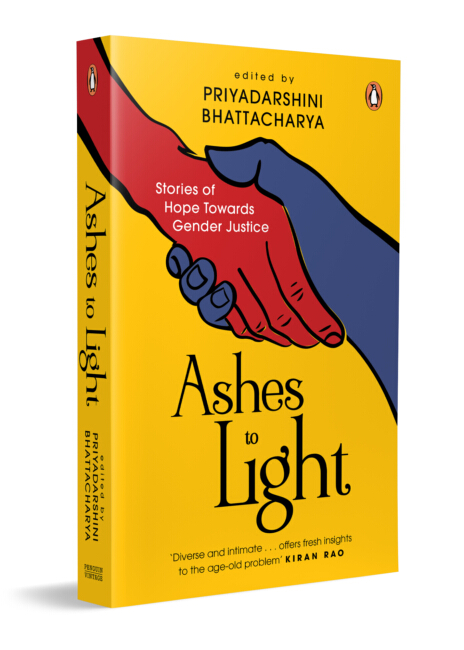
What might it mean to live in a gender-attuned world? Not a perfectly gender-just one, but a world that is receptive—capable of noticing, listening and responding to the quiet ways in which gender shapes lives, choices, institutions and intimacies. This question animates Ashes to Light, an anthology that engages resistance to gender-based prejudice not through proclamation, but through attention to the subtle, everyday forms of violence that often go unnamed.
At a time when conversations on gender are increasingly polarized, Ashes to Light resists slogans and certainties. Instead, it dwells in lived experience—where gender is not always overtly oppressive, but persistently present, shaping exclusions through normalization, condescension, erasure and quiet endurance.
Bringing together reflective personal essays from culture, politics, bureaucracy, law, academia, sports, art, and media, the anthology features film-maker Deepa Mehta on gender and creative choice; social activist Laxmi on socially sanctioned ideals of beauty; actor Rahul Bose on the rise of the Indian women’s rugby team; food scholar Pushpesh Pant on women’s struggles within the Indian kitchen; producer and screenwriter Kiran Rao on marriage and personal history; and former Chief Justice of India D.Y. Chandrachud on the feminist origins of law within the Indian family, among others.
Ashes to Light does not shout; it nudges. As editor Priyadarshini Bhattacharya reflects, the anthology is anchored in hope—not as optimism, but as practice: a daily, conscious commitment to attentiveness, movement and imagining otherwise.
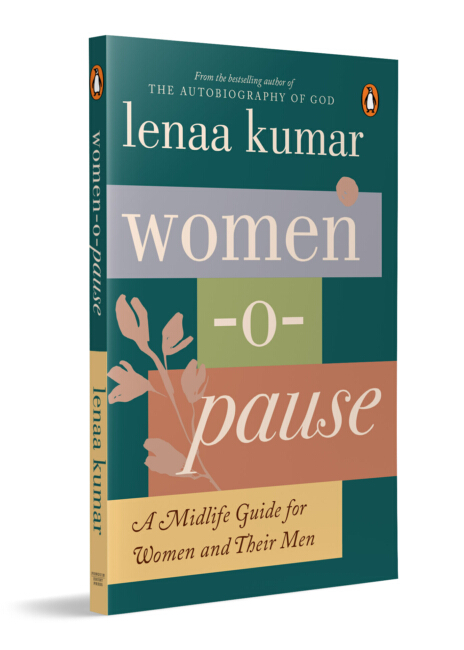
From the bestselling author of The Autobiography of God
In Women-O-Pause, Lenaa invites you into a year of profound transformation. 2024 sparked a wave of social media attention just as her life shifted dramatically through marriage, relocation, and an unexpected initiation: perimenopause. Rather than viewing it as a decline, she reframed this transition as ‘Womenescence’—a powerful awakening into the next phase of womanhood.
Amid the whirlwind of public visibility and private change, she embarked on a deep exploration of midlife health. Refusing to accept confusion, discomfort, and pharmaceutical dependence, she turned to extensive research, lifestyle changes, and natural healing practices rooted in holistic wellness and ancient traditions.
The result is both memoir and guide—a practical yet deeply reflective blueprint for women navigating perimenopause and menopause with greater awareness, agency, and vitality. Through personal insight and actionable tools, Women-O-Pause challenges conventional narratives while encouraging women to reconnect with the cyclical intelligence of their bodies.
Featuring insights from professional doctors who offer medical insight and clinical perspectives, this book bridges lived experience with modern science. It ultimately reframes menopause not as a problem to be solved, but as a powerful rite of passage.
Loving someone is easy. But keeping them forever? That’s tough.
Vikrant Vayu is just another middle-class guy navigating college life in Delhi till one drunken night, when a dare from his friends changes everything. The challenge is to slide into the DMs of Tara Neer, the college’s reigning Instagram queen with an aesthetic feed and a vibe that screams ‘out of league’.
He’s not expecting anything. But Tara, intrigued by his charm and wit, starts chatting with him. What follows is an unexpected friendship that grows into something real. From cozy campus walks to viral couple reels and late-night chai dates, Vikrant and Tara fall in love.
For a while, it feels perfect. So perfect, they decide to get engaged. Families meet. Rings are discussed. Future feels real.
But love in the age of Instagram comes with receipts. And insecurities don’t disappear just because you say, ‘I trust you.’ Enter the red flags, the toxic patterns and online drama. And when those red flags start waving too loud, you’re forced to ask the question no couple wants to answer: Are we fighting for love—or just fighting?
Days With My Red-Flag Girlfriend is a raw, unfiltered story about modern love—the kind that’s messy, real and impossible to forget.
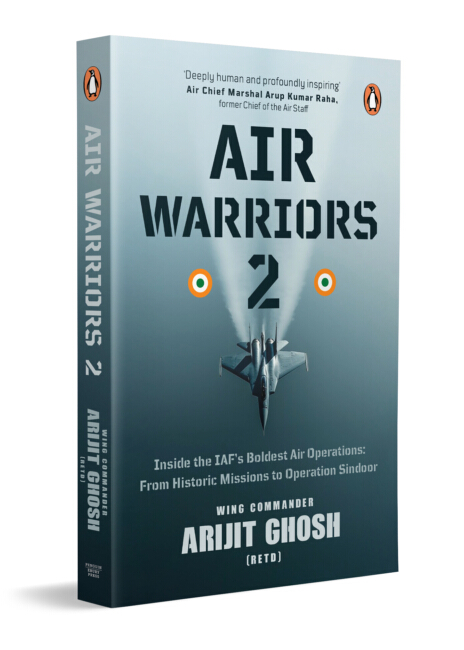
There exists a deep curiosity about the Indian Air Force in civilian minds—fascination with the glamour of its aircraft and the men and women who fly them. This stands especially true after the IAF’s pivotal role in the high-stakes Operation Sindoor.
In the follow-up to the widely successful first book, Air Warriors 2 showcases more untold stories of quiet professionalism under fire and courage in the face of peril, set against the backdrop of the IAF’s day-to-day operations. From insights into Operation Sindoor and the lessons drawn from it, to boisterous games of cricket at the NDA and perilous landings on Siachen’s tiny helipads — Wing Commander Arijit Ghosh reveals a whole new side of the men and women in blue.
Deeply researched and engagingly told, the true stories in Air Warriors 2 seek to inspire, enthral, and fascinate every reader.
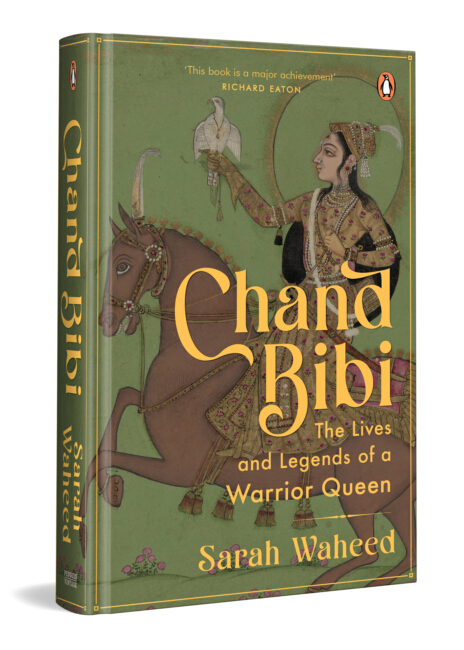
Over four hundred years ago, a Muslim queen defied an empire. Chand Bibi—ruler, military strategist, and diplomat—stands among the most remarkable figures of early modern India. This book brings her world to life, moving between palace intrigue, battlefield strategy, poetry, and politics.
Historian Sarah Waheed uncovers the multilayered world of the Deccan region that shaped Chand Bibi and her battles against the Mughal empire under Akbar. Interwoven with the queen’s storied past is the author’s personal journey across archives, crumbling forts, and Sufi shrines; through forgotten manuscripts and contested memories; and into the mysteries that both illuminate and conceal Chand Bibi’s life.
Deeply researched and narratively evocative, this is the definitive portrait of a woman who fought for her homeland and sought to unify a fractured region—and of the quest to bring her story back into view.
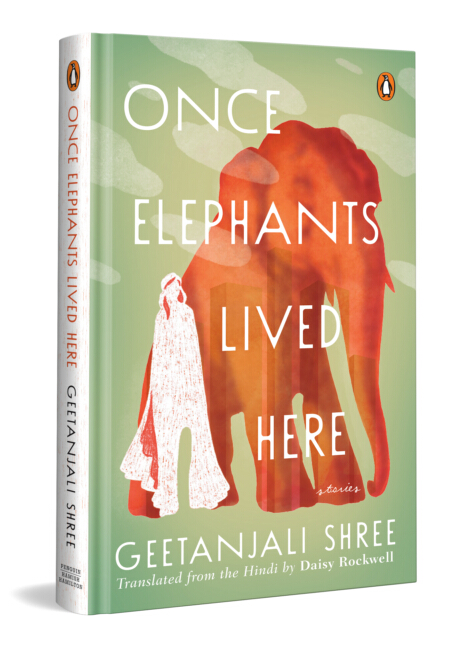
The eleven stories cover a wide variety of themes, but all have in common the stylistic experimentalism which came to blossom fully in Tomb of Sand. There is an iconoclasm to Geetanjali Shree’s writing, especially beginning with this collection. Readers will soon learn that nothing is sacred to the author: narrative and genre conventions are summarily pushed off their pedestals and in their place we find…what? Entirely new ways of conceiving and presenting storytelling unfurl before us as we come to question our own rigid preconceptions of the short story genre. In one story, a woman spends all day compulsively walking in circles around her housing complex. There is no introduction, no explanation, no denouement. In another, a woman goes on a writer’s retreat, and in a pseudo-sci-fi turn of events, falls passionately in love with the sky. The other participants in the retreat are robots. In a third, “Butterflies” (included here), a narrator staying in a cottage in Kerala is overwhelmed with the grief over past events, but is surprised out of her self-indulgence by a mysterious group of young women who are either nurses or diabetes patients; she’s never sure which. Plots break, sentences shatter, grammar careens, new words are formed, and new narrative structures are erected and felled. Once Elephants Lived Here reveals to us the pathbreaking experiments that led to Geetanjali Shree’s magnum opus Tomb of Sand.

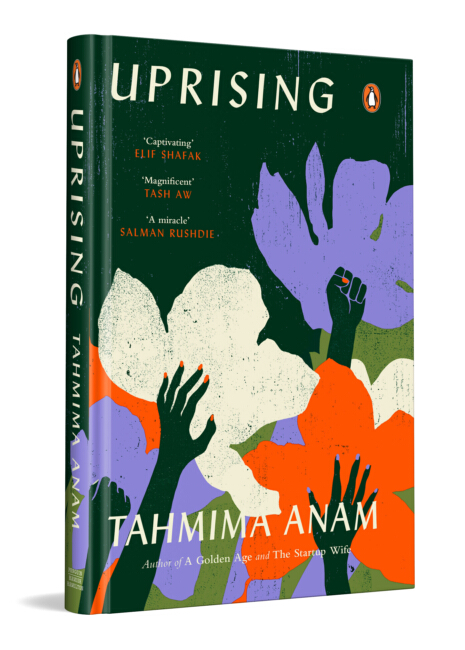
On a desolate, sinking island, a group of children witness their mothers living lives of cruelty and servitude.
Bought and sold by Amma, the sadistic madam who was once herself sold into slavery, the women have learned to accept their fate. Yet their children weave fantastic tales of escape, imagining that someday they will leave the island and enjoy a life of freedom.
When Kusum Khan, a young, educated woman from the city, is forcibly brought to the island, she too is subjected to Amma’s violent induction. Yet Kusum refuses to yield, and soon the collective complacency of her fellow prisoners turns into ferocity and defiance. Together, they begin a rebellion that will upend their island, their world and the very order of things. An earth-shattering drama of resistance and female power, Uprising gives voice to the silenced through the story of a revolution no one saw coming.
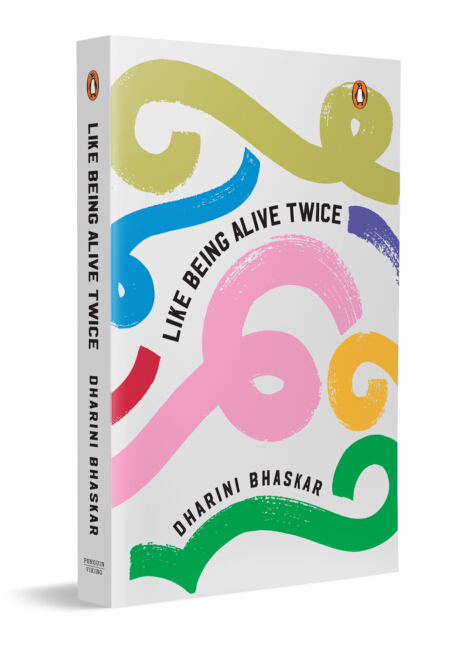
Is there a moment, so pliant, that we can nudge it towards any future we desire?
Sometimes I believe that there is such a moment. In a lifetime, once.
In an unnamed nation that’s about to rupture, Priyamvada (Poppy), a Hindu and Tariq, a Muslim are in love. In a few hours, Tariq intends to propose; Poppy intends to say yes. Both assume that they’ll fend off political blowback. For, surely, their privilege will protect them.
But will it? Will Poppy and Tariq sustain a love so wholesome, so cossetted, that it remains impervious to a dystopian state? Or will the two be rent apart by chance and circumstance? What will their lives look like as they plunge into a brave new future, together or apart?
Written in alternating chapters, Like Being Alive Twice trails fact and possibility—the tale as-it-was and the tale as-it-could-have-been-if-only—arranging and rearranging, tweaking and nudging; hoping to find a lasting peace in one or the other story; hoping, above all else, that such peace will prevail over murderous times.
Politically urgent, stylistically intrepid, and relentless in its commitment to scrutinizing love, loss and the language of privilege, Like Being Alive Twice tells of the frantic pursuit of life piled upon life, even as a bloodied world closes in.
Sometimes life takes you to places so dark,
You can’t even see the stars.
But don’t forget the light that’s inside you–
That you’re made of stars too.
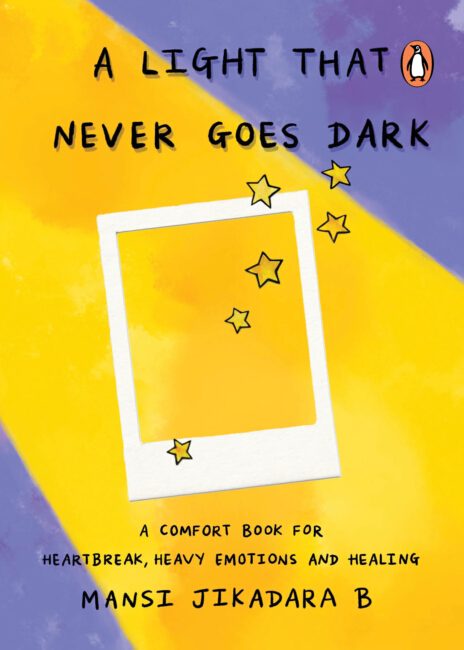
A Light That Never Goes Dark is an illustrated collection of poetry and prose you can turn to when you feel dark inside. Whether you’re navigating difficult seasons, heartbreak, growth or simply the complexity of being human, it is here to hold space for you and gently guide you back to the light that exists within.