




Saadat Hasan Manto’s first collection of stories was published in the 1940s, but his stories have an enduring relevance. Now read by more people than ever before, the simple clarity of his stories about arginalized people, his astute understanding of the complexity of human nature and the poignancy of his stories on Partition transcend spatial and temporal boundaries many of his characters are legendary and his taut narratives are a great source of insight into the human condition. Widely regarded as one of the greatest short-story writers of the Subcontinent, Manto is now, a hundred years after his birth, also acknowledged as one of the most powerful voices of his time. An enigma in his lifetime, and plagued by financial troubles, alcoholism and legal persecution in the last years of his life, he draws a posthumous wave of near-universal admiration. Aatish Taseer’s sensitive translation captures the lyricism and power of Manto’s voice. Manto, Selected Stories, with two new stories, is a collection to be savoured by new readers and old fans of Manto alike.
Catagory: Non Fiction
non fiction main category
Train to Pakistan Penguin Premium Classic Edition
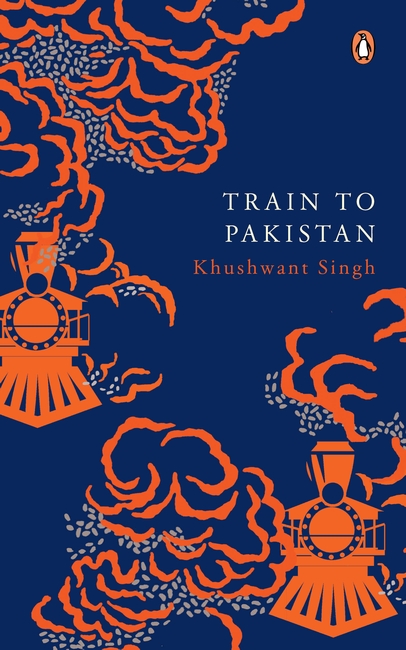
Mano Majra is a place, Khushwant Singh tells us at the beginning of this classic novel, where Sikhs and Muslims have lived together in peace for hundreds of years. Then one day, at the end of the summer, the ‘ghost train’ arrives, a silent, incredible funeral train loaded with the bodies of thousands of refuges, bringing the village its first taste of the horrors of the civil war. Train to Pakistan is the story of this isolated village that is plunged into the abyss of religious hate. It is also the story of a Sikh boy and a Muslim girl whose love endures and transcends the ravages of war.
Regarded as one of the most heart-rending testimonials of the partition of 1947, the Train to Pakistan is an ideal novel for those who wishes to learn more about India’s past and is looking for more than the socio-political scenario behind the partition.
Untouchable The Penguin Premium Classic Edition

Bakha is a proud and attractive young man. Nonetheless he is an Untouchable- an outcast in India’s caste system. Into this vivid recreation of a single day in the sweeper and toilet-cleaner Bakha’s life, Anand pours a vitality, fire, and richness of detail that earn his place as one of the most important Indian writers of the twentieth century.
India’s Most Fearless
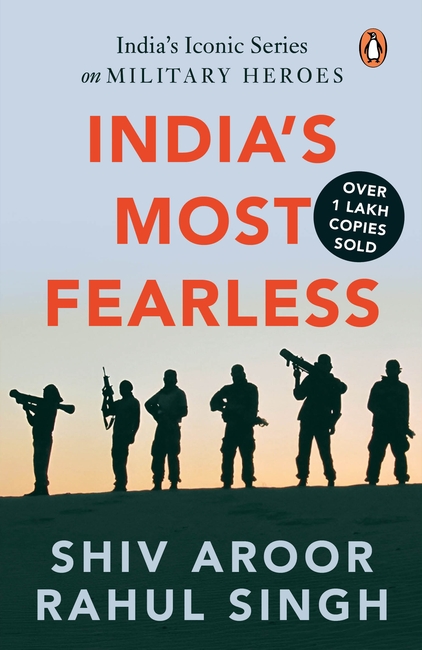
The men who hunted down terrorists in a magical
Kashmir forest where day turned to night. The Army major who led the legendary September 2016 surgical strikes on terror launch pads across the LoC. A Navy officer who sailed into a treacherous port to rescue hundreds from an exploding war. A bleeding Air Force pilot who found himself flying a jet that had become a screaming fireball. An e xclusive first-hand account of the 2020 Galwan clash.
Featuring thirty-eight untold accounts, this box set brings together the three books from the India’s Most Fearless series-a collection of true stories of extraordinary courage and fearlessness that provide glimpses into the kind of heroism our soldiers display in unthinkably hostile conditions and under grave provocation.
Passion Economy and the Side-Hustle Revolution
‘Work’ is getting unbundled from ’employment’ and the ‘Great Resignation’ has become the new normal. As the passion economy becomes mainstreamed, people will look to build a portfolio of professions that create multiple income streams. They are likely to monetize their passions and build a career on their terms, seeking autonomy, mastery and purpose along the way. Today it is possible to do what you love, teach what you love and make a living. This book will tell you how.
Water in A Broken Pot
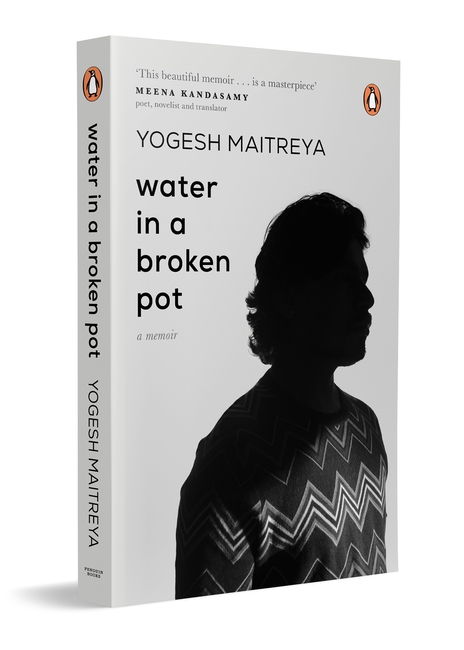
Incredibly moving and hauntingly honest, Water in a Broken Pot is the memoir of Yogesh Maitreya, a leading independent Indian Dalit publisher, writer, and poet. Encompassing experiences of pain, loneliness, depravation, alienation, and the political consciousness of his caste identity, this intimately moving memoir is a story of resilience and raw brutality. Growing up in a working-class family with meagre wages to get by in life, Yogesh writes of his father’s struggle against alcohol and passion for cinema; of intergenerational dreams shattered; working day and night shifts in factories; the struggle of being lost, overlooked and unmentored in India’s schooling, college and University systems which continue to be casteist, exclusionary and hostile; and feelings of lovelessness, loss and heartaches.
Having hopped from gig to gig to make ends meet, he writes of his eventual discovery of the written word, literature and the Ambedkarite legacy, which helped shape his dreams, identity and the eventual career choice of publishing books. In sharing his story, this fresh and radical voice tells his truth in the most frank and unfiltered of ways, as it happened, giving us readers permission to also be vulnerable in telling our tales.
The Tatas, Freddie Mercury & Other Bawas
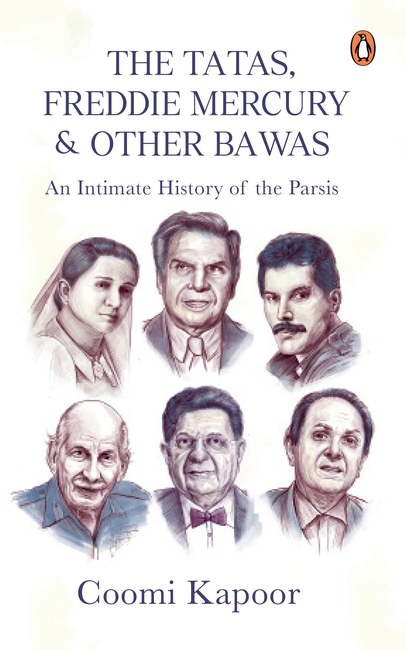
The Parsis are fast disappearing. There are now only around 50,000 members of the community in all of India. But since their arrival here from Central Asia, somewhere between the eighth and tenth centuries, the Parsis’ contribution to their adopted home has been extraordinary. The history of India over the last century or so is filigreed with such contributions in every field, from nuclear physics to rock and roll, by names such as Dadabhai Naoroji, Dinshaw Petit, Homi Bhabha, Sam Manekshaw, Jamsetji Tata, Ardeshir Godrej, Cyrus Poonawalla, Zubin Mehta and Farrokh Bulsara (aka Freddie Mercury). This is a revised and updated new edition – engaging and accessible – making it as the most intimate history of the Parsis by senior journalist and columnist Coomi Kapoor, herself a Parsi. The book pores through the names, stories, achievements and the continuing success of this tiny but extraordinary minority. She delves deep into both the question of what it means to be Parsi in India, as well as how the community’s contributions-from tanchoi silk to chikoos-became integral to what it meant to be Indian. In Kapoor’s hands, the story of the Parsis becomes a rip-roaring, incident-filled adventure: from dominating the trade with China to being synonymous with Bombay, once, arguably, a city defined by its Parsis; from the business success of the Tatas, the Mistrys, the Godrejs and the Wadias, to such current contributions as the manufacturing of COVID-19 vaccines by the Parsi-founded Serum Institute of India.
Working to Restore:
Winner of the Tata Literature Live Business Book of the Year Award
Dispatches from a landscape where pioneering entrepreneurs use their businesses as catalysts of change to solve social and environmental problems
Historically, big businesses have sourced materials from remote corners of the globe and moved millions of people and tons of cargo around the clock-all in the name of profit. But many of today’s startups are rewriting the rules. Journalist Esha Chhabra draws on her decades of reporting to explore the nuanced realities and promise of regenerative business operations.
Working to Restore examines revolutionary approaches in nine areas: agriculture, waste, supply chain, inclusivity for the collective good, women in the workforce, travel, health, energy, and finance. The companies profiled are solving global issues: promoting responsible production and consumption, creating equitable opportunities for all, encouraging climate action, and more. Chhabra highlights how their work moves beyond the greenwashed idea of ‘sustainability’ into a new era of regeneration and restoration.
The book highlights innovative entrepreneurs who understand that we cannot expect to create radical change if we try to sustain a system that has long been broken. Instead, their efforts of restoration and regeneration should be used as a model for other forward-thinking enterprises.
Inspiring and engaging, this book shows it is possible for a business to thrive while living its mission and how the rules can be rewritten to put both the planet and its global citizens at the center.
Bipin
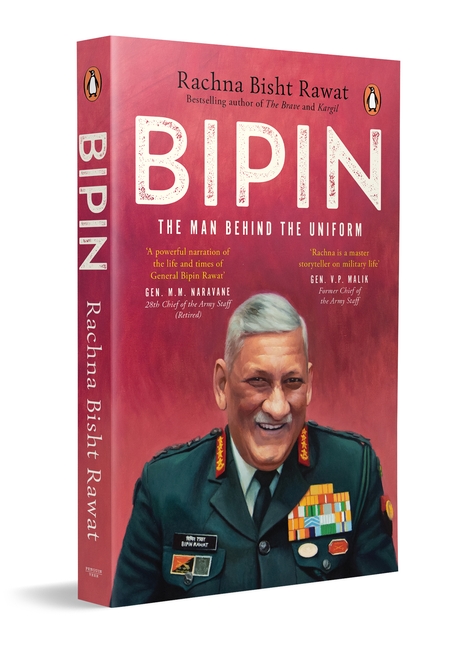
On the morning of 8 December 2021, India’s Chief of Defence Staff, General Bipin Rawat, and his wife, Madhulika, said goodbye to their daughter, Tarini, and dogs, and left their Delhi home to board a flight for Sulur in Tamil Nadu. Around 11.48 a.m., they boarded an Mi-17 V5 helicopter that took off from Sulur to Wellington, where Gen. Rawat was to deliver a lecture at the Defence Services Staff College. Just a few minutes away from its destination, the chopper crashed, and all fourteen passengers onboard eventually perished. It was a sudden and shocking end to the life of a man who had risen like a meteor in the defence forces.
Bipin: The Man behind the Uniform is the story of the NDA cadet who was relegated in the third term for not being able to do a mandatory jump into the swimming pool; of the young Second Lieutenant who was tricked into losing his ID card at the Amritsar railway station by a 5/11 Gorkha Rifles officer posing as his sahayak; of the Major with a leg in plaster who was carried up to his company post on the Pakistan border because he insisted on joining his men for Dusshera celebrations under direct enemy observation; of the Army Chief who decided India would retaliate immediately and openly to every act of cross-border terrorism; of the Chief of Defence Staff who was happiest dancing the jhamre with his Gorkha troops.
Written by bestselling author Rachna Bisht Rawat and featuring in-depth interviews with Bipin Rawat’s friends, family members and comrades, this book is a befitting tribute to one of India’s greatest and most controversial Generals.
From Darkness Into Light

God is the Guardian
of those who believe
He brings them out from
the darkness into light
Qur’an 2:257