




Mallika is a painfully shy young woman growing up in the heart of a close-knit, sometimes stifling New Delhi colony. Though she is surrounded by love, her life is complicated by secrets that she, her mother and her aunt work hard to keep.
After suffering a trauma aged nineteen, Mallika loses three days of her memory and slowly spirals into a deep depression. She must find a way out of this abyss, back to herself and those she cares about. But she must also hide her mental illness from her community.
In a narrative that unfolds elliptically from the perspectives of Mallika and the seven people closest to her, the astonishing story of these characters’ lives emerges. For Mallika’s family, childhood friends and the two men she loves are also hiding truths. As each gives voice to contending with their own struggles, secrets and silences shatter.
Catagory: Non Fiction
non fiction main category
Secrets of Divine Love Journal
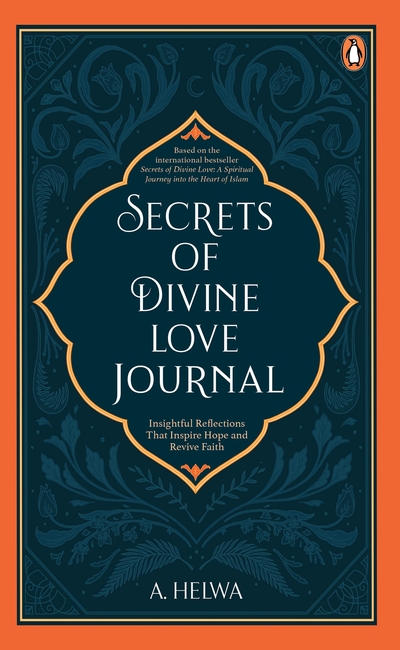
‘Call upon me
I will answer you’
Qur’an 40:60
The Secrets of Divine Love Journal is based on the award-winning book Secrets of Divine Love: A Spiritual Journey into the Heart of Islam. Through heart-centered reflections, insightful prompts, and thought-provoking questions, Secrets of Divine Love Journal can help you foster a deeper relationship with Allah by connecting you with the heart of your faith in a more intimate and inspiring way.
Inside-Out Leadership
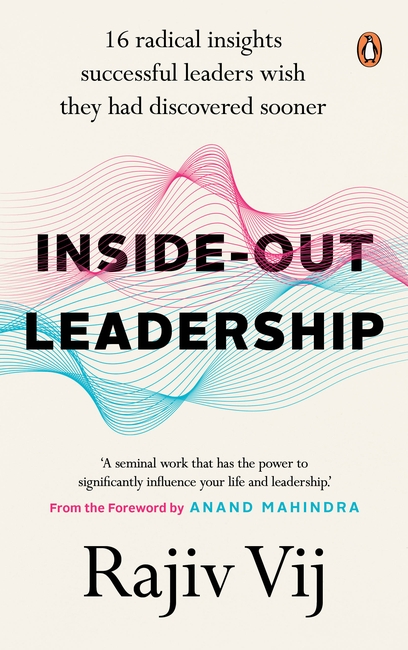
‘It’s not the mountain we conquer, but ourselves.’ -Edmund Hillary
Rajiv Vij, a leading life and executive coach, believes the path to outstanding leadership lies in embracing the journey we take within ourselves.
Anchored in the principles of personal mastery, Rajiv describes how deepening your self-awareness, learning to regulate your emotional triggers and reforming your conditioned beliefs, aligning your life and work to a higher purpose, and consistently taking personal responsibility for your actions not only makes you an inspirational leader, but also directly contributes to your personal happiness, balance and fulfilment.
Founded in the belief that every good leader can become great, Inside-Out Leadership describes a clear pathway for leaders to discover and fulfil their potential. Drawing on his extensive coaching experience and responding to the most significant challenges faced by contemporary leaders, Rajiv reveals, for the first time, the powerful inner journey of self-discovery that has worked for so many leaders and shares empowering insights, tools and practical ideas to support you in discovering your own greater self-both as a leader and as a person.
The Skincare Answer Book

What products should I have in my skincare routine?
How do I choose the right moisturiser for my skin?
How can I prevent my skin from ageing?
As a leading celebrity dermatologist, Dr Jaishree Sharad gets inundated with skincare-related questions every day-be it at a public event, a party, in her magazine columns, or on her social media accounts. But knowing how to properly care for your skin can be very confusing, especially when there is so much advice and information out there.
Written in a Q&A format, The Skincare Answer Book helps you cut through the jargon by answering some of the most common skincare questions. From questions on skin types and skin routines to more specific topics like serums, acne, hyperpigmentation, sun allergies, hair loss, anti-aging, rosacea, layering of skin, common skin conditions like eczemas and skin infections, this book will arm you with all the information you need to care for your skin.
Praise for the book:’A book on skin care for all ages’ Amitabh Bachchan‘Numerous well-known clients on Dr Sharad’s long list attest to her reliability . . . May she achieve even more acclaim in the future’ Jaya Bachchan‘The best dermatologist I have known’ Dimple Kapadia‘One of the best skin doctors in the country’ Sanjay Dutt‘Doc is my one-point contact whenever my skin is under any kind of stress’ Alia Bhatt
Navarasa
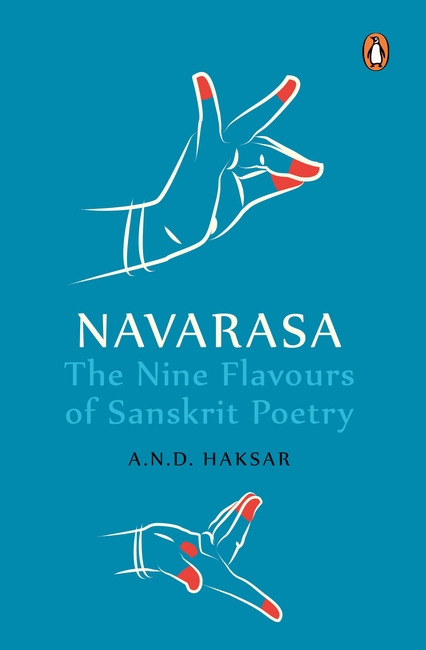
In Indian aesthetics, the ‘rasa’ is the juice or sap that pervades through our art, culture, and guide our primal human emotions. The Navarasas first mentioned in the ancient Hindu text the Natya Shastra, have defined the core of Indian aesthetics; our art, dance, theatre, and literature are based on these nine human emotions.
A first of its kind, this collection of verses from the original Sanskrit, moves away from a mere interpretation of the rasas to an actual translation from ancient texts such as the Subhashitavali by Vallabhadeva (15th century Kashmir), the Sharngdharapaddhati by Sharngadhara (14th century Rajasthan), and the Suktimuktavali by Jalhana (13th century Deccan).
Navarasa: The Nine Flavors of Sanskrit Poetry brings to us for the first time, 99 verse translations on the nine rasas of ancient Hindu history.
Stop Overthinking
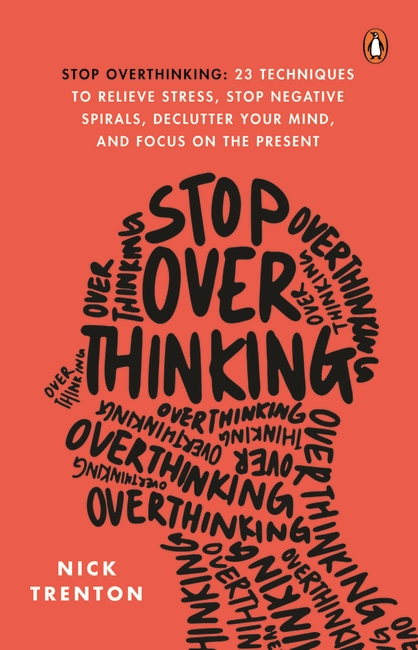
Break free of your self-imposed mental prison. Stop agonizing over the past and trying to predict the future.
Overthinking is the biggest cause of unhappiness and staying in a never-ending thought loop is the biggest cause of unhappiness.
Stop Overthinking is a book that understands the exhausting situation you’ve put yourself in, and how you lose your mind with anxiety and stress. It will walk you through detailed and proven techniques to help rewire your brain, control your thoughts, and change your mental habits.
The book will provide you with scientific approaches to:
-How to be aware of your negative spiral triggers
-Identify and recognize your inner anxieties
– How to keep the focus on relaxation and action
– Proven methods to overcome stress attacks
-Learn to declutter your mind and find focus
– Unleash your unlimited potential and start living
No more self-deprecating talk. No more sleepless nights with racing thoughts. Free your mind from overthinking and achieve more, feel better.
The Miracle Makers
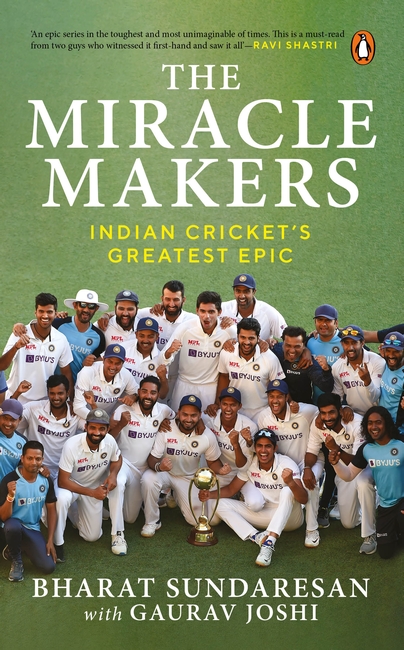
‘This is going to be the most unique cricket tour since the Second World War.’
Ravi Shastri’s prophetic words came true as India pulled off one of the greatest coups in cricketing history, beating Australia in Australia for the second time in three years, eventually breaching the Gabba fortress with what was eventually a skeleton team. Bharat was known as the ‘Eyes and Ears of the Tour’, being the only Indian-origin journalist covering this most memorable series live and seeing the drama unfold in real time. He drove the length and breadth of Australia, journeys that were as thrilling as the series that he was chasing, with the unnerving shadow of Covid always trailing after him. His camaraderie with the Indian team and his standing as among the most respected journalists in the world makes this book incredibly special.
Filled with anecdotes from on and off the field, including conversations with coaches, players and other stars of the show, and inputs from his colleague Gaurav Joshi, this book hopes to transport you to the battleground of this never-imagined script. It promises to bring to life the most unique cricket tour, not just since World War II, but perhaps from the time when the sport was conceived.
Purposeful
How do I find greater purpose at work?
How do I cultivate a mindset for greater professional engagement?
Should I stay in my current job or quit?
How do I fuel my purpose accelerators?
How are purposeful organizations built?
Backed with contemporary research from psychology, philosophy, management and business, expert insights and over two decades of experience in the field, Sandeep demonstrates how you can find your purpose and be more engaged at work.
You will learn about crafting your purpose action plan, climbing the pyramid of purpose, building an ‘owning’ mindset, understanding and using purpose accelerators, learning and applying skills that matter, ceasing to overthink and building resilience. Along with this, you will get actionable tips such as crafting a ‘micro-purpose’, which includes meaningful goals that can be achieved in a shorter period, and valuable advice from top leaders. This book will nudge you to embrace your purpose and ambitiously steer your career to achieve your potential at work and in life.
One and a Half Wife
Amara Malhotra was fourteen years old when her parents immigrated to the United States of America. But unlike most Indian immigrants, she was not destined to achieve the American Dream. Much to the anxiety of her parents-the spirited Biji and the doting Baba-Amara leads an unremarkable life. That is, until she marries Harvard-educated millionaire, Prashant Roy. This fairy tale isn’t meant to last, though, and even as Amara’s marriage collapses, she finds herself returning to the land of her birth, to the small city of Shimla. Here, in a borough grappling with questions of modernity, Amara is caught in a tug-of-war between old beliefs and new ones, between parents who favour obedience and new friends who encourage independent thought.
With powerful insights, One and a Half Wife traces the coming-of-age of multiple characters, while redefining family, relationships and love in contemporary India.
Basu Chatterji
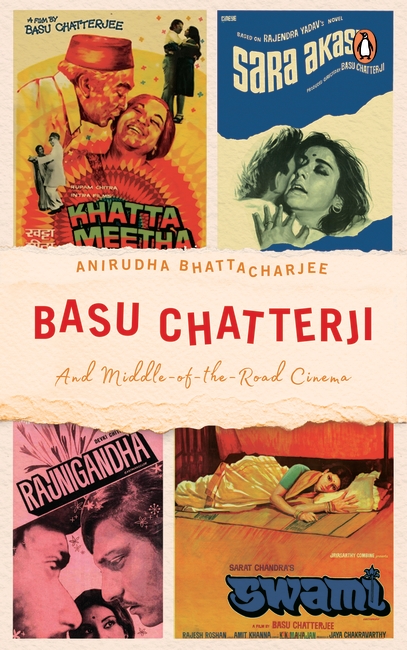
A behind-the scenes look at Basu Chatterji’s most loved films
This is the enigma of Basu Chatterji. His films did not have the box-office ingredients that could make them a distributor’s hot pick, nor were they art house cinema that needed unravelling over many cups of tea. He was the quintessential ‘middle-of-the-road’ film-maker, a genre that he founded in Bollywood. His films, whether it be Chhoti Si Baat or Rajnigandha or Chitchor, were about common people and common problems, such as employment and love, social and economic inequalities, and joint family conflicts. Like fellow cartoonist R.K. Laxman, who created the ‘common man’, Chatterji too was an auteur of the common man, whose journey he portrayed with charm, delicate warmth and humour.
As a person, Basu was much like his common man: mild, unobtrusive and media-shy. He preferred not to scout for stars and mostly made his films with rookies, giving them respectability as artists. And today, names like Amol Palekar, Vidya Sinha, Pearl Padamsee, Zarina Wahab, Nandita Thakur, Girish Karnad, Rakesh Pandey, Bindiya Goswami and Ranjit Chowdhry have become central to the history of Indian cinema, thanks to Basu.
Basu Chatterji: And Middle-of-the-Road Cinema, anecdotal in nature, goes behind the scenes of his films. It places Basu’s cinema and television work in the context of the changing times, like the emergence of Rajesh Khanna, Kishore Kumar and Amitabh Bachchan, the Emergency, the return of Sarat Chandra’s stories, the introduction of disco and the decadent phase of Hindi cinema in the 1980s. The book celebrates the work of one of the most underrated, yet successful, film-makers in Hindi cinema.