A single-volume guide to the writing and thoughts of one of the greatest personalities of modern India
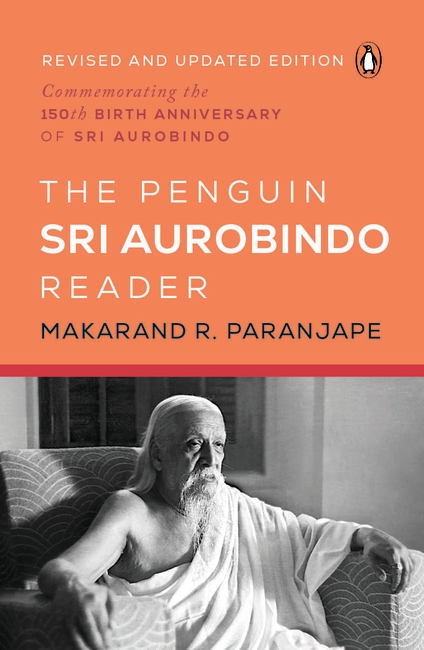
A multifaceted genius, Sri Aurobindo was a political revolutionary, social critic, poet and above all, a great yogi and spiritual teacher. He was not only one of our foremost interpreters of the Vedas, Upanishads and the Bhagavad Gita, but also developed an original philosophy, which, though based on the ancient wisdom of India, has a modern, evolutionary dimension to it-the human being, according to him, is not the end of the evolutionary process; our destiny is to grow to a higher state of consciousness which will fundamentally alter life as we know it.
As a writer, Sri Aurobindo’s range was staggering-there is hardly a field of human endeavour that escaped his notice. This collection offers a sampling of his writings with selections from most of his major works and areas of interest. It begins with the early, often-ignored essays written during the struggle for Independence and traces the development of Sri Aurobindo’s philosophical and religious thought, culminating in the system of Integral Yoga. Also included are some of his poems, letters and aphorisms. Together, they provide an ideal introduction to the complex and brilliant mind of a remarkable yogi and seer-poet.

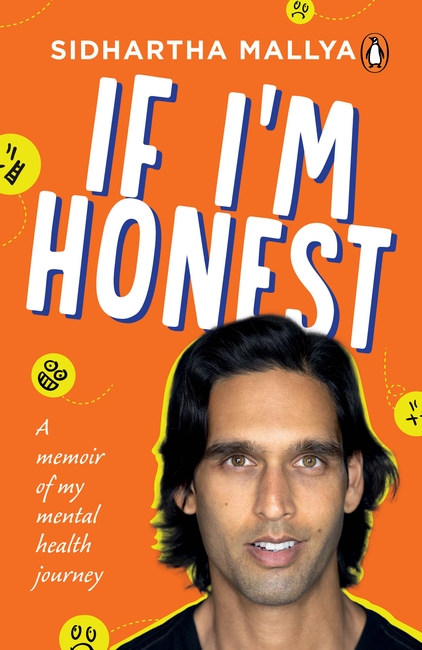
Sidhartha Mallya has had a unique life to say the least. Born into one of India’s most prominent business families, he has had-from an outside perspective-what many would consider a blessed life. Appearances can often be deceiving, though, and at times what was going on inside was a very different story. In 2016, he went through depression. Something that came as a bit of a surprise to him, given that he seemingly had the world at his feet: he was young, had just graduated from a prestigious drama school and had upcoming film projects. However, despite all the wonderful opportunities that awaited him, he felt desperately unhappy, constantly low and like his insides were being crushed by a vice. That was when Sidhartha realized that something was not right and he sought professional help. Thus began the journey to understanding his current mental state as well as an exploration of the other mental issues he has suffered throughout his life and where they might have stemmed from. Sidhartha also writes about what helped him face and overcome his challenges.

‘I could hear wild animals, as hungry as I was, growling down below, having caught my human smell. They attempted to scale the rocks. If there was one among them that could climb the cliff, my helplessness would turn me into its dinner tonight.’
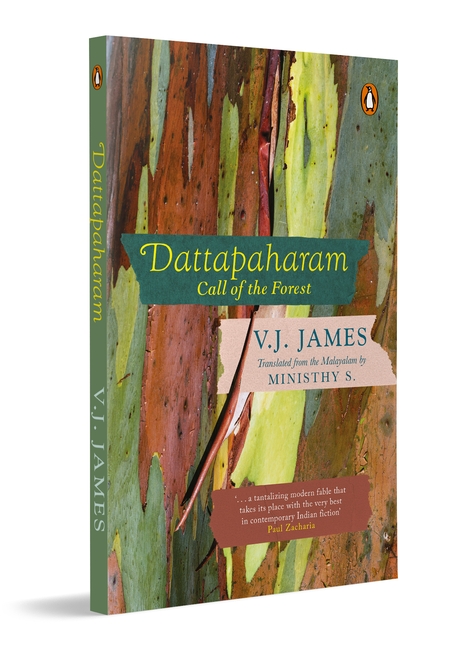
On the eve of Independence Day, Mahesh reads a small news item about a mysterious forest dweller who appeared in the middle of a rainforest out of nowhere and disappeared without a clue. Immediately, he recognizes the man to be Freddie Robert, their friend, guide, leader and the one they had all named Yudhisthira, who had disappeared into the forest several months ago, in search of a rare new bird. Mahesh and his four friends, each named after a Pandava brother, and Panchali, or Meera, decide that the only way they can ascertain whether the man was indeed Freddie is to return to the forest and search for him.
Thus begins Dattapaharam, a powerhouse of a novel by the critically acclaimed and bestselling Malayalam author V.J. James. A rumination on solitude, man’s connection with nature and the strings that attach us to this world, this is a surreal novel where the author’s imagination soars like an eagle and words flow like the untouched springs in a rainforest. At times a fable on the modern world, at times a search for identity amid a quest of discovery, and on the whole a moving tale that takes the reader deep into the forests to understand what really makes us human, Dattapaharam is a powerful novel for our anthropocentric age, written by one of the most exciting voices to emerge from the Indian subcontinent.

The epic tale of a woman who breathes a fantastical empire into existence, only to be consumed by it over the centuries – from the transcendent imagination of Booker Prize-winning, internationally bestselling author Salman Rushdie.
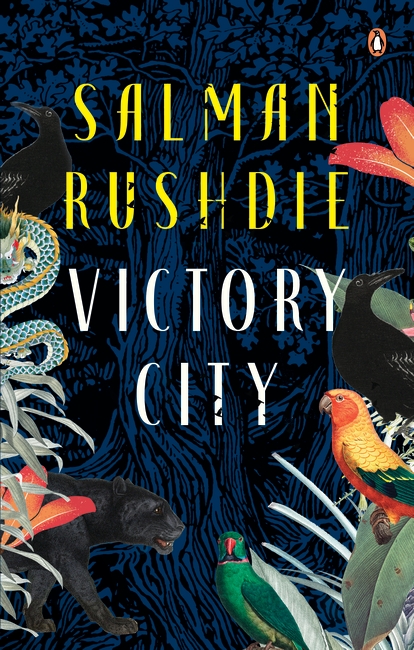
In the wake of an insignificant battle between two long-forgotten kingdoms in fourteenth-century southern India, a nine-year-old girl has a divine encounter that will change the course of history. After witnessing the death of her mother, the grief-stricken Pampa Kampana becomes a vessel for the Goddess, who begins to speak out of the girl’s mouth. Granting her powers beyond Pampa Kampana’s comprehension, the goddess tells her that she will be instrumental in the rise of a great city called Bisnaga – literally ‘victory city’ -the wonder of the world.
Over the next two hundred and fifty years, Pampa Kampana’s life becomes deeply interwoven with Bisnaga’s, from its literal sowing out of a bag of magic seeds to its tragic ruination in the most human of ways: the hubris of those in power. Whispering Bisnaga and its citizens into existence, Pampa Kampana attempts to make good on the task that the Goddess set for her: to give women equal agency in a patriarchal world. But all stories have a way of getting away from their creator, and Bisnaga is no exception. As years pass, rulers come and go, battles are won and lost, and allegiances shift, the very fabric of Bisnaga becomes an ever more complex tapestry – with Pampa Kampana at its centre.
Brilliantly styled as a translation of an ancient epic, this is a saga of love, adventure and myth that is in itself a testament to the power of storytelling.

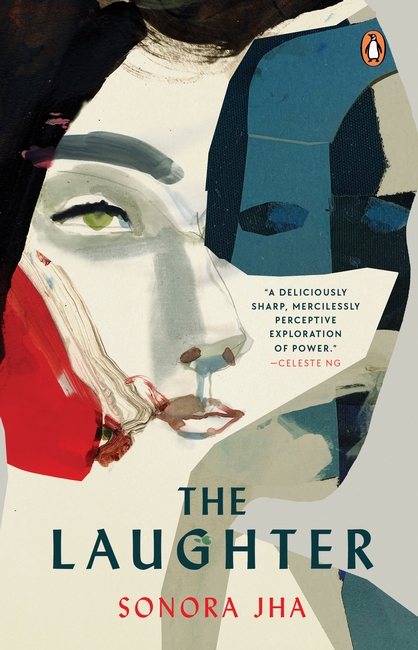
Dr. Oliver Harding is long settled into the routines of a divorced, aging academic. But his quiet life is upended by his new colleague, Ruhaba Khan, a dynamic Pakistani law professor.
Ruhaba unexpectedly ignites Oliver’s long-dormant passions, a secret desire that quickly tips towards obsession after her teenaged nephew arrives to stay with her. Drawn to them, Oliver tries to reconcile his discomfort with the worlds from which they come, and to quiet his sense of dismay at the encroaching change they represent-both metaphorically and in Ruhaba’s spirited engagement with the student movements on campus.
After protests break out demanding diversity across the university, Oliver finds himself and his beliefs under fire, even as his past reveals a picture more complicated than it seems. As Ruhaba seems to fade in and out of reach, Oliver reacts in ways shocking and devastating.
Sonora Jha has created a complex character both in tune and out of step with our time, an erudite man who first inspires and then challenges our sympathies. As the novel reaches its shocking conclusion, Jha compels us to re-examine scenes in a new light, revealing a depth of loneliness in unlikely places, the subjectivity of innocence, and the looming peril of white rage in America.
An explosive and tense work of fiction, The Laughter is a fascinating portrait of privilege, radicalization, class, and modern academia that forces us to confront the assumptions we make, as both readers and as citizens.

ONE SALES STRATEGY TO WIN IN BOTH BUSINESS AND LIFE
There are 7.7 billion sales owners in the world. Everyone is selling either a product, a service or an idea. The fact that everyone is selling brings its own unique challenges and possibilities.
How can high-growth companies and start-ups win clients amid unprecedented competition?
How can one close large deals virtually?
How does one become a great storyteller and influence others?
How can one communicate effectively in life scenarios such as parenting, hiring or asking for a raise?
What is the higher purpose of sales?
Sharing forty-two practical business, consumer and real-life experiences, this book reveals one simple and powerful sales strategy that is the perfect answer to all the above questions. In an engaging manner, Amit provides you with a clear and easy-to-implement blueprint for this strategy.
The Updated and Expanded Edition includes
Virtual Selling Readers’ Case Studies 10 Videos Embedded as QR codes

In the distant land of Gandhara, there once was a janapada called Chakrapuri. Its elders were a worried lot. Their children were uninterested in the welfare and upkeep of the janapada. Most of them were consumed by self-interest and avarice, seeking personal gains, even at the cost of their fellow citizens. Realizing that the young must learn the arts and crafts of citizenship, the Sabha of Chakrapuri decided to employ Nitina of Takshashila, whose wisdom was said to be unparalleled, to teach their children. So it came to pass that the unconventional scholar was entrusted with the charge of these boys and girls for the next ninety days.
Thus begins the Nitopadesha. A labyrinth of stories in the style of the Panchatantra and the Jataka tales, this is a book about good citizenship and citizen-craft that will speak to the modern reader. Covering aspects such as what citizenship means, the ethical dilemmas one faces as a citizen and how one can deal with social issues, Nitin Pai’s absorbing translation is an essential read for conscientious citizens of all ages.
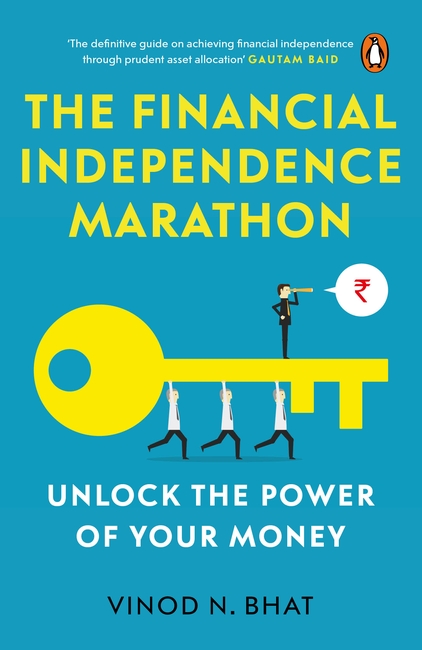
‘Time is money’. But the opposite is also true, i.e., ‘money is time’. Money, if used wisely, gives us the free time to do what makes us happy. It is crucial to understand the concept that money creates time because time is a non-renewable resource. And becoming financially independent is akin to finding a hidden treasure of time. It’s similar to discovering a gold mine, because it gives us the ability to live life on our own terms.
The key is not to think of financial independence as a goal but as a marathon, which we need to enjoy. This book is an easy, entertaining and actionable guide to becoming financially independent and avoiding any pitfalls on the journey.

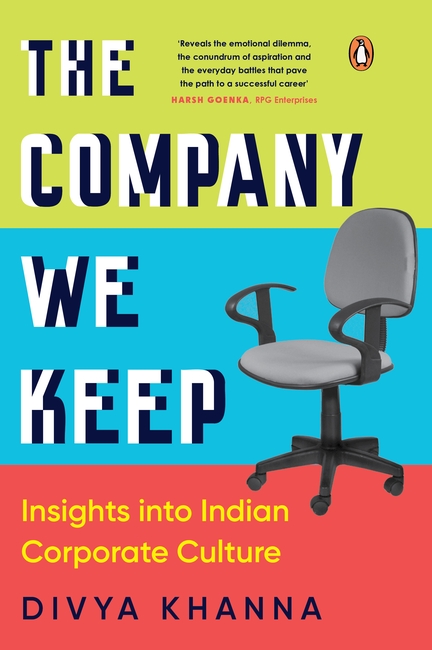
There are many challenges facing business corporations today-the pandemic we have barely moved on
from, economic recession, rapid changes in consumer behaviour and technological and competitive disruptions. These challenges stick out like the visible tip of an iceberg, while culture, the biggest challenge, is like the slow-moving, gigantic mass that lurks deep under the surface. We cannot deal sufficiently with superficial problems if we do not understand the depths that drive them.
‘Culture eats strategy for breakfast’ is a widely accepted saying in the business world, often attributed to Peter Drucker. This is as true for corporate India as it is for its consumers. Yet, we spend more time and money studying our consumers and their cultures than we do ourselves.
The Company We Keep is a market research-based exploration of Indian corporate culture. It looks beyond the glamour and jargon of the business world to individual stories that share real personal insights into the aspirations, vulnerabilities, pressures and possibilities of corporate careers and lives. These are urgent conversations we need to keep having as we reflect, review and decide where we can go from here.
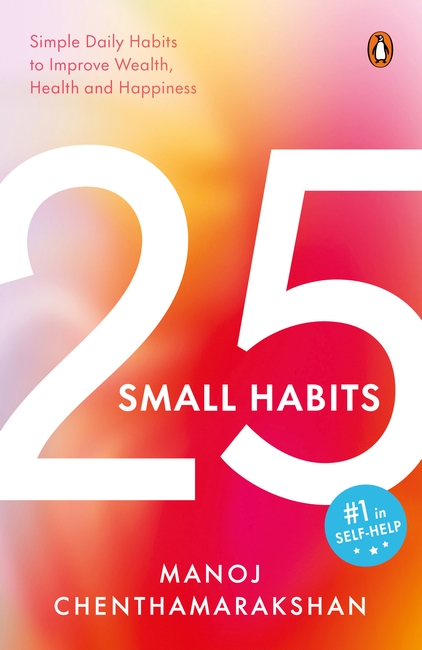
We all know that our habits shape our lives, but when we try to incorporate a new habit into our lifestyle, we understand how difficult it can get. Most people fail to retain a new habit past the first week. This book doesn’t teach you how to develop habits; instead, it offers you a set of twenty-five small habits that take very little time and can be held on to without much effort.
The habits in this book are designed to give you holistic growth in terms of self-development, community, career, relationship, and physical and mental health. You can choose the habits that you are able to fit into your daily schedule.