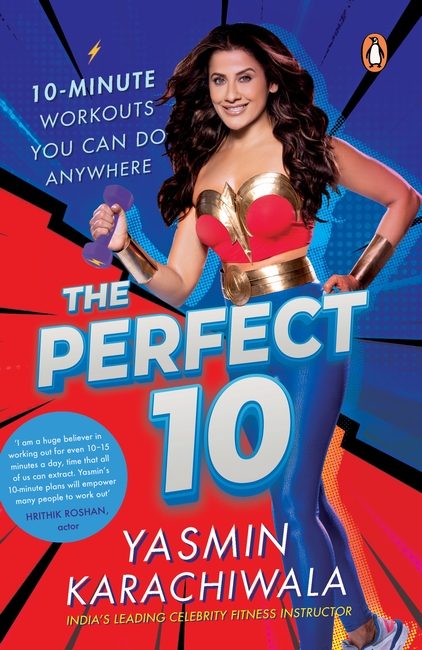
Fitness looks hard. Weight maintenance looks difficult.
It is a culture that has normalized conversations that have been internalized so deeply that we forget that many are the same half-truths or untruths repeated for so long that they become part of our conditioning.
Normalize this: fitness is easy.
This book will show you that all it takes is ten minutes a day to start that journey and will be packed with exercise plans, movement ideas and lifestyle changes punctuated by stories of real journeys of real people. Get up. Move with Yasmin Karachiwala. And see how your body and your life changes.

No matter what kind of bits you have, the ‘private’ bits between our legs often leave us with … many feelings and many questions.
Is it big enough? Is it too big? Why is it so dark? And hairy? How are babies made? Why do periods hurt? As John Mayer so beautifully sang, your body is a wonderland, but in the land of the Kama Sutra, we often forget this. Words like vagina, clitoris, penis, scrotum tend to confound and embarrass people.
Maybe even you, dear reader?
Even though everyone has a body, nobody wants to talk about it. Especially those ‘private’ bits. With so much shame and stigma, we have nowhere to go to learn and understand our bodies. Instead of a beautiful, technicolour musical, our relationship with our bodies remains a drab black and white production.
This is where this book comes in-a one-stop scientific, funny, and easy to understand guide to everything
you’ve always wondered about what’s ‘down there’.
Or even up there! Whatever your concern, Dr Cuterus has got you covered.

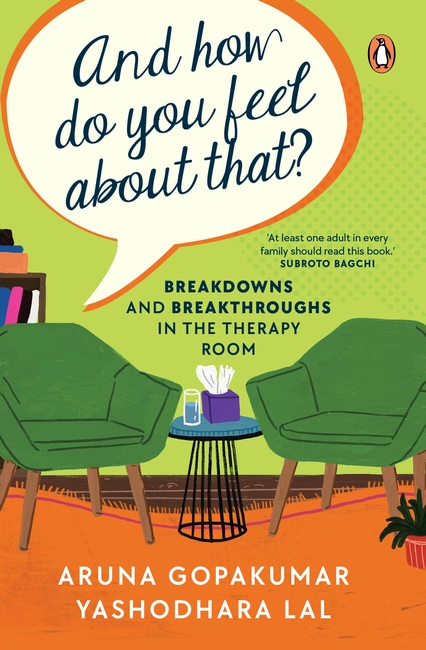
Ever wondered what REALLY happens in the therapy room?
For too long, therapy has been seen as taboo in our society and is shrouded in myth–it’s only for the weak or ‘crazies’, it’s just blaming your parents, a therapist ‘only listens’ and so on. In this book, Aruna Gopakumar and Yashodhara Lal bust those myths and show you how therapy actually works.
With decades of combined experience in the field, these two therapists share fascinating stories based on their practice. You’ll meet the woman who sends secret messages to her husband during arguments; the towering tattooed man who realizes he can’t save his sister; the teenager whose life is revealed in the tale of a lonely bear; the divorced man angry with his ex-wife for starting to date again; the fiery gay young man impatient to change the world; the lady who won’t relax until her daughter is perfect; and many more.
Written with authenticity, warmth, simplicity, and lightness, And How Do You Feel About That brings you an understanding of the world of possibilities that opens up when we embark on an inner exploration – in dialogue with another.

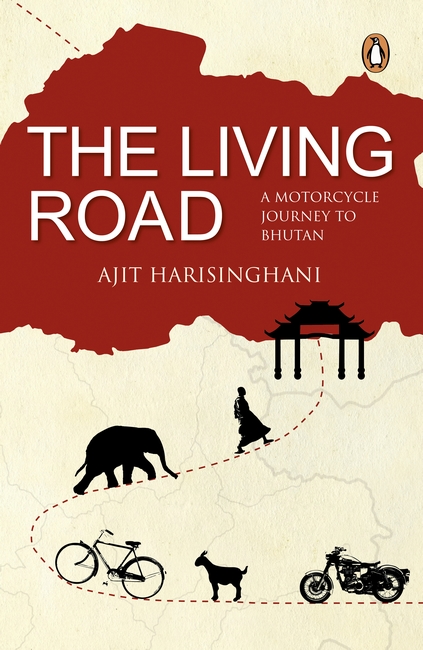
A solo motorcycle ride across India, and into Bhutan, becomes much more than just a test of physical endurance when 57-year-old, Pune-based, speech therapist Ajit Harisinghani decides to go in the pursuit of that most elusive of all human desires-happiness.
With the idea of Bhutan’s gross national happiness on his mind, he traverses a potpourri of terrain, riding through landscapes that change daily. From arid land to verdant fields, from jungles with glimpses of elephants and tigers to tea gardens…
Along the way, he meets a yogi and his singing goat, explores ancient caves, is frightened in a wild life sanctuary, sees a Schizophrenic bicycle and helps a police inspector overcome his stammering problem. A variety of experiences later, he is finally in Thimpu where a Buddhist monk reveals the road-map to being happy.
A funny, honest and entertaining real-life adventure story that promises to surprise, shock and perhaps even liberate!

Since its independence in 1947, India’s leaders have sought to grasp the greatness that the country seemed destined for. India’s first prime minister, Jawaharlal Nehru, articulated these aspirations early on but, overwhelmed by development challenges, his successors focused largely on domestic concerns rather than on global leadership. The post-1991 era saw India positioned for the first time in many decades as an economic success, suggesting that it was on the cusp of breaking out as a global player.
The twenty-odd years following the 1991 reforms were heady for India. Based on the expectation that India was now poised to ascend as a major power, Prime Minister Narendra Modi-less than a year after he first took office in May 2014-expressed his desire that India assume a leading role: completing the transformation from being merely an influential entity into one whose weight and preferences are defining for international politics.
Grasping Greatness explores the various tasks pertaining to this push for eminence in world affairs. It elaborates the economic, state-building, and international dimensions of this ambition. Eminent thinkers like Rakesh Mohan, Ila Patnaik, Surjit Bhalla, Arjun Subramanian, and others reflect upon the tasks at hand and the desirable routes to achieve them.
Edited by Ashley J. Tellis, Bibek Debroy and C. Raja Mohan, Grasping Greatness is an important contribution to the intellectual debates as India enters into a new era on the world stage.

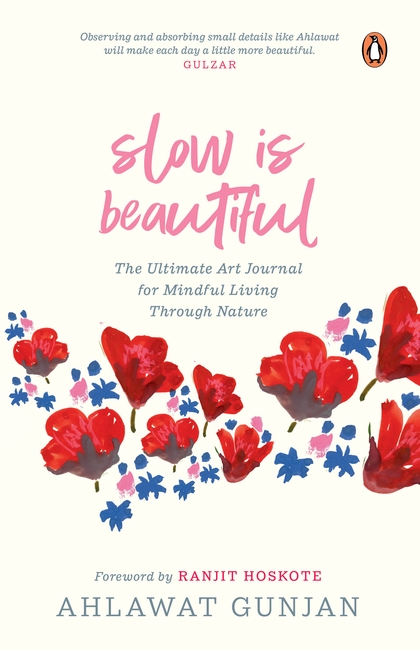
Slow is Beautiful is an invitation to embark on a journey through mindfulness and cut through the clutter and noise of the world around you. Under the guidance of artist and visual designer Ahlawat Gunjan, you’ll learn to see, observe, reflect, and practise using artistic techniques developed through years of training to re-kindle a lost instinct. This beautiful collector’s edition prepares you to welcome a new artistic vision into your lives by building a relationship with form, colour, and composition in a uniquely accessible way.
Each of the sixty easy-to-use prompts in this book is an essential step highlighted by vibrant ink and watercolour paintings inspired from nature, created and curated by the artist himself to motivate readers to draw, erase, paint, experiment, create and, most importantly, embrace their mistakes.

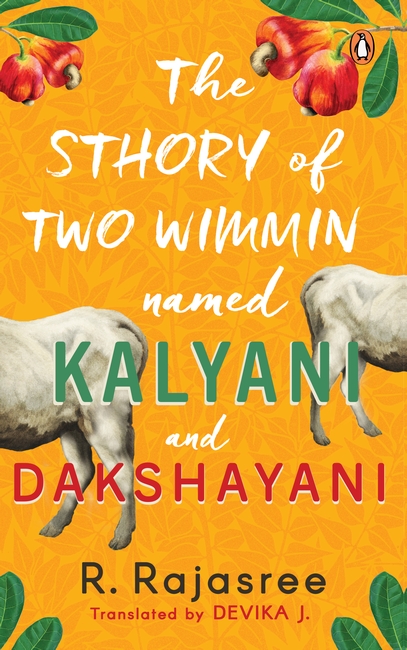
The Sthory of Two Wimmin Kalyani and Dakshayani traces luminous paths of female friendship in the rural worlds of north Malabar, through the lives of two rural women, Kalyani and Dakshayani. Rebelling against the patriarchy in school at the age of six (‘Rot in ‘ell, yuh sonofabitch’, yells Dakshayani at the school master who lifted her skirt to pinch her thigh, and walks out of school, with Kalyani following in solidarity), the two friends take on life and love. Women have no native place, they learn-but they have each other. Rajashree’s cleverly crafted narrator pauses and plays the scenes of their struggles, pains and laughter, drawing strength from them for her own battle against the mind-police. The bittersweet longing for one’s place of birth, the dialects of Malayalam, animals, spirits-all come alive in Rajashree’s beautifully crafted tale, enabled by Devika’s magnificent and careful translation.

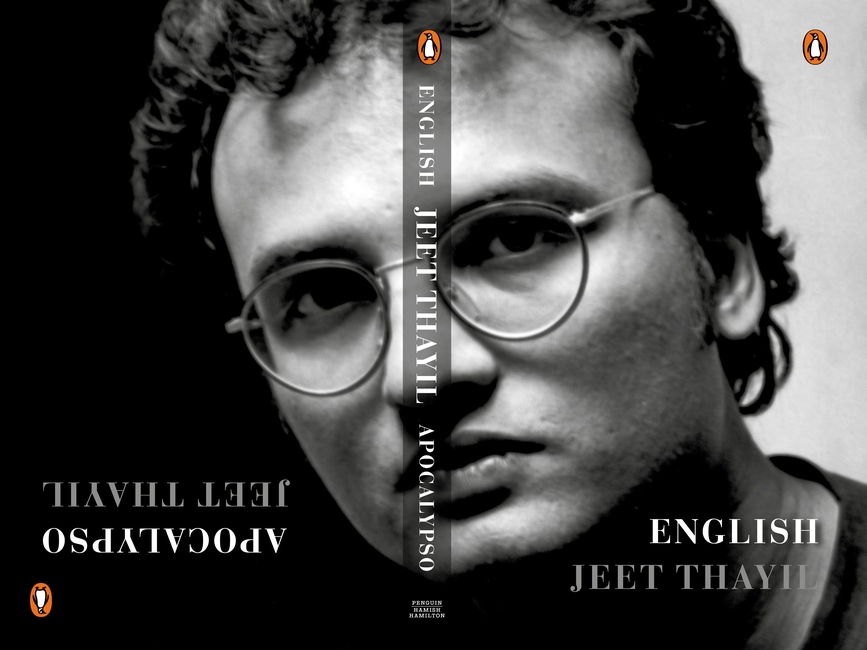
ENGLISH
Many of the poems in English are set in New York City around the events of September 11, 2001. In the faux prologue poem ‘About the Author’, the narrator finds himself ‘on Sixth, watching ruin, with / a handful of rain and a prophecy’: a citizen of no country except the republic that gives the book its title, the Republic of English. Here, English is more than a language. It is a river of the world.
‘Thayil’s poems refract his vibrant, unique and far-flung life experiences through the prism of his tremendous lyric intellect. The result is a fantastic realism that will haunt me forever. Thayil’s English first spices a transcendent command of diverse registers of literary and colloquial speech with certain sprung local talk, but then melts all that into an infinitely focused and inventive, personal and emotional idiolect, delivered in one of the most unforgettable voices of our time. He is a master of the knockout lyric punchline. Some of these poems made me cry, which is rare.’ – PHILIP NIKOLAYEV
APOCALYPSO
Jeet Thayil’s first full-length collection, Apocalypso, is a gritty, intense exploration of love and its secular limits. Song-like rhythms offer Biblical imagery and a lyric view of the wild side. Detached, tough, and vulnerable at the same time, the raw, intimate poems in this collection point towards the work that would follow. They examine and lay bare the mystery of love–its heartbreak and exaltation, and its redemptive, enduring power.
Everybody betrays everybody, you said
somebody said.
‘Thayil’s poems light up a corner of the dirty world, imbuing it with a near-holy radiance. The beautiful uncompromising poems in this selection are an achievement.’ – ADIL JUSSAWALLA
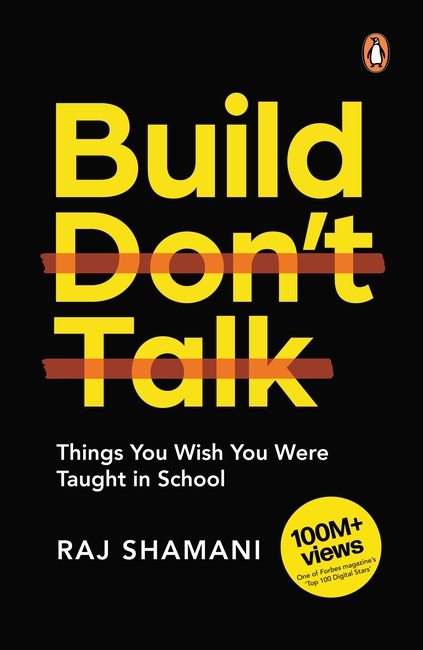
School taught us specific subjects, like maths and history.
But we weren’t taught:
How to sell
Or how to build relationships
Or how to negotiate
Or how to take care of our mental health
Or how to network
Or how to deal with personal finance
These most important situations we face as adults were never discussed with us when we were students. We weren’t taught these skills in school, and this makes all the success stories we hear about seem out of reach; it makes us feel dumb. We aren’t dumb, we just don’t know how to work the system.
Your school taught you how to run in the race; it didn’t teach you how to win. And that’s what this book is for. To help you win the race. Packed with useful advice gleaned from his own journey as an entrepreneur and content creator, this book by Raj Shamani is a must-read.

This book examines fifteen judgments that have influenced the financial destiny of India. With significant macroeconomic dimensions, these judgments, when explored, show a long-term impact on the economy. In doing so, judgments from different times of history have been examined to give the reader a flavour of the jurisprudential philosophies at different times in the country since Independence.