



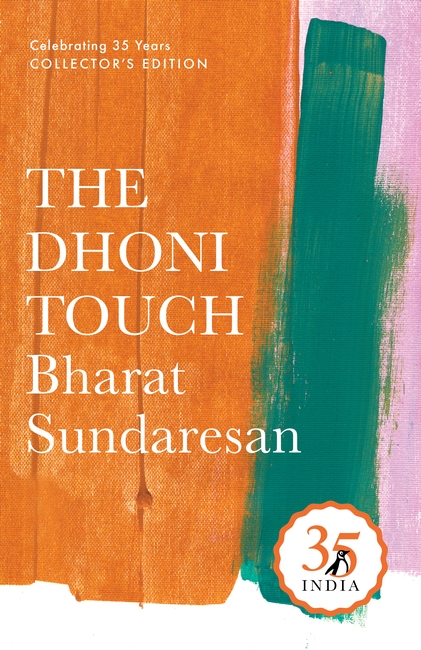
For over a decade, Mahendra Singh Dhoni has captivated the world of cricket and over a billion Indians with his incredible ingenuity as captain, wicketkeeper and batsman. Bharat Sundaresan tracks down the cricketer’s closest friends in Ranchi and artfully presents the different shades of Dhoni-the Ranchi boy, the fauji, the diplomat, Chennai’s beloved Thala, the wicketkeeping Pythagoras-and lays bare the man underneath. He discovers a certain je ne sais quoi about the man who has a magical ability to transform and elevate everything which comes into his orbit-the Dhoni Touch.
Catagory: Non Fiction
non fiction main category
Wealth Creation Made Easy in a Box
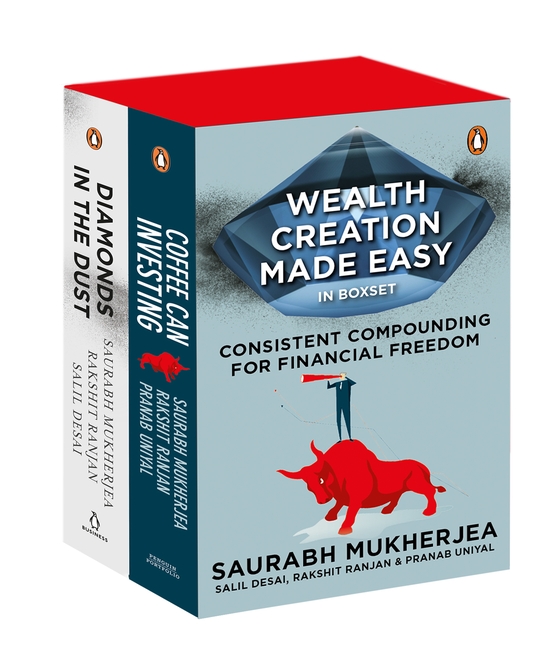
This box includes a set of two bestselling books on investing and wealth creation.
Diamonds in the Dust offers Indian savers a simple, yet highly effective, investment technique to identify clean, well-managed Indian companies that have consistently generated outsized returns for investors. Based on in-depth research conducted by the award-winning team at Marcellus Investment Managers, it uses case studies and charts to help readers learn the art and science of investing in the US$3 trillion Indian stock market.
The book also debunks many notions of investing that have emerged from the misguided application of Western investment theories in the Indian context.
Vital and indispensable, this book will serve as the ultimate manual on investing and provide practical counsel to readers to achieve their financial goals.
Coffee Can Investing offers a simple strategy to make not 10 not 15 but 20 percent compound annual growth rate (CAGR) on your investments. Using this strategy one can easily grow their money four to five times whilst taking half the risk compared to the overall market. The book decodes the secret to identifying low-risk investments that generate great returns.
Penguin 35 Collectors Edition: The Radical in Ambedkar
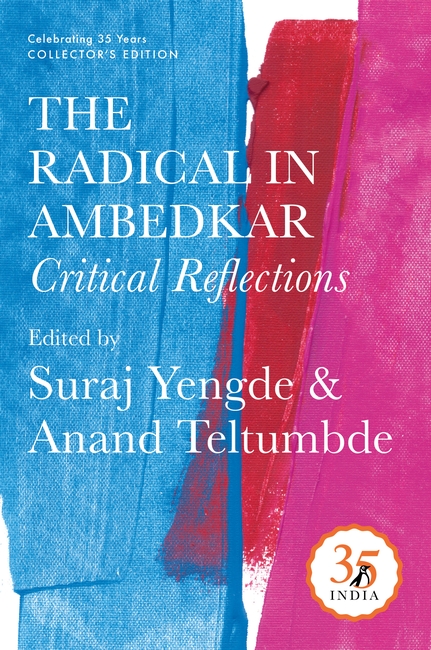
This landmark volume, edited and introduced by Anand Teltumbde and Suraj Yengde, establishes B.R. Ambedkar as the most powerful advocate of equality and fraternity in modern India. While the vibrant Dalit movement recognizes Ambedkar as an agent for social change, the intellectual class has celebrated him as the key architect of the Indian Constitution and the political establishment has sought to limit his concerns to the question of reservations. This remarkable volume seeks to unpack the radical in Ambedkar’s legacy by examining his life work from hitherto unexplored perspectives.
Although revered by millions today primarily as a Dalit icon, Ambedkar was a serious scholar of India’s history, society and foreign policy. He was also among the first dedicated human rights lawyers, as well as a journalist and a statesman. Critically evaluating his thought and work, the essays in this book-by Jean Drèze, Partha Chatterjee, Sukhadeo Thorat, Manu Bhagavan, Anupama Rao and other internationally renowned names-discuss Ambedkar’s theory on minority rights, the consequences of the mass conversion of Dalits to Buddhism, Dalit oppression in the context of racism and anti-Semitism, and the value of his thought for Marxism and feminism, among other global concerns.
An extraordinary collection of immense breadth and scholarship that challenges the popular understanding of Ambedkar, The Radical in Ambedkar is essential reading for all those who wish to imagine a new future.
Penguin 35 Collectors Edition: Three Thousand Stitches
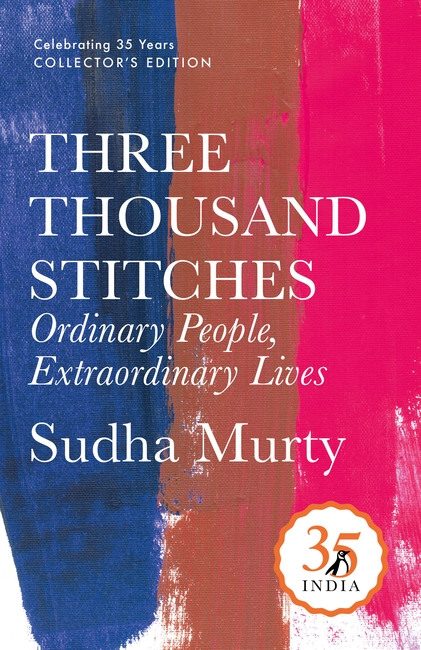
So often, it’s the simplest acts of courage that touch the lives of others. Sudha Murty-through the exceptional work of the Infosys Foundation as well as through her own youth, family life and travels-encounters many such stories . . . and she tells them here in her characteristically clear-eyed, warm-hearted way. She talks candidly about the meaningful impact of her work in the devadasi community, her trials and tribulations as the only female student in her engineering college and the unexpected and inspiring consequences of her father’s kindness. From the quiet joy of discovering the reach of Indian cinema and the origins of Indian vegetables to the shallowness of judging others based on appearances, these are everyday struggles and victories, large and small.
Unmasking both the beauty and ugliness of human nature, each of the real-life stories in this collection is reflective of a life lived with grace.
Penguin 35 Collectors Edition: Love’s Rite
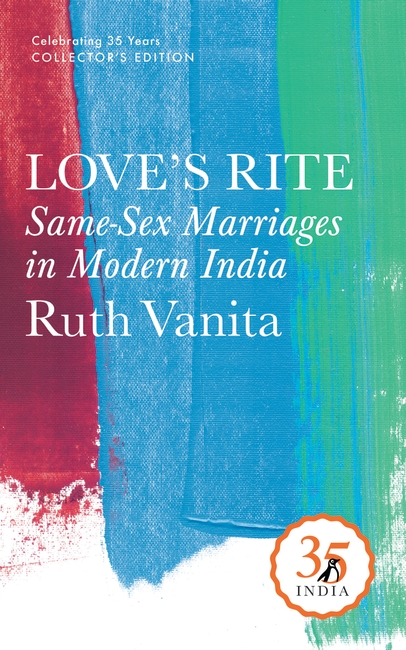
‘An effortless combination of empathy, moral conviction and deep cultural sensitivity’ ~ Ashis Nandy
A CHRONICLE OF LOVE’S TRIUMPH OVER ALL OBSTACLES
Long before the debate on marriage equality began, young, non-English speaking, low-income female couples all over India got married by religious rites or committed joint suicide, which they considered being ‘married in death’. These women had no contact with any movement and had never heard words like ‘lesbian’ or ‘gay’. While many families, in collusion with police, violently separated the couples, several families also supported their daughters.
Love’s Rite, first published in 2005, is the first and still the only book-length study of these unions, starting with one reported in 1980. The book argues that the couples asserted-and today still assert-their right to be together, using an age-old language of love understood by Indians. Vanita explores Indian religious, legal and literary traditions that provide spaces for same-sex and other socially disapproved unions.
While many recent high-profile Indian weddings have been reported as the ‘first’ of their kind, Love’s Rite celebrates the unsung pioneers and martyrs of the struggle for marriage equality.
Penguin 35 Collectors Edition: Being Mortal
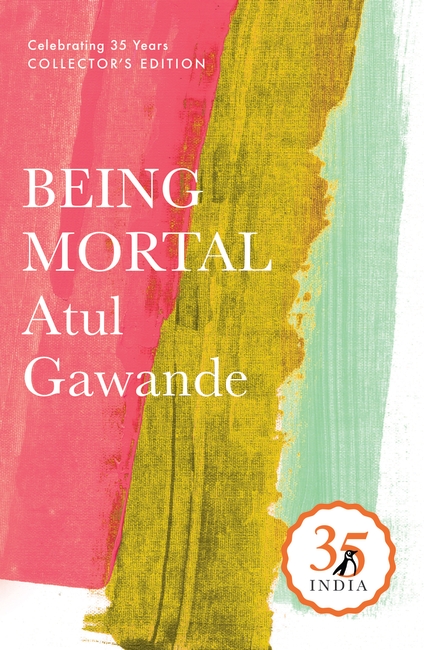
Doctors are trained to keep their patients alive as long as possible. But they are never taught how to prepare people to die. And yet for many patients, particularly the old and terminally ill, death is a question of when, not if. Should the medical profession rethink its approach to them? And in what way? With aging populations and hospital costs rising globally, these questions have become increasingly relevant.
In his new book, Atul Gawande argues that an acceptance of mortality must lie at the center of the way we treat the dying. Using his experiences (and missteps) as a surgeon, comparing attitudes toward aging and death in the West and in India and drawing a powerful portrait of his father’s final years-a doctor who chose how he should go-Gawande has produced a work that is not only an extraordinary account of loss but one whose ideas are truly important.
Questioning, profound and deeply moving, Being Mortal is a masterpiece.
Penguin 35 Collectors Edition: The Great Indian Novel
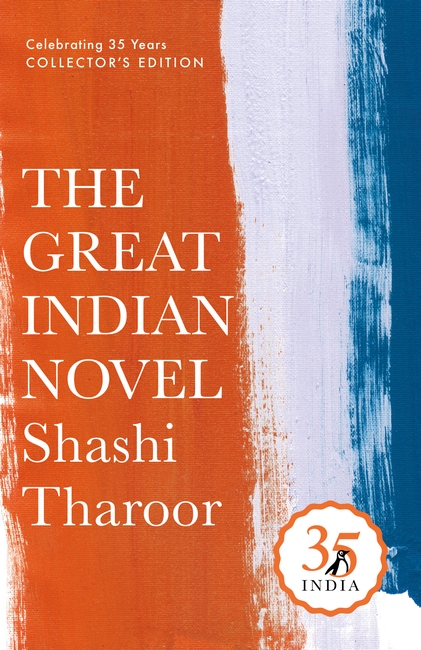
In Shashi Tharoor’s satirical masterpiece, the story of the Mahabharata is retold as recent Indian history, and renowned political personalities begin to resemble characters from the Mahabharata-all of whom have a curious and ambiguous relationship with Draupadi Mokrasi (D. Mokrasi for short) . . .
Penguin 35 Collectors Edition: Makers Of Modern India
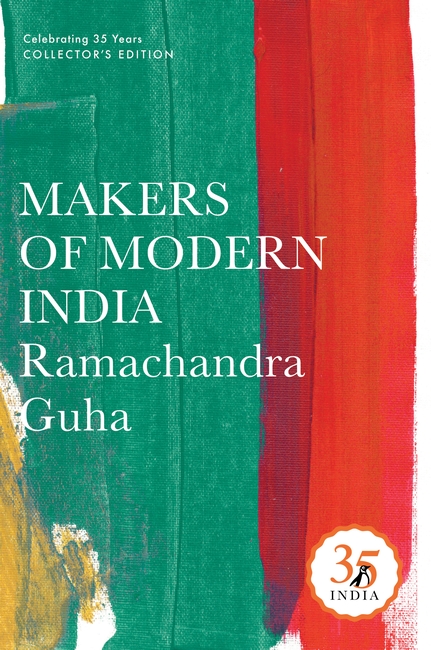
Makers of Modern India is a detailed source for information about the country’s political traditions. The republic of India had a very tumultuous beginning and the author shows you how 19 political activists were instrumental in the evolution of this country. The author goes beyond a description of the people by including extracts of the speeches they have written. Each phase of the freedom movement and the following years of independent India are shown through the written works produced by these 19 individuals. In Makers of Modern India you will see caste, religion, colonialism, the economy language, gender, nationalism, democracy and secularism in a historical context. The book is a treat for those who are curious about the formation of the multifarious collection of people, ideas and religions in India. The author shows you how the lack of unison in the opinions of the makers of India complemented each other and resulted in the finished product called India.
Penguin 35 Collectors Edition: India Since Independence
The story of the forging of India, the world’s largest democracy, is a rich andinspiring one. This volume, a sequel to the India’s Struggle forIndependence, analyses the challenges India has faced and the successes ithas achieved in the light of its colonial legacy and century-long struggle forfreedom. It covers the framing of the Constitution and the evolution of theNehruvian political and economic agenda and basics of foreign policy; theconsolidation of the nation and contentious issues like party politics in theCentre and the states, the Punjab problem and anti-caste politics anduntouchability. These, along with objective assessments of Jawaharlal Nehru,Indira Gandhi, Jayaprakash Narayan, Lal Bahadur Shastri, Rajiv Gandhi,Vishwanath Pratap Singh, Atal Bihari Vajpayee and Manmohan Singh,constitute a remarkable overview of a nation on the move.
Penguin 35 Collectors Edition: Curfewed Night
Basharat Peer was a teenager when the separatist movement exploded in Kashmir in 1989. Over the following years countless young men, seduced by the romance of the militant, fuelled by feelings of injustice, crossed over the Line of Control to train in Pakistani army camps. Peer was sent off to boarding school in Aligarh to keep out of trouble. He finished college and became a journalist in Delhi. But Kashmir-angrier, more violent, more hopeless-was never far away.
In 2003, the young journalist left his job and returned to his homeland to search out the stories and the people which had haunted him. In Curfewed Night he draws a harrowing portrait of Kashmir and its people. Here are stories of a young man’s initiation into a Pakistani training camp; a mother who watches her son forced to hold an exploding bomb; a poet who finds religion when his entire family is killed. Of politicians living in refurbished torture chambers and former militants dreaming of discotheques; of idyllic villages rigged with landmines, temples which have become army bunkers, and ancient sufi shrines decapitated in bomb blasts. And here is finally the old story of the return home-and the discovery that there may not be any redemption in it.
Lyrical, spare, gutwrenching and intimate, Curfewed Night is a stunning book and an unforgettable portrait of Kashmir in war.