Publish with Us

Follow Penguin

Follow Penguinsters

Follow Penguin Swadesh

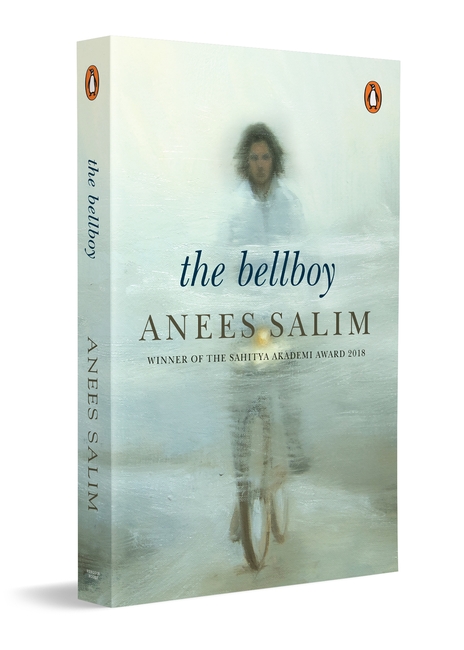
The Bellboy

Latif’s life changes when he is appointed bellboy at the Paradise Lodge – a hotel where people come to die.

After his father’s death, drowned in the waters surrounding their small Island, it is 17 year-old Latif’s turn to become the man of the house and provide for his ailing mother and sisters. Despite discovering a dead body on his first day of duty, Latif finds entertainment spying on guests and regaling the hotel’s janitor, Stella, with made-up stories. However, when Latif finds the corpse of a small-time actor in Room 555 and becomes a mute-witness to a crime that happens there, the course of Latif’s life is irretrievably altered.

The Bellboy is as much a commentary on how society treats and victimizes the intellectually vulnerable as it is about the quiet resentment brewing against religious minorities in India today. With a mix of wry humour and heart-wrenching poignancy, the book narrates a young boy’s coming-of-age on a small island, and his innocence that persists even in the face of adversity and inevitable tragedy.

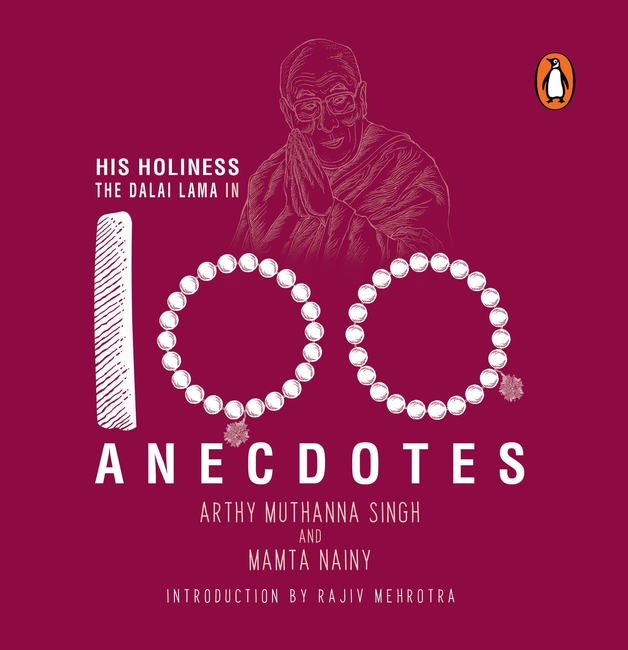
His Holiness the Dalai Lama in 100 Anecdotes

On 6 July 1935, a mischievous boy was born in a remote village in Tibet, who, at the age of two, was recognized as the fourteenth reincarnation of the Dalai Lama. His eventful boyhood in Lhasa, thrilling escape to India and subsequent exile in Dharamsala, captured the imagination of thousands. With an endearing smile and childish humour, he has become a symbol of optimism and hope for the oppressed.

Tracing his life through 100 lesser-known and inspiring incidents, unusual trivia and gorgeous illustrations, this one-of-a-kind book explores the Dalai Lama’s vision, teachings and philosophies. His Holiness the Dalai Lama in 100 Anecdotes is a classic tribute and a collectible edition that celebrates the various facets of an extraordinary spiritual leader from his birth through his eighty-seventh birthday.

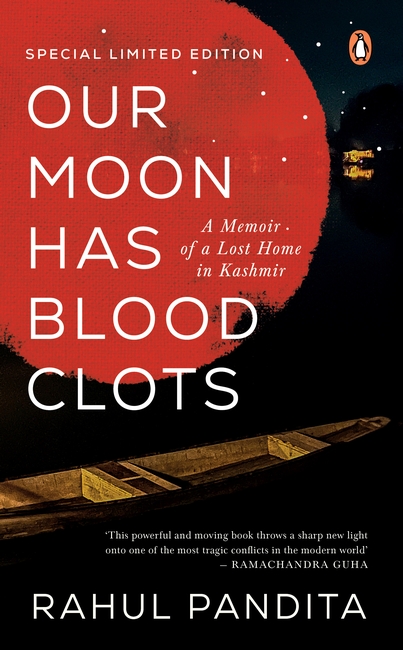
Our Moon Has Blood Clots

Rahul Pandita was fourteen years old when he was forced to leave his home in Srinagar along with his family. They were Kashmiri Pandits-the Hindu minority within a Muslim-majority Kashmir, which was by 1990 becoming increasingly agitated with the cries of Azaadi from India. Our Moon Has Blood Clots is the story of the Kashmir, in which hundreds of thousands of Kashmiri Pandits were tortured, killed and forced to leave their homes by Islamist militants and made to spend the rest of their lives in exile in their own country. Rahul Pandita has written a deeply personal, powerful and unforgettable story of history, home and loss.

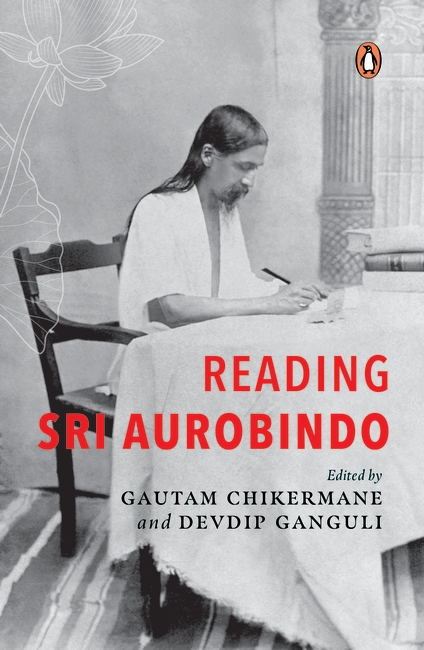
Reading Sri Aurobindo

Sri Aurobindo dedicated his life to the transformation of humanity. His journey saw him traverse many paths, including that of poet, journalist, jailed revolutionary, philosopher, and radical mystic. Essays, translations, literary criticism, political articles, philosophical treatises, poetry, epics, plays and short stories-his writings encompass the depth and range of his extraordinary life. The modern sage commented on spiritual texts such as the Vedas, the Upanishads and the Bhagwad Gita, authored an epic poem, Savitri, presented his integral vision in The Life Divine, wrote on contemporary issues, all the while writing thousands of letters to guide his disciples, and even documenting his inner life in meticulous detail.

The relevance of Sri Aurobindo’s message has never been more urgent and compelling, yet, his Complete Works, thirty-six volumes in all, can be a daunting prospect even for those acquainted with his philosophy and practice. Reading Sri Aurobindo introduces each of these volumes through the perspectives of twenty-one contributors. The result is a book packed with insights inviting us to explore Sri Aurobindo’s deep wisdom and vision for resolving the fundamental issues facing individuals, societies, and nations today.

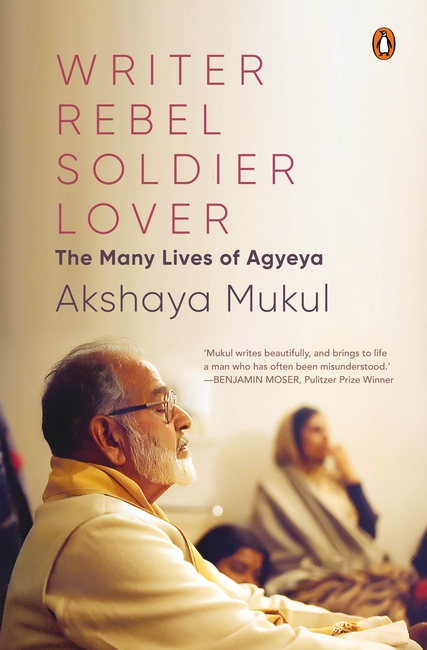
Writer, Rebel, Soldier, Lover

“An outstanding literary biography” AMITAV GHOSH

“Mukul writes beautifully, and brings to life a man who has often been misunderstood” BENJAMIN MOSER

“This book is a remarkable contribution to the world of Indian letters: ANNIE ZAIDI

Sachchidanand Hirananda Vatsyayan ‘Agyeya’ is unarguably one of the most remarkable figures of Indian literature. From his revolutionary youth to acquiring the mantle of a (highly controversial) patron saint of Hindi literature, Agyeya’s turbulent life also tells a history of the Hindi literary world and of a new nation-spanning as it does two world wars, Independence and Partition, and the building and fraying of the Nehruvian state.

Akshaya Mukul’s comprehensive and unflinching biography is a journey into Agyeya’s public, private and secret lives. Based on never-seen-before archival material-including a mammoth trove of private papers, documents of the CIA-funded Congress for Cultural Freedom and colonial records of his years in jail-the book delves deep into the life of the nonconformist poet-novelist. Mukul reveals Agyeya’s revolutionary life and bomb-making skills, his CIA connection, a secret lover, his intense relationship with a first cousin, the trajectory of his political positions, from following M.N. Roy to exploring issues dear to the Hindu right, and much more. Along the way, we get a rare peek into the factionalism and pettiness of the Hindi literary world of the twentieth century, and the wondrous and grand debates which characterized that milieu.

Writer, Rebel, Soldier, Lover features a formidable cast of characters: from writers like Premchand, Phanishwarnath Renu, Raja Rao, Mulk Raj Anand and Josephine Miles to Prime Minister Jawaharlal Nehru, revolutionary Chandra Shekhar Azad and actor Balraj Sahni. And its landscapes stretch from British jails, an intellectually robust Allahabad and modern-day Delhi to monasteries in Europe, the homes of Agyeya’s friends in the Himalayas and universities in
the US. This book is a magnificent examination of Agyeya’s civilizational enterprise.

Ambitious and scholarly, Writer, Rebel, Soldier, Lover is also an unputdownable, whirlwind of a read.

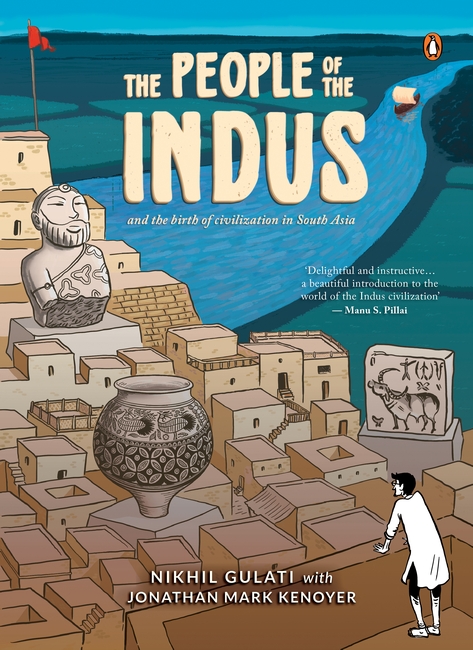
The People of the Indus

Who were the people of the Indus?
Why didn’t they build pyramids like the Egyptians?
And ultimately what happened to them?

Supported by extensive research from a leading Indus archaeologist, this graphic novel seeks answers to precisely these questions. It is not history in the form of a dull record of dates and events but a beautifully illustrated glimpse into the lives of the people of the Indus civilization, dating all the way back to 3200 BCE. The People of the Indus is a rare account of how one of the most unique and enigmatic civilizations of the ancient world changed the course of human history. It is sure to enthral young adults and older readers alike.

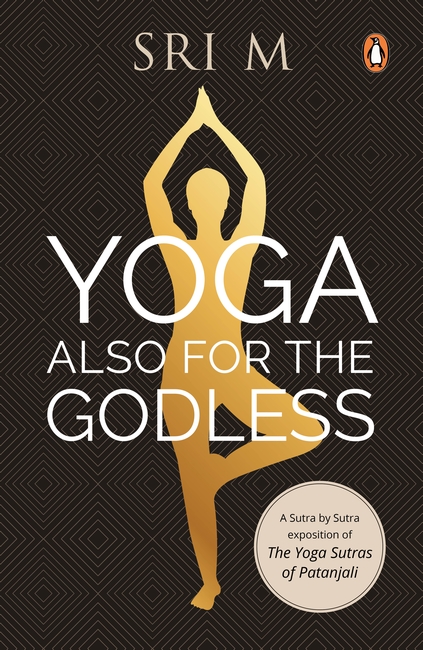
Yoga Also for the Godless

Practitioners of the ancient science of yoga have long contended that you don’t have to be a Hindu, in the conventional sense, to practise yoga, even though its origins lie in India. Renowned spiritual teacher, author, social reformer, educationist and global speaker Sri M goes a step further in this new and path-breaking book-he proves that, let alone belonging to a particular religion, one doesn’t even need to believe in God to be a true yogi. One of the best-known Vedantic scholars of our times, he draws on his deep knowledge of ancient Indian scriptures to prove that the godless are as capable as the God-inspired of reaching the pinnacle of self-realisation and bliss through yoga.
Based on a profound understanding of Patanjali’s Yoga Sutras, this is a step-by-step guide to the theory and practice of yoga for those who seek to know it better, and also for the young and the millennial, who may be stepping out for the first time. In lucid prose, with photographs for visual aid, Sri M takes us through the most complex notions of breath, body and posture with admirable brevity and clarity.

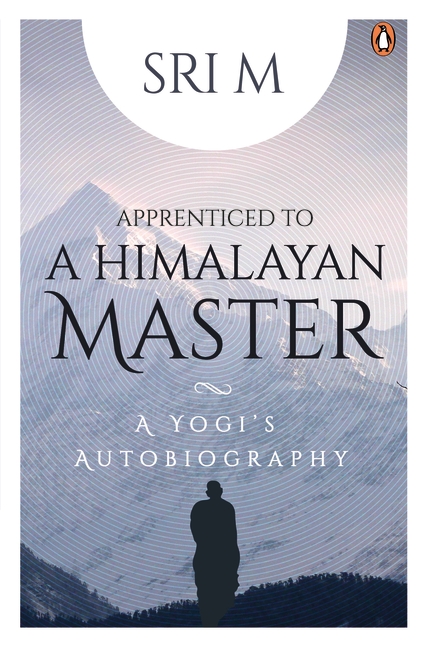
Apprenticed to a Himalayan Master

In this tell-all autobiography, Sri M writes about his fascinating journey as a young man from the southern coast of India to the mystical Himalayan Mountains. At the age of nineteen and a half, he felt an irresistible urge to go to the Himalayas in quest for his great Master. He finally met his Master at the Vyasa Cave, beyond the Badrinath shrine. After spending three and half years with his Master, wandering freely across the length and breadth of the Himalayan ranges, he was instructed to go back to live in the plains and lead a normal life. He started working for a living, fulfilled his social commitments and prepared himself to teach others all that he had learned and experienced. This book reveals the spiritual journey of a young lad from Kerala, who by his sincerity and dedication evolved into a living yogi. Sri M shares his knowledge of the Upanishads and spiritual insights born out of first hand experiences in his autobiography. Apprenticed to a Himalayan Master will make for an engaging and riveting read for those interested in the life and teachings of Sri M.

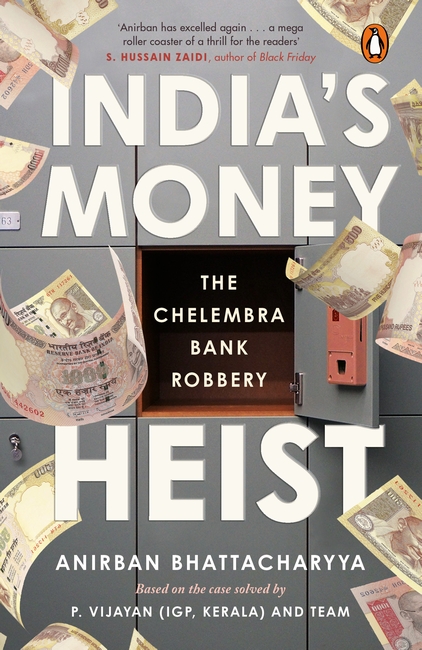
India’s Money Heist

From the creator-producer of Savdhaan India, the producer of Crime Patrol, and the bestselling author of The Deadly Dozen: India’s Most Notorious Serial Killers, comes the true story behind one of India’s biggest and most sensational bank heists

31st December 2007. New Year’s Eve. A sleepy town in Kerala called Chelembra finds itself in the national headlines for India’s biggest bank heist to the tune of a whopping Rs 8 crore which included 80 kg of gold.
A crime that was supposedly inspired by a Bollywood blockbuster, this is the sensational story of that heist seen from both sides of the coin-the planning and execution by the mastermind criminals, and the difficult, yet thrilling, investigation by the Kerala police team led by P. Vijayan.
Constructed from extensive first-person interviews of the police team that solved the crime and the confession details of the criminals, this is the true story of how India’s biggest bank heist was executed and the cat-and-mouse game that ensued.

error: Content is protected !!