What does it mean to be financially included? Does having an Aadhaar, a Jan Dhan account and a phone make one financially included? Is rural India able to access financial products and institutions comfortably?
Is the Fintech revolution actually here?
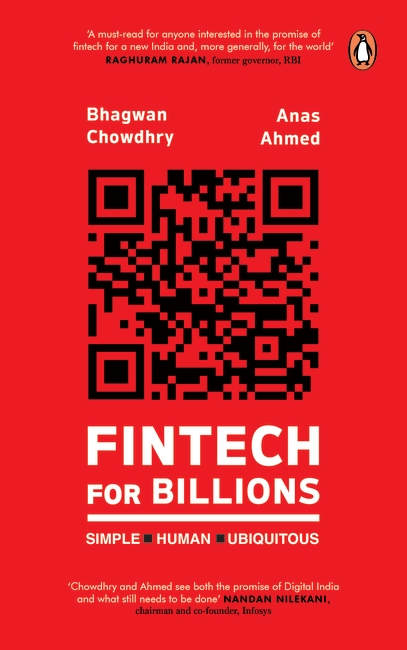
The biggest problem with fintech in India is that the full potential of financial technology and policy is not really reaching the poorest of the poor. Thoroughly researched and expertly written, FinTech for Billions reveals why many of the existing solutions have faltered and fumbled along their path to inclusion. But things are not without hope. Through meticulous research across India – from towns in Rajasthan to villages in Goa, from hamlets in Odisha to districts in Telangana and Himachal Pradesh — this book offers simple, human and ubiquitous solutions that can transform the lives of people at the bottom of the pyramid.

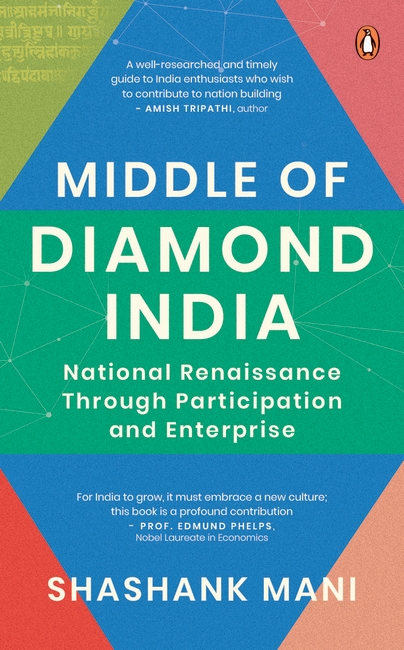
Middle of Diamond India proposes a revolutionary idea – that India has long ignored its largest and most talented segment, citizens in the Tier 2 and Tier 3 districts, its Middle.
The book reveals the hidden stories of those in its Middle who have been ignored owing to their location and language. By examining India’s revolutionary past, its culture, its citizens, its innovators, and its spirit, the book illuminates this Diamond shaped India.
Replete with characters, anecdotes, insights, research and accounts of an annual pilgrimage on a special train-Jagriti Yatra, and an enterprise ecosystem established in Deoria district, the book outlines a new vision of India focussed on its rising Middle. It proposes a Banyan Revolution over the coming twenty-five years of Amrit Kaal, using the tool of enterprise or Udyamita that can ignite a national renaissance.
The book argues that by recognizing and awakening the entrepreneurial vitality of those in small towns and districts, we can create meaning for millions of citizens and define a new modernity for India.

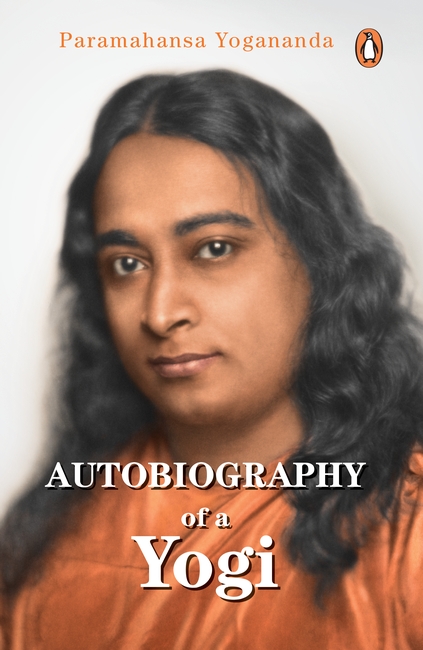
Named one of the 100 best spiritual books of the 20th century, Paramahansa Yogananda’s remarkable life story takes you on an unforgettable exploration of the world of saints and yogis, science and miracles, death and resurrection. With soul-satisfying wisdom and endearing wit, he illuminates the deepest secrets of life and the universe – opening our hearts and minds to the joy, beauty, and unlimited spiritual potentials that exist in the lives of every human being.
This complete edition – offered in collaboration with Yogoda Satsanga Society of India and Self-Realization Fellowship, the organizations founded by the author – incorporates all of his wishes for the final text, including the extensive material he added after the 1946 edition.
Experience the captivating journey of Paramahansa Yogananda’s life through the pages of “Autobiography of a Yogi.” With remarkable candor, eloquence, and wit, Yogananda shares his inspiring chronicle, from his extraordinary childhood to encounters with saints and sages during a quest for an illumined teacher in India.
Through this compelling life story, Yogananda unveils the subtle laws governing both ordinary and extraordinary events, offering a profound understanding of human existence. “Autobiography of a Yogi” transcends time, enthralling readers with its spiritual teachings, making it a timeless masterpiece and a revered spiritual classic.
Join Yogananda on a journey that will leave an indelible mark on your soul and open your heart to the mysteries of life!

Sunaina Joshi is a reporter with a leading news channel.
Her day-to-day work involves reporting on urban-centric, health-related issues; myriad subjects that bore her, leaving her jaded. Her real passion is a life in the great outdoors, and reporting on wildlife and the environment, something she is unable to do as often as she would like. Unexpectedly, a fabulous opportunity falls into her lap when her channel is commissioned to run a campaign on tiger conservation, featuring a Bollywood star who is trying to resurrect his image and career following a drug scandal.
The shoot takes a dramatic turn when the television team finds itself in the middle of a local conflict and a heated incident involving a tiger attacking a forest guard. Controversy follows, with the decision to relocate the tiger to a zoo, leading to protests
and fresh outrage over the action. To Sunaina’s dismay, she finds
herself becoming the epicentre of the converging controversies. Also
complicating matters are the run-ins she has with the arrogant owner
of the resort. But is her aggravation with him turning to attraction?
Can she keep her wits about her while remaining professional
about the things she loves?

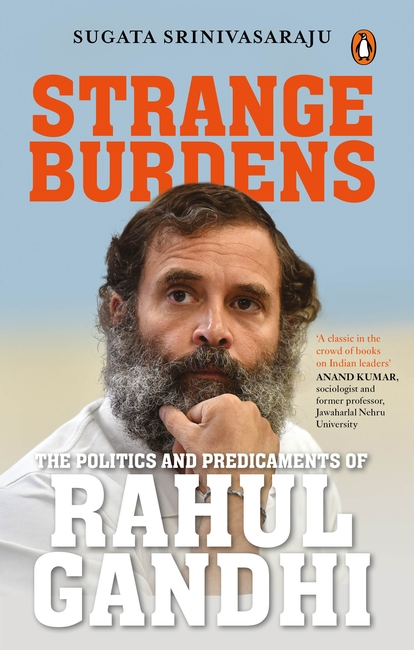
Strange Burdens is not a biography but a book of political commentary. It examines and analyses Rahul Gandhi’s ideas and leadership since he officially entered politics in March 2004. It journeys all the way to the conclusion of the Bharat Jodo Yatra in Srinagar on 30 January 2023 and captures the dilemmas of his
disqualification a couple of months later.
The narrative here crawls across two decades with the intention of understanding Rahul Gandhi’s politics and predicaments, confusions and contradictions, triteness and triumph, as well as his burdens and benignity. It is not the purpose of this book to understand his failures and successes in tabular columns but speculate in the best traditions of political commentary why he is where he is, both politically and as an individual. The book does not seek to answer questions about his suitability or unsuitability for a public role but is rather focused on how he has been caught in the currents of history. It is not a myth-busting or myth-making exercise, nor is it an inquisition; it is a pursuit of political insight.
Since the book is about Rahul Gandhi and the Congress party, it cannot not be about Narendra Modi and the Bharatiya Janata Party. Examining one automatically illuminates the other. The book looks at the contrasts and convergence of the two personalities and the two parties they represent.
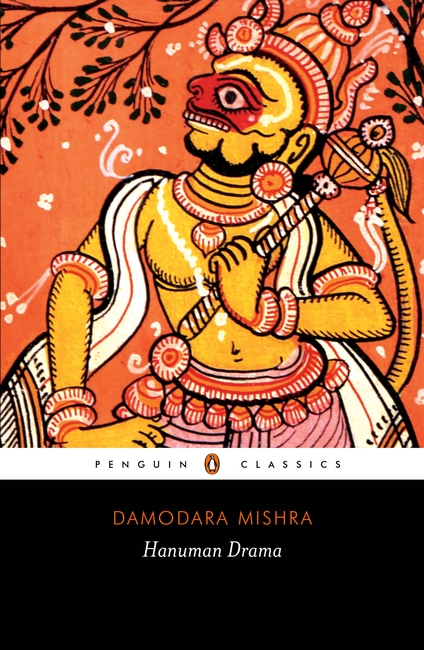
This poem recounts the life and deeds of the god-hero Rama. Legend has it that it was first inscribed on rocks by his devotee Lord Hanuman but was then thrown away into the sea on the advice of the sage Valmiki. Discovered centuries later in King Bhoja’s time, its verses were carefully transcribed and fashioned into what became Hanumannataka, composed by Bhoja’s court poet Damodara Mishra. This beautiful work has now been translated into English by A.N.D. Haksar and will appeal to lovers of mythology, poetry and philosophy.

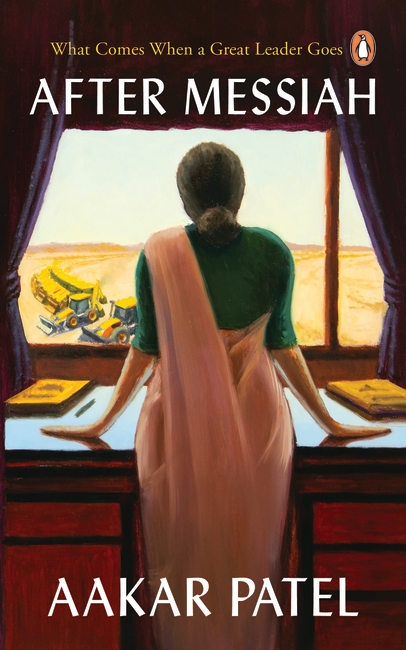
‘Everyone bowed to the Big Man. He was glorified, deified even, with temples raised to him, as the embodiment of the nation.’
Now the Big Man is gone, with nobody named as his successor. Into this void is pushed Mira, who is reluctant at first but increasingly interested in the position she finds herself in. Will she use her authority to further her agenda, or will she hold on to her principles? Watched by her political rivals, Jayeshbhai and Swamiji, and guided by well-wishers Ayesha, Prabhu and Du Bois, she marches on and discovers something about power-and about herself.

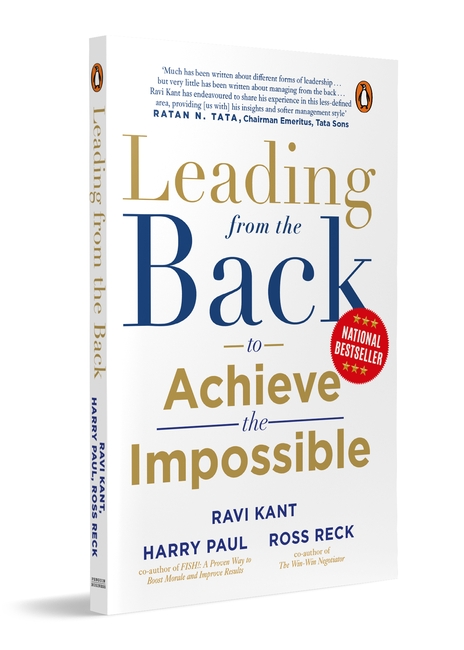
Are you looking for a leadership model that is uncomplicated, easy to use and produces amazing results? If so, then Leading from the Back is for you! In it you will find everything you need to become a superstar leader. You will learn how to earn respect from your team members and help them in achieving the impossible. No more learning about numerous principles and laws of leadership. Just a three-part model that has an amazing track record of proven success.
Through an engaging parable about the travails of an upcoming young manager, Shiv Kundra, whose leadership style hampers both his ability to lead and his ability to deliver, the authors outline the fascinating concept of ‘leading from the back’.
Leading from the Back is a distillation of the collective experience and wisdom of Ravi Kant (former CEO, vice chairman, Tata Motors), Harry Paul (co-author of the bestseller FISH! A Proven Way to Boost Morale and Improve Results) and Ross Reck (co-author of The Win-Win Negotiator).
There is an adventure inside every person, waiting to be had . . . the discovery of a self, long buried within.
This personal belief reverberates through Ashok Alexander’s How the Light Gets In. In his memoir of an improbable start-up in public health, he writes about an organization with the audacious goal of ending needless deaths and sickness at scale, amongst India’s poorest mothers and children. It is a great leap emboldened by an unshakable faith in the ‘idea that cannot be denied’. It is a tale of adventure filled with twists and turns, told with a disarming honesty.
Ashok writes with his signature ability to transport the reader from the ground-level view of a Mumbai shoeshine boy, through hushed hallways of power, and on to the green forests and enchanting hills of tribal Madhya Pradesh-where much of the book is set. This book is a curated tour of the other India, with all its pathos and ineffable beauty. This is also a story of personal transformation-Ashok left a high-profile job in corporate India to be inspired by the everyday heroism and grit of utterly marginalized women, soon after realizing a simple truth: you must ask the way from those you serve. The journey described here will leave you awash with feelings-joy, anguish, anger, compassion and much laughter. It is about the adventures waiting within, that give great hope and never fail to inspire.