The path to spiritual understanding can be a confusing one. The manic pace of the present age has loosened the threads that tied our ancestors to prayer and faith. But role models could still help us find our way back. In Icons of Grace, respected ISKCON monk Nityanand Charan Das introduces readers to the lives of twenty-one extraordinary people who served as spiritual guides, through their teachings and through personal example.
At one level, the lives of these great souls-from Mirabai and Ramanujacharya to Sant Tukaram and Adi Shankaracharya-are a practical demonstration of the most essential spiritual principles. In relating them, though, Nityanand Charan Das aims not just to record the richness of their cultural and spiritual legacies but also to convey to readers the lessons one can learn through one’s daily actions and choices. Icons of Grace is inspiring. It also offers hope: however imperfect our journey has been thus far, spiritual redemption is accessible to us all.

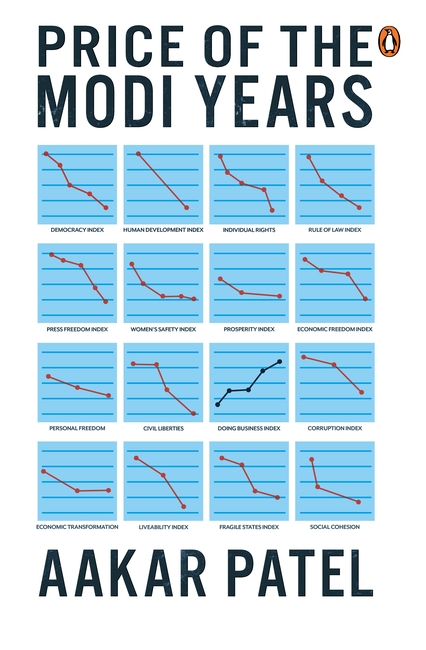
Columnist, author and political commentator, Aakar Patel has long been a close observer of the political scenario. In Price of the Modi Years, he seeks to explain the data and facts on India’s performance under Narendra Modi.
Modi’s predecessor, Manmohan Singh, had once said that Modi would be a disaster as prime minister. This book shows how. It concedes Modi’s popularity; this is an accounting of the damage he has wrought. It is the history of India since 2014, assessing the damage across the polity from the economy, national security, federalism, foreign relations, legislations and the judiciary to media and civil society.
Our memories are not long, news cycles are transient and incidents are forgotten or misclassified as being only episodic, unless documented, unified and placed together as a record. And, therefore, this book-a history of these present times.

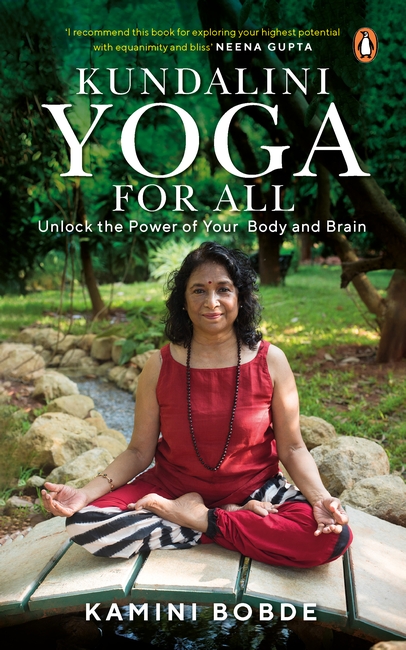
Kundalini, the primordial energy resides in all of us, lying dormant at the base of our spines. Very few know the secret of how to arouse it from its slumber. But now with the world familiar with yoga and its efficacy, the custodians of this knowledge have thought it prudent to open the doors to hitherto secret practices and reveal the what, why and how of Kundalini practice.
Kundalini Yoga for All will take you through this journey with explanations of the various stations you will encounter. Starting with cleansing and tuning your body to the step-by-step guide of your daily Kundalini yoga practice, this book will empower you to experience your highest potential in brain, body and awareness to meet all challenges of life with equanimity and experience bliss which is every human’s birthright.
Take this exciting journey within to discover the divine energy, so you can enhance every sphere of your life-professional, personal and spiritual.

This book examines the social and cultural infrastructure that sustains Sindhi business and its trade networks. It provides a rich historical context to the narrative by tracing the origin of Sindhi Trade to the annexation of Sindh in 1843, when it was incorporated into an expanding global economy. The book also locates Sindhi business within the dynamics of the contemporary Indian diaspora and features several success stories both from India and outside. The book emphasizes the commercial inventiveness, spatial mobility, and adaptability of Sindhis—-the qualities crucial to building successful cosmopolitan businesses.

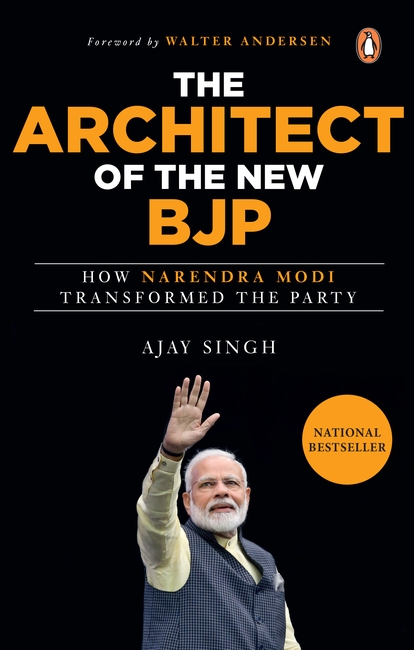
In less than forty years of its existence, the Bharatiya Janata Party has become the world’s largest political party and continues to go from strength to strength in Indian politics. Although its historic rise may seem organic to some, there is much internal deliberation and planning that has aided the growth of this 180-million-member organization.
The Architect of the New BJP uses in-depth research and concrete examples to explain how the BJP has transformed over the decades. It reveals lesser-known contributions, like Prime Minister Narendra Modi’s experiments with traditional methods of party-building, his keen eye for detail and the different innovative methodologies to expand the party. Ajay Singh not only examines the past of the party, including the vision of its founders, but also provides a glimpse into the future of the party. Based on extensive interviews with many party workers, leaders and observers, this is the story of how the veterans of this cadre-based party, appreciating its limitations, developed a unique Indian model that eventually transformed the BJP into the election-winning machine it is today.

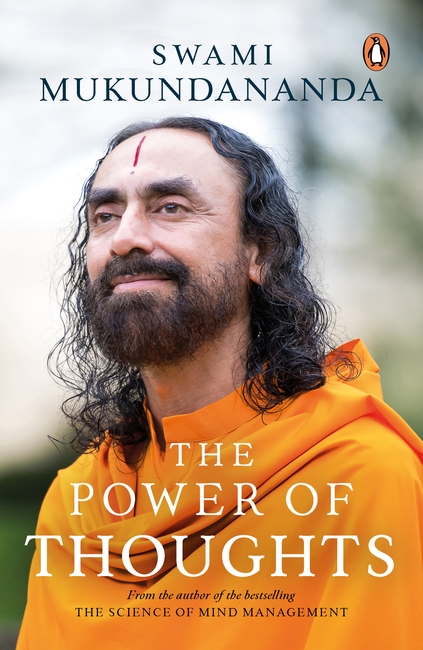
Incredibly, the ingredients of a hugely successful life cost nothing at all. In fact, we mass-produce 60,000 of them every day. These are the thoughts that our mind creates. They are responsible for the happiness and distress we experience. They are the precursors of all we do. We grapple with improving our actions, only to find our attempts undone by impure thinking.
If we focus on transforming our thoughts instead, incredible results will accrue from a fraction of the efforts. Since all aspects of our life are so strongly linked to our thoughts, we have much to gain by deepening our understanding of them.
In this book, Swami Mukundananda, a world-renowned spiritual teacher from India and an internationally acclaimed mind-management authority, will teach you about watching your thoughts, directing them, dismantling harmful thought structures, creative thinking, meditation and much more. When you focus on revolutionizing your thoughts-the most fundamental aspect of inner personality-you will discover yourself evolving to divine heights to fulfil the purpose of your life.

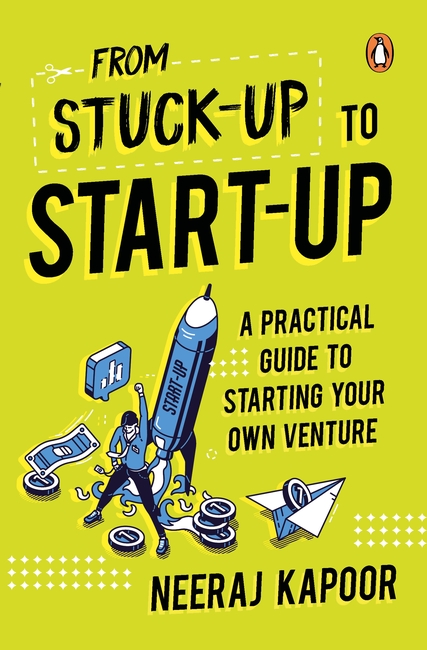
Stuck-up to Start-up is a step-by-step guide to launching your start-up without quitting your job and exploring new opportunities in a post-covid-19 world. It is suitable for those millions of professionals who are stuck in their job traps and who have dreams of starting someday but don’t know ‘how’. The book answers the ‘how to’ questions that most people have but don’t know whom to ask.
The book has been carefully crafted to become an essential handbook for students at business schools, and for every professional worth his dreams. Neeraj brings the flavour of sharing from his life that’s vivid and real to the reader, which connects with the reader and has high retention value. This enables readers to enhance their clarity, decision-making and effectiveness at work and in life to launch their start-up and rapidly scale up with ease, grace, power and freedom.

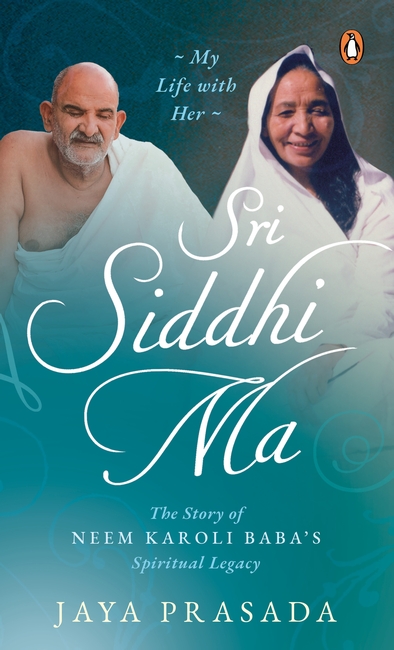
Revered the world over, Baba Neem Karoli Maharaj, known as Maharaj ji, emphasized ‘manav seva hi madhav seva hai.’ ‘Service to humanity is service to god.’ His simple boundless love and compassion drew deep devotion from the east and the west.
The beacon of light taking forward Maharaj ji’s spiritual legacy was his chosen disciple Sri Siddhi Ma, the silent saint of Kainchi. Living by the highest precepts of renunciation and devotion to the guru, Ma remained the eternal disciple to the eternal guru, Maharaj ji.
This perceptive account by Jaya Prasada reflects her journey with Sri Siddhi Ma. Prasada, though not a strong believer in her early days, was eventually blessed with a life with Sri Siddhi Ma, and imbibed through Ma the divine essence of Maharaj ji.
Filled with anecdotes of her time with Ma and Maharaj, and accounts of the godly and supernatural events Prasada saw with her own eyes in the company of such strong, spiritually charged figures, she recounts their journey as well as her own with such sensitivity, conviction, wit and charm that it is enough to turn any non-believer into a believer.

In Untangling Conflict, the authors guide families in business through an introspective process that helps them determine their own bespoke approaches to preventing and mitigating conflict. Drawing on decades of lessons learned from supporting families and the businesses they own, the book brings conflicts to life through the lens of a fictional family and the business conglomerate they own. Readers of the book begin by grounding themselves in the defining attributes of their family and their relationship with the business through deep reflection. The book untangles messy threads of conflict within family businesses by examining issues laden with emotion, those related to the rights, benefits, and restrictions of ownership, and issues of business strategy. By exploring these three threads of conflict, the authors help families understand, prevent, and respond to disagreements, without disrupting the family business. Lastly, the book offers tools to align expectations and reduce friction between families, non-family employees, and the partners of the family-owned businesses.
Set in India during the time of the Buddha, Siddhartha is the most influential and famous novel of Nobel Prize-winning author Hermann Hesse.
Desiring spiritual fulfillment, Siddhartha, a young Brahmin, leaves his home to become an ascetic-and on his journey meets the wise Gotama, the famous Buddha. But Siddhartha believes no teacher, however great, can discover meaning for an individual-and so continues alone on his quest to find himself.
In his journey Siddhartha experiences life as a pious brahmin, a Samana, a rich merchant, a lover, and a father-shifting between decadence and asceticism as he navigates the material world. Still unhappy, still unfulfilled, Siddhartha is on the verge of giving it all up when he encounters the ferryman. The events that follow change his life forever.
Thought-provoking, inspiring, and utterly profound-this spiritual novel has influenced generations of readers, writers, and thinkers.