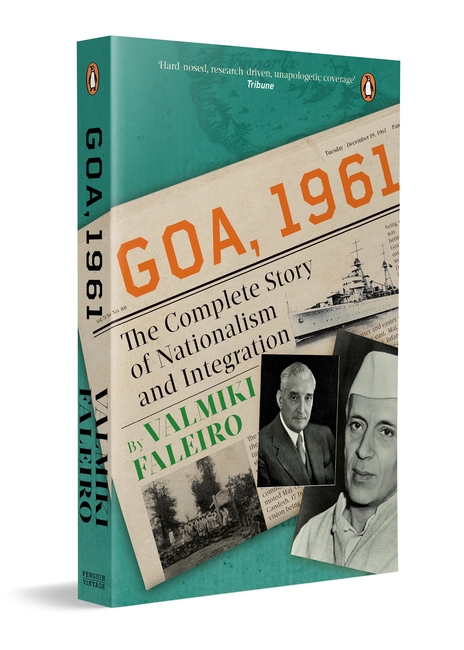
The subject of the liberation of Goa in 1961 and its integration into the Indian Union in 1962 is sparsely understood at best and misunderstood at worst. What were the events that led to the thirty-six-hour military operation-possibly the first since Independence that occurred entirely at India’s initiative? What was the political climate within Goa? What role did Goans themselves play?
In this gripping account, former journalist Valmiki Faleiro covers a wide canvas in detail, including the entire story of Operation Vijay, the events that preceded it and those that followed. The diplomatic efforts, the arguments, the run-up, the build-up, the actual ops and their aftermath in Goa, within India and internationally-all of it is vividly related in this nuanced telling. Faleiro lucidly outlines the prevailing political atmosphere and its changing character, the part played by indigenous independence movements and freedom fighters leading to the liberation of Goa, and the impact of its consequent assimilation into India.
Extensively researched and extremely well-written, Goa, 1961 is a seminal book on an important subject and a must-read for anyone interested in Indian history.

Impactful Communication is a highly practical and useful book based on the author’s first-hand experience in the field of communication. In today’s world of artificial intelligence and social media, where organizations demand sharp communication skills, this book carries tools to effectively deal with the conventional and nonconventional aspects of verbal and nonverbal communication in varied situations and with different stakeholders. It discusses the art of communication by evaluating its barriers and the seven vital Cs of communication. While highlighting the importance of listening, the book explores the challenges of communication in the era of artificial intelligence and shares insights into how one can maintain the personal touch of communication in a highly non-personalized world. Impactful Communication is a user-friendly guide with numerous enlightening illustrations for new professionals and managers entering the corporate world.

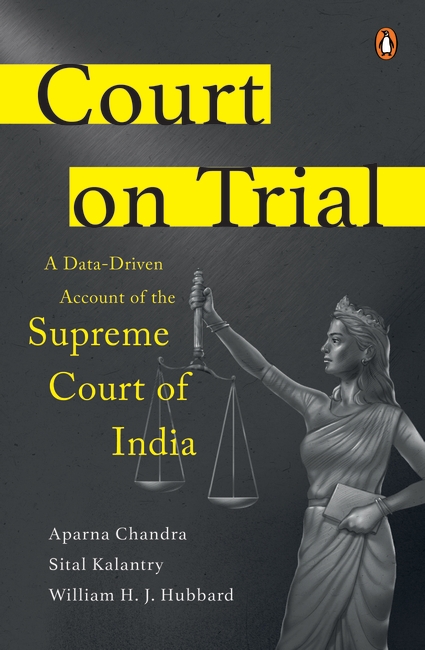
The Indian Supreme Court was established nearly seventy-five years ago as a core part of India’s constitutional project. Does the Court live up to the ideals of justice imagined by the framers of the Indian Constitution? Critics of the Supreme Court point out that it takes too long to adjudicate cases, a select group of senior advocates exercise disproportionate influence on the outcome of cases, the Chief Justice of India strategically assigns cases with an eye to outcome, and the self-appointments process-known as the collegium-is just another ‘old boy’s network’. Building on nearly a decade of original empirical research, this book examines these and other controversies plaguing the Supreme Court today. The authors provide an overview of the Supreme Court and its processes which are often shrouded in mystery, and present data-driven suggestions for improving the effectiveness and integrity of the Court.
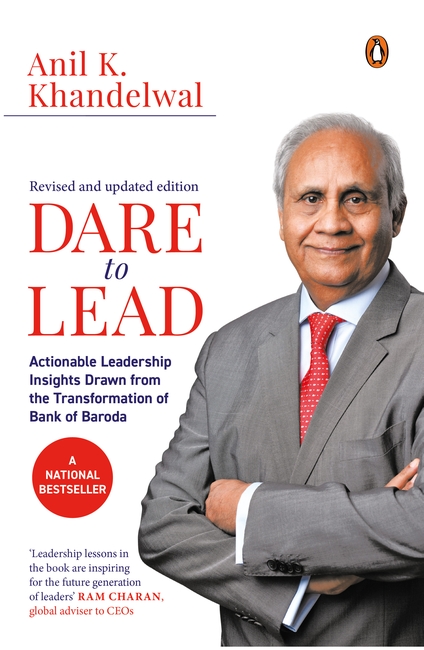
Dare to Lead is the fascinating story of how Anil K. Khandelwal transformed Bank of Baroda (BOB) from being just another public sector bank into one of the most valuable brands in Indian banking.
This is the story of the leadership challenges, management solutions and personal and professional excitement the author experienced in transforming the 97 year old bank into a modern, tech-savvy, customer-centric bank.
This book is an excellent blueprint for undertaking transformation in large, geographically dispersed public sector enterprises. It describes how a large-sized bank was transformed on all parameters with clear vision, execution discipline, customer centricity and people engagement. The author emphasizes that large-scale transformation can be undertaken successfully only if the CEO shows courage to change the status quo and mobilize the human effort within the organization.
The story of BOB’s transformation has captured international attention and finds its mention in Harvard Business Review, Human Resources Development International and the book The India Way by the Wharton School faculty.
Shagun knows he will never be the kind of son his father demands. After the agonizing deaths of his beloved twin sisters, he flees his own guilt, his mother’s grief, and his father’s violent disapproval by enrolling at an all-boys boarding school. He forms tumultuous and eye-opening relationships there, but doesn’t find true belonging till he encounters a traveling theater troupe performing the myths of his childhood.
Welcomed by other storytellers, Shagun thrives-easily embodying mortals and gods, men and women-and embraces a life on the move, far from his father’s clutches. When Shagun meets Marc, a charming photographer, he seems to have found the love he always longed for. But not even Marc can save him from his lingering shame, nor his father’s ever-present threat to send him to a conversion center. As Shagun’s past begins to engulf him once again, he must decide if he is strong enough to face what he fears most, and to boldly claim his own happiness.
Set in 1990s India, The Sea Elephants is an utterly immersive and spellbinding novel, both dark and beautiful, harrowing and triumphant. An ode to the redemptive joys of storytelling, Shastri Akella’s soulful debut is a celebration of hard-won love-of others and for ourselves.

Change is hard but does it need to be painful? What if there was a more intrinsically motivating and nourishing way to drive change?
Play to Transform is a book that challenges the traditional mindset of business leaders and encourages them to tap into their inner child to accelerate transformation with purpose. The book argues that we are all born creative geniuses with an innate ability to empathize deeply with others, but somewhere along the way, we have lost touch with these qualities. In the post-pandemic world, leaders need to be more empathetic and agile than ever before, and a conscious shift in mindset is required to achieve this.
Drawing on real-life examples, contemporary shift strategies and key implications for organizations, the book demonstrates how play can be used as a catalyst for transformation and innovation. By providing a psychologically safe and co-creative environment that normalizes failure, the book shows how organizations can encourage their employees to express themselves more freely and make the necessary shifts to embrace change and find harmony in chaos. The book challenges the myth that play is frivolous and cannot be used for serious work, offering a fresh perspective on how to conduct business with more heart and soul.
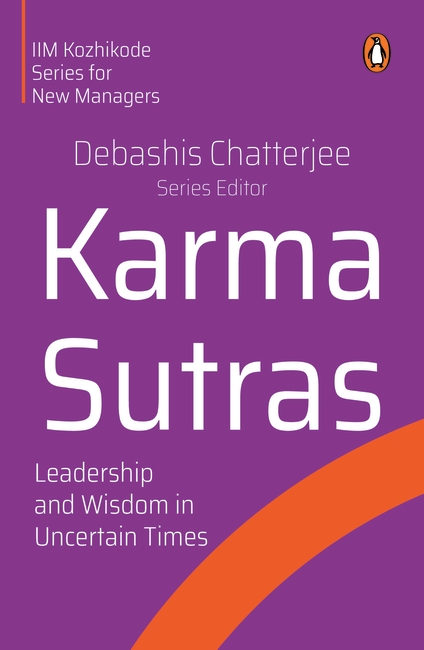
Karma Sutras decodes the secrets of effective leadership in these uncertain times. It is a blueprint for success in the organizational and personal sphere. The book contains management mantras from one of India’s foremost thought leaders. It will help you navigate the technology-driven culture of 21st century business. Karma Sutras throws light on the leadership practices needed for the VUCA world. It vividly encapsulates the scientific and spiritual truths about organization, work, self-mastery and the purpose of leadership in the post-Covid world. Laced with small, insightful narratives from current issues to motivating stories and relatable quotes, the book caters to aspiring leaders and first-time managers alike. It provides deep anchors in spirituality for managers struggling in a disruptive world. Finally, Karma Sutras will teach you the art of effective followership. As the author rightly says, ‘. . . in each follower there is an emerging leader’.
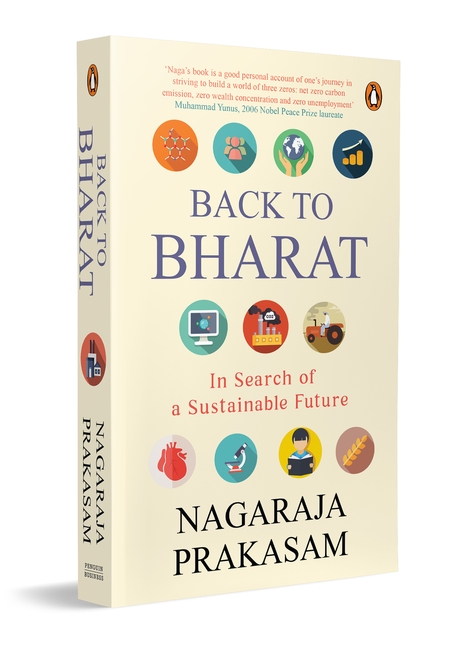
Back to Bharat: In Search of a Sustainable Future is a book that addresses the present economic dilemma for Indian entrepreneurs and consumers, looking at the past and present situation of both India and the developed world to find a way forward.
Written in an engaging and anecdotal style, the book is enriched with case studies from Nagaraja’s investment career. It consolidates many observations and insights from the experience he has as a professional, investor and mentor for entrepreneurs across the country. It strongly expresses the belief that India’s strengths are its people, problems and technology (PPT).
As it draws on real-life examples of struggle and success, the book illuminates many questions that are most relevant to our present dilemma, both in terms of economic development as well as environmental threats that compel us to look at more sustainable alternatives to patterns of production and consumption.

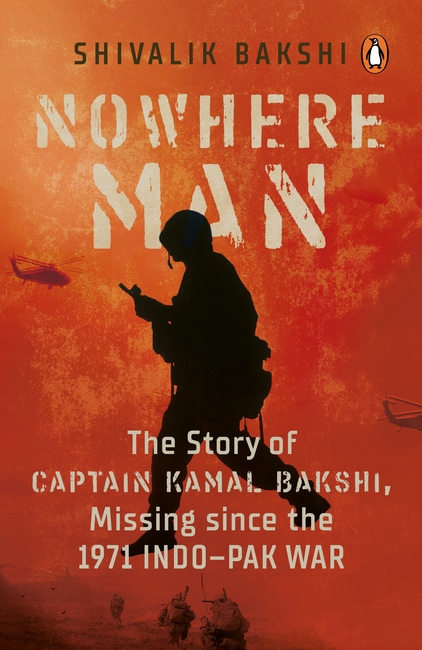
Capt. Kamal Bakshi fought in the 1971 Indo-Pak War and went missing after the Battle of Chhamb–the bloodiest battle of 1971. Although no one from his battalion had seen him get killed, no one had been able to locate his body. And so, the military declared him ‘Missing, Believed Killed’–the ambiguous status assigned to soldiers when their death cannot be confirmed.
However, six years after the war, the Indian government changed its mind. The Ministry of External Affairs announced in Parliament that Indian intelligence agencies have reason to believe that Pakistan had not been truthful when it handed over the list of Indian POWs in its custody. It went on to state the names of at least forty Indian soldiers still believed to be in Pakistani custody and one of the names was Kamal Bakshi’s.
This book has been written by his nephew Shivalik Bakshi. It is his story, recreated from his letters, diaries, recollections of those who crossed paths with him and published accounts of the Battle of Chhamb.

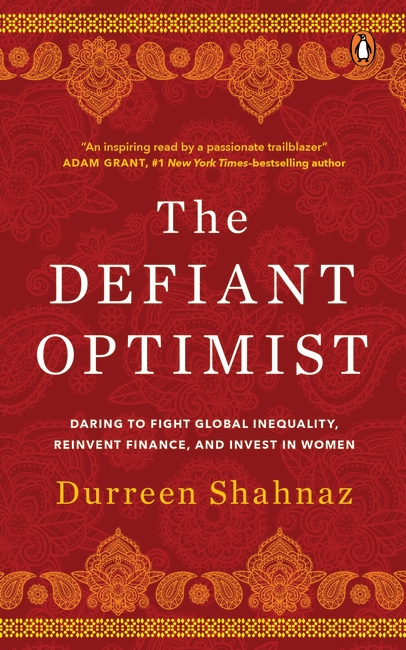
Global inequality is growing. Financial markets disenfranchise women, the 99 percent, and the planet itself. But what if we found the source of power and turned it inside out? What if we made the tools of the system available to all?
When she launched the world’s first stock exchange for social enterprises, Durreen Shahnaz started more than a new financial system; she sparked a movement. Defiant optimism-the stubborn belief that systems that enrich the few can be transformed for the good of the many-requires an indomitable spirit. In these pages, Shahnaz illuminates what investing in those excluded from networks of power and opportunity requires.
From growing up with constrained life chances, to working as the first Bangladeshi woman on Wall Street, to becoming a global leader in impact investing, Shahnaz takes us on a mesmerizing trek of innovation, compassion, and enterprise. We accompany her to villages in Bangladesh where she helps women entrepreneurs learn to proudly sign their names, and on visits to venture capitalists who walk past her to shake her male employees’ hands. We go to a garment factory where women labour for low wages, and to a town in India where microfinance offers women enough capital to run grocery stores and tailor shops. Along the way, the birth of her two daughters only fuels her relentless pursuit of a world where girls are valued. Finally, armed with financial backers and a plan, Shahnaz successfully launches the Women’s Livelihood Bond™ Series, the world’s first tradable financial product for investing in underserved women’s livelihoods.
Changing how systems work-and who they work for-isn’t for the faint of heart. But The Defiant Optimist offers strategies for placing women, the underserved, and the planet at the heart of systems. Together we can locate the levers of power and pull them defiantly in a new direction.