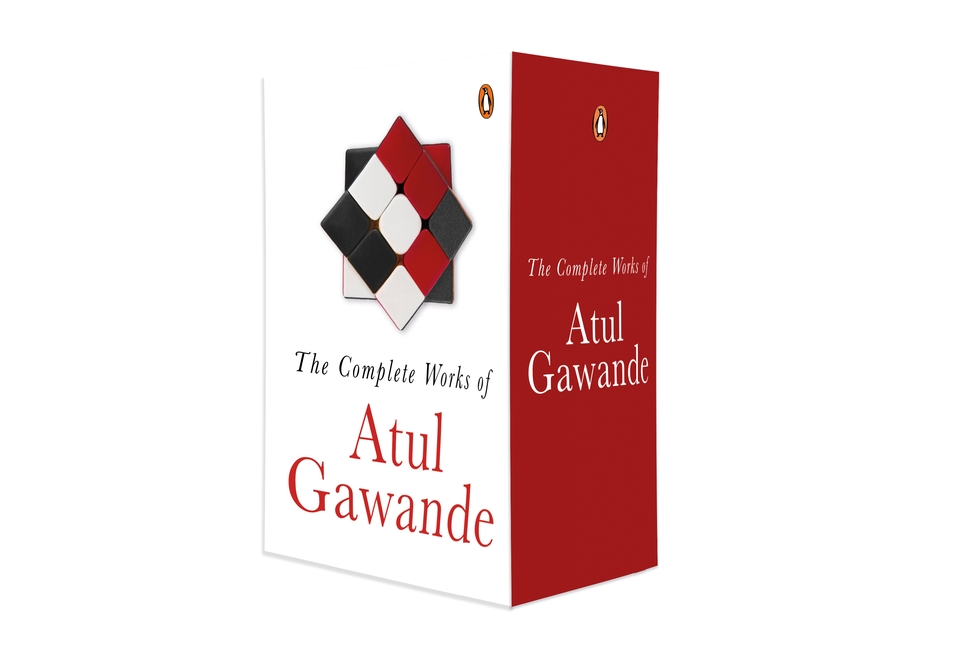
Combined box set of all the bestselling books by Atul Gawande, acclaimed surgeon and writer
In The Checklist Manifesto, Gawande finds a remedy to tackle immensely complex problems with the humblest of techniques: the checklist. Through riveting stories from the fields of medicine to disaster response, investment banking to skyscraper construction and businesses, he demonstrates how the checklist can help anyone improve their own and others’ lives.
In Being Mortal, Gawande argues that an acceptance of mortality must lie at the center of the way we treat the dying. Using his experiences (and missteps) as a surgeon, comparing attitudes toward aging and death in the West and in India, he provides an extraordinary account of loss. Questioning, profound and deeply moving, Being Mortal is a masterpiece.
In Better, Gawande’s gripping stories take us to battlefield surgical tents in Iraq, delivery rooms in Boston, a polio outbreak in India, and malpractice courtrooms in the US. He discusses the ethical dilemma of lethal injections, examines the influence of money on modern medicine, and recounts the contentious history of hand-washing. And as in all his writing, he gives us an inside look at his own life as a surgeon.
In Complications, Gawande performs surgery on medicine itself, laying bare a science that is complicated, perplexing and profoundly human. Dramatic true stories explore how mistakes occur, why good surgeons go bad, and what happens when medicine comes up against the inexplicable.

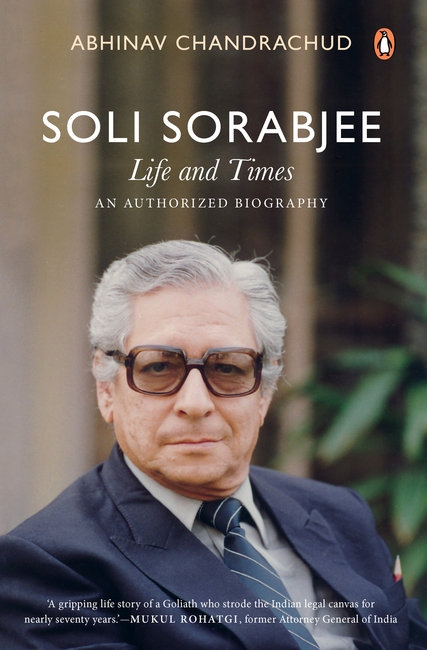
The first authorized biography of Soli Sorabjee
‘A gripping life story of a Goliath who strode the Indian legal canvass for nearly seventy years.’ – Mukul Rohatgi, former Attorney General of India
‘Superbly researched, this book by Abhinav Chandrachud is a must read. ‘ – Madhavi Goradia Divan, Additional Solicitor General in the Supreme Court of India
How does a Parsi lawyer, deeply influenced by the principles of Roman Catholicism, fall in love with a Bahá’í and go on to become the Attorney General of India for a Hindu nationalist BJP government? How does a boy with a broken leg, who studied in a Gujarati-medium school, and lost his father at the age of nineteen, go on to mount a heroic defense of the Janata government’s decision to dissolve Congress state legislatures (in 1977) in the Supreme Court? How does a newspaper columnist who admires Nehru, who criticizes the BJP for being ‘obsessed’ with ‘demolishing mosques’ and advises them to replace ‘Hindutva’ with ‘Bharatva’ or ‘Indianness’, get chosen by Prime Minister Vajpayee to represent the government in the Supreme Court in many cases, including the Ayodhya case? How does a lawyer with a humdrum customs and excise law practice, whose grandfather sold horsedrawn carriages in Bombay, become a U.N. human rights rapporteur, and repeatedly defend the fundamental right to free speech and expression in the Supreme Court of India?
Definitive, comprehensive and absolutely unputdownable, this first biography of Soli Sorabjee opens a window into the life and times of one of India’s foremost constitutional experts.

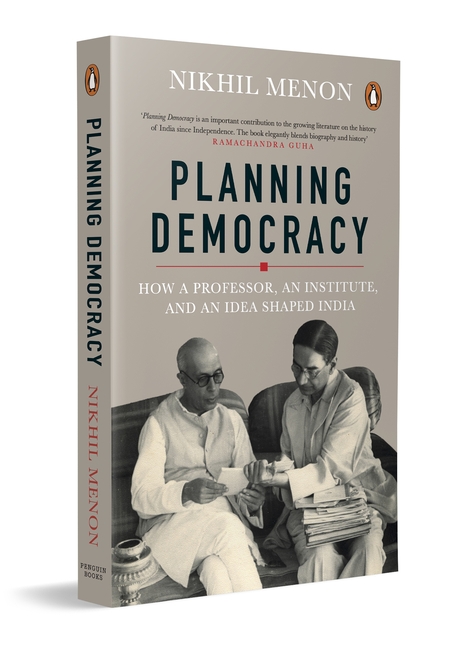
India’s Five-Year Plans were one of the developing world’s most ambitious experiments. After nearly two centuries of colonial rule, planning the economy was meant to be independent India’s route from poverty to prosperity. Planning Democracy explores how India married liberal democracy to a socialist economy. Planning not only built India’s data systems, it even shaped the nature of its democracy. The Five-Year Plans loomed so large that they linked surprisingly far-flung contexts-from computers to Bollywood to Hindutva.
In this compelling history, Nikhil Menon brings the world of planning to life through the intriguing story of a gifted scientist known as the Professor, a trail-blazing research institute in Calcutta, and the alluring idea of ‘democratic planning’. Set amidst global conflicts and international debates, Menon reveals how India walked a tightrope between capitalism and communism. Planning Democracy recasts our understanding of the Indian republic, uncovering how planning came to define the nation and revealing the ways in which it continues to shape our world today

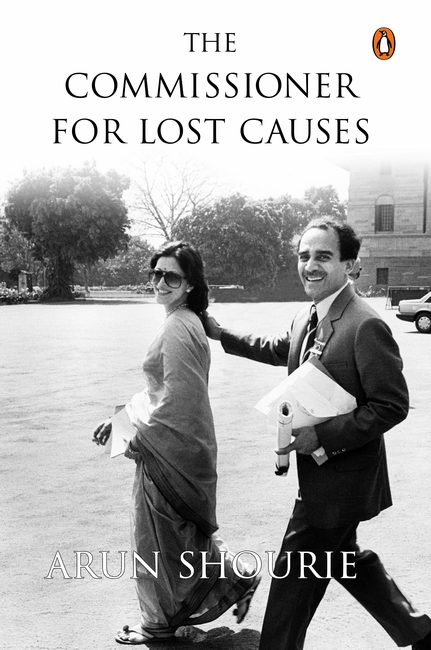
The work done by Arun Shourie and his colleagues rocked institutions and governments: the freeing of 40,000 undertrials; revealing the Bhagalpur blindings; purchasing Kamla; dislodging a ‘Sultan’; foiling ‘strikes’; controverting Judges; battling privilege motions; courting contempt of court charges; nailing corruption, forgeries, lies, and the opportunism of rulers; uncovering suppressed reports… What lay behind these and the consequences that followed?
A comprehensive account of dramatic incidents like getting governments to swallow legislation against the press, unseating of chief ministers, a prime minister unspooling himself even as manoeuvres to unseat him are scotched, a deputy prime minister trying to dislodge colleagues with fabricated documents, people’s movements ending up as rivulets in the sand, The Commissioner for Lost Causes discusses Shourie’s innings, the calumny hurled at him, his dismissal, and his being recalled and removed again.
Delicious tales of characters from the noble to the colourful to the short-sighted to outright bounders: from JP, to a president, to prime ministers, a deputy prime minister, chief ministers, a conman, indignant editors, and of course a great warrior, the press baron, feature in this honest retelling of the life of Arun Shourie, the writer, former editor and minister who was acclaimed as one of the fifty ‘World Press Freedom Heroes’.

Travel far and wide with an Indian sailor and his endless love for the sea!
Imagine an infinite blue ocean and somewhere in the middle of it, tossed by wind and wave-a single boat. In it a solitary sailor.
This is the gritty, glorious and true adventure of Commander Abhilash Tomy, a former officer of the Indian Navy, who in 2012 set off on the journey of a lifetime. Without once stopping by land, he circumnavigated the world alone for 151 days, encountering deathly perils on choppy waters! No other Indian had sailed like this before. When he finally returned to India, Abhilash was awarded the Kirti Chakra for his heroism.
Dive right into this rousing tale of a real-life hero whose ambition, courage, and determination to circle the world on his little boat, will fire up your imagination. And as you travel with Abhilash across the ocean, learn about famous ships and sailors, legends and maps, winds and currents, and a score and more fascinating stories about our world of water.

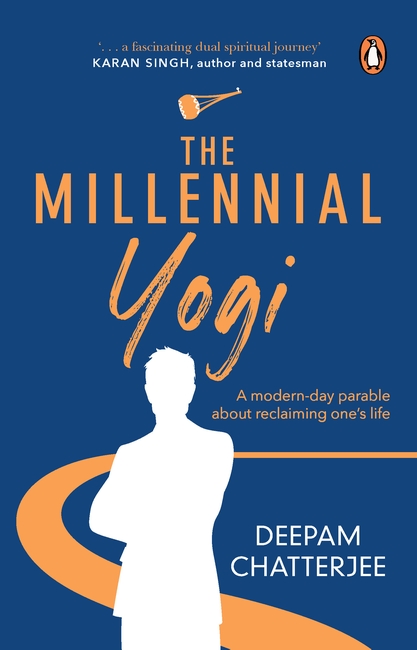
‘How do I fight? I see failure at every juncture,’ said Jay.
‘If we divide our life the way we sort laundry, we will never find peace,’ replied Vini.
Jayshankar Prasad, or Jay, has had a shady-yet-mercurial rise in his journey as an entrepreneur, but he has little idea as to what is around the corner. On the other hand, Vini, a mystic monk, has already been there, and knows what it is like to have it all and then lose it in an instant. Greed . . . power . . . money . . . are all transitory.
In a serendipitous twist of fate, Jay crosses paths with the enigmatic Vini and thus begins a cathartic and transformative journey. The Millennial Yogi is the zeitgeist parable for anyone searching for meaning and purpose in life. With prose that is both photographic and profound, Deepam Chatterjee has crafted an extraordinary tale of loss, redemption and the fight for one’s soul in an increasingly materialistic world.
India rightly aspires to be an upper-middle-income economy with its vast workforce gainfully employed
to have a decent standard of living. This, however, is a challenging proposition as India continues to
grapple with major economic policy issues. This book discusses the present state of India’s economy. It thematically explores the critical policy issues India faces today and suggests reforms for India to become a $10-trillion economy
by the mid-2030s. The book presents a wide-angled and comprehensive view of the state of the Indian economy. It analyses India’s macroeconomy in the light of its evolution since Independence and covers the performance of the Indian economy on macro parameters of growth, inflation, monetary management, credit management, foreign capital inflows, fiscal management and other important macroeconomic fundamentals. Covering major sectors of the economy, such as agriculture, industry and services, the book also captures India’s progress towards becoming a digital economy.

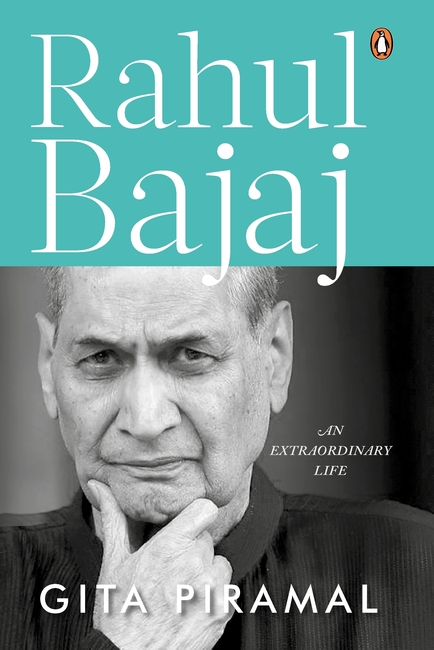
‘Integrity and character matter. Without them, no amount of ability can get you anywhere. In addition, you need courage–courage to make difficult decisions and courage to oppose something if your conscience tells you that you are right’–Rahul Bajaj
Rahul Bajaj is a billionaire businessman, the chairman emeritus of the Bajaj Group and a former member of Parliament. This book is not just the story of Rahul Bajaj but the story of India. The author takes us through the country’s transformation from the time Rahul Bajaj’s mother was imprisoned during the freedom struggle to the prism of his eventful life.
Based on unrestricted interviews, the book is full of anecdotes, business learnings and political asides. It is, at its core, a moving human story.

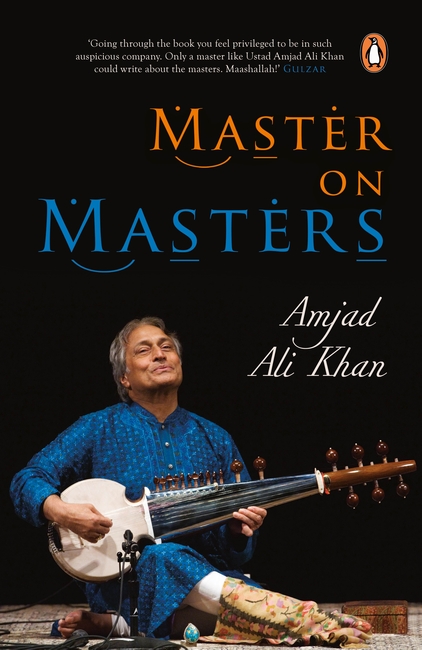
Veteran musician and sarod maestro Ustad Amjad Ali Khan writes a deeply personal book about the lives and times of some of the greatest icons of Indian classical music. Having known these stalwarts personally, he recalls anecdotes and details about their individual musical styles, bringing them alive.
Twelve eminent musicians of the twentieth century appear in the book – Bade Ghulam Ali Khan, Amir Khan, Begum Akhtar, Alla Rakha, Kesarbai Kerkar, Kumar Gandharva, M.S. Subbulakshmi, Bhimsen Joshi, Bismillah Khan, Ravi Shankar, Vilayat Khan and Kishan Maharaj. In writing about them, Amjad Ali Khan transcends the Gharana and north-south divide, and presents portraits of these great artists that are drawn with affection, humour and warmth.