



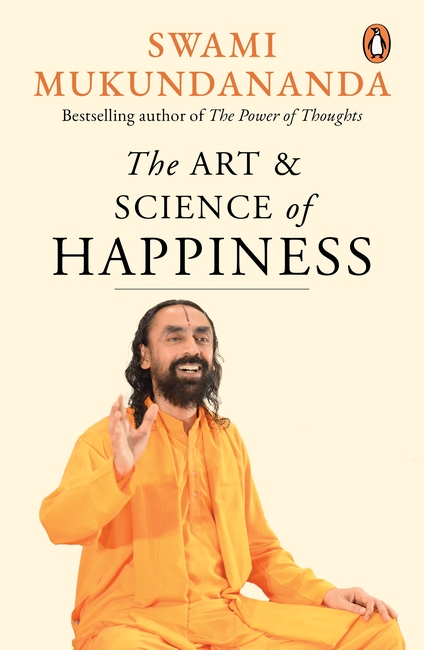
First 5000 copies will have Swamiji’s digital signature.
Happiness is a beautiful feeling. It floods our heart with gratitude and enriches us with the exuberance of life. Happiness is what makes living worthwhile. That is why we pursue it in all we do. Yet, despite our best efforts, it remains elusive. Why?
This is the puzzle we must solve in life. What is the secret of finding everlasting bliss? What is the art of experiencing joy that is immune to vicissitudes? And what is the science of achieving happiness that is not dependent on externals?
In this book, internationally acclaimed authority on mind management, renowned saint and bestselling author Swami Mukundananda draws on the ancient wisdom of the scriptures and current scientific research to address these questions. He also explains strategies for happiness in relationships, at work and in the face of adversity. By applying these concepts in your daily life, you can be happy everywhere and at all times.
Catagory: Non Fiction
non fiction main category
Impactful Data Visualization
Water, water, everywhere, nor any drop to drink,
Data, data, everywhere, no time to stop and think!
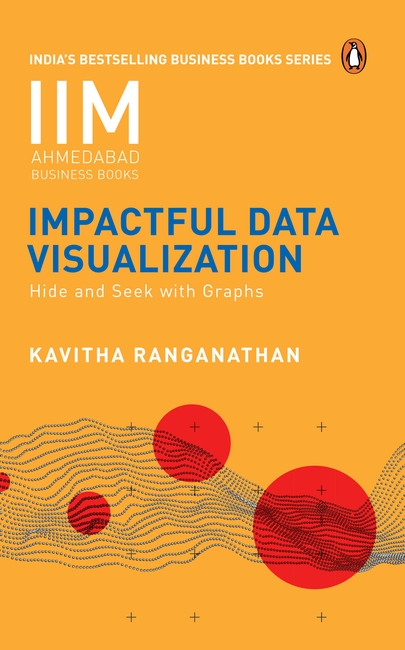
There is scarcely a role that does not require us to understand, analyse and present data. Charts, graphs and maps are everywhere. However, many of these data visuals leave the viewer bewildered, confused or (even worse) with an incorrect understanding of the data. In contrast, if designed well, data visualizations help us make sense of data and communicate our insights better.
Bringing her clear classroom-teaching style, which has helped hundreds of data wranglers, to this book, the author walks you through the myriad ways that graphs can mislead, helping to spot visualization traps and prevent misinterpretations. She illustrates core design principles for creating truthful and effective data visualizations, assisting you to master the art and science behind creating impactful and accurate graphs. Packed with examples to clearly explain the dos and don’ts of data visualization and backed by empirical research, this book will transform the way you create and analyse graphs and charts.
I’m a Climate Optimist
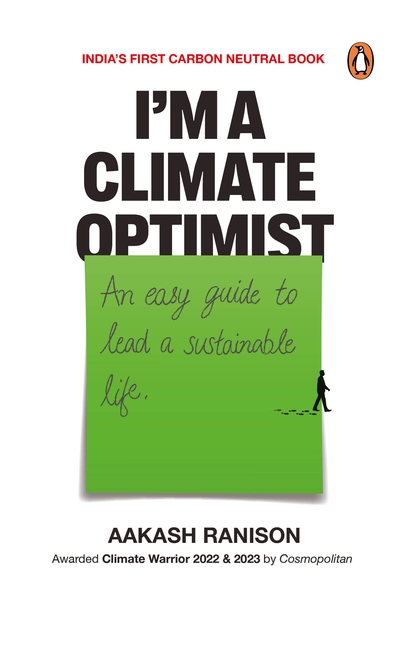
Whenever climate change as a topic pops up in a conversation, someone ends the conversation with ‘What can I do about it?’ This book is the answer to those all, what can I dos. Covering all the aspects of day-to-day life like food, textile, transportation, tourism, beauty, home, education, business, etc along with Industry specific expert comments.
Climate change is mostly talked about in a very technical language and is full of jargon like “Climate Emergency, Carbon Neutral, Carbon Positive, Net-Zero, Below 2°C” which is one of the biggest issues that the majority of people don’t understand the problem. This book focuses on simplifying climate change and sustainability so that everyone can understand and take action toward achieving the Sustainable Development Goals of the United Nations. If we learn to make conscious decisions regarding our consumption habits, we surely can get closer to achieving the target agreed upon in the landmark Paris agreement.
Get hold of this book to learn the art of making our planet more liveable and sustainable.
The Camel Merchant of Philadelphia
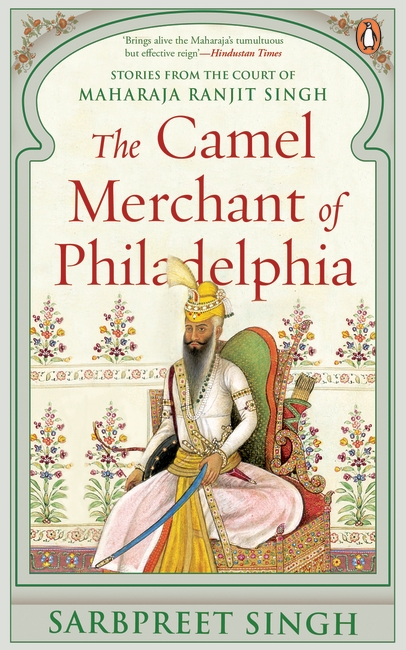
In 1801, the young scion of a petty fiefdom in the Punjab was invested with the title of Maharaja of Punjab. The young man, whose name was Ranjit Singh, went on to carve out a kingdom for himself that stretched from the borders of Afghanistan in the west to the boundaries of the British Raj in the east. It included the lush hills and valleys of Kashmir, the barren mountains of Ladakh and the fertile plains of his native Punjab. The British valued him as an ally who would keep their western frontier safe and while they coveted his kingdom, they did not dare to engage in military adventures in Punjab during his lifetime.
The Camel Merchant of Philadelphia is an examination of Ranjit Singh and his times that focuses on a wide array of characters that populated his court. All these stories combine to present a nuanced and complex image of Maharaja Ranjit Singh through his interactions with these characters. The work humanises Maharaja Ranjit Singh and presents him as the brilliant man he clearly was, without attempting to gloss over his flaws and foibles.
Welcome to Aaraampur
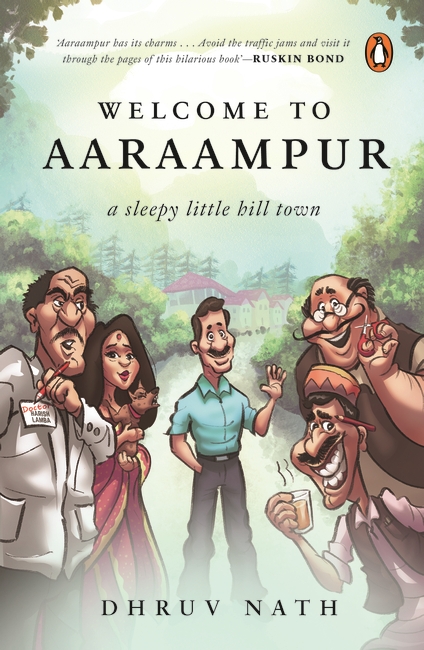
Welcome to life in the sleepy little hill town of Aaraampur, where you will meet Kaptaan Sahib, who got his name because he ‘almost’ got into the Army. And the Pahalwaan Nai, a wrestler who used his skill of pulling out the hair of his opponents to become a barber. And of course, Chetu, the painter who specialized in making the walls of his customers’ homes appear patchier than earlier.
You will visit the classy Aaraampur Club, which would put the lesser-known Delhi Gymkhana Club to shame. You will also figure out why Aaraampur Cabs-that famous startup-was never available between 2 p.m. and 5 p.m. Not to forget the famous engineering college of Aaraampur, popularly known as ‘The PITS’.
Sit back and enjoy this charming and amusing book which will momentarily transport you far from the din of everyday life to a slower, more agreeable rhythm.
Faf Through Fire

Faf through Fire is far more than just a book about cricket. It is the story of a man who happened to play the sport at the highest level.
This brutally honest, fascinating, introspective work provides a unique insight into the mind and heart of one of South Africa’s most interesting and charismatic cricketers. There is the public persona-the tattooed, fashion-conscious, mentally tough, immensely popular and yet, at times, misunderstood Du Plessis. And then there is the authentic Faf. It took him years to connect with this side of himself, but when he did, it shaped his relationships with people and, ultimately, his captaincy of the Proteas.
In this book, Du Plessis lays bare the story of his growth, from a youth with a questionable moral compass outside of cricket to a leader known for his integrity, values, honesty and empathy for his teammates. He reflects on how influential leaders, such as Gary Kirsten, Stephen Fleming, Doc Moosajee, Graeme Smith, A.B. de Villiers, Owen Eastwood, Russell Domingo, Ottis Gibson and M.S. Dhoni, helped mould him into a man who leads with grit, purpose and a love of people. He also explores the destructive relationships, offering his perspective, in devastating detail, on his final years of international cricket. Neither the changing room nor the boardroom is off limits in this no-holds-barred account.
Madam President
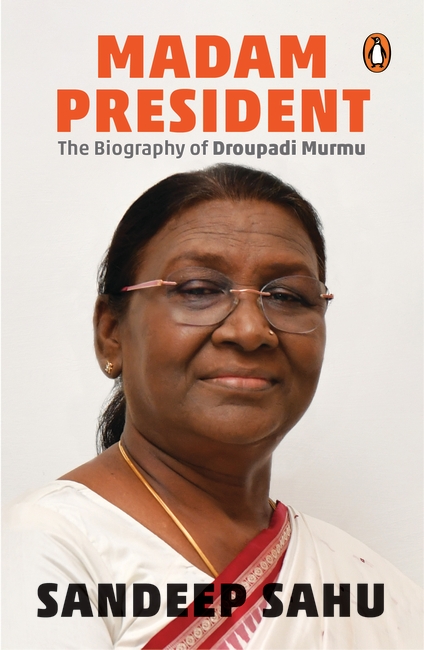
Madam President is the first-ever comprehensive and authentic biography of Droupadi Murmu, the fifteenth President of India, by senior journalist Sandeep Sahu. Murmu’s long and eventful political journey is a story of true perseverance and inspiration. Having battled early years of struggle in securing quality education, being struck by a series of personal tragedies such as the loss of her husband and two sons in quick succession,
and suffering electoral victories and losses, Murmu has risen through her circumstances with grace, fortitude and resilience that make her the well-revered leader she is today.
In this stellar biography, Sahu writes on Murmu’s life’s work, a journey that started as councillor in the Rairangpur civic body, having previously also served as Governor of Jharkhand, and reaching the Rashtrapati Bhavan. As the first Indian President from the tribal community, her phenomenal rise as an earnest and ambitious young woman, who would, with dedication and rigour, go on to become the most powerful woman in the country, presents a fascinating study of democratic empowerment in India.
Office Secrets

The corporate masks we wear hide many a secret. The most potent are not the secret financial numbers or confidential strategy documents hidden away in locked drawers or in safes but the simple ones-good filter coffee, generosity and thirty minutes of me-time.
This book offers a selection of fascinating and useful secrets that can help you be far more successful at your workplace. As a bonus, they can make you happier as well. You will find within a range of subjects-whether the best methods of fighting exhaustion, organizing your work desk, the power of listening, why kindness is so important, workplace lessons from Hercule Poirot and what you can learn from the cookies that your colleagues eat.
Harish Bhat wields his pen with his signature insight to delight, inspire, provoke and change the way you see offices forever.
Small Wins Every Day

Nothing is as daunting as a goal. Many of us struggle with achieving them – be it in life, health, love and career. When you set unrealistic goals and keep failing, your intelligently designed brain tries to protect you from the pain and negative emotions that come with failure.
In Small Wins Every Day, Luke Coutinho presents a simple premise with powerful results, teaching you to rewire your brain for success. The hack? Break down your goals into small wins that you can achieve every day. Stacked over time, these contribute to significant lifestyle changes, good health and happiness.
Simple and bite-sized but packed with a punch, here are 100 wins to change your life.
The Boy Who Wanted to Fly: J.R.D. Tata (Dreamers Series)

Before Jeh started India’s first airline and changed the way the nation travelled, he was a boy who dreamt of flying.