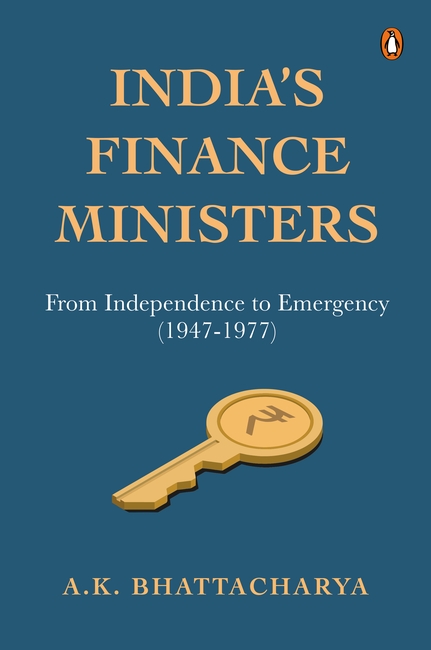
Independent India has so far witnessed twenty-eight finance ministers. But only a handful of them could leave their mark on the exchequer or North Block, the headquarters of the Indian finance ministry. From Independence to Emergency: India’s Finance Ministers 1947-1977 is the story of India’s unforgettable finance ministers who shaped India’s economy in the first thirty years after Independence. The book highlights the significant difference that these finance ministers made to the management of the Indian economy and to the policy evolution of the government, and who thus left an indelible mark on the psyche of Indian citizens. It attempts to measure the impact these decisions left, not only on India’s economic system but also on its political system, and looks at to what extent the decisions were influenced by the socio-economic backgrounds of the finance ministers.
Full of interesting anecdotes, the book is the first in-depth account of the crucial role these finance ministers have played in the functioning of India’s economy.

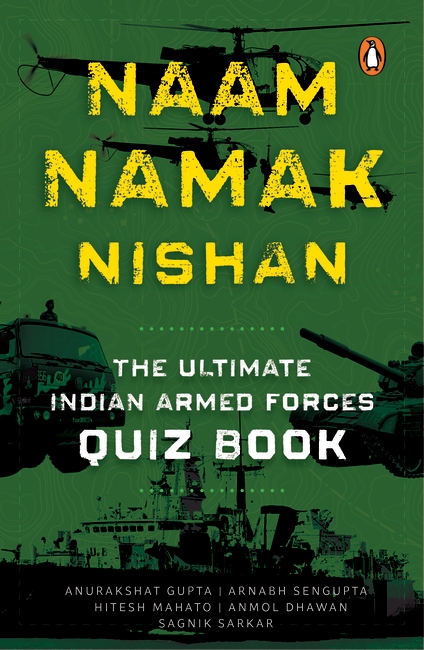
Do you know why the Indian Navy counts ‘One, Two, Six’ instead of ‘One, Two, Three’ while doing group tasks?
Or that the Intelligence Bureau was set up in response to an assassination?
Or that a Frenchman who had served three nations before turning thirty eventually rose to become the most powerful general of the Marathas?
Or that an army man gave his name to the highest mountain without ever having set foot on it?
Find out the answers to these and more as a team of quizzer-doctors from the Armed Forces Medical College (AFMC) Pune takes you on a journey across 250 questions, exploring trivia that connects the Indian Armed Forces to topics ranging from mythology, history and art to geography, fashion and sport.
This and more in a quiz book that will help you see the Indian Armed Forces through a lens you might never have seen before.
Happy exploring!

Manasi is a stalwart of Malayalam literature. With her unparalleled feminist writing and powerful voice, she has mastered the art of telling radical short stories. Through Subversive Whispers, a collection of some of her best work, she continues to defy patriarchy, question Brahminical hegemony and push narratives that subtly yet fervently challenge the status quo. The book introduces readers to the irreverent ‘Sheelavathi’, which explores the Madonna-Whore complex in a uniquely local context, ‘Devi Mahathmyam’, which sheds light on the price that women pay for being goddesses in mere name and stories such as ‘Spelling Mistakes’, ‘Square Shapes’ and ‘The Walls’, all of which explore romantic love with a piercing realism.
In stark and urgent murmurs that build up a fever pitch, these stories channel women’s voices that open up their inner worlds, struggling to capture the minutiae of their suffering. It is this whisper-like quality of Manasi’s storytelling that J Devika deftly conveys in translation, bringing the author’s prose to the English reader in an incendiary collection that is sure to cast light on the darkened chambers of patriarchy and the hidden recesses of women’s minds.

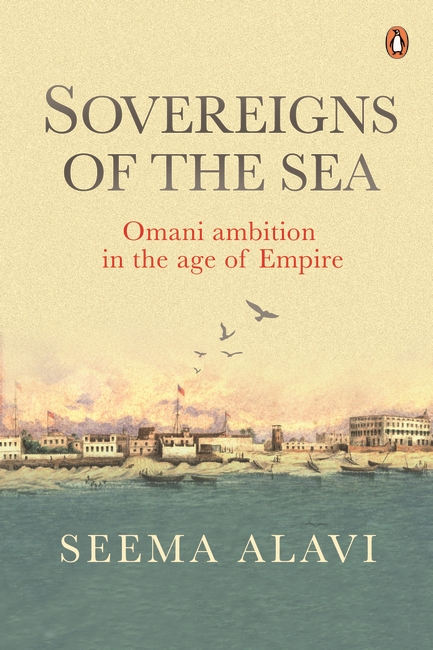
This definitive book on the Sultans of Oman is a thrilling historical account of their action-packed battles, daring expeditions, epic triumphs and ingenious politics in the long nineteenth century. It puts the optic of ‘micro-history’ on their fascinating lives as they navigated the geopolitics of their time and propelled the politics of the Western Indian Ocean. It offers a comprehensive and in-depth examination of the ambitions of the Omani patriarch Sultan Sayyid Said and his four sons and shows how integral they were to the political culture of the region.
Keeping a sensitive finger on the specific temporal and spatial moments in the maritime space that they navigated, it explores their key role in shaping the politics of the Ocean and nurturing the Omani Sultanate on their terms. The groundbreaking narrative sheds light on the role of the Sultans as agents of change, challenging the Eurocentric narrative that views the Indian Ocean as framed in the history of western imperialism and capitalism alone.
In addition to its academic rigour, the book is easy to read and engaging, making it an ideal resource for students, scholars and anyone with an interest in the history of the Indian Ocean, the Middle East and South Asia. Its fresh perspective and insightful analysis make it an invaluable contribution to the fast-growing field of Indian Ocean Studies.
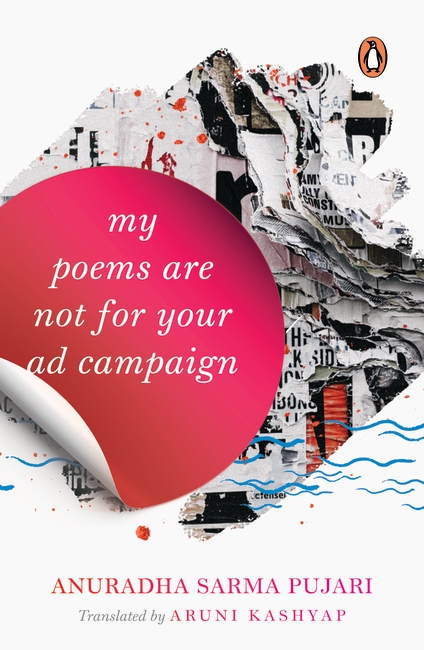
In a recently liberated economy characterized by speed, the commodification of women’s bodies and consumerist culture, Bhashwati is an increasingly disillusioned misfit who has, ironically, just started working in an advertising firm. But her life changes one day when she finds out about the mysterious Mohua Roy, a former copywriter with the company, whose desk Bhashwati now uses. The company employees remain tight-lipped about Mohua, who had left abruptly for reasons unknown. On finding a poem written by Mohua, Bhashwati decides to search for her. This takes Bhashwati to Calcutta’s lanes, where she meets people who sacrificed immensely for the same values that she finds eroded in a developing India. Who is Mohua Roy? Why is there a net of silence around her very existence? Will Bhashwati find Mohua? Will she leave her job, just like Mohua?
Hriday Ek Bigyapan, first published in Assamese in 1997, was an instant bestseller, going into tens of reprints in the next two decades. By taking a close look at the newly globalized India of the 1990s from a feminist lens, it poses questions about modern urban life that few Indian novels have been able to-questions that are still relevant today. Aruni Kashyap’s seamless translation from the Assamese makes this book a must-read.

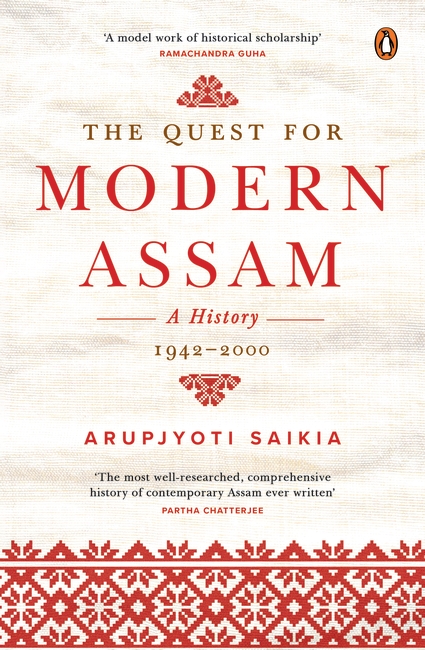
‘A model work of historical scholarship’-Ramachandra Guha
‘The most well-researched, comprehensive history of contemporary Assam ever written’-Partha Chatterjee
The crucial battles of World War II fought in India’s north-east-followed soon after by Independence and Partition-had a critical impact on the making of modern Assam. In the three decades following 1947, the state of Assam underwent massive political turmoil, geographical instability, and social and demographic upheaval, among others. Later, the truncated state suffered widespread unrest as various groups believed their cultural identity and political leverage were under threat. New social energies and political forces were unleashed and came to the fore.
Definitive, comprehensive and unputdownable, The Quest for Modern Assam explores the interconnected layers of political, environmental, economic and cultural processes that shaped the development of Assam since the 1940s. It offers an authoritative account that sets new standards in the writing of regional political history. Not to be missed by any one keen on Assam, India, Asia or world history in the twentieth century.

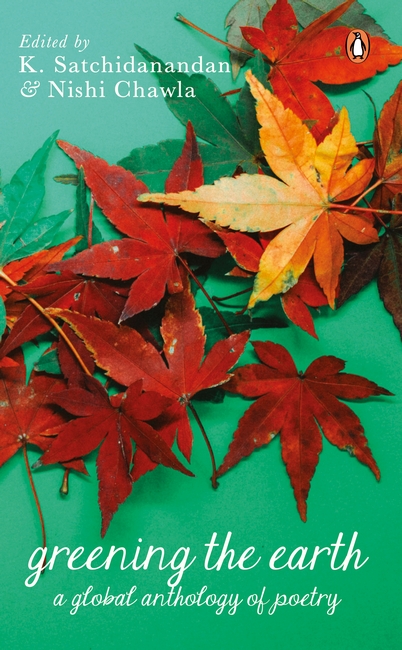
Greening the Earth is a rare anthology that brings together global poetic responses to one of the major crises faced by humanity in our time: environmental degradation and the threat it poses to the very survival of the human species. Poets from across the world respond here in their diverse voices-of anger, despair, and empathy-to the present ecological damage prompted by human greed, pray for the re-greening of our little planet and celebrate a possible future where we live in harmony with every form of creation.

Join rising YouTube star Alara, struggling but hopeful stand-up comedian Aarav, and zany but zen beach shack owner Ricky on a quest for the truth in You Live Only Once.
Discover yourself with Myra, Kabir and Sandy, three individuals who refuse to give up on themselves as they make life-changing decisions, in On the Open Road.
Embark on the adventure of growing up with Iti, Nishit and Shelly in Where the Sun Never Sets.
Bestselling author Stuti Changle’s trio of novels are life-changing stories of human relationships, of introspection, and of having the courage to follow your dreams.
Now together in this boxset, they promise to entertain, inspire and, of course, compel you to Make a Move.

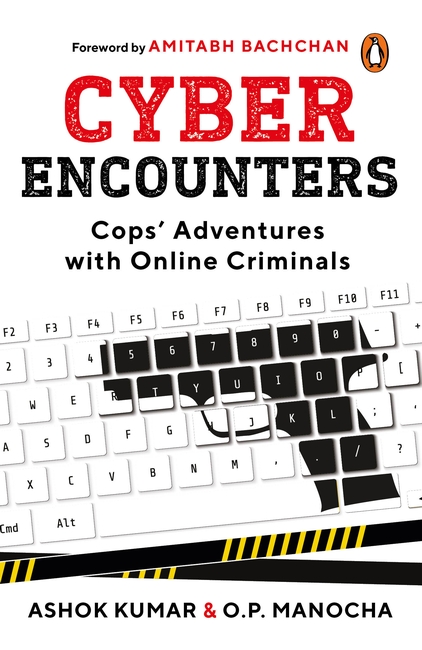
As technology has evolved, so has crime. Digital technologies have brought with them a whole host of crimes committed online-unsuspecting people are cheated of crores of rupees, duped by false advertisements on fake websites, incited to click on suspicious links through payment gateways, and download apps that give remote access of their device to criminals. From credit card fraud to phishing, the list is endless.
Cyber Encounters delves deep into this nebulous cyberspace, to bring twelve fascinating accounts of cybercrime. Ashok Kumar, DGP, Uttarakhand Police and a veteran in the systematic fight against cybercrime in the state, and OP Manocha, an ex-DRDO scientist, unfold a specific type of cybercrime in each tale, based on a true story. Packed with information on the crime, its investigation and the apprehending of the criminals, this illuminating insider account is a must-read.
Our planet is facing not one but two crises.
In a world where carbon emissions and climate financing are rightly rising up the agenda, there exists another catastrophe that is often overlooked but just as dire-the global collapse of our ecosystems. Siddarth Shrikanth’s The Case for Nature presents a compelling vision for tackling this other crisis by rethinking our relationship with nature in economic, social and even personal terms.
Shrikanth argues that we can create flourishing economies and societies by preserving and restoring our planet’s ‘natural capital’ and introduces the pioneers of this nature-positive revolution with vivid examples from across the world. But he also calls on readers to reflect on the roots of this crisis, drawing upon indigenous world views to show that nature must be woven into our modern societies, not set apart.
By offering a hopeful yet deeply pragmatic perspective on how we can exist in harmony with our living planet, The Case for Nature is a must-read for anyone seeking to understand how nature can help us forge a more sustainable future and what they can do to contribute to this vision.