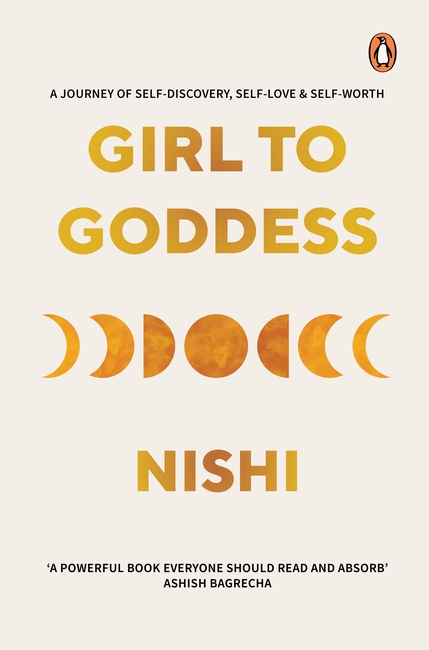
Girl to Goddess is a book of poetry written by popular Instagram poet Nishi. The poems in the book are deeply personal, touching on universal themes of struggle, pain and healing. Nishi writes candidly about her own struggles with finding happiness, dealing with relationships and the challenges she faced on her journey towards self-acceptance and self-love. She explores the idea of finding the inner divinity, or the goddess within, and how listening to this voice helped her find a sense of peace and purpose. She shares her personal journey of self-discovery and growth.
Through this collection of insightful poems, Nishi takes the reader on a journey of mistakes, failures, fears, lessons, perspectives and realizations about life, love and everything in between. She shares her vulnerabilities and opens up about her deepest emotions. Her words inspire readers to look inwards and embrace their own inner divinity, encouraging them to find their own path towards healing and self-love.
Girl to Goddess is a powerful and moving book of poetry that speaks to the struggles of the human experience and how one surmounts them. Nishi’s writing is a testament to the power of self-reflection and the importance of finding the goddess within, and her words will resonate with readers long after they’ve turned the final page.

How often have you put off eating healthy food, starting those morning walks, hitting the gym or practising yoga because you are feeling well anyway?
The refrain often is-will stop junk food from next week, will begin fitness from the new year or next month, will ensure adequate sleep from tomorrow. Almost always, starting wellness or staying fit is post-dated.
Dr Mathai’s ABC to Good Health tells you why you must not postpone all those good habits of staying healthy and what could happen to you if you ignore your fitness quotient. It tells you why you must not press the panic button only when you fall sick but practise wellness every single day to build a solid immunity and stay away from the common cold, fever and many everyday ailments.
The book gives you simple tips to practise daily wellness by way of eating right, sleeping enough and staying positive at all times. It gives you the health benefits of practising wellness from A to Z, ranging from fruits and nuts to vegetables and even activities that can make you feel like a rock star every single morning when you wake up. It is wellness today and every single day.

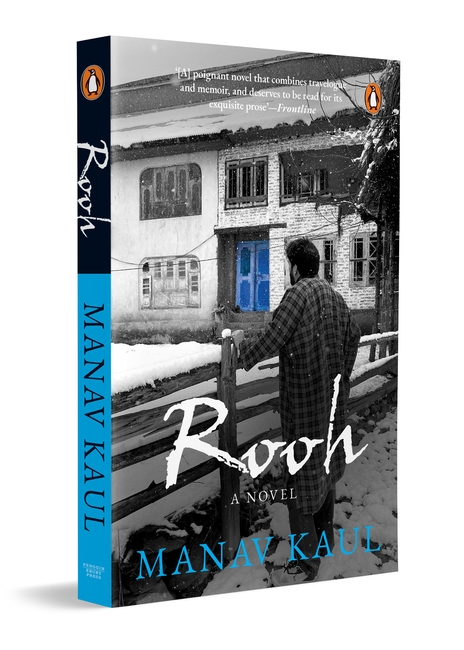
When Rooh tells Manav in a bar in New York that he ought to go to back home to the hills in Kashmir, he’s suddenly thrown into the loop of his past-a blue door, white walls and a house at the end of a lane. Soon, the seemingly small worlds in which his memories reside coalesce into a giant mass and envelop both his past and present, like dark clouds covering a brilliant blue sky.
Two young boys on the cusp of growing up, the cruelty of being a refugee in their own country, a father who is unable to come to terms with this confusing reality-an undercurrent of pain sweeps through his life. In this stream-of-consciousness novel, the protagonist, Manav, makes a physical and metaphorical journey back to Kashmir and relives the past as a part of the present. Rooh emerges as a deeply touching story of tender but broken people he meets along this journey.
Can an outdated or failed solution in one industry bring disruption to another?
Can a racing team improve industrial manufacturing productivity?
Can science fiction offer entrepreneurs valuable lessons in innovative thinking?
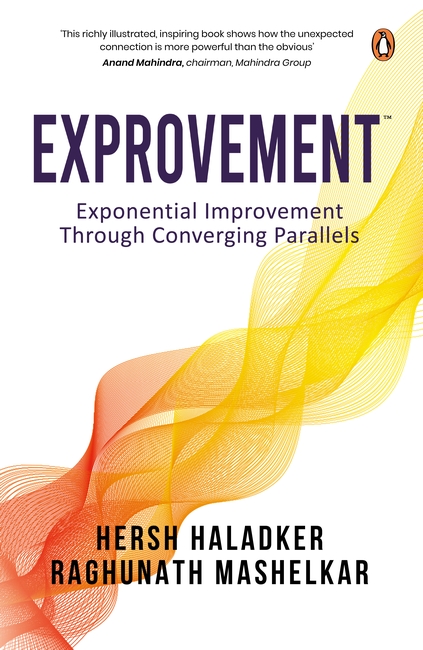
Such examples lie at the core of Exprovement, which is exponential improvement borne out of drawing parallels between the seemingly unrelated, much in the same way Henry Ford revolutionized the automotive industry by comparing and correlating his business with the meat-packing industry.
Through the various examples highlighted in this book, Hersh Haladker and Raghunath Mashelkar emphasize that searching for growth opportunities within an offering’s existing industry usually results in incremental improvement, whereas exponential improvement can be achieved by drawing parallels from outside of the current context.
This book will inspire leaders to look outward and find parallels, keeping in mind that ‘obvious’ comparisons can, at best, lead to improvement, whereas ‘unexpected’ ones can lead to exponential improvement and perpetuate a legacy of innovation.

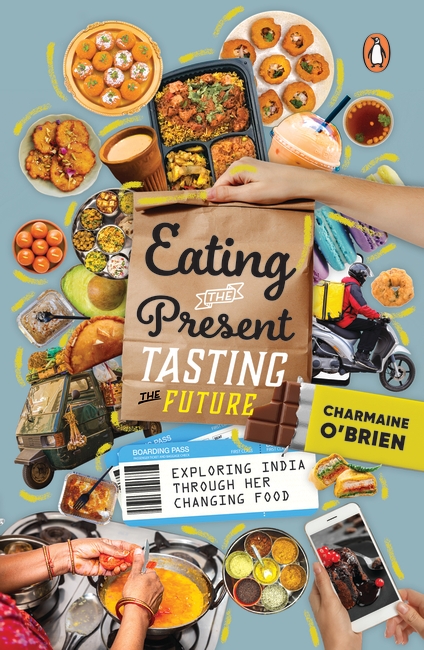
India’s food is one of her most remarkable features: its countless tastes and styles reflect the nation’s history, enduring traditions, and diversity of people and place.
But it is changing at a rapid rate beyond anyone’s imagination.
Eating the Present, Tasting the Future ventures ‘off the plate’ to journey through India’s contemporary foodscape to discover the myriad forces transforming what, how and where Indians are producing, trading and eating their food. At a time when food and our relationship with it are topics of increasing global interest, this is a timely, and important, work, offering unique insight into a complex society.

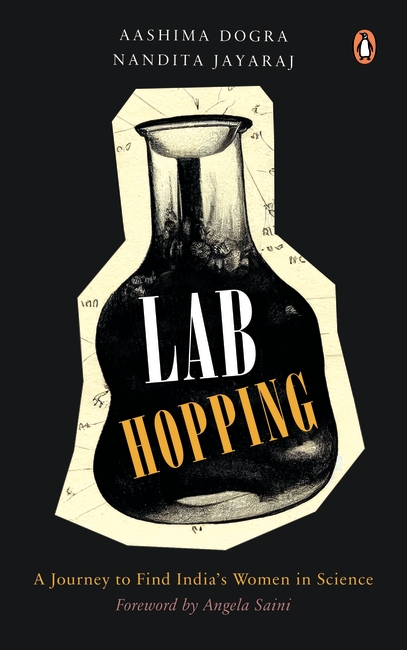
Embark on a one-of-a-kind journey through India’s science laboratories in pursuit of the true story behind the gender gap.
From Bhopal to Bhubaneswar, from Bangalore to Jammu, Aashima Dogra and Nandita Jayaraj engage in thought-provoking conversations with renowned scientists like Gagandeep Kang, Rohini Godbole, Kiran Mazumdar-Shaw and Prajval Shastri, as well as researchers at earlier stages of their scientific careers. These dialogues about the triumphs and challenges faced by women offer fresh perspectives on the gender gap that continues to haunt Indian science today.
Our labs are brimming with inspiring stories of women scientists persisting in science despite facing apathy, stereotypes, and sexism to systemic and organizational challenges. Stories that reveal both a broken system and the attempts by extraordinary women working to fix it. By questioning whether India is doing enough to support its women in science and if western models of science and feminism can truly be applied in India, the authors not only offer a comprehensive examination of the state of women in science but also offer a roadmap for the way forward.

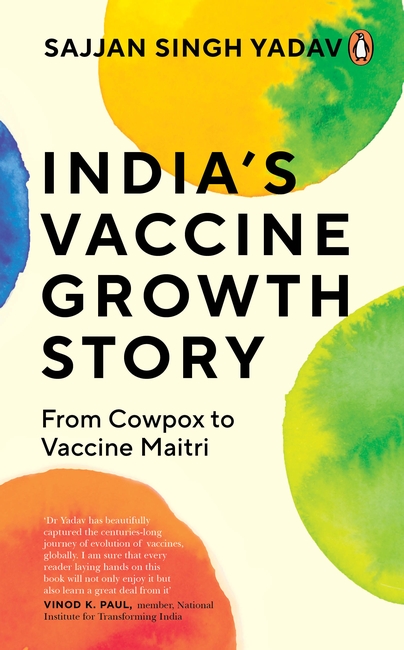
THIS POTENT GROUP OF WEAPONS HAS NOTABLY ANNIHILATED SMALLPOX, PUSHED POLIO TO THE VERGE OF ELIMINATION AND IS NOW TAKING ON COVID-19
Indians practised inoculation centuries before the West discovered vaccines in 1796. India’s Vaccine Growth Story charts the journey of vaccines from the Jennerian era to the COVID-19 pandemic, covering multiple facets of vaccines from the Indian and global perspectives. Apart from discussing vaccine leadership, vaccine nationalism, vaccine hesitancy, eagerness and equity, as well as the latest diplomatic currency-the Vaccine Maitri- the book takes its readers through India’s exciting and meticulously planned project of executing the world’s largest vaccination drive.
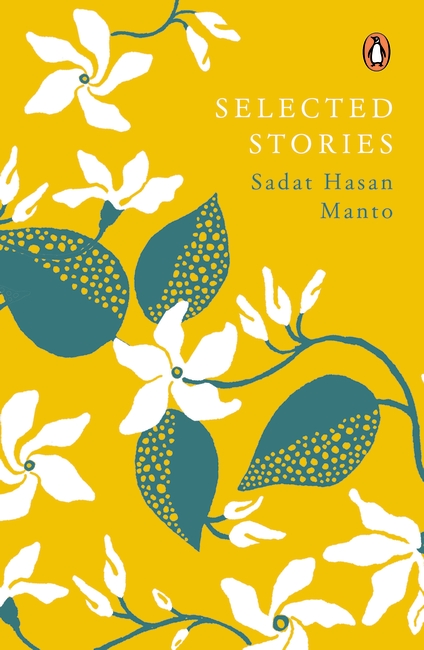
Saadat Hasan Manto’s first collection of stories was published in the 1940s, but his stories have an enduring relevance. Now read by more people than ever before, the simple clarity of his stories about arginalized people, his astute understanding of the complexity of human nature and the poignancy of his stories on Partition transcend spatial and temporal boundaries many of his characters are legendary and his taut narratives are a great source of insight into the human condition. Widely regarded as one of the greatest short-story writers of the Subcontinent, Manto is now, a hundred years after his birth, also acknowledged as one of the most powerful voices of his time. An enigma in his lifetime, and plagued by financial troubles, alcoholism and legal persecution in the last years of his life, he draws a posthumous wave of near-universal admiration. Aatish Taseer’s sensitive translation captures the lyricism and power of Manto’s voice. Manto, Selected Stories, with two new stories, is a collection to be savoured by new readers and old fans of Manto alike.

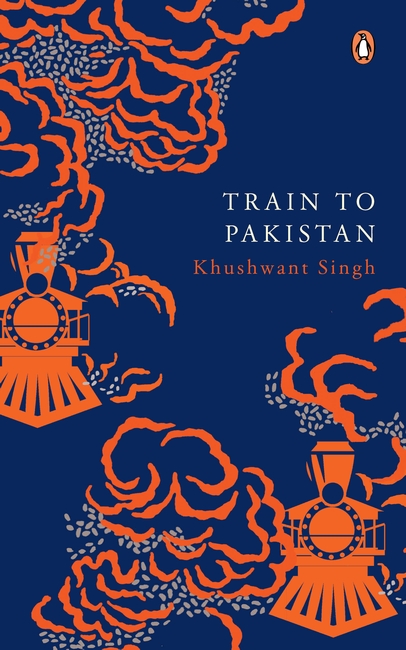
Mano Majra is a place, Khushwant Singh tells us at the beginning of this classic novel, where Sikhs and Muslims have lived together in peace for hundreds of years. Then one day, at the end of the summer, the ‘ghost train’ arrives, a silent, incredible funeral train loaded with the bodies of thousands of refuges, bringing the village its first taste of the horrors of the civil war. Train to Pakistan is the story of this isolated village that is plunged into the abyss of religious hate. It is also the story of a Sikh boy and a Muslim girl whose love endures and transcends the ravages of war.
Regarded as one of the most heart-rending testimonials of the partition of 1947, the Train to Pakistan is an ideal novel for those who wishes to learn more about India’s past and is looking for more than the socio-political scenario behind the partition.

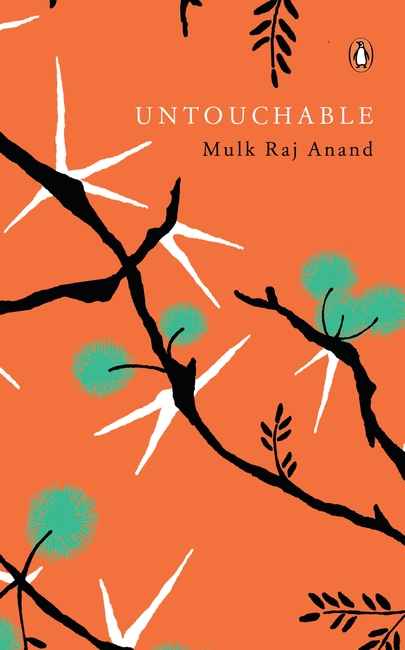
Bakha is a proud and attractive young man. Nonetheless he is an Untouchable- an outcast in India’s caste system. Into this vivid recreation of a single day in the sweeper and toilet-cleaner Bakha’s life, Anand pours a vitality, fire, and richness of detail that earn his place as one of the most important Indian writers of the twentieth century.