What products should I have in my skincare routine?
How do I choose the right moisturiser for my skin?
How can I prevent my skin from ageing?
As a leading celebrity dermatologist, Dr Jaishree Sharad gets inundated with skincare-related questions every day-be it at a public event, a party, in her magazine columns, or on her social media accounts. But knowing how to properly care for your skin can be very confusing, especially when there is so much advice and information out there.
Written in a Q&A format, The Skincare Answer Book helps you cut through the jargon by answering some of the most common skincare questions. From questions on skin types and skin routines to more specific topics like serums, acne, hyperpigmentation, sun allergies, hair loss, anti-aging, rosacea, layering of skin, common skin conditions like eczemas and skin infections, this book will arm you with all the information you need to care for your skin.
Praise for the book:’A book on skin care for all ages’ Amitabh Bachchan‘Numerous well-known clients on Dr Sharad’s long list attest to her reliability . . . May she achieve even more acclaim in the future’ Jaya Bachchan‘The best dermatologist I have known’ Dimple Kapadia‘One of the best skin doctors in the country’ Sanjay Dutt‘Doc is my one-point contact whenever my skin is under any kind of stress’ Alia Bhatt

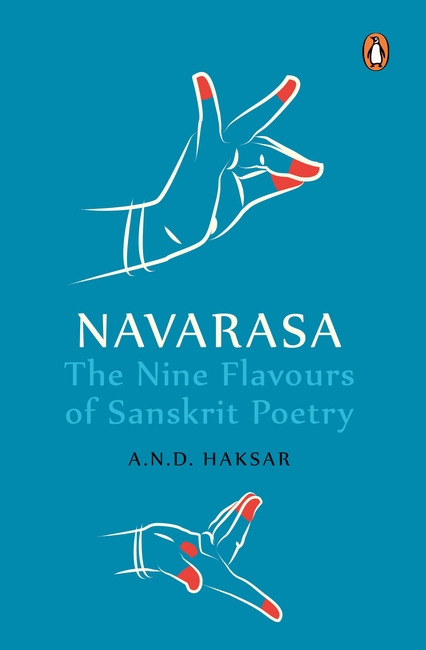
In Indian aesthetics, the ‘rasa’ is the juice or sap that pervades through our art, culture, and guide our primal human emotions. The Navarasas first mentioned in the ancient Hindu text the Natya Shastra, have defined the core of Indian aesthetics; our art, dance, theatre, and literature are based on these nine human emotions.
A first of its kind, this collection of verses from the original Sanskrit, moves away from a mere interpretation of the rasas to an actual translation from ancient texts such as the Subhashitavali by Vallabhadeva (15th century Kashmir), the Sharngdharapaddhati by Sharngadhara (14th century Rajasthan), and the Suktimuktavali by Jalhana (13th century Deccan).
Navarasa: The Nine Flavors of Sanskrit Poetry brings to us for the first time, 99 verse translations on the nine rasas of ancient Hindu history.

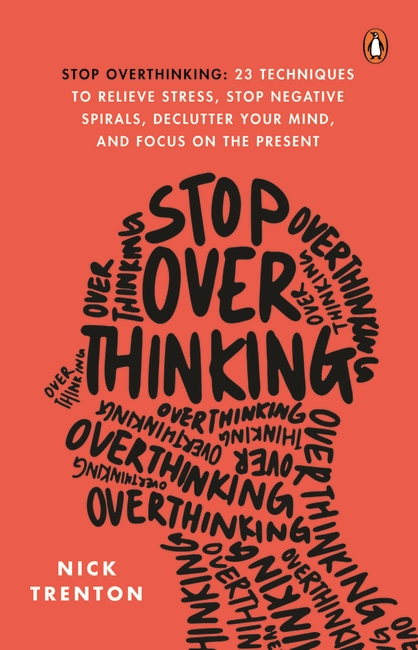
Break free of your self-imposed mental prison. Stop agonizing over the past and trying to predict the future.
Overthinking is the biggest cause of unhappiness and staying in a never-ending thought loop is the biggest cause of unhappiness.
Stop Overthinking is a book that understands the exhausting situation you’ve put yourself in, and how you lose your mind with anxiety and stress. It will walk you through detailed and proven techniques to help rewire your brain, control your thoughts, and change your mental habits.
The book will provide you with scientific approaches to:
-How to be aware of your negative spiral triggers
-Identify and recognize your inner anxieties
– How to keep the focus on relaxation and action
– Proven methods to overcome stress attacks
-Learn to declutter your mind and find focus
– Unleash your unlimited potential and start living
No more self-deprecating talk. No more sleepless nights with racing thoughts. Free your mind from overthinking and achieve more, feel better.

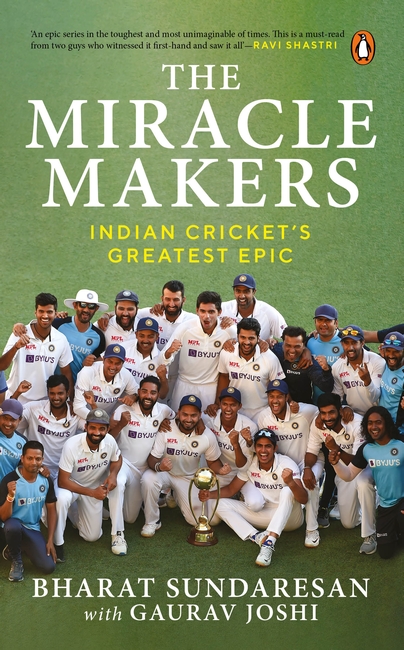
‘This is going to be the most unique cricket tour since the Second World War.’
Ravi Shastri’s prophetic words came true as India pulled off one of the greatest coups in cricketing history, beating Australia in Australia for the second time in three years, eventually breaching the Gabba fortress with what was eventually a skeleton team. Bharat was known as the ‘Eyes and Ears of the Tour’, being the only Indian-origin journalist covering this most memorable series live and seeing the drama unfold in real time. He drove the length and breadth of Australia, journeys that were as thrilling as the series that he was chasing, with the unnerving shadow of Covid always trailing after him. His camaraderie with the Indian team and his standing as among the most respected journalists in the world makes this book incredibly special.
Filled with anecdotes from on and off the field, including conversations with coaches, players and other stars of the show, and inputs from his colleague Gaurav Joshi, this book hopes to transport you to the battleground of this never-imagined script. It promises to bring to life the most unique cricket tour, not just since World War II, but perhaps from the time when the sport was conceived.

How do I find greater purpose at work?
How do I cultivate a mindset for greater professional engagement?
Should I stay in my current job or quit?
How do I fuel my purpose accelerators?
How are purposeful organizations built?
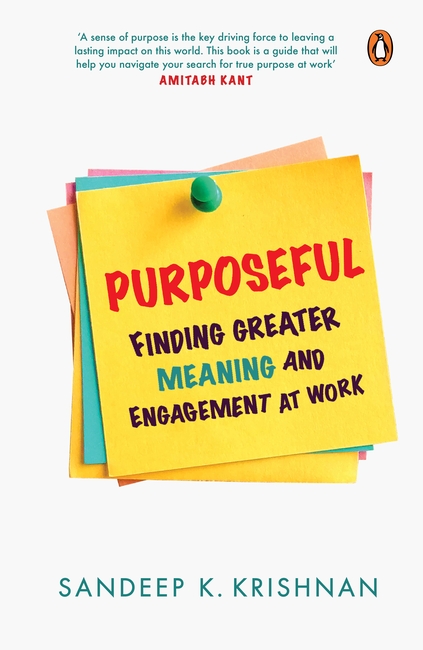
Backed with contemporary research from psychology, philosophy, management and business, expert insights and over two decades of experience in the field, Sandeep demonstrates how you can find your purpose and be more engaged at work.
You will learn about crafting your purpose action plan, climbing the pyramid of purpose, building an ‘owning’ mindset, understanding and using purpose accelerators, learning and applying skills that matter, ceasing to overthink and building resilience. Along with this, you will get actionable tips such as crafting a ‘micro-purpose’, which includes meaningful goals that can be achieved in a shorter period, and valuable advice from top leaders. This book will nudge you to embrace your purpose and ambitiously steer your career to achieve your potential at work and in life.

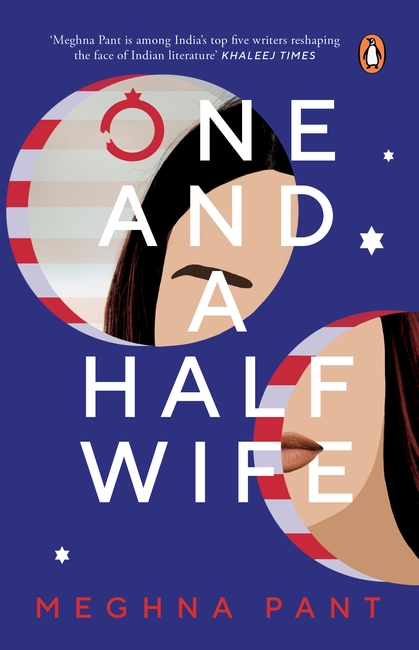
Amara Malhotra was fourteen years old when her parents immigrated to the United States of America. But unlike most Indian immigrants, she was not destined to achieve the American Dream. Much to the anxiety of her parents-the spirited Biji and the doting Baba-Amara leads an unremarkable life. That is, until she marries Harvard-educated millionaire, Prashant Roy. This fairy tale isn’t meant to last, though, and even as Amara’s marriage collapses, she finds herself returning to the land of her birth, to the small city of Shimla. Here, in a borough grappling with questions of modernity, Amara is caught in a tug-of-war between old beliefs and new ones, between parents who favour obedience and new friends who encourage independent thought.
With powerful insights, One and a Half Wife traces the coming-of-age of multiple characters, while redefining family, relationships and love in contemporary India.

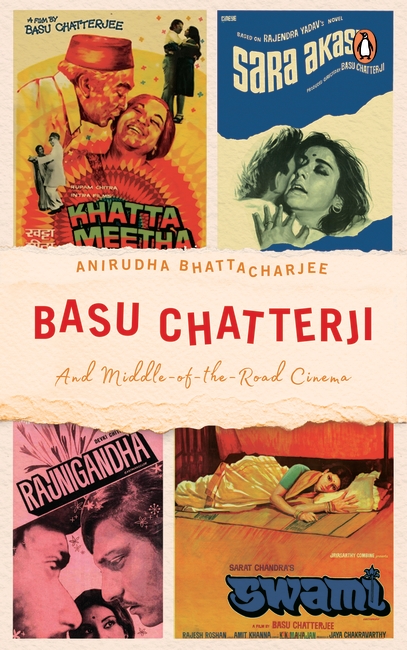
A behind-the scenes look at Basu Chatterji’s most loved films
This is the enigma of Basu Chatterji. His films did not have the box-office ingredients that could make them a distributor’s hot pick, nor were they art house cinema that needed unravelling over many cups of tea. He was the quintessential ‘middle-of-the-road’ film-maker, a genre that he founded in Bollywood. His films, whether it be Chhoti Si Baat or Rajnigandha or Chitchor, were about common people and common problems, such as employment and love, social and economic inequalities, and joint family conflicts. Like fellow cartoonist R.K. Laxman, who created the ‘common man’, Chatterji too was an auteur of the common man, whose journey he portrayed with charm, delicate warmth and humour.
As a person, Basu was much like his common man: mild, unobtrusive and media-shy. He preferred not to scout for stars and mostly made his films with rookies, giving them respectability as artists. And today, names like Amol Palekar, Vidya Sinha, Pearl Padamsee, Zarina Wahab, Nandita Thakur, Girish Karnad, Rakesh Pandey, Bindiya Goswami and Ranjit Chowdhry have become central to the history of Indian cinema, thanks to Basu.
Basu Chatterji: And Middle-of-the-Road Cinema, anecdotal in nature, goes behind the scenes of his films. It places Basu’s cinema and television work in the context of the changing times, like the emergence of Rajesh Khanna, Kishore Kumar and Amitabh Bachchan, the Emergency, the return of Sarat Chandra’s stories, the introduction of disco and the decadent phase of Hindi cinema in the 1980s. The book celebrates the work of one of the most underrated, yet successful, film-makers in Hindi cinema.
Are you looking to multiply and grow your money consistently? If yes, this book is just what you need!
Prasenjit Paul, a bestselling author and successful investor, who has multiplied his portfolio by more than a 100 times over the last decade, shares his wisdom on multibagger investing in this book. He recounts his wealth-creation journey and offers an easy-to-implement strategy, which anyone from any background can use to create wealth and achieve financial well-being.
This book offers readers a simple yet effective technique to identify the stocks that have the potential of generating stupendous returns. Cutting through the clutter and noise, it answers the three most critical questions related to stock-market investing: when to invest (enter the market), how long to remain invested and, finally, when to exit. Dispelling the myth that multibagger stocks are devoid of strong fundamentals, the book explains why only stocks with strong fundamentals can become multibaggers. It also forewarns readers to stay away from the stocks of dubious companies that seem like multibaggers and may lead to wealth destruction, and helps them identify good companies with solid fundamentals.
‘What should I study to best prepare me for success in today’s working world?’
This is the most common question one gets from young people (and their parents) who are transitioning from school to college education. They want to know which fields they should choose, which universities or programmes to attend, and which career track will give them the best chance to succeed.
The professional world isn’t as straightforward as it once was, especially in India. The modern workplace is changing rapidly. While many from the previous generations chose a career in engineering, medicine or business and then stuck to it, most people entering college today will end up changing careers at least once, if not many times. And many of the careers that young people will have in the future don’t even exist yet. Today’s students and their parents need new guides and frameworks to make decisions about what educational opportunities to pursue and what to focus on as they embark on their professional journeys.
In Learn, Don’t Study, drawing on his experiences of over twenty-five years in the field of education, Pramath Raj Sinha has put together the best and most practical advice available for youngsters who are facing some of the most important and challenging choices of their professional lives.

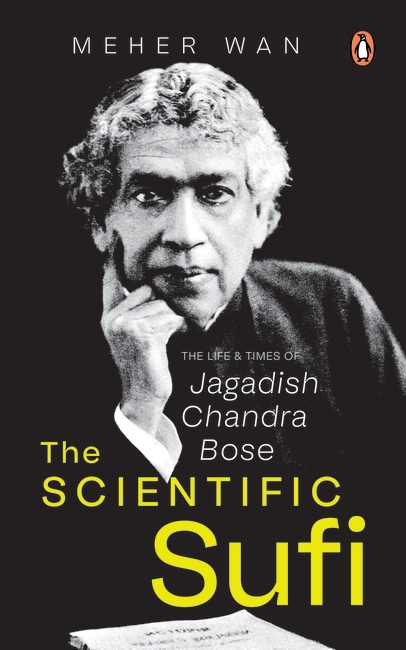
The Scientific Sufi is the most definitive English language biography of Sir Jagdish Chandra Bose, the father of modern science in India. In his time, he came close to, and many believe was robbed of, his due to winning at least two Nobel Prizes, if not one, for his work on wireless communication and the discovery of nervous system in plants. This biography carefully reconstructs his life, times, work, legacy, childhood, early years, influences and paint an intimate portrait of the father of modern science in India.