The remote village of Perumpadi, at the border between Kerala and Karnataka, is a unique settlement. Bounded by dense Kodagu forests on the south and west, and raging rivers on the north and east, its very isolation was what drew the first settlers to this unharnessed land.
The first to make his way across this rough terrain was Kunjuvarkey, along with a young woman bearing his child. Kunjuvarkey was fleeing the opprobrium of getting his own daughter pregnant. Those who followed had similar shameful secrets. In a land of sinners, where no one pried into the other’s past, they were able to live and build a community without being tied down by society’s interdictions.
Fifty years later, as the community moves into modernity, they start showing signs of reforming from their beginnings-of a hillbilly and promiscuous existence. With no panchayats to resolve local disputes, following in his father’s footsteps, Jeremias Paul of Reformation House, known by the moniker President, becomes the unchallenged adjudicator of Perumpadi, thanks to his equanimity and sense of fairness.
But Jeremias has his own secrets and, ultimately, may have to answer for his own moral lapse.
Anthill, a robust translation of the award-winning novel Puttu and with a cast of over 200 characters, tells the story of a people who have tried to shed the shackles of family, religion and other restraining institutions, but eventually also struggle to conform to the needs of a cultured society.
Written with disarming honesty and biting humour, Anthill is ultimately a story that questions the veneer
of respectability people try to put up in their lives.

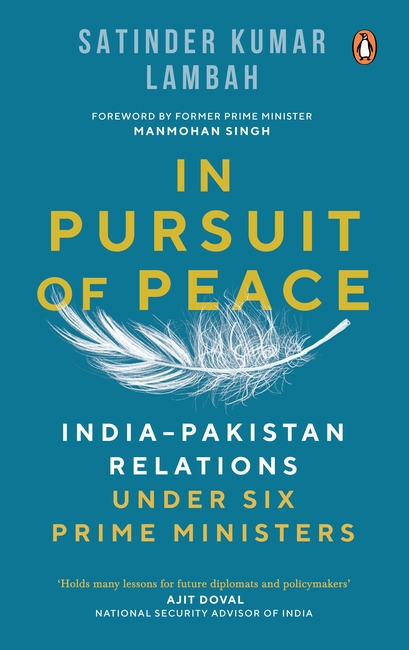
No relationship has been as complex and so difficult to manage as India’s relations with Pakistan. Four wars, cross-border terrorism, and Pakistan’s persistent hostility and relentless campaign on “Kashmir issue” have been a source of strategic challenge for every Indian leader. Yet, each has pursued peace in the interest of India’s progress and security with differing strategies, but with the same result.
As a diplomat who served around the world and in Pakistan, the late Satinder Kumar Lambah’s unique position helps tell an insider’s story of the turbulent history between India and Pakistan. He writes of his personal experiences of India-Pakistan relations having served six Indian Prime Ministers, whom he worked directly with and offered counsel. This includes his role as Prime Minister’s Special Envoy for back-channel talks under PM Manmohan Singh and India’s quick diplomatic moves in the post-Taliban Afghanistan. With insight, he also traces the roots of Pakistan’s evolution since its birth and the challenges its army-driven polity poses for India and reflects on the way forward in dealing with Pakistan to secure peace in the region.

A pioneering book, Unfiltered: The CEO and the Coach, for the first time, opens the doors that normally shield the confidential world of coaching conversations. The book, through its candour, helps readers fully grasp the life-changing impact that coaching can have. Conceived as a leadership development book, the authors share the narratives (both individual and mutual) of their partnership over the course of five years. The resultant narrative provides not just unique insights that executives and entrepreneurs will find useful for their own development but also deep insights into how, by understanding ourselves, we move towards mastery over the world at large.

TOMB OF SAND
In northern India, an eighty-year-old woman slips into a deep depression after the death of her husband, and then resurfaces to gain a new lease on life. Her determination to fly in the face of convention – including striking up a friendship with a transgender person – confuses her bohemian daughter, who is used to thinking of herself as the more ‘modern’ of the two.
To her family’s consternation, Ma insists on travelling to Pakistan, simultaneously confronting the unresolved trauma of her teenage experiences of Partition, and re-evaluating what it means to be a mother, a daughter, a woman, a feminist.
Rather than respond to tragedy with seriousness, Geetanjali Shree’s playful tone and exuberant wordplay results in a book that is engaging, funny, and utterly original, at the same time as being an urgent and timely protest against the destructive impact of borders and boundaries, whether between religions, countries, or genders.
THE SEVEN MOONS OF MAALI ALMEIDA
A searing satire set amid the murderous mayhem of Sri Lanka beset by civil war
Colombo, 1990. Maali Almeida, war photographer, gambler and closet gay, has woken up dead in what seems like a celestial visa office. His dismembered body is sinking in the Beira Lake and he has no idea who killed him. At a time when scores are settled by death squads, suicide bombers and hired goons, the list of suspects is depressingly long, as the ghouls and ghosts who cluster around him can attest. But even in the afterlife, time is running out for Maali. He has seven moons to try and contact the man and woman he loves most and lead them to a hidden cache of photos that will rock Sri Lanka. Ten years after his prizewinning novel Chinaman established him as one of Sri Lanka’s foremost authors, Karunatilaka is back with a rip-roaring epic, full of mordant wit and disturbing truths.

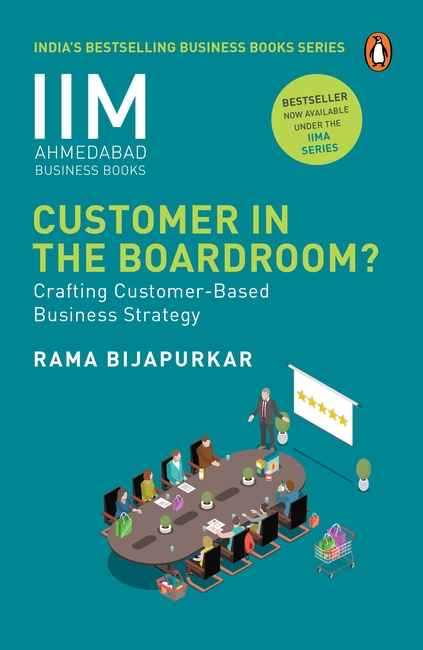
Is the customer in your boardroom?
The business strategies of most companies in India are marked by the supply-sided, tunnel vision of the market and obsessively competitor-centred approaches. Customer in the Boardroom highlights the need for companies to embed customer centricity into the heart of their business strategy development process, if they are to continue to grow profitably and secure their future.
Rama Bijapurkar presents a compelling treatise on how to develop business strategy around the world of customers rather than the world of competitors. She draws a sharp distinction between the ‘market = industry size’ and the ‘market = customers with needs’ bases for developing business strategy.
Replete with anecdotes, examples and cases from India Inc, the book draws on the author’s vast experience in consulting and teaching and places equal emphasis on both the theory and the practice of bringing the customer into the boardroom.

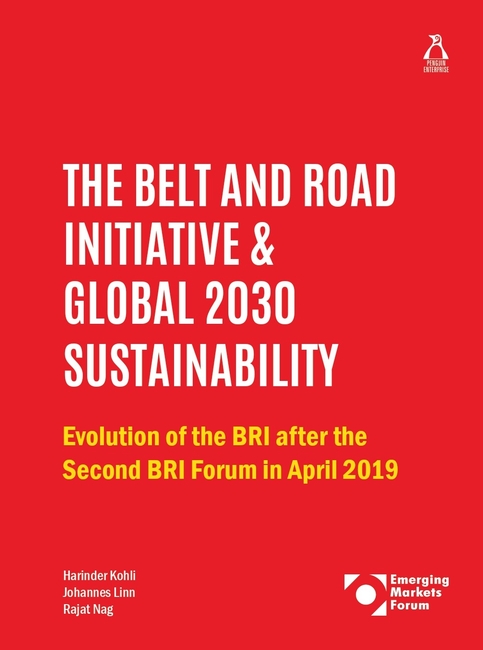
This book discusses the progress of the BRI as it enters its tenth year after being launched in 2013 and becoming by far the biggest bilateral development assistance program in the world. The analysis offered herein is based on eleven detailed ‘inside-out’ country studies by independent experts and the studies presented here explain in an accessible manner how the pace and direction of the BRI has been impacted by the pandemic, the debt distress faced by many countries and the policies adopted by the Chinese authorities to navigate these new challenges.
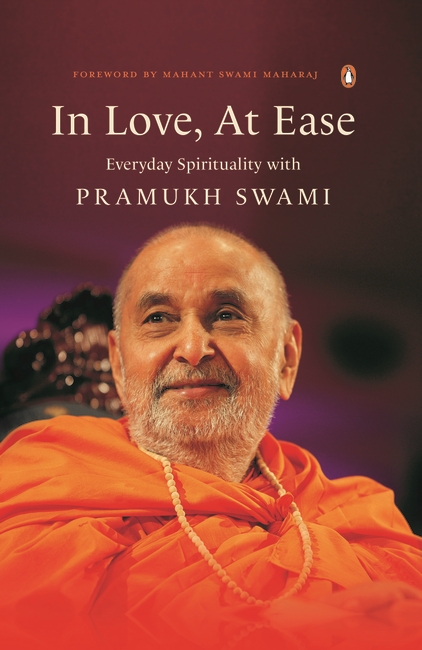
In Love, At Ease is a heartfelt, intimate reflection on the life of Pramukh Swami Maharaj who personified the eternal spiritual values of selfless love and service, humility, inclusiveness and stability. The book presents a roadmap to inner happiness and success based on the interactions of a spiritual master who guided people from different faiths and backgrounds through the journey of life

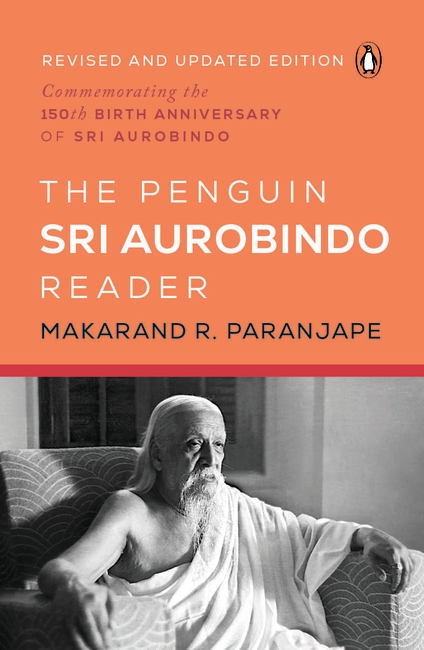
A single-volume guide to the writing and thoughts of one of the greatest personalities of modern India
A multifaceted genius, Sri Aurobindo was a political revolutionary, social critic, poet and above all, a great yogi and spiritual teacher. He was not only one of our foremost interpreters of the Vedas, Upanishads and the Bhagavad Gita, but also developed an original philosophy, which, though based on the ancient wisdom of India, has a modern, evolutionary dimension to it-the human being, according to him, is not the end of the evolutionary process; our destiny is to grow to a higher state of consciousness which will fundamentally alter life as we know it.
As a writer, Sri Aurobindo’s range was staggering-there is hardly a field of human endeavour that escaped his notice. This collection offers a sampling of his writings with selections from most of his major works and areas of interest. It begins with the early, often-ignored essays written during the struggle for Independence and traces the development of Sri Aurobindo’s philosophical and religious thought, culminating in the system of Integral Yoga. Also included are some of his poems, letters and aphorisms. Together, they provide an ideal introduction to the complex and brilliant mind of a remarkable yogi and seer-poet.
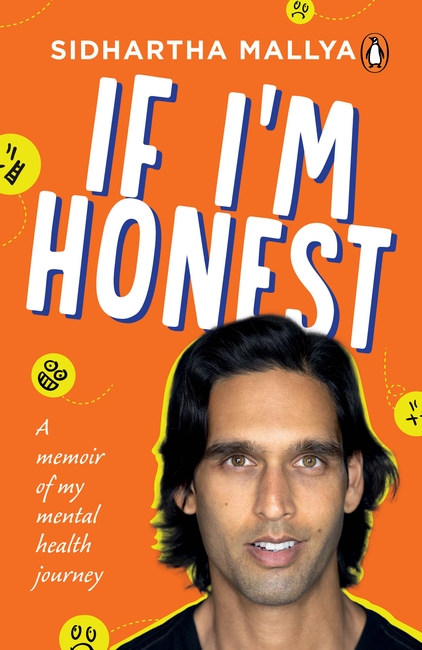
Sidhartha Mallya has had a unique life to say the least. Born into one of India’s most prominent business families, he has had-from an outside perspective-what many would consider a blessed life. Appearances can often be deceiving, though, and at times what was going on inside was a very different story. In 2016, he went through depression. Something that came as a bit of a surprise to him, given that he seemingly had the world at his feet: he was young, had just graduated from a prestigious drama school and had upcoming film projects. However, despite all the wonderful opportunities that awaited him, he felt desperately unhappy, constantly low and like his insides were being crushed by a vice. That was when Sidhartha realized that something was not right and he sought professional help. Thus began the journey to understanding his current mental state as well as an exploration of the other mental issues he has suffered throughout his life and where they might have stemmed from. Sidhartha also writes about what helped him face and overcome his challenges.
‘I could hear wild animals, as hungry as I was, growling down below, having caught my human smell. They attempted to scale the rocks. If there was one among them that could climb the cliff, my helplessness would turn me into its dinner tonight.’
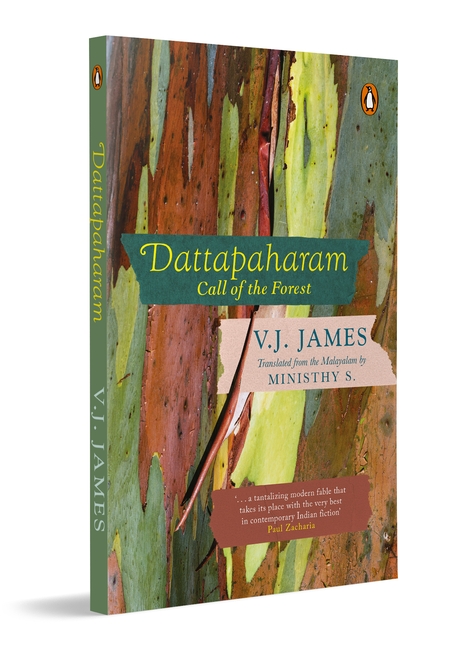
On the eve of Independence Day, Mahesh reads a small news item about a mysterious forest dweller who appeared in the middle of a rainforest out of nowhere and disappeared without a clue. Immediately, he recognizes the man to be Freddie Robert, their friend, guide, leader and the one they had all named Yudhisthira, who had disappeared into the forest several months ago, in search of a rare new bird. Mahesh and his four friends, each named after a Pandava brother, and Panchali, or Meera, decide that the only way they can ascertain whether the man was indeed Freddie is to return to the forest and search for him.
Thus begins Dattapaharam, a powerhouse of a novel by the critically acclaimed and bestselling Malayalam author V.J. James. A rumination on solitude, man’s connection with nature and the strings that attach us to this world, this is a surreal novel where the author’s imagination soars like an eagle and words flow like the untouched springs in a rainforest. At times a fable on the modern world, at times a search for identity amid a quest of discovery, and on the whole a moving tale that takes the reader deep into the forests to understand what really makes us human, Dattapaharam is a powerful novel for our anthropocentric age, written by one of the most exciting voices to emerge from the Indian subcontinent.