LONGLISTED FOR THE JCB PRIZE 2022
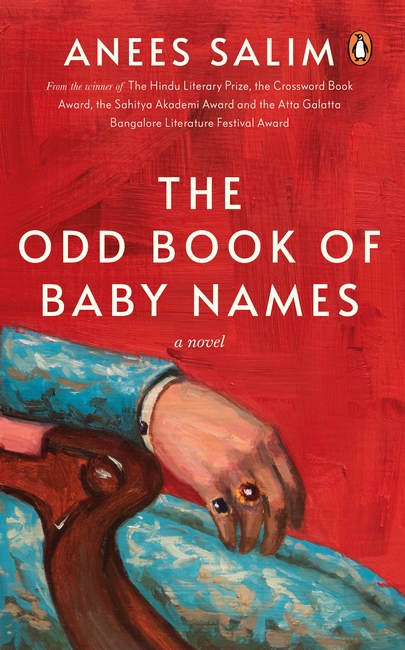
As a thin ribbon of smoke rose from the edge something stirred in me and I slapped the book against the railing until small specks of fire fell to the floor and died down. It was not just a book of baby names. It was an unusual memoir my father was leaving behind, memories condensed into names; memories of many kisses, lovemaking, panting and feeling spent.
Can a life be like a jigsaw puzzle, pieces waiting to be conjoined? Like a game of hide-and-seek? Like playing statues? Can memories have colour? Can the sins of the father survive his descendants?
In a family – is it a family if they don’t know it? – that does not rely on the weakness of memory runs a strange register of names. The odd book of baby names has been custom-made on palace stationery for the patriarch, an eccentric king, one of the last kings of India, who dutifully records in it the name of his every offspring. As he bitterly draws his final breaths, eight of his one hundred rumoured children trace the savage lies of their father and reckon with the burdens of their lineage.
Layered with multiple perspectives and cadences, each tale recounted in sharp, tantalizing vignettes, this is a rich tapestry of narratives and a kaleidoscopic journey into the dysfunctional heart of the Indian family. Written with the lightness of comedy and the seriousness of tragedy, the playfulness of an inventive riddle and the intellectual heft of a philosophical undertaking, The Odd Book of Baby Names is Salim’s most ambitious novel yet.

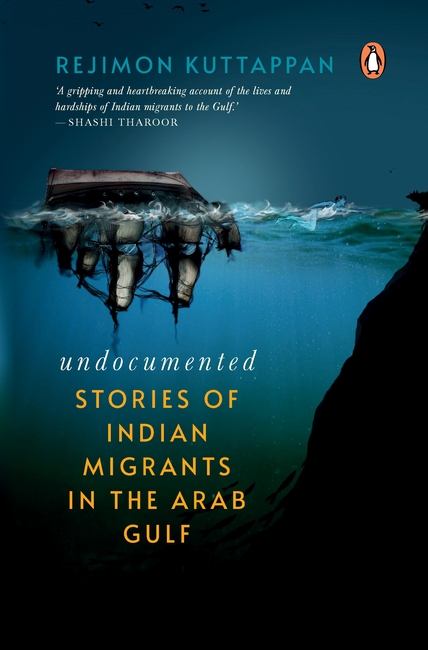
Our complicated and fragile global economy relies on the unacknowledged labour of a subterranean network of undocumented migrant workers. Despite them providing vital support to host economies, governments continue to turn a blind eye to these migrants’ woes without any consequences. In the absence of documents to speak for them, their human rights are systematically abused, their voices ignored, their existence refuted.
The women, as is often the case, suffer under the dual attacks of patriarchy and anonymity. Exigencies of bureaucracy ensure that the children are often unregistered and even lack passports. The result is a truly exploited populace without much relief in sight. They survive on sheer courage and perseverance, shedding blood, sweat and tears that end up fuelling the thumping home and host economies.
In Undocumented, journalist and migrant-rights researcher Rejimon Kuttappan brings to light the lives of these oft-ignored migrants through stories of six Indians in the Arab Gulf, and through them, voices the plight of millions more. Delving into histories both personal and national to establish where we are and how we got here, the author lays bare the lives of people betrayed by their own into human trafficking, into poverty, and into exile in a land that only glimmers with promise.

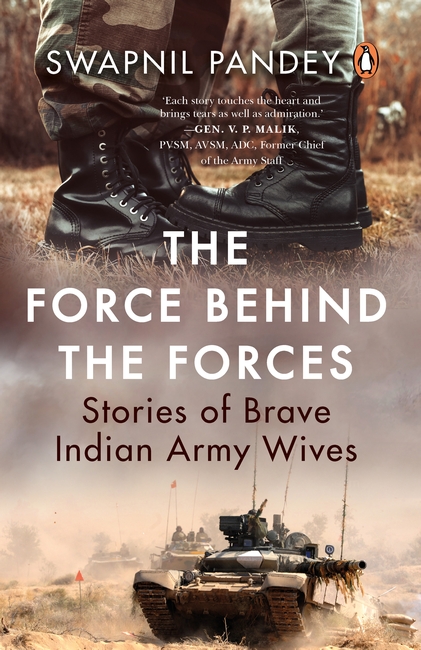
Who continues to pay the costs of war long after our soldiers are gone?
There are many stories of courageous heroes at the borders, but how much do we know about the women standing strong behind them?
The Force behind the Forces is a collection of seven true stories of eternal love, courage and sacrifice. Written by an army wife, Swapnil Pandey, this book brings to light moving stories of unimaginable valour in the face of broken dreams, lost hopes and shattered families. It proves that bullets and bombs can only pierce the bodies of our soldiers, for their stories will live on in the hearts of these brave women forever, women who have dedicated their lives to the nation, without even a uniform to call their own.

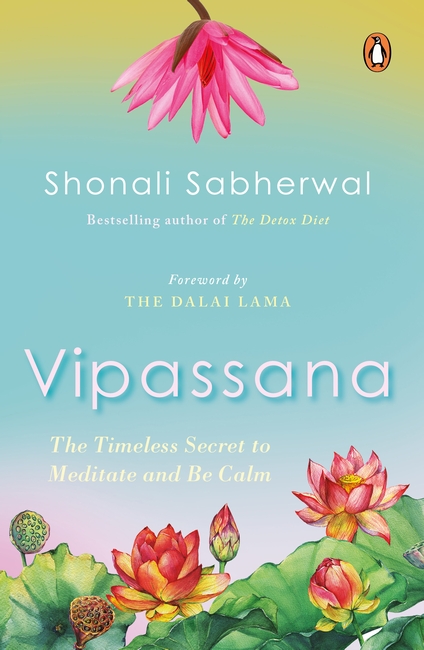
Foreword by The Dalai Lama
Do you wish to sharpen your awareness?
Train your mind to observe your thoughts and emotions?
Bestselling author Shonali Sabherwal’s latest book is for anyone looking to start meditating. With a detailed guide and a focus on Vipassana, it shows you how to control the highs and lows in life and take charge of your happiness. It teaches you how to occupy a state of equanimity and be present in the moment through an ancient technique used by the Buddha for enlightenment. Lift yourself up on this journey from misery to happiness, from defilement to purity, from bondage to liberation and from ignorance to enlightenment. Turn your life around through Vipassana.

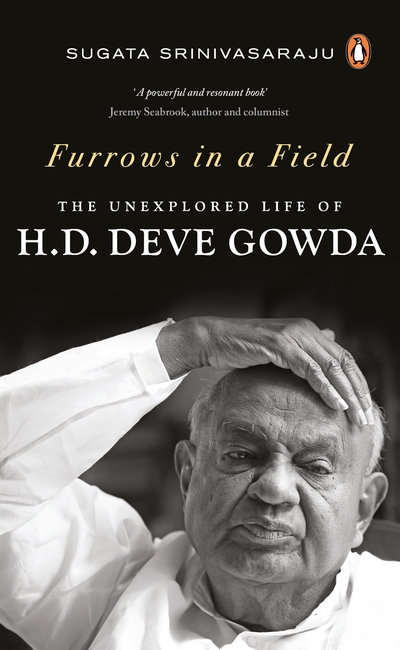
H.D. Deve Gowda has been in public life for nearly seven decades. He started at the very bottom, as a member of the Holenarasipur Taluk Development Board and reached the very top as India’s eleventh prime minister, in 1996. In between, he was an independent legislator, spent long years as leader of Opposition in the Karnataka Legislative Assembly, had been an effective irrigation and public works minister, and finally, chief minister in 1994 after many missed opportunities. Even twenty-five years after he stepped down as prime minister, he has remained relevant in Indian politics. Despite this long, arduous yet fascinating journey that began in a poor peasant household in the plains of Hassan, there has been no comprehensive assessment of his life and work. This biography endeavours to professionally fill the gap.
The book’s narrative is instructed by Gowda’s rich parliamentary record, archival material and interviews conducted with people associated with him at various stages of his life. The layered narrative is further nuanced by Gowda’s own voice, gargantuan memory, a close reading of the time when he made history and the currents of destiny that preceded it. Although Gowda has spent most of his years in Karnataka and has become a symbol of the federal idea, this book argues that the diverse national imagination and sincerity that he deployed as prime minister had magically lit up different corners of India.
When Gowda became prime minister, many people intuitively registered that our democracy had not been rigged or captured by elites and dynasts, and there was indeed space in our system to rise for a self-made person with no godfathers. It generated hope and continues to do so.

How did Tata transform itself from a family-owned business to one of the most professionally managed enterprises in the world? How did it become a world leader in an array of unrelated businesses-from steel and automobile manufacturing to hotels and IT consulting? What exactly is the ‘Tata Way’, which has earned it so much admiration and respect?
This brief history of the Tatas charts the contribution of every Tata chairman-from Jamsetji Tata, who set up the company in 1868, to Ratan Tata and Cyrus Mistry-and explores the values at the heart of the Tata Group, as well as the role played in its development by the philanthropic trusts that own two-thirds of the company.
For anyone curious about this Indian company that has become a leading global player, this book is the perfect introduction.

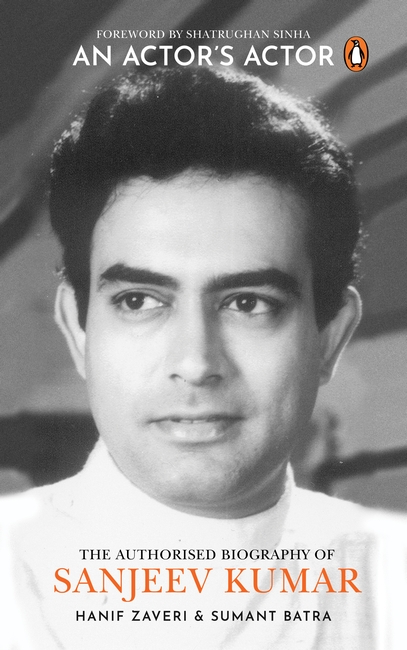
More than thirty-five years after his death, Sanjeev Kumar remains a role model for all aspiring actors. He could light up the screen in underpants, paunch showing, in one of Hindi cinema’s most lovable song sequences, ‘Thande thande paani se nahana chahiye’ (Pati Patni Aur Woh, 1977). Entirely unselfconscious of his image as a star, he would often be cast as the father figure to a number of his contemporaries, most famously Sharmila Tagore in Mausam (1975) and Amitabh Bachchan in Trishul (1978), or as the elderly Thakur in Sholay (1975) and yet leave an indelible mark with his presence and his acting prowess.
After starting out in B-films in the 1960s, he caught the eye in Sungharsh (1967), where the manner in which he held his own against Dilip Kumar is now stuff of Hindi film folklore. Equally adept at comedy (Angoor and Manchali, for example) and dramatic serious roles (Anubhav and Koshish), he was truly an actor’s actor.
Hanif Zaveri and Sumant Batra’s biography provides a glimpse of star’s personal and professional lives, taking off from the traditional business of the Zariwalas, his romantic involvement with some of Hindi cinema’s biggest names, his lifelong battle with loneliness and his glittering achievements on screen. An Actor’s Actor is a succinct introduction to the life and films of a star who left us tragically at the young age of forty-seven but who continues to live through his unforgettable and remarkable contribution to Hindi cinema.

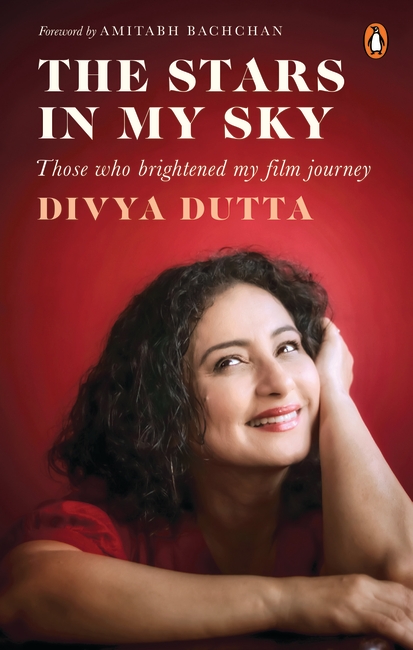
In her second book, award-winning actor Divya Dutta recounts her experiences with some of the stalwarts of Bollywood who played a significant role in her film journey. She talks about the inspiration they have been in her life through their immersive interactions, through what they did for her, and what she learnt from them.
From getting Shabbo’s dialect and look just right on the sets of Veer-Zaara with Yash Chopra to being inspired by Shabana Azmi’s inimitable zest for celebrating life; from her impromptu improvisations on the sets with Irrfan Khan to her non-stop peals of laughter with Shah Rukh Khan, she tells it all with rare candour. She opens up about moments that changed her deeply from within. Such as the time when she burst out crying after playing mean to Amitabh Bachchan during a shoot, or when Shyam Benegal made her choreograph her own dance sequence in a film.
The Stars in My Sky is not only about the deep impact these experiences had on her life, but also about how they defined the trajectory of her career.

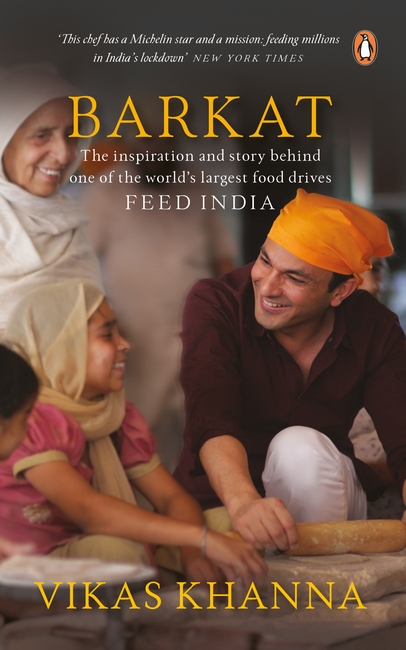
‘Barkat’ means abundance. An abundance of blessings and auspiciousness. Where there is no dearth and there is no scarcity, that’s Barkat. It’s a much bigger word than can be translated in English.
This is the story of one of the most beloved chefs from India, Vikas Khanna. From the small town of Amritsar, he grew to be an international chef and fulfilled his dream of getting a Michelin Star. He narrates how his grandmother infused in him the values of sharing food, while the langars of the Golden Temple showed him that community kitchens are perhaps the only way to ensure no one goes hungry.
From these values developed around food, he got the goal and the grit to build one of the world’s largest food drives called ‘Feed India’ during the COVID-19 lockdown.
This deeply personal and heart-touching narrative is a testimony of one man’s vision to showcase Indian culture and the intrinsic value of sharing food to the world.

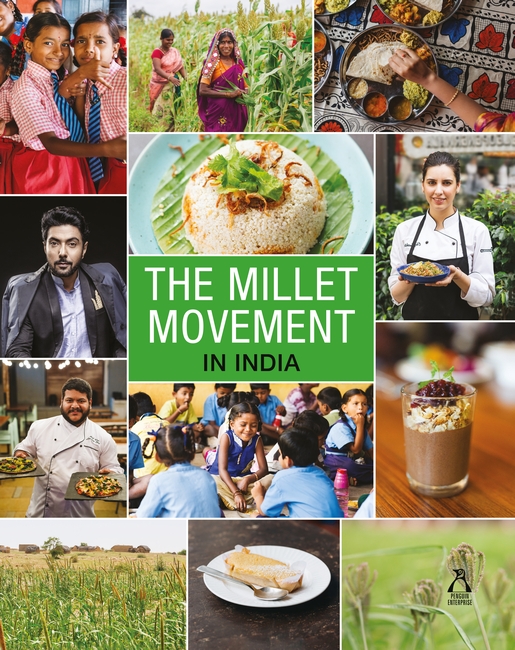
Insights into the millet movement that is happening in India creating a buzz with consumers, entrepreneurs, chefs, NGOs and government. Hear how people have become inspired by this humble ancient grain. Stories, touching moments, beautiful imagery, harsh environments to new urban trends and recipes especially created by chefs and a nutritionist. This and more. Be amazed by this quiet revolution that is happening in India.