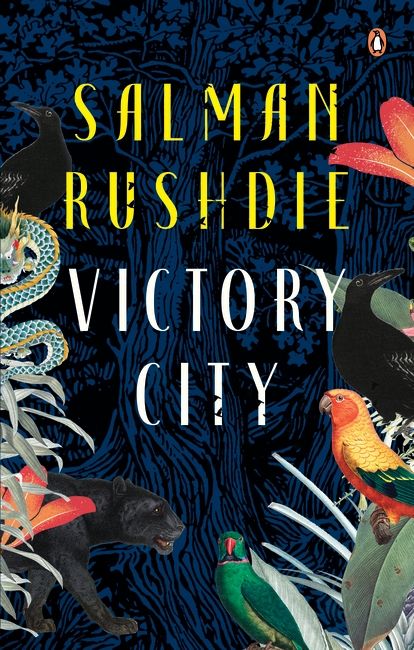
The epic tale of a woman who breathes a fantastical empire into existence, only to be consumed by it over the centuries – from the transcendent imagination of Booker Prize-winning, internationally bestselling author Salman Rushdie.
In the wake of an insignificant battle between two long-forgotten kingdoms in fourteenth-century southern India, a nine-year-old girl has a divine encounter that will change the course of history. After witnessing the death of her mother, the grief-stricken Pampa Kampana becomes a vessel for the Goddess, who begins to speak out of the girl’s mouth. Granting her powers beyond Pampa Kampana’s comprehension, the goddess tells her that she will be instrumental in the rise of a great city called Bisnaga – literally ‘victory city’ -the wonder of the world.
Over the next two hundred and fifty years, Pampa Kampana’s life becomes deeply interwoven with Bisnaga’s, from its literal sowing out of a bag of magic seeds to its tragic ruination in the most human of ways: the hubris of those in power. Whispering Bisnaga and its citizens into existence, Pampa Kampana attempts to make good on the task that the Goddess set for her: to give women equal agency in a patriarchal world. But all stories have a way of getting away from their creator, and Bisnaga is no exception. As years pass, rulers come and go, battles are won and lost, and allegiances shift, the very fabric of Bisnaga becomes an ever more complex tapestry – with Pampa Kampana at its centre.
Brilliantly styled as a translation of an ancient epic, this is a saga of love, adventure and myth that is in itself a testament to the power of storytelling.

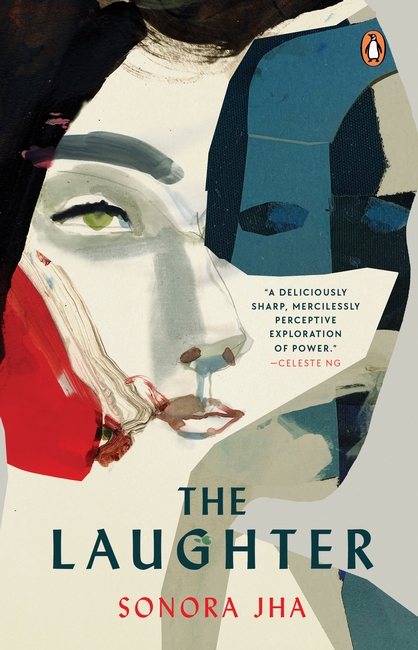
Dr. Oliver Harding is long settled into the routines of a divorced, aging academic. But his quiet life is upended by his new colleague, Ruhaba Khan, a dynamic Pakistani law professor.
Ruhaba unexpectedly ignites Oliver’s long-dormant passions, a secret desire that quickly tips towards obsession after her teenaged nephew arrives to stay with her. Drawn to them, Oliver tries to reconcile his discomfort with the worlds from which they come, and to quiet his sense of dismay at the encroaching change they represent-both metaphorically and in Ruhaba’s spirited engagement with the student movements on campus.
After protests break out demanding diversity across the university, Oliver finds himself and his beliefs under fire, even as his past reveals a picture more complicated than it seems. As Ruhaba seems to fade in and out of reach, Oliver reacts in ways shocking and devastating.
Sonora Jha has created a complex character both in tune and out of step with our time, an erudite man who first inspires and then challenges our sympathies. As the novel reaches its shocking conclusion, Jha compels us to re-examine scenes in a new light, revealing a depth of loneliness in unlikely places, the subjectivity of innocence, and the looming peril of white rage in America.
An explosive and tense work of fiction, The Laughter is a fascinating portrait of privilege, radicalization, class, and modern academia that forces us to confront the assumptions we make, as both readers and as citizens.

ONE SALES STRATEGY TO WIN IN BOTH BUSINESS AND LIFE
There are 7.7 billion sales owners in the world. Everyone is selling either a product, a service or an idea. The fact that everyone is selling brings its own unique challenges and possibilities.
How can high-growth companies and start-ups win clients amid unprecedented competition?
How can one close large deals virtually?
How does one become a great storyteller and influence others?
How can one communicate effectively in life scenarios such as parenting, hiring or asking for a raise?
What is the higher purpose of sales?
Sharing forty-two practical business, consumer and real-life experiences, this book reveals one simple and powerful sales strategy that is the perfect answer to all the above questions. In an engaging manner, Amit provides you with a clear and easy-to-implement blueprint for this strategy.
The Updated and Expanded Edition includes
Virtual Selling Readers’ Case Studies 10 Videos Embedded as QR codes

In the distant land of Gandhara, there once was a janapada called Chakrapuri. Its elders were a worried lot. Their children were uninterested in the welfare and upkeep of the janapada. Most of them were consumed by self-interest and avarice, seeking personal gains, even at the cost of their fellow citizens. Realizing that the young must learn the arts and crafts of citizenship, the Sabha of Chakrapuri decided to employ Nitina of Takshashila, whose wisdom was said to be unparalleled, to teach their children. So it came to pass that the unconventional scholar was entrusted with the charge of these boys and girls for the next ninety days.
Thus begins the Nitopadesha. A labyrinth of stories in the style of the Panchatantra and the Jataka tales, this is a book about good citizenship and citizen-craft that will speak to the modern reader. Covering aspects such as what citizenship means, the ethical dilemmas one faces as a citizen and how one can deal with social issues, Nitin Pai’s absorbing translation is an essential read for conscientious citizens of all ages.

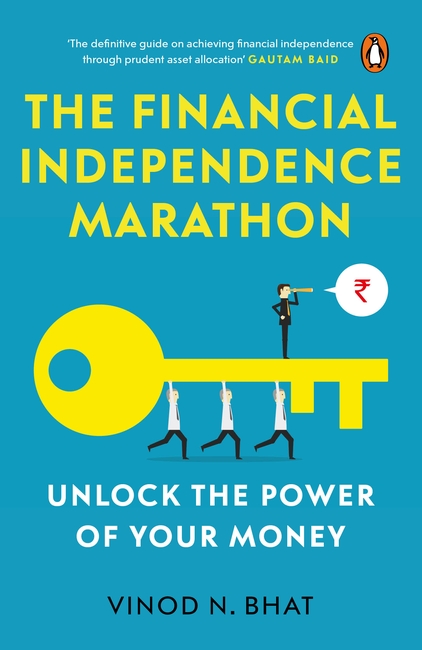
‘Time is money’. But the opposite is also true, i.e., ‘money is time’. Money, if used wisely, gives us the free time to do what makes us happy. It is crucial to understand the concept that money creates time because time is a non-renewable resource. And becoming financially independent is akin to finding a hidden treasure of time. It’s similar to discovering a gold mine, because it gives us the ability to live life on our own terms.
The key is not to think of financial independence as a goal but as a marathon, which we need to enjoy. This book is an easy, entertaining and actionable guide to becoming financially independent and avoiding any pitfalls on the journey.

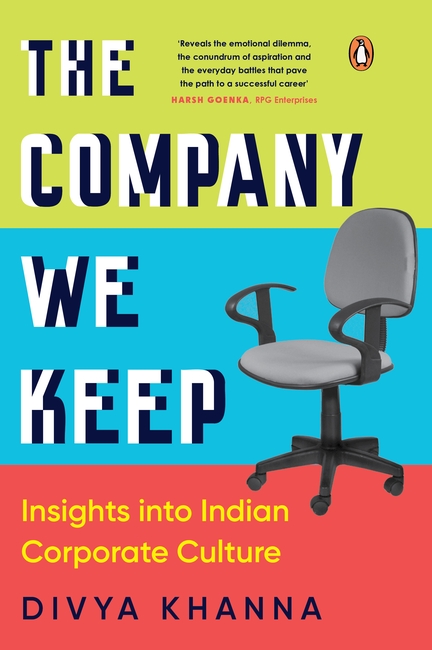
There are many challenges facing business corporations today-the pandemic we have barely moved on
from, economic recession, rapid changes in consumer behaviour and technological and competitive disruptions. These challenges stick out like the visible tip of an iceberg, while culture, the biggest challenge, is like the slow-moving, gigantic mass that lurks deep under the surface. We cannot deal sufficiently with superficial problems if we do not understand the depths that drive them.
‘Culture eats strategy for breakfast’ is a widely accepted saying in the business world, often attributed to Peter Drucker. This is as true for corporate India as it is for its consumers. Yet, we spend more time and money studying our consumers and their cultures than we do ourselves.
The Company We Keep is a market research-based exploration of Indian corporate culture. It looks beyond the glamour and jargon of the business world to individual stories that share real personal insights into the aspirations, vulnerabilities, pressures and possibilities of corporate careers and lives. These are urgent conversations we need to keep having as we reflect, review and decide where we can go from here.
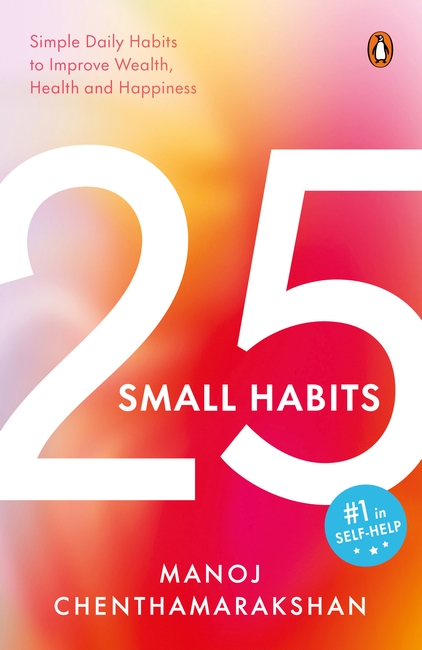
We all know that our habits shape our lives, but when we try to incorporate a new habit into our lifestyle, we understand how difficult it can get. Most people fail to retain a new habit past the first week. This book doesn’t teach you how to develop habits; instead, it offers you a set of twenty-five small habits that take very little time and can be held on to without much effort.
The habits in this book are designed to give you holistic growth in terms of self-development, community, career, relationship, and physical and mental health. You can choose the habits that you are able to fit into your daily schedule.

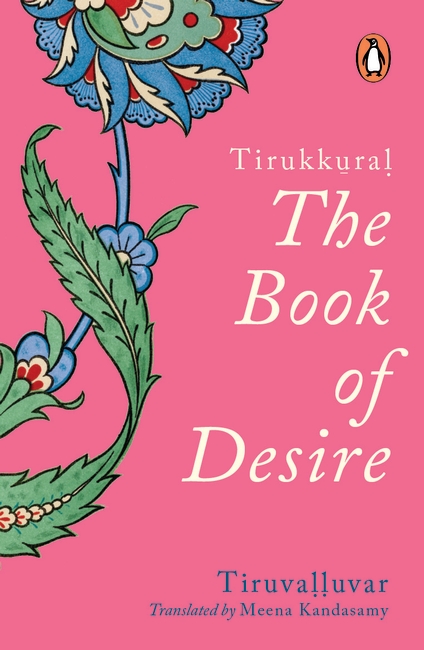
Written by the poet Thiruvalluvar, the Kamattu-p-pal is the third part of the Tirukkural – one of the most important texts in Tamil literature. The most intimate section of this great work – it is also, historically, the part that has been most heavily censored. Although hundreds of male translations of the text have been published, it has also only ever been translated by a woman once before. Tirukkural is award-winning writer Meena Kandasamy’s luminous translation of the Kamattu-p-pal.
Meena Kandasamy delves into this classic, and provides the first feminist interventionist translation into English-remaining true to the desire throbbing through the lifeblood of the text, while retaining the drama that pervades the quintessential Tamil world of exaggerated hurt, lover’s quarrels and evenings lost to longing.
With her trademark wit, lyricism and passionate insight, Meena weaves a magic spell: taking the reader on a journey through 250 kurals, organised under separate headings – ‘The Pleasure of Sex’, ‘Renouncing Shame’, ‘The Delights of Sulking’ – the result is a fresh, vital, and breath-taking translation that conveys powerful messages about female sensuality, agency, and desire. It is a revolution 2000 years in the making.

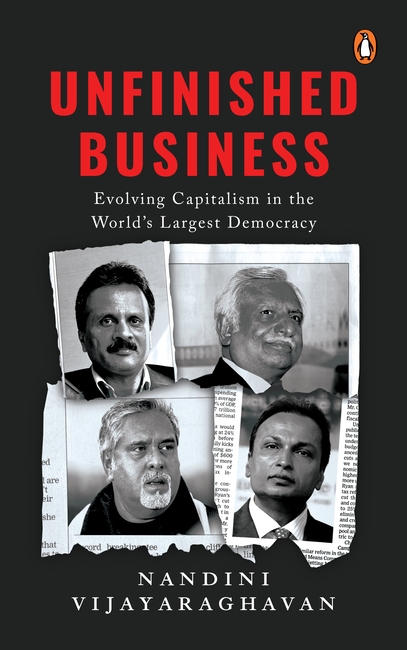
Unfinished Business is a chronicle of contemporary Indian corporate history, narrated through the professional trajectories of four high-profile businessmen: Anil Ambani, Naresh Goyal, V.G. Siddhartha and Vijay Mallya.
By no means unique in their proclivity for debt and penchant for politics, these four men belonged to a rarefied club of entrepreneurs, who could raise a sizeable quantum of financing with ease despite their businesses not generating adequate cash flows and/or possessing sufficient collateral.
So, what competitive advantage(s) did this guild of Indian entrepreneurs have? What caused their enterprises to struggle, while other similar organizations whose CEOs shared these attributes survived and even flourished? How did the Indian business ecosystem, regulatory norms, lenders’ underwriting practices and investor due diligence influence the organizations helmed by this quartet?
Following these four entrepreneurs’ careers and professional decisions, Unfinished Business throws light on the evolution of Indian capitalism during the first two decades of the twenty-first century, set against the backdrop of a dynamic political, regulatory and business climate in India. And, with great insight, clarity and analysis, Nandini Vijayaraghavan explores the takeaways for entrepreneurs, regulators, lenders and investors in this compelling, illuminating read.

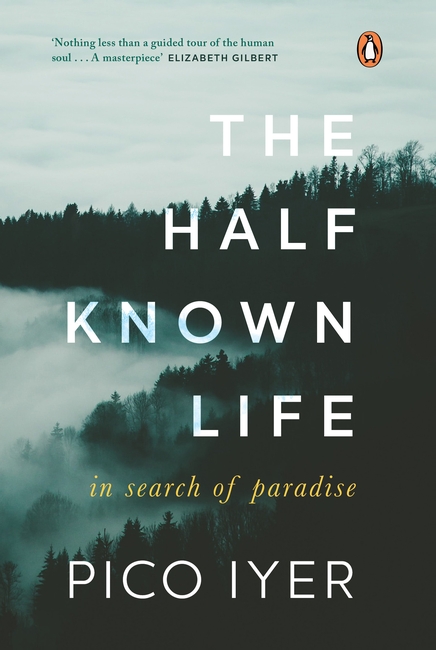
Paradise: that elusive place where the anxieties, struggles, and burdens of life fall away. Most of us dream of it, but each of us has very different ideas about where it is to be found. For some it can be enjoyed only after death; for others, it’s in our midst-or just across the ocean-if only we can find eyes to see it.
Traveling from Iran to North Korea, from the Dalai Lama’s Himalayas to the ghostly temples of Japan, Pico Iyer brings together a lifetime of explorations to upend our ideas of utopia and ask how we might find peace in the midst of difficulty and suffering. Does religion lead us back to Eden or only into constant contention? Why do so many seeming paradises turn into warzones? And does paradise exist only in the afterworld – or can it be found in the here and now?
For almost fifty years Iyer has been roaming the world, mixing a global soul’s delight in observing cultures with a pilgrim’s readiness to be transformed. In this culminating work, he brings together the outer world and the inner to offer us a surprising, original, often beautiful exploration of how we might come upon paradise in the midst of our very real lives.