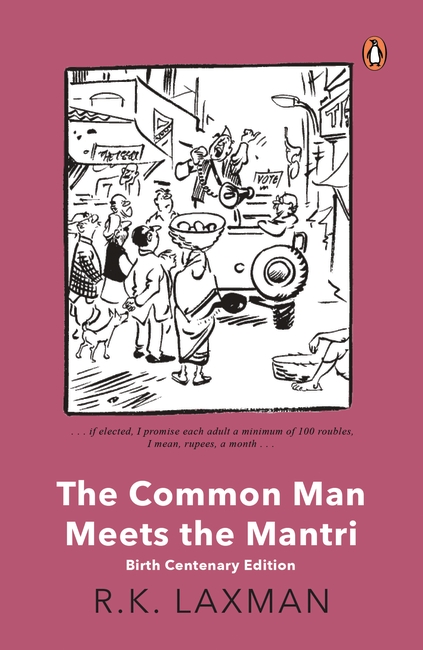
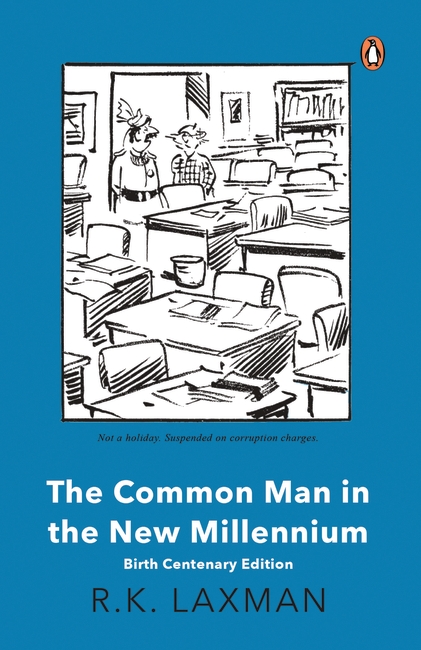
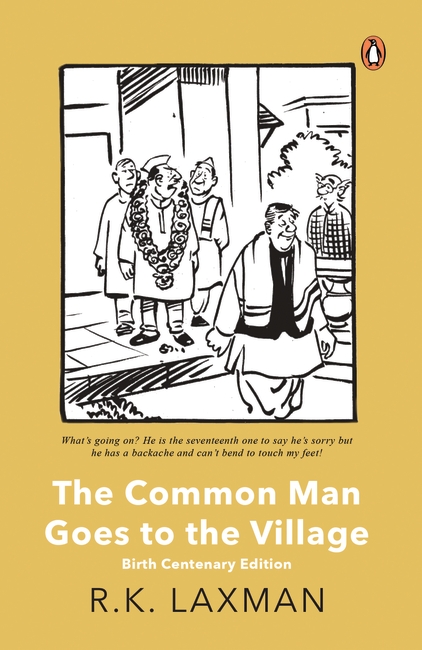
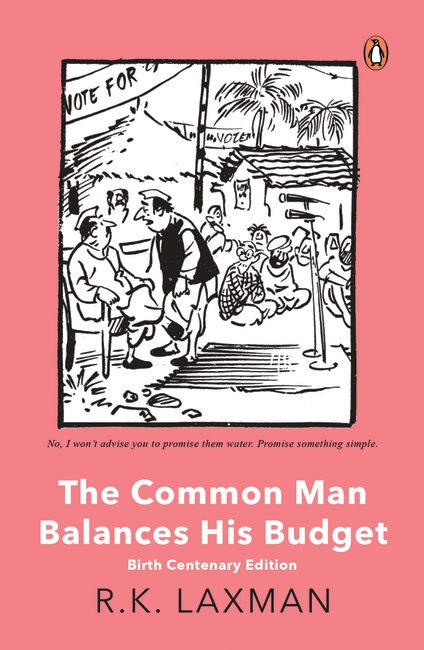
A collection of gems by our best-loved cartoonist, R.K. Laxman
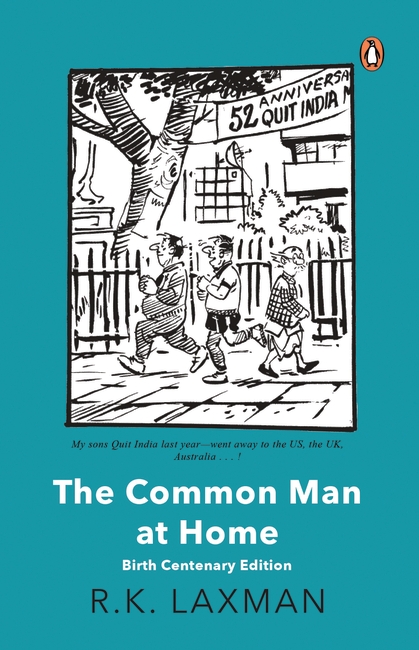
From financial crises to the woes of householders, from political instability to rampant corruption, these cartoons capture the entire gamut of contemporary Indian experience. Hilarious and thought-provoking at the same time, this is a treasure house of humour from one of the most striking voices commenting on Indian sociopolitical life today.

A collection of gems by our best-loved cartoonist, R.K. Laxman
‘For half a century, the Times of India has thoughtfully provided an antidote to all the bad news brimming on its front pages. It is a sketch, a single box, inked by R.K. Laxman, the . . . sharpest cartoonist and political satirist [of the country]. Each morning, [the] frazzled character, known as the Common Man, confronts [the] latest heartbreak with a kind of wry resignation. Meek, doddering, and with a moustache that bristles like an electrocuted mongoose, he is a witness to everything: scheming politicians, rapacious bureaucrats and gossiping housewives. What is common about this character is that like most Indians, he sees his country being forced through endless indignities by its leaders and yet does not even whimper in protest.’ ~ TIME
From financial crises to the woes of householders, from political instability to rampant corruption, these cartoons capture the entire gamut of contemporary Indian experience. Hilarious and thought-provoking at the same time, this is a treasure house of humour from one of the most striking voices commenting on Indian sociopolitical life today.

A collection of gems by our best-loved cartoonist, R.K. Laxman
‘For half a century, the Times of India has thoughtfully provided an antidote to all the bad news brimming on its front pages. It is a sketch, a single box, inked by R.K. Laxman, the . . . sharpest cartoonist and political satirist [of the country]. Each morning, [the] frazzled character, known as the Common Man, confronts [the] latest heartbreak with a kind of wry resignation. Meek, doddering, and with a moustache that bristles like an electrocuted mongoose, he is a witness to everything: scheming politicians, rapacious bureaucrats and gossiping housewives. What is common about this character is that like most Indians, he sees his country being forced through endless indignities by its leaders and yet does not even whimper in protest.’ ~ TIME
From financial crises to the woes of householders, from political instability to rampant corruption, these cartoons capture the entire gamut of contemporary Indian experience. Hilarious and thought-provoking at the same time, this is a treasure house of humour from one of the most striking voices commenting on Indian sociopolitical life today.

A collection of gems by our best-loved cartoonist, R.K. Laxman
From financial crises to the woes of householders, from political instability to rampant corruption, these cartoons capture the entire gamut of contemporary Indian experience. Hilarious and thought-provoking at the same time, this is a treasure house of humour from one of the most striking voices commenting on Indian sociopolitical life today.

A collection of gems by our best-loved cartoonist, R.K. Laxman
From financial crises to the woes of householders, from political instability to rampant corruption, these cartoons capture the entire gamut of contemporary Indian experience. Hilarious and thought-provoking at the same time, this is a treasure house of humour from one of the most striking voices commenting on Indian sociopolitical life today.
A collection of gems by our best-loved cartoonist, R.K. Laxman
From financial crises to the woes of householders, from political instability to rampant corruption, these cartoons capture the entire gamut of contemporary Indian experience. Hilarious and thought-provoking at the same time, this is a treasure house of humour from one of the most striking voices commenting on Indian sociopolitical life today.
A witty look at the strange world of politics by our best-loved cartoonist
This exhilarating collection by R.K. Laxman takes a humorous look at the colourful personalities, peculiar codes of conduct and bombastic rhetoric that characterize the inimitable world of politics.
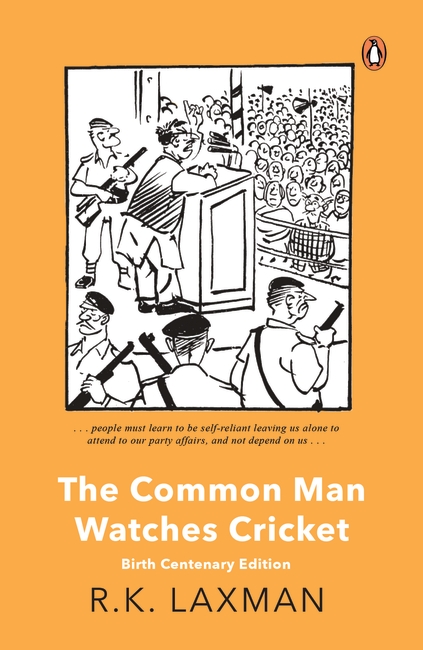
A Vote for Laughter contains a hundred of the classic Common Man cartoons that have to do with political subjects, from party meetings, election campaigns and VVIP movements to cabinet reshuffles, horse trading and foreign tours, not to forget the activity that for Laxman defines the Indian politician: the impulse to rush to the well of the House. These are accompanied by a hundred of the funniest jokes about politics and politicians, collected from all over the world.
A Vote for Laughter will entertain everyone who enjoys seeing the farcical streak in our contemporary politics, even as we take pride in being the largest democracy in the world.
A humorous look at doctors and their ilk by India’s best-loved cartoonist
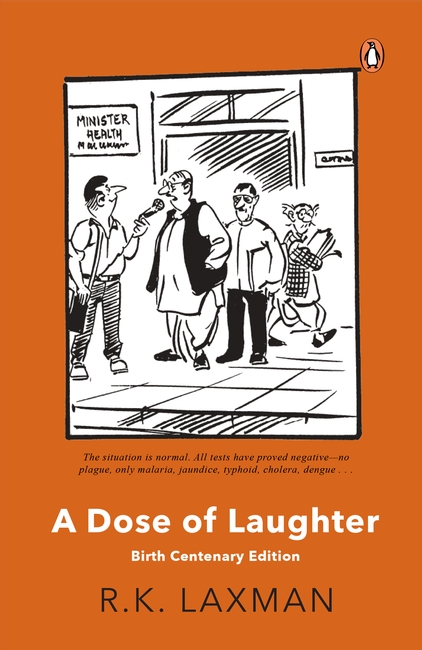
Laughter, they say, is the best medicine. It is therefore fitting that the world’s most honourable profession should have a great deal of fun made at its expense. Humour directed at physicians and medicine has sustained many a suffering patient through the bleakest of times. A Dose of Laughter is an exhilarating collection of cartoons and jokes about doctors and their practices that will bring a smile to the lips of those who wield the stethoscope as well as those who yield to it.
This book contains 100 cartoons about the world of doctors, hospitals, laboratories, ailments, maladies, health schemes and hygiene that show R.K. Laxman at his inimitable best. These are accompanied by a hundred of the funniest jokes about doctors and the medical profession collected from all over the world. Together, these make for a witty, perceptive look at the unequal effort doctors make to combat disease and bring succour to their fellow humans. This is a book that can be dipped into at random, or read from cover to cover. In either case, it is guaranteed to provide a great deal of unadulterated merriment and laughter.
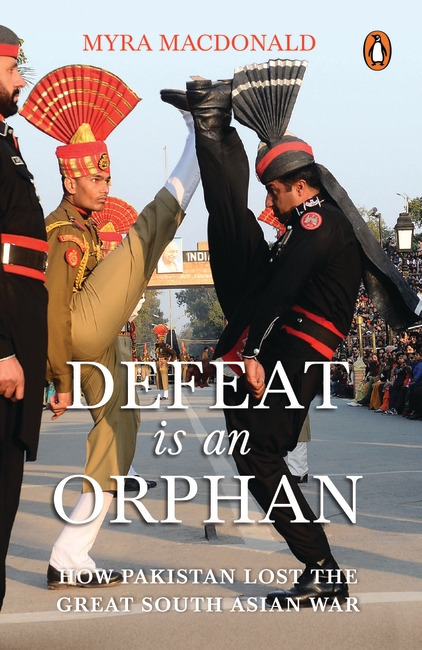
When India and Pakistan held nuclear tests in 1998, they restarted the clock on a competition that had begun half a century earlier. Nuclear weapons restored strategic parity, erasing the advantage of India’s much larger size and conventional military superiority. Yet, in the years that followed, Pakistan went on to lose decisively to India. It lost any ability to stake a serious claim to Kashmir, a region it called its jugular vein. Its ability to influence events in Afghanistan diminished. While India’s growing economy won it recognition as a rising world power, Pakistan became known as a failing state. Pakistan had lost to India before but the setbacks since 1998 made this defeat irreversible.
Defeat Is an Orphan follows the roller-coaster ride through post-nuclear India-Pakistan, from bitter conflict in the mountains to military confrontation in the plains, from the hijacking of an Indian plane to the assault on Mumbai. Nuclear weapons proved to be Pakistan’s undoing. They encouraged a reckless reliance on militant proxies even as the jihadis spun out of control outside and inside Pakistan. By shielding it from retaliation, the nuclear weapons also sealed it into its own dysfunction-so much so that the Great South Asian War, fought on-and-off since 1947, was not so much won by India as lost by Pakistan.

KERALA SAHITYA AKADEMI AWARD WINNER
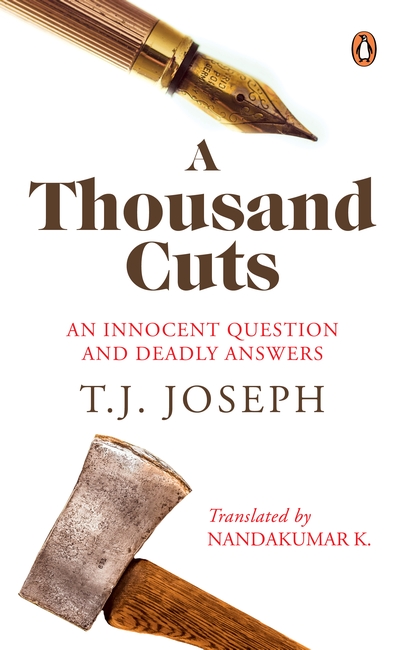
A Thousand Cuts is a harrowing, sobering and ultimately inspiring autobiography of Professor T.J. Joseph, who in 2010 became the victim of a brutal terrorist assault, accused of blasphemy after setting an exam question that enraged fundamentalists. This book is an important reminder of the pernicious effect of religious extremism and the duty of every person to speak out against those who would silence free expression’ SHASHI THAROOR
‘There is excruciating agony here, but also black humour and irony that enliven and lighten the narrative even at the height of anguish’ K. SATCHIDANANDAN
‘The poignant tale, with its sense of urgency and helplessness, has been sensitively translated as A Thousand Cuts‘ RANA SAFVI
A chilling account of religious extremism
In 2010, T.J. Joseph, a professor of Malayalam at Newman College, Kerala, framed an innocuous question for an internal examination that changed his life forever. Following a trumped-up charge of blasphemy, members of a radical Islamist organization set upon him in public, viciously maiming him and chopping off his right hand. His memoir, told with amazing restraint and wry humour, is the moving tale of his life and family as they went through hell and beyond. Here’s the extraordinary story of a man who survived dismembering only to be betrayed by his
own Church. Let alone stand by him, it robbed him of his livelihood and isolated him from his community, driving Joseph’s long-suffering wife to melancholia and eventual suicide. Joseph’s story is one of fortitude, will power, forgiveness and compassion, told with rare wit that will make readers chuckle through their tears.
This is a tale that will leave the reader seething, weeping and smiling by turns.